Explore the ultimate collection of 2-line narazgi poetry and angry shayari to express your unspoken feelings, release your frustration, or finally win back an upset friend.
Relationships are beautiful, but they are rarely perfect. There are moments when words fail us, and a deep sense of hurt takes over. Whether it is a misunderstanding with a loved one or an unspoken argument with a best friend, unresolved anger often leads to unhappiness and frustration.
Here, we have compiled a deeply emotional collection of narazgi poetry in Urdu for when you are confronted with feelings of hurt, betrayal, or anger. Sometimes, expressing that you are khafa (upset) is the first step toward healing. From intense angry poetry in Urdu to soft and apologetic naraz dost ko manana poetry, these verses will help you communicate your true feelings.
Instead of holding onto that heavy silence, explore our collection below. Find the perfect 2-line shayari, save the high-quality images, and share them directly to your WhatsApp status to let them know exactly what is on your mind.
جس کی ہوس کے واسطے دنیا ہوئی عزیز واپس ہوئے تو اس کی محبت خفا ملی
Jis ki havas ke vaste duniya hui aziiz Vapas hue to us ki mohabbat khafa mili
This striking couplet explores the bitter irony of misplaced priorities and the high cost of worldly ambition. The poet confesses that he chased material success and made the world his priority only to satisfy the desires or needs of his beloved. However, the tragedy unfolds in the second line: when he finally returns from his pursuit, he finds that the very love he was trying to secure has grown cold and resentful. It serves as a powerful reminder that while we are busy building a world for those we love, we often neglect the emotional connection that mattered most. The verse resonates with anyone who has sacrificed their time and peace for a relationship, only to find themselves a stranger to the person they did it all for.
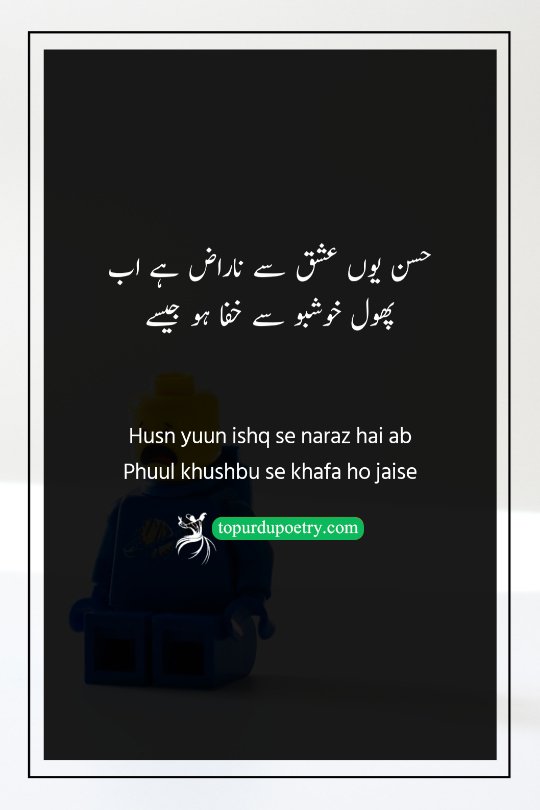
حسن یوں عشق سے ناراض ہے اب پھول خوشبو سے خفا ہو جیسے
Husn yuun ishq se naraz hai ab Phuul khushbu se khafa ho jaise
This elegant couplet uses a stunning metaphor to describe the tension between a beloved and a lover. The poet compares Beauty's anger toward Love to a flower being upset with its own fragrance. It’s a powerful image because a flower and its scent are inseparable; one defines the other. By using this comparison, the poet suggests that the conflict is not just painful, but fundamentally unnatural. Just as a flower loses its essence without its smell, beauty loses its purpose without the adoration of love. It captures that heartbreaking moment when two things that belong together are driven apart by pride or misunderstanding, creating a void that defies the laws of nature.
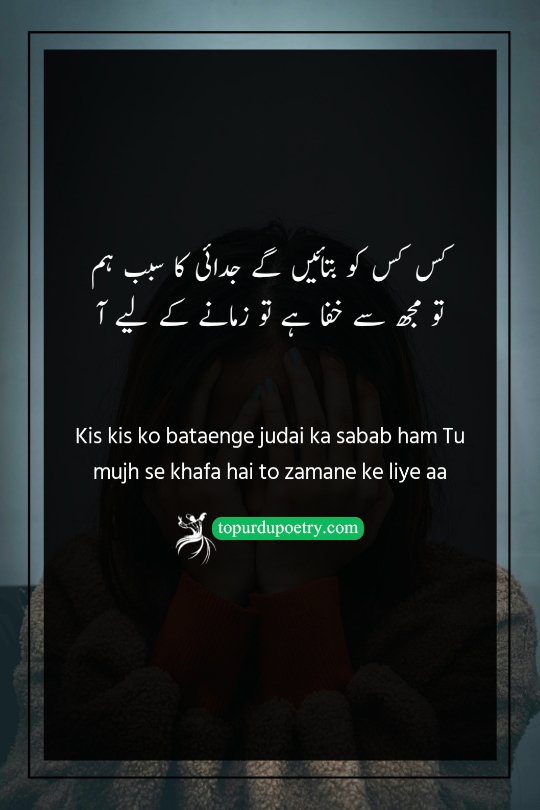
کس کس کو بتائیں گے جدائی کا سبب ہم تو مجھ سے خفا ہے تو زمانے کے لیے آ
Kis kis ko bataenge judai ka sabab ham Tu mujh se khafa hai to zamane ke liye aa
This world-famous couplet by Ahmad Faraz perfectly captures the social pressure that often accompanies personal heartbreaks. The poet expresses the immense burden of having to explain a separation to a judgmental world. He asks, 'To how many people will we have to explain the cause of our parting?' To avoid this public scrutiny and the gossip of society, he makes a desperate and somewhat tragic plea to his beloved: even if you are truly angry with me in private, come back just to maintain appearances for the sake of the world. It highlights the painful reality where social reputation often forces people to hide their true emotional distance behind a mask of togetherness.
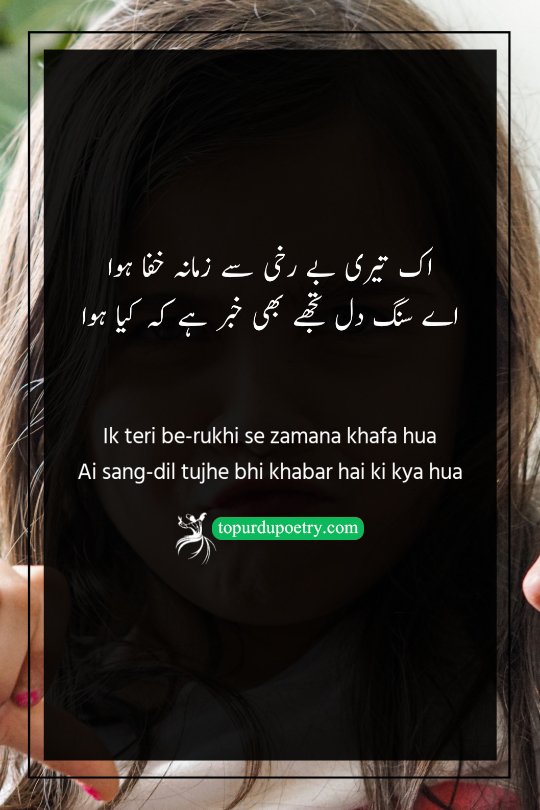
اک تیری بے رخی سے زمانہ خفا ہوا اے سنگ دل تجھے بھی خبر ہے کہ کیا ہوا
Ik teri be-rukhi se zamana khafa hua Ai sang-dil tujhe bhi khabar hai ki kya hua
This striking couplet explores the domino effect of a beloved’s indifference on a lover's entire existence. The poet laments that just one instance of be-rukhi (neglect) from the person he loves has caused the whole world to turn against him. It suggests that his social identity and peace were entirely dependent on the beloved's favor; once that link broke, his standing in the world collapsed. In the second line, he addresses the sang-dil (stone-hearted) beloved with a mix of pain and accusation, asking if they even realize the magnitude of the destruction they have triggered. It captures the tragic reality of suffering a public downfall caused by a private rejection.
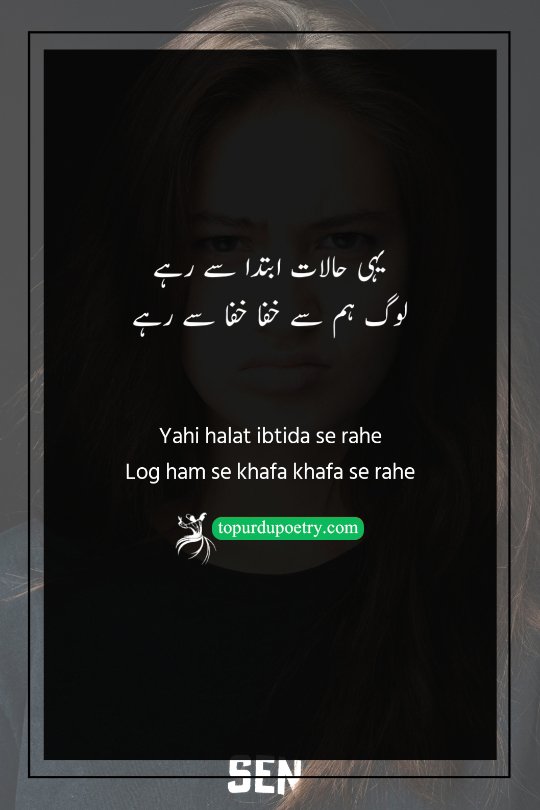
Yahi halat ibtida se rahe Log ham se khafa khafa se rahe
This melancholic couplet reflects a lifetime of social alienation and the weary acceptance of being misunderstood. The poet notes that his strained relationship with the world isn't a recent development; rather, it is a persistent state that has existed since the very beginning. The repetition of 'khafa khafa' suggests a lingering, subtle tension rather than a series of explosive conflicts. It captures the experience of an individual who, perhaps due to their unique nature or refusal to conform, finds themselves perpetually at odds with societal expectations. Instead of bitterness, there is a sense of quiet resignation—the poet has stopped trying to bridge the gap and has instead accepted loneliness as his natural environment.
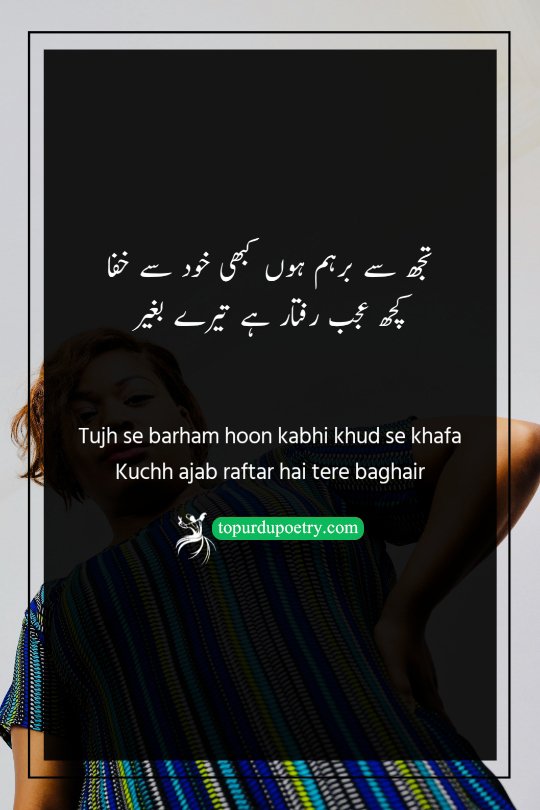
تجھ سے برہم ہوں کبھی خود سے خفا کچھ عجب رفتار ہے تیرے بغیر
Tujh se barham hoon kabhi khud se khafa Kuchh ajab raftar hai tere baghair
This melancholic couplet is a perfect example of naraz-poetry-in-urdu, capturing the emotional turbulence that follows a rift with a loved one. The poet describes a state of deep restlessness where his anger is divided; one moment he is 'barham' (annoyed) with the beloved for leaving, and the next, he is 'khafa' (upset) with himself for being unable to move on. Life's pace becomes erratic and strange because the person who provided emotional balance is gone. This verse beautifully portrays the indecisive heart of a lover who is caught between resentment and self-blame, making it deeply relatable for anyone navigating the silent anger of a broken bond.
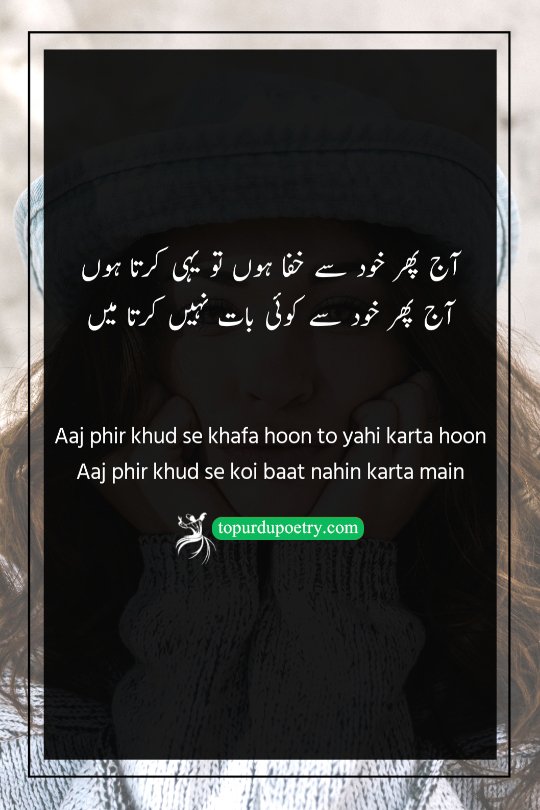
آج پھر خود سے خفا ہوں تو یہی کرتا ہوں آج پھر خود سے کوئی بات نہیں کرتا میں
Aaj phir khud se khafa hoon to yahi karta hoon Aaj phir khud se koi baat nahin karta main
This deeply introspective couplet explores the silent battle of self-conflict and internal disappointment. The poet describes a state of profound self-alienation where he is so 'khafa' (upset) with his own actions or circumstances that he resorts to a unique form of punishment: absolute silence within. By refusing to engage in his own thoughts or 'talk to himself,' he highlights a level of emotional exhaustion where even the inner dialogue has ceased. It captures that relatable moment of feeling like a stranger to oneself. This verse resonates with anyone who has ever felt so overwhelmed by self-regret that they choose to withdraw from their own identity, finding a haunting peace in that internal silence.
Heart-Touching Narazgi Poetry in Urdu (ناراضگی شاعری)
When you are hurt but don’t want to start a massive argument, a simple, deep quote is all you need. These 2-line verses perfectly capture the silent pain of being upset with someone you truly care about.
وہ خوش ہو کے مجھ سے خفا ہو گیا مجھے کیا امیدیں تھیں کیا ہو گیا
Vo khush ho ke mujh se khafa ho gaya Mujhe kya umiden thiin kya ho gaya
This poignant couplet captures the sudden, bewildering shock of a relationship's collapse. The poet is left in a state of disbelief because the beloved seemed to find a strange ease—or even a cruel joy—in becoming upset and walking away. The phrase 'khush ho ke khafa hona' suggests that the separation wasn't born out of a heavy conflict, but perhaps out of indifference or a whim, which makes the betrayal feel even sharper. The second line is a universal cry of shattered expectations. It reflects the painful distance between the beautiful dreams a lover once held and the harsh, confusing reality they are now forced to face alone.
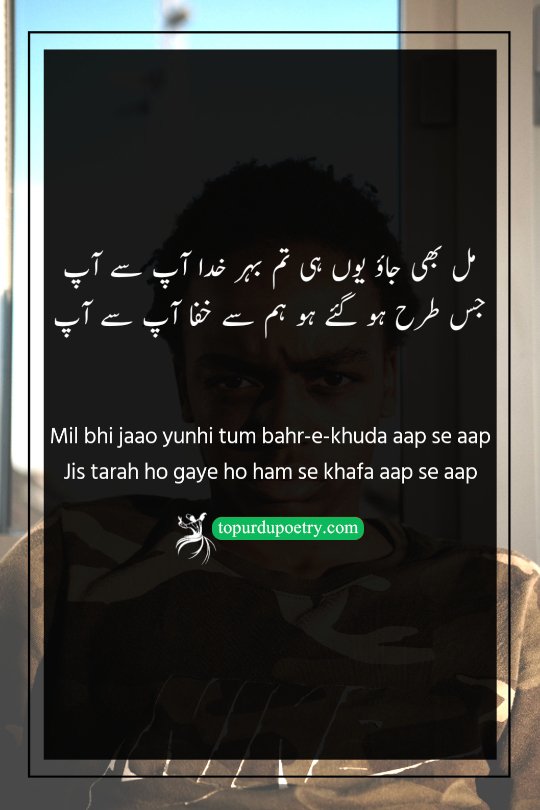
مل بھی جاؤ یوں ہی تم بہر خدا آپ سے آپ جس طرح ہو گئے ہو ہم سے خفا آپ سے آپ
Mil bhi jaao yunhi tum bahr-e-khuda aap se aap Jis tarah ho gaye ho ham se khafa aap se aap
This couplet is a beautiful plea for a spontaneous reconciliation. The poet highlights the sudden and unexplained nature of the beloved’s anger—noting that they became upset all on their own, without a specific reason or confrontation. Using this same logic, the poet begs for a miracle: that the beloved should return just as easily and unexpectedly as they left. By using the phrase 'bahr-e-khuda' (for God’s sake), he adds a layer of humility and urgency to the request. It perfectly captures that feeling of being stuck in a rift where you don't even know what went wrong, so you just hope that a change of heart will fix it as suddenly as it broke.
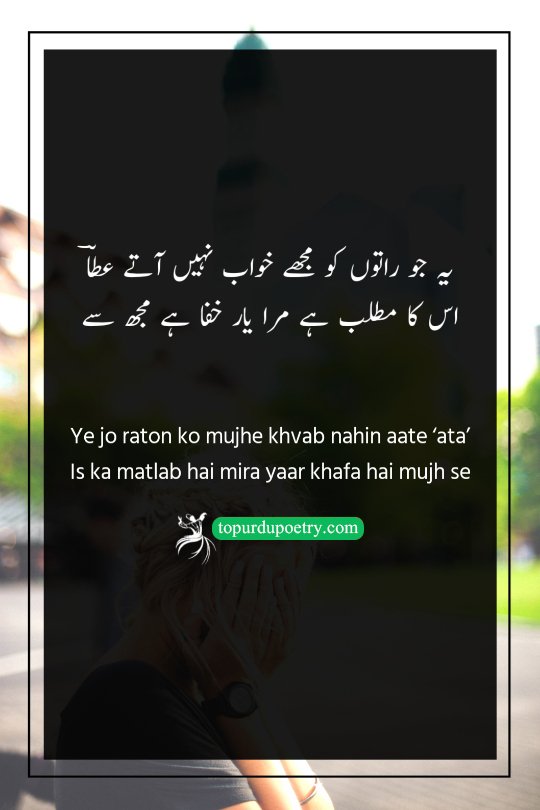
یہ جو راتوں کو مجھے خواب نہیں آتے عطاؔ اس کا مطلب ہے مرا یار خفا ہے مجھ سے
Ye jo raton ko mujhe khvab nahin aate ‘ata’ Is ka matlab hai mira yaar khafa hai mujh se
In this beautifully evocative couplet, the poet Ata uses a unique, mystical logic to explain his lack of dreams. In the world of Urdu poetry, dreams are often seen as the only meeting ground for separated lovers. By stating that he no longer sees dreams at night, the poet concludes that his beloved must be deeply 'khafa' (upset). It suggests that the beloved’s anger is so profound that they have even withdrawn their presence from the poet’s subconscious world. It’s a tragic yet romantic realization that when the heart is in conflict, even the soul’s escape—the dream world—becomes empty. This verse perfectly captures the superstition of a lover who looks for signs of his beloved’s mood in the rhythm of his sleep.
چھیڑا ہے دست شوق نے مجھ سے خفا ہیں وہ گویا کہ اپنے دل پہ مجھے اختیار ہے
Chheda hai dast-e-shauq ne mujh se khafa hain vo Goya ki apne dil pe mujhe ikhtiyar hai
This couplet is a brilliant addition to the sad-poetry-naraz genre, as it perfectly captures the helpless frustration of a lover who is being blamed for something beyond his control. The poet describes a situation where the beloved is upset because his 'hand of desire' made a move or expressed a longing. The beauty lies in the second line, where the poet uses sharp irony to defend himself. He asks if the beloved truly believes that he has any control or authority over his own heart. It suggests that love is an involuntary force—a restless impulse that acts on its own. By holding him responsible for an act of passion, the beloved is treating his heart like a disciplined servant, when in reality, it is an uncontrollable entity.
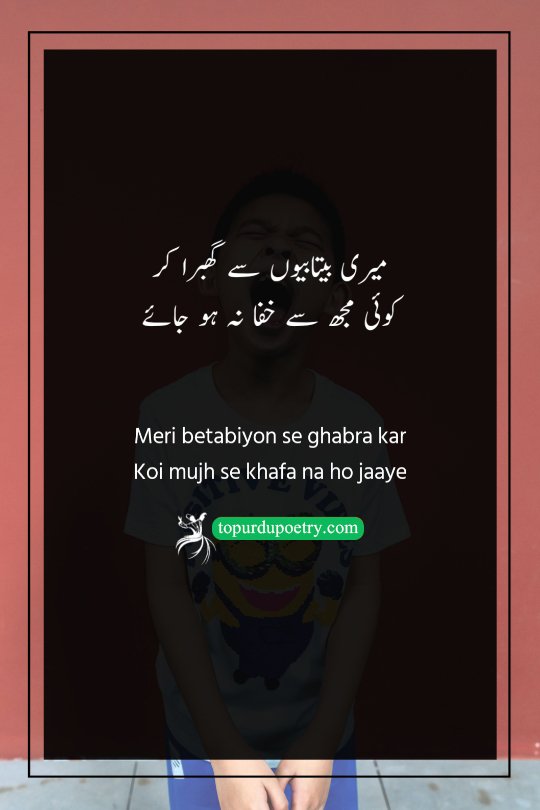
میری بیتابیوں سے گھبرا کر کوئی مجھ سے خفا نہ ہو جائے
Meri betabiyon se ghabra kar Koi mujh se khafa na ho jaaye
This couplet captures the deep-seated anxiety that often comes with intense love or friendship. The poet is conscious of his own restlessness and fears that his overwhelming emotions might become a burden for the other person. It explores the delicate balance of a relationship where one person feels so deeply that they worry their passion might be mistaken for instability or pressure. The second line is a vulnerable prayer, hoping the other person doesn't get upset just because they are overwhelmed by such raw emotion. It resonates with anyone who has ever felt like their feelings were 'too much' for someone else.
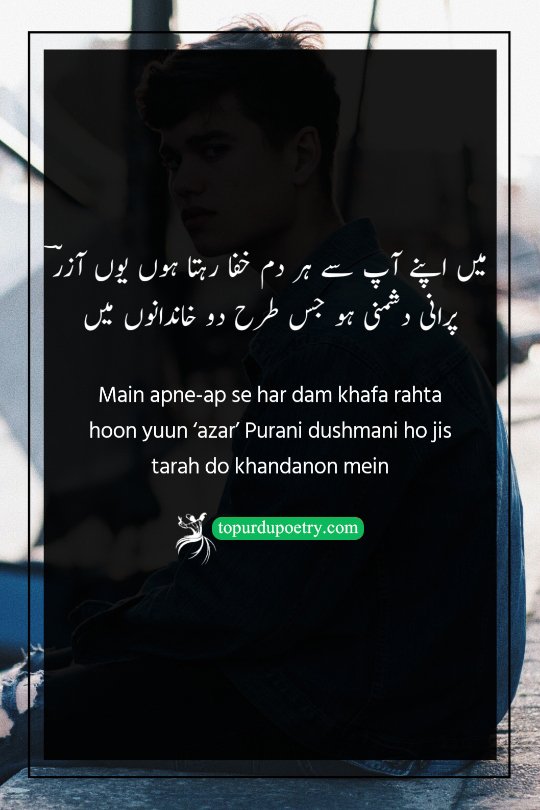
میں اپنے آپ سے ہر دم خفا رہتا ہوں یوں آزرؔ پرانی دشمنی ہو جس طرح دو خاندانوں میں
Main apne-ap se har dam khafa rahta hoon yuun ‘azar’ Purani dushmani ho jis tarah do khandanon mein
This striking couplet by the poet Azar delves into the intense and painful world of self-conflict. The poet describes his relationship with himself as being in a state of constant anger. To illustrate the depth of this feeling, he uses the powerful metaphor of an old family feud. Just as such feuds are deep-rooted and seemingly endless, the poet’s conflict with his own soul has become a permanent part of his identity. It suggests a mind and heart that are perpetually at odds, capturing the exhaustion of living with an internal struggle that refuses to offer peace.
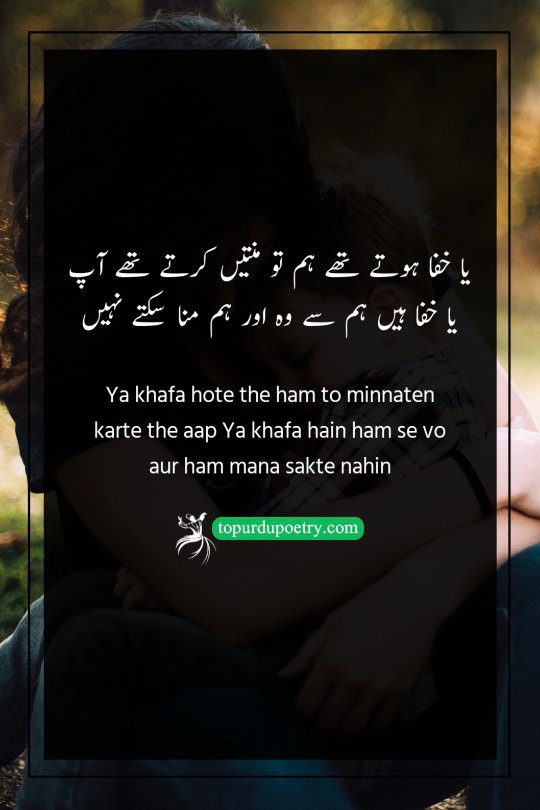
یا خفا ہوتے تھے ہم تو منتیں کرتے تھے آپ یا خفا ہیں ہم سے وہ اور ہم منا سکتے نہیں
Ya khafa hote the ham to minnaten karte the aap Ya khafa hain ham se vo aur ham mana sakte nahin
This poignant couplet captures the heartbreaking shift in power and affection that often occurs as a relationship fades. The poet draws a sharp contrast between the past and the present. He remembers a time when, if he were ever upset, the beloved would move heaven and earth with gentle pleas to win him back. However, the second line presents a cold, current reality: now that the beloved is the one who is angry, the poet finds himself completely helpless. He lacks the strength or influence to persuade them to return. It perfectly portrays the tragedy of a love that has become one-sided, where the lover’s previous importance has vanished.
Naraz Dost Ko Manana Poetry: Win Them Back
Friendships often go through rough patches. If you have upset your closest companion and need the perfect words to apologize, this naraz dost ko manana poetry is guaranteed to melt their heart and fix the bond.
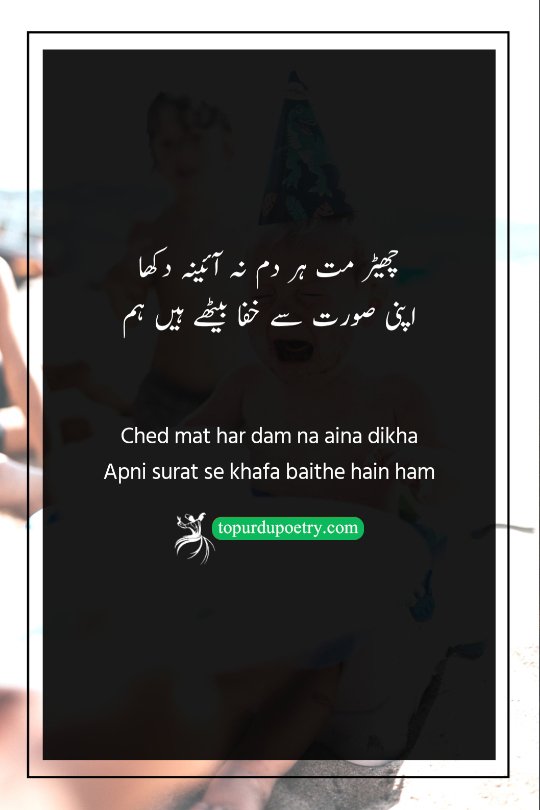
چھیڑ مت ہر دم نہ آئینہ دکھا اپنی صورت سے خفا بیٹھے ہیں ہم
Ched mat har dam na aina dikha Apni surat se khafa baithe hain ham
This couplet is a brilliant expression of self-alienation and the weight of internal disappointment. In Urdu poetry, the mirror is often a symbol of truth and self-confrontation. Here, the poet isn't just talking about his physical appearance; he is talking about his entire existence. He asks not to be provoked or forced to face the mirror because he is currently in a state of deep resentment with his own self. It suggests a moment of such intense regret or identity crisis that even his own reflection feels like an enemy. It captures that raw, human moment where we are so unhappy with our choices or our situation that we cannot stand to look at who we have become.
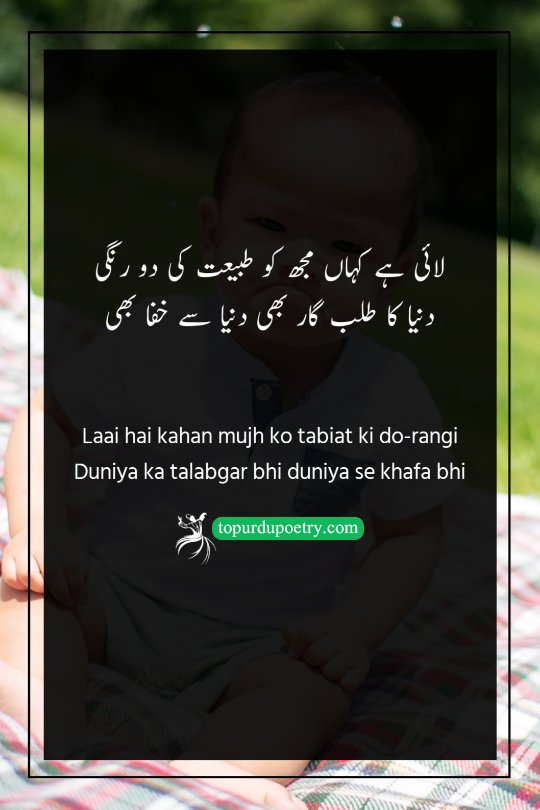
لائی ہے کہاں مجھ کو طبیعت کی دو رنگی دنیا کا طلب گار بھی دنیا سے خفا بھی
Laai hai kahan mujh ko tabiat ki do-rangi Duniya ka talabgar bhi duniya se khafa bhi
This profound couplet highlights the internal conflict and hypocrisy that many of us feel within ourselves. The poet uses the term 'do-rangi' (duality or double-mindedness) to describe a restless nature that pulls in two opposite directions. On one hand, the poet is a 'talabgar' (seeker)—he still wants the world, its pleasures, and its validations. On the other hand, he is deeply 'khafa' (upset or cynical) about the world’s harshness and lack of sincerity. This verse perfectly captures the struggle of the modern soul, feeling stranded between a desire for worldly success and a deep spiritual fatigue with the society around him.
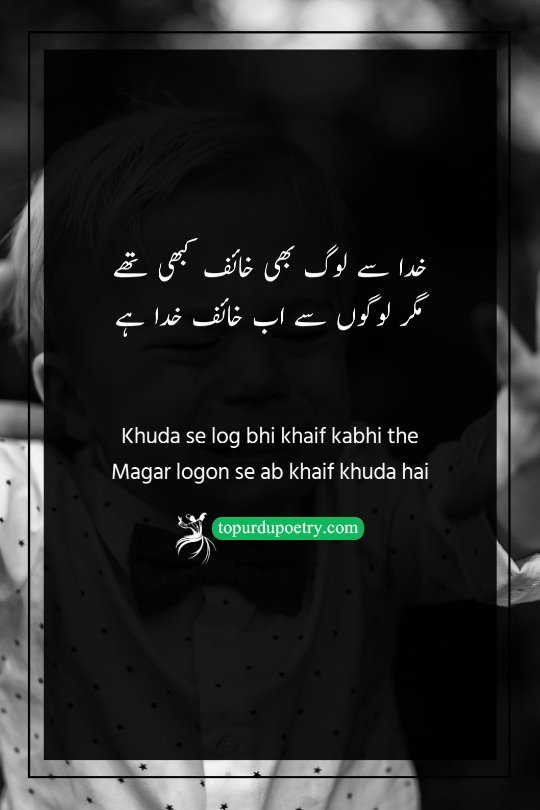
خدا سے لوگ بھی خائف کبھی تھے مگر لوگوں سے اب خائف خدا ہے
Khuda se log bhi khaif kabhi the Magar logon se ab khaif khuda hai
This thought-provoking verse is a unique choice for poetry-for-naraz-dost, as it highlights a deep disappointment in how people change. The poet suggests that the moral order has reversed: once people feared God, but now human behavior has become so unpredictable and harsh that even the Divine seems 'startled.' In a friendship, this couplet expresses the shock and hurt that comes when a friend's behavior becomes unrecognizable. It reflects the pain of seeing someone you cared for lose their original kindness, making the rift feel like a loss of faith in people altogether.
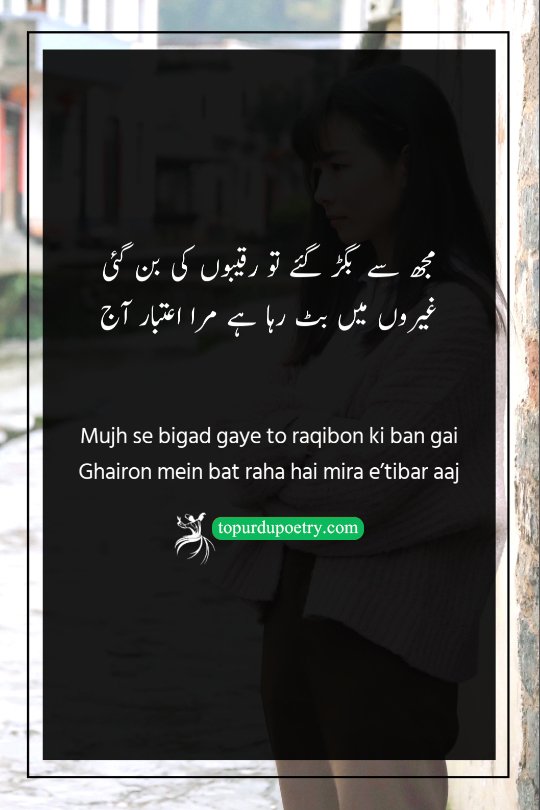
مجھ سے بگڑ گئے تو رقیبوں کی بن گئی غیروں میں بٹ رہا ہے مرا اعتبار آج
Mujh se bigad gaye to raqibon ki ban gai Ghairon mein bat raha hai mira e’tibar aaj
This couplet highlights the bitter social consequences of a personal rift. The poet laments that because the beloved is upset, the rivals (raqib) are now the ones celebrating. The most painful part is that the trust (e’tibar) which was once a private, sacred bond is now being 'distributed' among strangers. It suggests that once a relationship breaks, the intimacy and loyalty that belonged only to the lover are now being shared with outsiders. It’s a stinging realization that a private heartbreak has turned into a public loss of dignity.
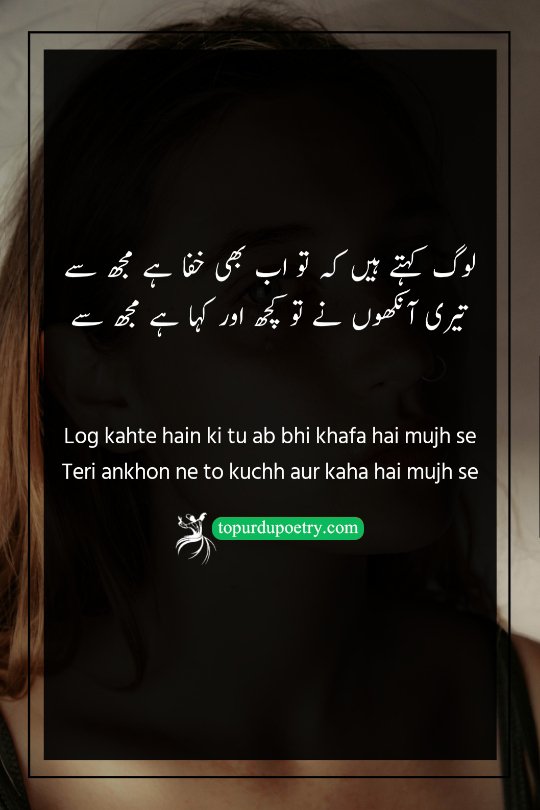
لوگ کہتے ہیں کہ تو اب بھی خفا ہے مجھ سے تیری آنکھوں نے تو کچھ اور کہا ہے مجھ سے
Log kahte hain ki tu ab bhi khafa hai mujh se Teri ankhon ne to kuchh aur kaha hai mujh se
This beautiful couplet explores the silent, non-verbal communication that exists between lovers, even during a conflict. While the 'world' or 'people' may be buzzing with rumors that the beloved is still upset (khafa), the poet remains unconvinced. He trusts a much deeper source of truth: the beloved's eyes. The verse suggests that while outward words or public behavior might show distance, the eyes often betray the heart's true feelings of warmth and longing. It’s a powerful testament to the idea that the soul recognizes the truth even when the ego is putting up a front of anger. It captures that hopeful, intimate moment where a single glance can negate a thousand rumors.
یا وہ تھے خفا ہم سے یا ہم ہیں خفا ان سے کل ان کا زمانہ تھا آج اپنا زمانا ہے
Ya vo the khafa ham se ya ham hain khafa un se Kal un ka zamana tha aaj apna zamana hai
This couplet is a bold take on the shifting power dynamics of a relationship. It captures the moment the 'tables turn,' replacing the usual sadness of a rift with a sense of pride and triumph. The poet describes a complete role reversal: in the past, the beloved held the power, and their anger dictated the mood. But now, that time has passed. The second line, 'Today is my time,' is a powerful statement of reclaiming autonomy. It suggests that the poet has finally found their strength, highlighting the cyclic nature of life where those who were once neglected eventually find their own 'zamana' (era) of importance.
Angry Poetry in Urdu: Expressing Your Gussa
Sometimes, anger needs to be expressed loud and clear. When someone has crossed a line or broken your trust, these strong lines of angry poetry in Urdu will help you release that frustration without losing your dignity.
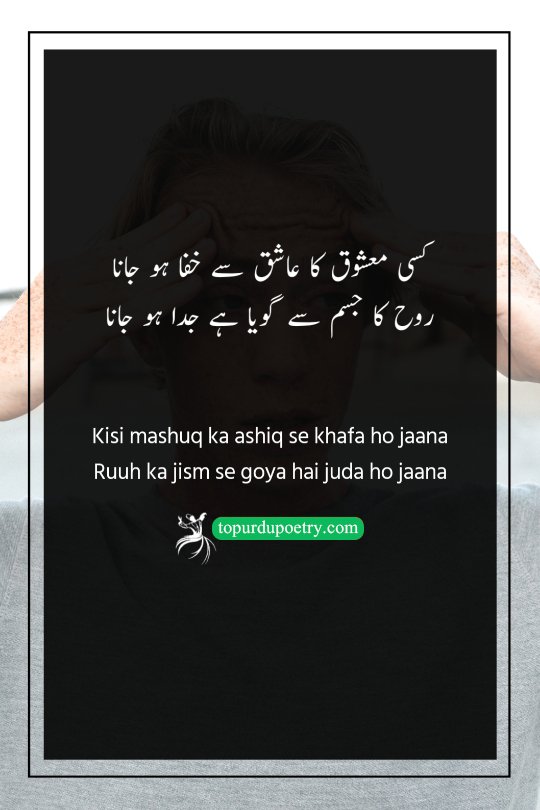
کسی معشوق کا عاشق سے خفا ہو جانا روح کا جسم سے گویا ہے جدا ہو جانا
Kisi mashuq ka ashiq se khafa ho jaana Ruuh ka jism se goya hai juda ho jaana
This couplet elevates a simple disagreement to a matter of life and death. The poet suggests that the bond between a lover and the beloved is spiritual and essential. By comparing the beloved being upset (khafa) to the soul (ruuh) leaving the body (jism), the verse implies that the lover is merely an empty shell without the beloved’s grace. It portrays a state of total devotion where the beloved’s happiness is the very breath that keeps the lover alive, capturing the absolute devastation felt during a rift in a deep relationship.
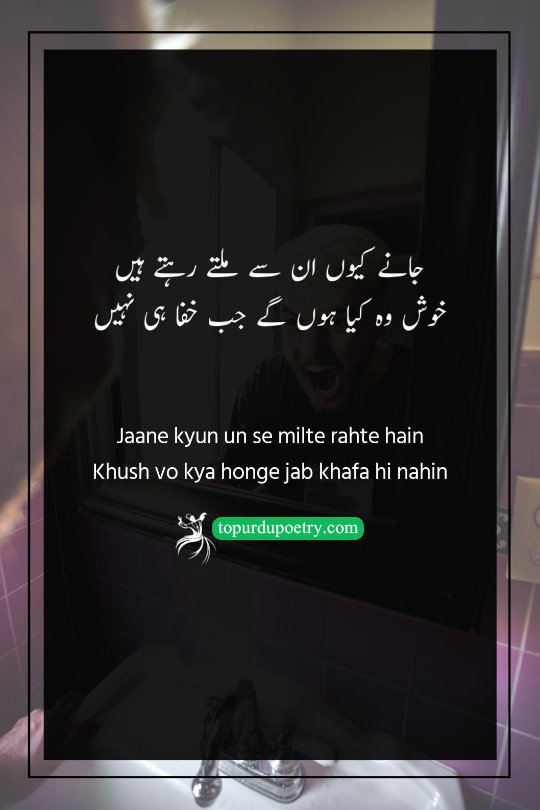
جانے کیوں ان سے ملتے رہتے ہیں خوش وہ کیا ہوں گے جب خفا ہی نہیں
Jaane kyun un se milte rahte hain Khush vo kya honge jab khafa hi nahin
This couplet explores a stage of a relationship that is far more painful than an active argument: total emotional detachment. A standout for naraz-sad-poetry-in-urdu, it suggests that anger is often a sign of underlying care. The poet wonders why he continues to meet the beloved when his presence no longer evokes any emotion—not even resentment. By pointing out that the beloved isn't even 'khafa' (upset) anymore, the verse highlights the tragedy of indifference. When someone stops being upset with you, it often means they have stopped caring altogether, leaving the lover in a void of cold, heartbreaking neutrality.
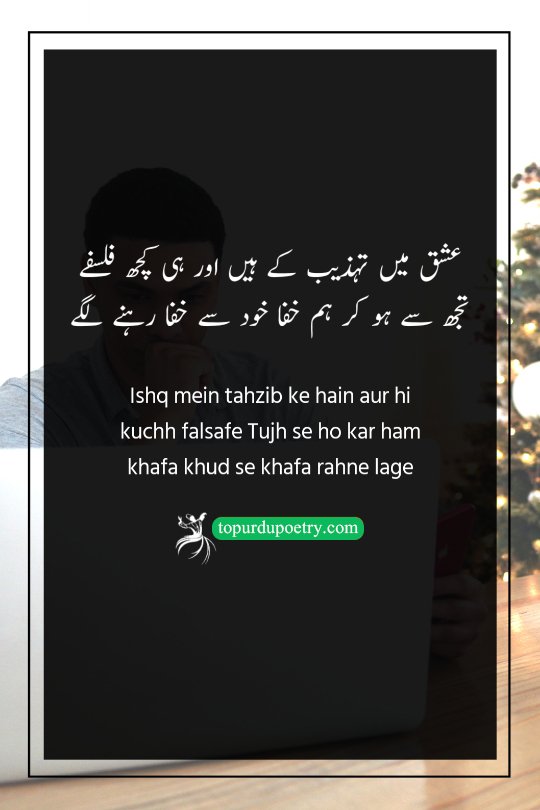
عشق میں تہذیب کے ہیں اور ہی کچھ فلسفے تجھ سے ہو کر ہم خفا خود سے خفا رہنے لگے
Ishq mein tahzib ke hain aur hi kuchh falsafe Tujh se ho kar ham khafa khud se khafa rahne lage
This couplet explores the sophisticated etiquette (tahzib) of love, where the rules of emotion are different from the ordinary world. The poet describes a unique internal shift: although the beloved is the cause of the anger, the lover eventually turns that resentment toward themselves. It highlights a deep level of devotion where the lover feels uncomfortable or guilty for being upset with their partner, leading to a state of self-conflict. It perfectly captures the heart of someone who loves so purely that they would rather blame themselves than hold a grudge against their beloved.
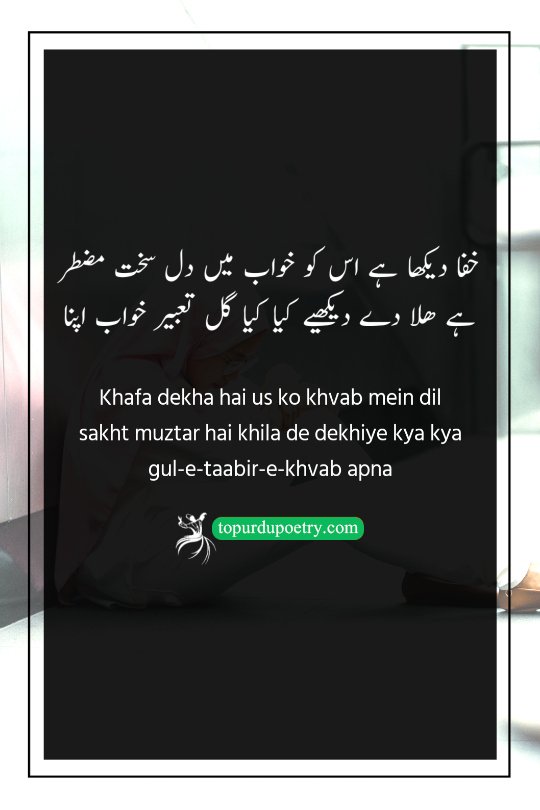
خفا دیکھا ہے اس کو خواب میں دل سخت مضطر ہے کھلا دے دیکھیے کیا کیا گل تعبیر خواب اپنا
Khafa dekha hai us ko khvab mein dil sakht muztar hai Khila de dekhiye kya kya gul-e-taabir-e-khvab apna
This couplet explores the psychological and superstitious side of love. The poet describes a state of deep anxiety because he saw his beloved 'khafa' (upset) in a dream. Even though it was just a dream, the image has left his heart 'muztar' (restless). In the second line, he waits with a mix of dread and curiosity to see the 'taabir' (interpretation) of this dream. He wonders if this subconscious vision will bloom into a real-world conflict or if it is simply a reflection of his own fears. It perfectly captures how a lover's peace of mind is tied to the beloved, even in their sleep.
خفا ہیں پھر بھی آ کر چھیڑ جاتے ہیں تصور میں ہمارے حال پر کچھ مہربانی اب بھی ہوتی ہے
Khafa hain phir bhi aa kar chhed jaate hain tasavvur mein Hamare haal par kuchh mehrbani ab bhi hoti hai
This beautiful couplet captures the sweet, lingering connection that remains even when a relationship is strained. The poet notes that although the beloved is currently 'khafa' (upset) in reality, they haven't completely disappeared. In his 'tasavvur' (imagination), they still come to visit and tease him. He interprets this mental presence as a form of 'mehrbani' (kindness), suggesting that even in their anger, the beloved’s essence hasn't abandoned the lover. It perfectly resonates with anyone who finds comfort in memories during a period of silence, showing that the heart refuses to accept the distance the mind has created.
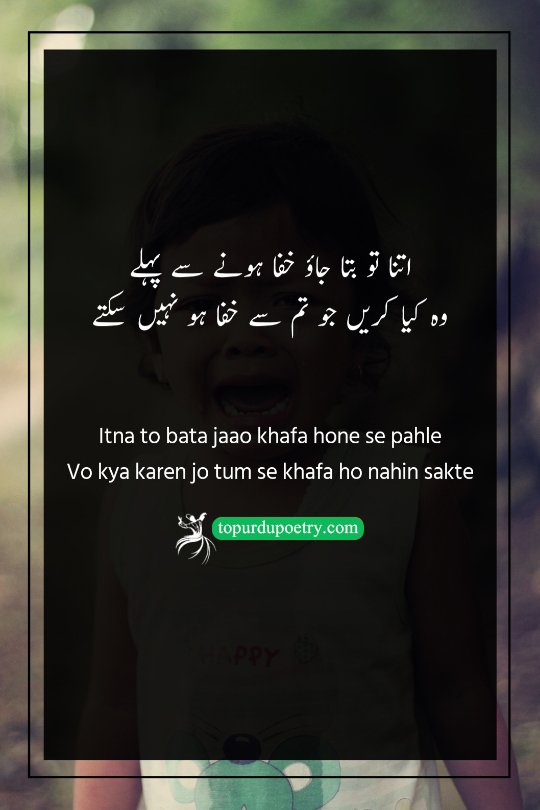
اتنا تو بتا جاؤ خفا ہونے سے پہلے وہ کیا کریں جو تم سے خفا ہو نہیں سکتے
Itna to bata jaao khafa hone se pahle Vo kya karen jo tum se khafa ho nahin sakte
This heart-touching couplet is a classic in the world of naraz-poetry-2-lines, highlighting the absolute helplessness of a true lover. The poet addresses a beloved who is on the verge of becoming 'khafa' (angry). He makes a desperate and vulnerable plea: 'Before you leave in anger, just tell me what should people like me do—those who are so deeply in love that they are incapable of being angry with you in return?' It captures the tragic imbalance of power in a relationship where one person has the freedom to be upset, while the other is so devoted that they cannot even harbor a moment of resentment.
Final Thoughts on Narazgi & Healing
Anger and narazgi do not have to be permanent. In fact, expressing your frustration through beautiful words often opens the door to better communication and stronger relationships. We hope this collection of narazgi poetry helped you find the exact words your heart was searching for.
Which of these 2-line naraz shayari perfectly matched your current mood? Did you use one of our verses to finally make up with an angry friend?
Share your favorite lines in the comments below! Don’t forget to download your favorite images for naraz poetry to update your WhatsApp and Facebook statuses. If you are looking for more emotional verses, be sure to check out our collection of Deep Bharosa Poetry in Urdu.