In Urdu literature, the moon is far more than just a celestial body in the night sky; it is the ultimate symbol of mesmerizing beauty, longing, and romance. For centuries, legendary poets have compared the radiant faces of their beloveds to the full moon. Whether you are gazing at the night sky missing someone special, or you simply want to praise your partner’s beauty, chand poetry in Urdu (چاند پر شاعری) provides the perfect words. From classic romantic couplets to verses that capture the silent loneliness of a moonlit night, this collection of poetry on moon in Urdu will speak directly to your soul.
There is a reason why we are so drawn to the night sky when we are deep in thought or in love. Staring at the moon brings a sense of peace and brings our deepest emotions to the surface. By sharing beautiful chand shayari Urdu, you are participating in a timeless tradition of expressing love through the wonders of nature. If you are looking for the perfect 2-line moon poetry in Urdu to share on your WhatsApp status or send to a loved one, you will find our handpicked selection below.
Interestingly, experts studying human emotions and the psychology of awe note that looking up at the night sky triggers a profound sense of connection and emotional depth, explaining exactly why the moon has always been the ultimate muse for poets.
Table of Contents
Romantic Chand Poetry in Urdu for Your Beloved
When you want to tell someone that their beauty outshines everything else, comparing them to the moon is the ultimate compliment. Our collection of romantic chand poetry in Urdu captures that exact feeling of being completely mesmerized. These two-line couplets of moon poetry (چاند پر شاعری) are perfect for sending to your partner to let them know they are the light of your life, even on the darkest nights.
Raat ko roz duub jaata hai Chand ko tairna sikhana hai
In this whimsical and surreal chand shayari Urdu by Tehzeeb Hafi, the poet treats the moon as a drowning entity that needs saving. He expresses a childlike yet profound desire to teach the moon how to 'swim' so it never has to set or disappear into the night. It is a beautiful metaphor for wanting to protect the things we love from the inevitable 'sinking' caused by time or sorrow. A masterpiece of modern imagination for those who believe in doing the impossible for love.
کئی چاند تھے سر آسماں کہ چمک چمک کے پلٹ گئے نہ لہو مرے ہی جگر میں تھا نہ تمہاری زلف سیاہ تھی
Kai chand the sar-e-asman ki chamak chamak ke palat gaye Na lahu mere hi jigar mein tha na tumhari zulf siyah thi
In this deeply melancholic moon poetry in Urdu, Ahmed Faraz explores the tragedy of missed connections and the passage of time. He laments that while many opportunities for happiness ('moons') appeared, they could not be seized because the era of youth and passion had already passed. It captures the heavy realization that sometimes love arrives when we no longer have the energy to hold it, and the beauty we once admired has faded into the grey of time.
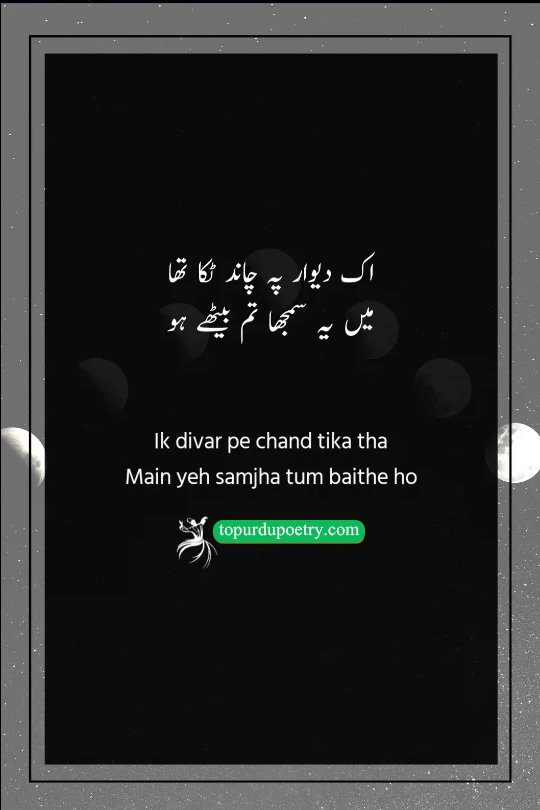
Ik divar pe chand tika tha Main yeh samjha tum baithe ho
In this minimalist and breathtaking chand poetry in Urdu by Tehzeeb Hafi, the poet describes a moment of beautiful confusion. Seeing the moon resting low on a wall, his heart immediately mistakes the celestial glow for the presence of his beloved. It perfectly illustrates how, for a lover, every source of light and beauty in the world becomes a reflection of the one they love. A modern masterpiece that captures the magic of a moonlit night and the intensity of a heart that sees its beloved everywhere.
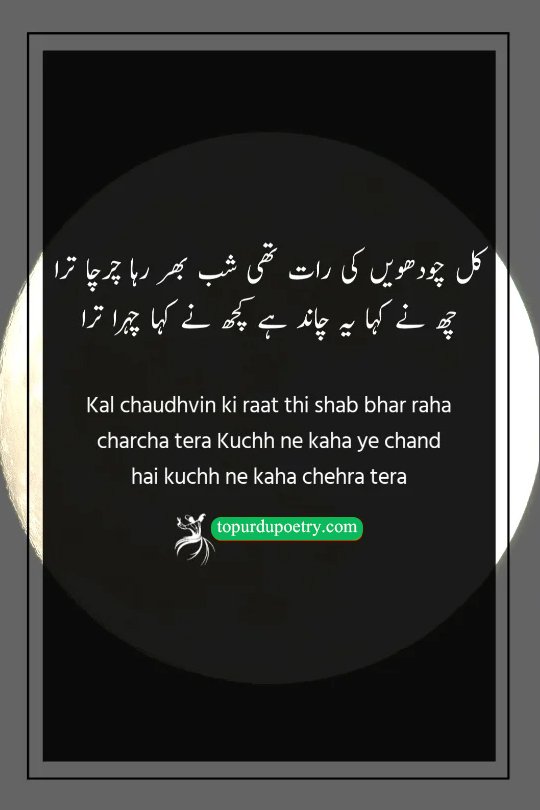
کل چودھویں کی رات تھی شب بھر رہا چرچا ترا کچھ نے کہا یہ چاند ہے کچھ نے کہا چہرا ترا
Kal chaudhvin ki raat thi shab bhar raha charcha tera Kuchh ne kaha ye chand hai kuchh ne kaha chehra tera
In this timeless masterpiece by Ibn-e-Insha, the poet describes a night of the full moon where the beauty of the beloved becomes the talk of the town. The verse captures a moment of magical confusion, where onlookers cannot distinguish between the radiant moon in the sky and the glowing face of the beloved. It is the ultimate tribute to a beauty so divine that it rivals the most perfect celestial bodies. A must-have for any collection of romantic Urdu ghazals.
وہ چار چاند فلک کو لگا چلا ہوں قمرؔ کہ میرے بعد ستارے کہیں گے افسانے
Vo chaar chand falak ko laga chala hoon ‘qamar’ Ki mere baad sitare kahenge afsane
In this masterful verse of self-affirmation, Qamar Jalalvi uses a clever play on his pen name, which means 'Moon.' He claims to have adorned the literary sky with such immense beauty ('chaar chand') that his legacy will endure forever. It captures the confidence of a creator who knows their work has changed the world, leaving the stars themselves to tell his stories for generations to come. A perfect couplet for those who take pride in their craft and legacy.
لطف شب مہ اے دل اس دم مجھے حاصل ہو اک چاند بغل میں ہو اک چاند مقابل ہو
Lutf-e-shab-e-mah ai dil us dam mujhe hasil ho Ik chand baghal mein ho ik chand muqabil ho
In this playfully romantic poetry on moon in Urdu, the poet expresses that the beauty of a moonlit night is incomplete without the presence of the beloved. He dreams of a perfect moment where he is caught between two 'moons'—the radiant one in the sky and the beautiful one by his side. It captures the essence of romantic indulgence, suggesting that for a lover, the world's natural beauty only finds its meaning when shared with the one they love.
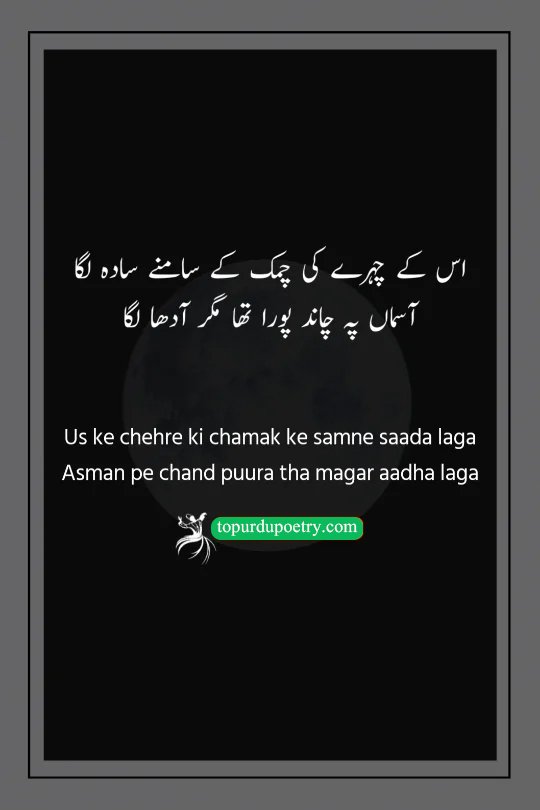
اس کے چہرے کی چمک کے سامنے سادہ لگا آسماں پہ چاند پورا تھا مگر آدھا لگا
Us ke chehre ki chamak ke samne saada laga Asman pe chand puura tha magar aadha laga
In this breathtakingly romantic poetry about moon in urdu, the poet places the beauty of the beloved above the celestial grace of the moon. He describes a moment where the glow of a loved one's face is so radiant that it makes a full moon appear 'saada' (plain) and even incomplete. It captures the essence of a heart so captivated by a person that the rest of the universe's beauty seems like a mere shadow in comparison. A perfect sher for those who find the world's greatest light in the face of their beloved.
سب ستارے دلاسہ دیتے ہیں چاند راتوں کو چیختا ہے بہت
Sab sitare dilasa dete hain Chand raton ko chikhta hai bahut
In this darkly poetic and surreal moon quotes in Urdu, the poet contrasts the quiet comfort of the stars with the loud, internal agony of the moon. While the stars represent a world trying to offer 'dilasa' (solace), the moon stands as a symbol of the individual's profound loneliness and pain—so intense that it feels like a silent scream echoing through the night. A masterpiece for those who feel that their deepest sorrows are often hidden behind a glowing, silent exterior.
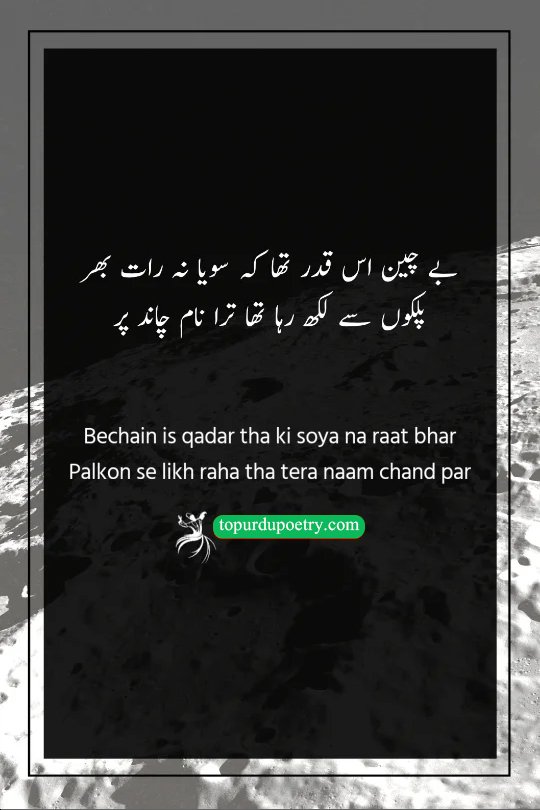
بے چین اس قدر تھا کہ سویا نہ رات بھر پلکوں سے لکھ رہا تھا ترا نام چاند پر
Bechain is qadar tha ki soya na raat bhar Palkon se likh raha tha tera naam chand par
In this hyper-romantic and surreal poetry for moon, the poet describes a night of profound restlessness. He portrays a state of devotion so intense that his eyes, heavy with longing, seem to trace the name of his beloved onto the surface of the moon using his very eyelashes. It captures the essence of 'Deewangi' (madness in love), where the entire universe—even the distant moon—becomes a part of the lover's private conversation with the one they miss. A stunning couplet for those who have spent sleepless nights under the stars.
چاند میں تو نظر آیا تھا مجھے میں نے مہتاب نہیں دیکھا تھا
Chand mein tu nazar aaya tha mujhe Main ne mahtab nahin dekha tha
In this deeply romantic and spiritual verse, the poet explores the intensity of a lover's gaze. He describes a moment where, upon looking at the moon, he was so overwhelmed by the image of his beloved that the physical moon itself ceased to exist for him. It captures the essence of a heart that sees its love in every beautiful thing, to the point where the world's natural wonders are merely a backdrop for a single, precious face. A perfect choice for those who believe that true beauty is always a reflection of the one they love.
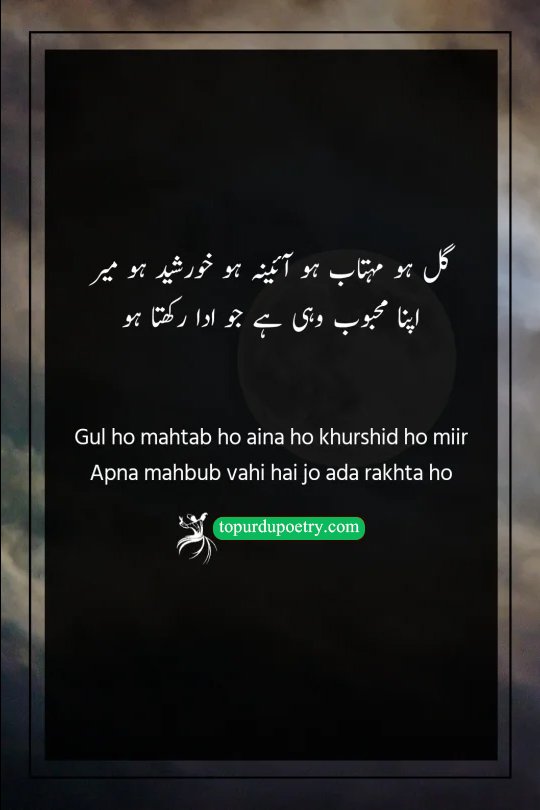
گل ہو مہتاب ہو آئینہ ہو خورشید ہو میر اپنا محبوب وہی ہے جو ادا رکھتا ہو
Gul ho mahtab ho aina ho khurshid ho miir Apna mahbub vahi hai jo ada rakhta ho
In this timeless verse, Mir Taqi Mir sets a high standard for beauty. He acknowledges the classic symbols of perfection—the flower, the moon, the mirror, and the sun—but dismisses them as incomplete. For Mir, true beauty isn't just a physical trait; it is found in 'Ada' (grace and charm). He suggests that a beloved is defined not by how they look, but by how they carry themselves. A perfect couplet for those who value personality and elegance over mere outward appearance.
ہر ایک رات کو مہتاب دیکھنے کے لیے میں جاگتا ہوں ترا خواب دیکھنے کے لیے
Har ek raat ko mahtab dekhne ke liye Main jagta hoon tera khvab dekhne ke liye
In this breathtakingly paradoxical chand quotes in Urdu, the poet redefines the act of dreaming. He stays awake through the night, using the 'Mahtab' (moon) as his companion, just to envision the one he loves. It suggests that some dreams are so sacred and intense that they don't happen behind closed eyes, but in the wide-awake silence of a moonlit night. A perfect couplet for the night-dwellers and those whose love keeps them from the world of sleep.
بارش کے بعد رات سڑک آئنہ سی تھی اک پاؤں پانیوں پہ پڑا چاند ہل گیا
Barish ke baad raat sadak aaina si thi Ik paanv paniyon pe pada chand hil gaya
This stunningly visual poetry on moon in Urdu captures the fragile beauty of a rainy night. The poet describes a street turned into a mirror by the rain, reflecting the moon in its puddles. The moment a foot touches the water, the 'moon' ripples and shakes—a powerful metaphor for how easily our most beautiful reflections and quietest dreams can be disrupted by the outside world. A perfect piece for anyone who finds poetry in the city streets and the quiet moments after a storm.
In this minimalist and evocative moon poetry in Urdu, the poet projects his own feelings of isolation onto the night sky. The 'ghane badal' (thick clouds) act as a veil, hiding the moon from the world. The poet wonders about the moon's loneliness, which is truly a reflection of his own heart's solitude. It is a perfect couplet for 'Tanhai' (Loneliness) or 'Mausam' (Weather) categories, resonating with anyone who feels hidden or misunderstood by the world.
The Solitude of the Night: Moon Poetry in Urdu
The moon doesn’t just represent beauty; it is also a companion for the lonely heart. Many classic verses of moon poetry in Urdu explore the feeling of sitting alone under the night sky, talking to the moon about a lost love or distant memories. If you are feeling reflective or a little heartbroken, these specific couplets of chand shayari Urdu (چاند پر شاعری) will perfectly match your late-night mood.
کبھی تو آسماں سے چاند اترے جام ہو جائے تمہارے نام کی اک خوبصورت شام ہو جائے
Kabhi to asman se chand utre jaam ho jaaye Tumhare naam ki ik khub-surat shaam ho jaaye
In this lyrical and soft moon quotes in Urdu, Bashir Badr dreams of a night where the moon itself descends to become a part of a romantic celebration. He wishes for an evening so perfect that it becomes synonymous with the beloved’s name. It captures the essence of 'Shab-e-Wasl' (the night of union) or a deep, romantic longing where nature itself participates in the lover's joy.
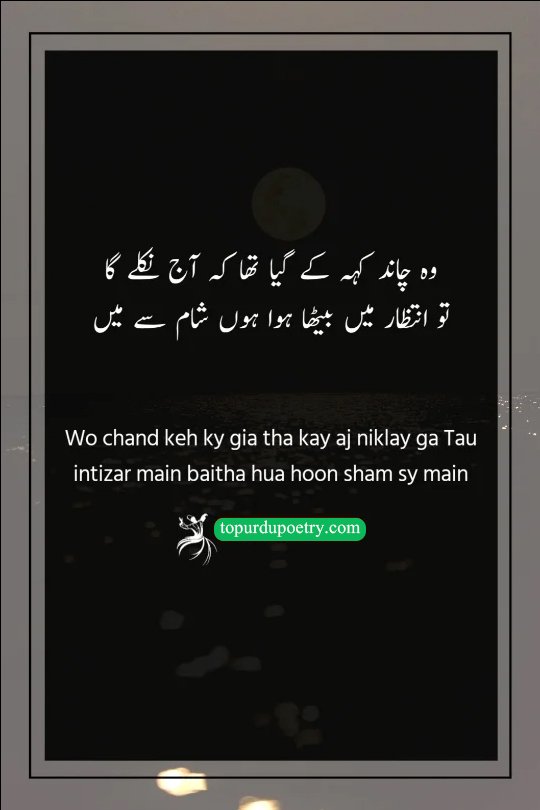
وہ چاند کہہ کے گیا تھا کہ آج نکلے گا تو انتظار میں بیٹھا ہوا ہوں شام سے میں
Wo chand keh ke gaya tha ke aaj nikle ga To intezar mein baitha hua hoon shaam se main
In this sweet and soulful verse, the poet treats a promise from his beloved with the same certainty as a lunar cycle. Having been promised a 'deedar' (glimpse), he begins his patient watch at sunset. It captures the pure, hopeful state of 'Intezar' (waiting), where every passing minute of the evening is a step closer to seeing the 'moon' of his life.
فلک پہ چاند ستارے نکلنے ہیں ہر شب ستم یہی ہے نکلتا نہیں ہمارا چاند
Falak pe chand sitare nikalne hain har shab Sitam yahi hai nikalta nahin hamara chand
In this poignant moon poetry in urdu, the poet draws a sharp contrast between the reliability of nature and the elusiveness of love. He notes that while the celestial moon and stars never fail to appear in the sky, his own 'moon'—the beloved—remains hidden. It captures the 'Sitam' (cruelty) of being surrounded by a beautiful world that feels empty because the one person who matters is absent. A perfect couplet for 'Gila' (complaint) or 'Tanhai' (loneliness) categories.
دیکھا ہلال عید تو آیا تیرا خیال وہ آسماں کا چاند ہے تو میرا چاند ہے
Dekha hilal-e-eid to aaya tera khayal Vo asman ka chand hai tu mera chand hai
This heartwarming chand poetry in Urdu perfectly captures the spirit of Eid for those in love. The poet describes how the sight of the Eid crescent (Hilal) immediately brings the beloved to mind. He draws a sweet contrast between the moon that belongs to the sky and the 'moon' that belongs to his heart. It beautifully suggests that while the world celebrates the festival with the celestial moon, a lover's true Eid is found in the radiance of their beloved. A must-share for the Eid season.
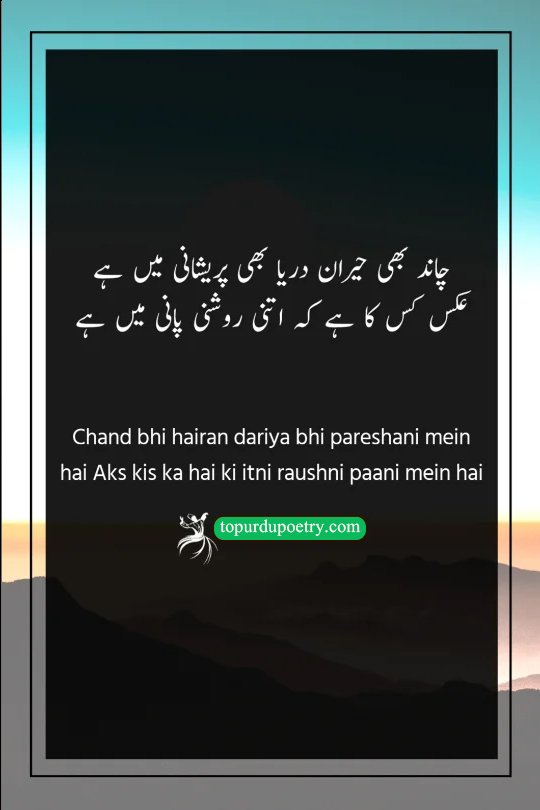
چاند بھی حیران دریا بھی پریشانی میں ہے عکس کس کا ہے کہ اتنی روشنی پانی میں ہے
Chand bhi hairan dariya bhi pareshani mein hai Aks kis ka hai ki itni raushni paani mein hai
In this breathtakingly descriptive chand poetry, the poet portrays a beauty that overwhelms nature itself. He describes a scene where the moon is left stunned and the river flows restlessly, both confused by a mysterious radiance in the water. The light is so intense that it couldn't possibly belong to the moon—it is the 'Aks' (reflection) of a beloved whose presence turns the dark river into a stream of pure light. A stunning choice for those who appreciate the 'Husn' (beauty) and 'Noor' (radiance) themes in Urdu literature.
یہ کس زہرہ جبیں کی انجمن میں آمد آمد ہے بچھایا ہے قمر نے چاندنی کا فرش محفل میں
Ye kis zohra-jabin ki anjuman mein aamad aamad hai Bichhaya hai qamar ne chandni ka farsh mahfil mein
In this majestic and celebratory moon quotes in Urdu, the poet describes the arrival of a breathtaking beauty ('Zohra-jabin'). The scene is so grand that the moon itself takes on the role of a host, spreading a literal carpet of moonlight ('chandni ka farsh') across the floor to welcome the guest. It captures the idea that true beauty is a force of nature, commanding even the celestial bodies to serve and honor it. An exquisite choice for 'Husn' (Beauty) or 'Istiqbal' (Welcome).
چاند خاموش جا رہا تھا کہیں ہم نے بھی اس سے کوئی بات نہ کی
Chand khamosh ja raha tha kahin Ham ne bhi us se koi baat na ki
In this subtly profound poetry on moon in Urdu, the poet captures a rare moment of mutual silence between man and nature. While the moon is often seen as a companion to the lonely, here it is portrayed as a silent traveler passing by. The poet chooses not to break that silence, reflecting a state of mind where words have lost their value, or where pride prevents one from seeking even celestial comfort.
Share Your Heart with 2-Line Chand Shayari Urdu
The true beauty of chand shayari Urdu lies in its ability to express deep, complex emotions in just two simple lines. Whether you want to update your WhatsApp status, create a beautiful Instagram story, or send a quick, meaningful message to someone special, these short couplets of poetry on moon in Urdu are the absolute perfect choice. Because the moon is such a universal symbol of love and longing, anyone who reads these verses will instantly relate to the feeling behind them. Browse through our carefully selected verses (چاند پر شاعری) below and find the one that perfectly matches your current mood.
عید کا چاند تم نے دیکھ لیا چاند کی عید ہو گئی ہوگی
Eid ka chand tum ne dekh liya Chand ki eid ho gai hogi
In this charming and witty chand poetry in urdu, the poet flips the traditional celebration of Eid on its head. He suggests that while the beloved was busy looking at the crescent moon, the moon itself was blessed by the sight of the beloved's face. Therefore, the moon is the one who truly celebrated Eid. It is a masterpiece of romantic flattery, perfect for sharing during the 'Chand Raat' festivities or as a sweet Eid greeting for someone special.
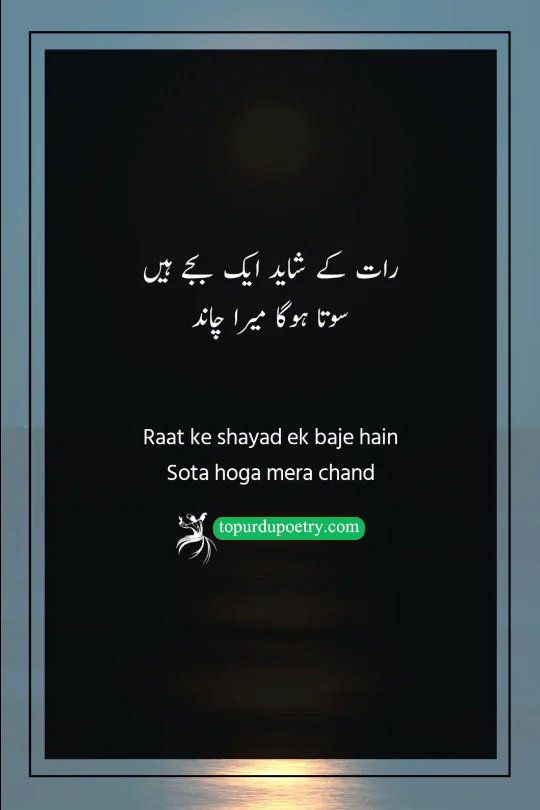
In this deeply relatable and tender verse, Tehzeeb Hafi captures the vulnerability of the late-night hours. While the poet sits awake, lost in thought, he imagines his beloved—his 'moon'—fast asleep. It is a masterpiece of modern 'Mohabbat' (love) and 'Tanhai' (loneliness), portraying a love that is selfless enough to find peace in the beloved's rest, even while the lover remains restless.
ہم سفر ہو تو کوئی اپنا سا چاند کے ساتھ چلو گے کب تک
Ham-safar ho to koi apna-sa Chand ke saath chaloge kab tak
In this thought-provoking poetry about moon in Urdu, the poet challenges the classic romantic notion of the moon as a companion. He suggests that while looking at the moon offers solace to a lonely heart, it cannot replace the need for a real, human 'Ham-safar' (companion). Life's journey requires someone 'apna-sa'—someone relatable and present. It is a soulful reminder that while the moon may follow your shadow, it can never truly understand your silence or walk beside you through the dust of reality.
چاند سے تجھ کو جو دے نسبت سو بے انصاف ہے چاند کے منہ پر ہیں چھائیں تیرا مکھڑا صاف ہے
Chand se tujh ko jo de nisbat so be-insaf hai Chand ke munh par hain chhain tera mukhda saaf hai
In this witty and defiant chand shayari urdu, the poet rejects the traditional comparison between a loved one and the moon. He argues that such a comparison is fundamentally unfair because the moon, despite its fame, carries dark spots and shadows on its surface. By contrast, the beloved’s beauty is seen as pure and 'saaf' (spotless). It is a perfect couplet for those who believe that true beauty transcends even the most famous celestial standards.
اے کاش ہماری قسمت میں ایسی bhi کوئی شام آ جائے Ai kaash hamari qismat mein aisi bhi koi shaam aa jaaye Ik chand falak par nikla ho ik chand sar-e-bam aa jaaye
In this breathtakingly romantic poetry on chand in Urdu, the poet yearns for a night of divine symmetry. He dreams of an evening where the world is lit by two moons—the celestial one shining in the vastness of the sky and the beloved appearing gracefully on the balcony. It is a masterpiece of 'Tamanna' (longing), suggesting that for a lover, the most beautiful night isn't just about the stars, but about the moment when the beauty of the universe matches the beauty of the one they love.
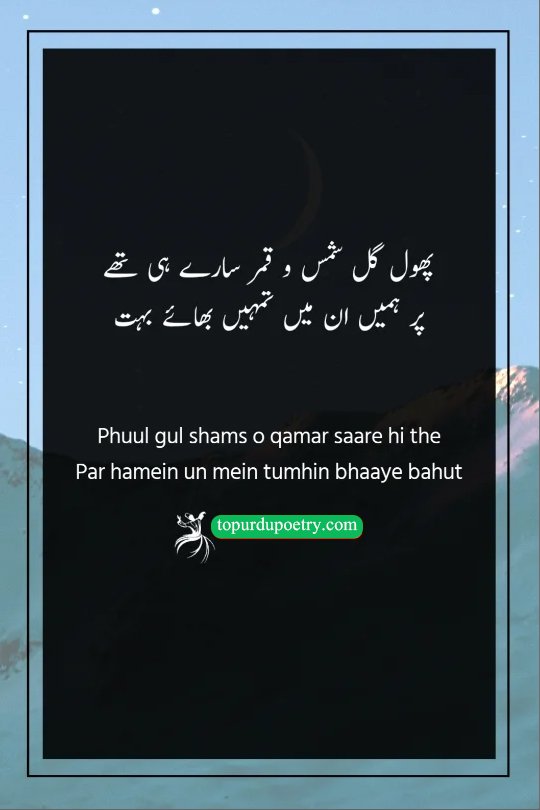
پھول گل شمس و قمر سارے ہی تھے پر ہمیں ان میں تمہیں بھائے بہت
Phuul gul shams o qamar saare hi the Par hamein un mein tumhin bhaaye bahut
In this simple yet profound verse, the poet explores the idea of singular devotion. He admits that the world is full of magnificent things—from the delicate rose to the radiant sun and the glowing moon. However, for a lover, these are merely distractions. The poem highlights that true beauty is subjective; despite the presence of the entire universe's wonders, the heart only finds peace and attraction in the beloved.
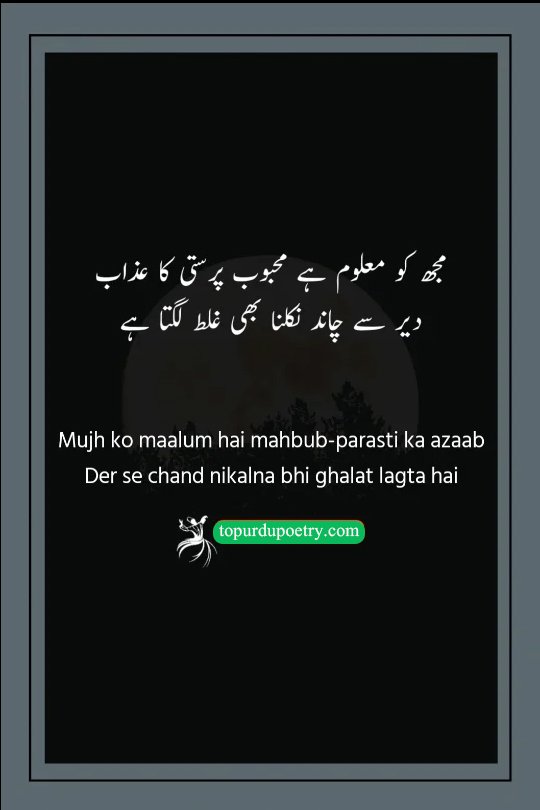
مجھ کو معلوم ہے محبوب پرستی کا عذاب دیر سے چاند نکلنا بھی غلط لگتا ہے
Mujh ko maalum hai mahbub-parasti ka azaab Der se chand nikalna bhi ghalat lagta hai
In this deeply introspective poetry about moon in Urdu, the poet explores the heavy price of extreme devotion. He describes 'Mahbub-parasti' (the idolization of a beloved) as a form of torment that leaves the lover with zero patience for the world around him. His heart is so synchronized with the wait for his loved one that even a natural delay, like the moon rising late in the sky, feels like a personal injustice. A masterpiece of 'Nafsiyaat' (psychology) in Urdu poetry, perfect for those who understand the restless nature of a heart in love.
وہ راتیں چاند کے ساتھ گئیں وہ باتیں چاند کے ساتھ گئیں اب سکھ کے سپنے کیا دیکھیں جب دکھ کا سورج سر پر ہو
Vo raten chand ke saath gaiin vo baten chand ke saath gaiin Ab sukh ke sapne kya dekhen jab dukh ka suraj sar par ho
This deeply moving poetry on chand in Urdu explores the loss of a golden past and the arrival of a harsh, painful present. The poet contrasts the 'Moon'—symbolizing peaceful nights and shared conversations—with the 'Sun of Sorrow,' representing an unavoidable and intense reality. It suggests that when one is in the midst of great suffering, even the memory of happiness feels like a distant dream that can no longer be reached. A poignant choice for collections themed around 'Gham' (Sorrow), 'Yaad' (Memory), or the transition from dreams to reality.
تم جسے چاند کہتے ہو وہ اصل میں آسماں کے بدن پر کوئی گھاؤ ہے
Tum jise chand kahte ho vo asl mein Asman ke badan par koi ghaav hai
In this darkly brilliant and surreal chand in urdu, the poet completely subverts the traditional romantic image of the moon. Instead of a symbol of beauty, he portrays the moon as a luminous wound ('ghaav') on the dark body of the night sky. It captures the profound psychology of a broken heart—when one is in deep sorrow, even the most beautiful wonders of nature appear as scars of cosmic pain. A poignant reminder that to a wounded soul, the brightest light in the dark is just another bleeding scar.
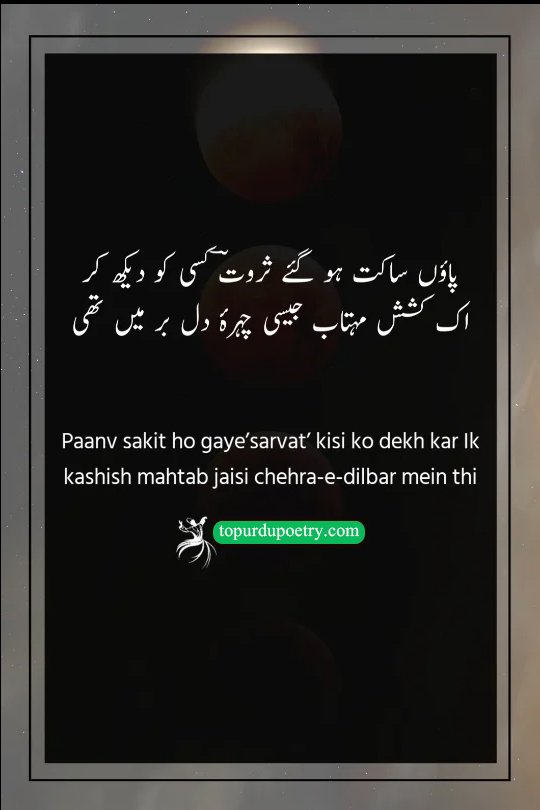
پاؤں ساکت ہو گئے ثروتؔ کسی کو دیکھ کر اک کشش مہتاب جیسی چہرۂ دل بر میں تھی
Paanv sakit ho gaye’sarvat’ kisi ko dekh kar Ik kashish mahtab jaisi chehra-e-dilbar mein thi
In this mesmerizing chand shayari Urdu by Sarvat Hussain, the poet describes a moment of absolute awe where time and motion simply stop. He portrays the beloved's beauty not just as a source of light, but as a literal force of nature. By comparing the beloved's face to the 'Mahtab' (moon) and giving it 'Kashish' (gravitational pull), he perfectly captures the physical sensation of being rooted to the spot by an overwhelming presence. It is a stunning depiction of a beauty so powerful that it commands the very gravity around it, leaving the observer beautifully paralyzed.
چاند کا حسن بھی زمین سے ہے چاند پر چاندنی نہیں ہوتی
Chand ka husn bhi zamin se hai Chand par chandni nahin hoti
In this profound and scientifically accurate moon poetry in Urdu, the poet shatters the illusion of inherent beauty. He points out that the moon's famous glow is only a reality when viewed from the earth; on the moon's own surface, there is no moonlight, only barren rock and dust. Metaphorically, it suggests that a beloved's radiant charm does not exist in isolation, but is actively created by the devoted, admiring gaze of the lover. It is a brilliant realization that the magic we see in others is often a reflection of the intense love we project onto them from our own grounded reality.
Final Thoughts on Romantic Moon Poetry (چاند پر شاعری)
The moon has inspired lovers and writers for generations, and we hope this collection of chand poetry in Urdu has given you the right words to express your own feelings. Whether you are praising a loved one’s radiant face or finding comfort in the quiet night, these moon quotes in Urdu carry a timeless magic.
Which of these 2-line moon shayari (چاند پر شاعری) is your favorite? Let us know in the comments below, and don’t forget to save these images for your social media status! For more romantic verses, be sure to explore our Beautiful Face Poetry in Urdu.