For Urdu speakers around the world, friendship isn’t just a bond—it’s a soulful connection often better expressed through verse than prose. At topurdupoetry.com, we believe that every friendship deserves its own unique verse. If you are searching for the best friend poetry in Urdu text to honor your closest companions, you have landed in the right place.
We have meticulously compiled a list of the funniest, shortest, and most photogenic poetry pieces that capture the true spirit of Dosti. This collection is designed for those who appreciate high-quality poetry in Urdu for friends that balances emotional depth with lighthearted fun.
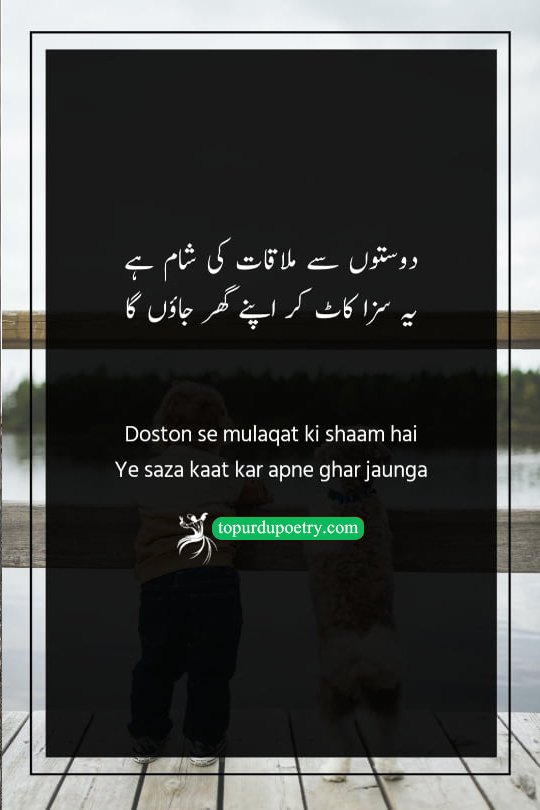
دوستوں سے ملاقات کی شام ہے یہ سزا کاٹ کر اپنے گھر جاؤں گا
Doston se mulaqat ki shaam hai Ye saza kaat kar apne ghar jaunga
This unique and slightly cynical couplet offers a raw look at social exhaustion and the burden of forced interactions. While most Urdu poetry celebrates the joy of meeting friends, the poet here subverts that expectation by labeling a social evening as a punishment. It implies that the act of socializing has become a weary duty rather than a source of comfort. The poet views the time spent with others as a sentence he must serve before he can finally return to the sanctuary and peace of his own home. This verse resonates deeply with anyone experiencing social burnout or the feeling of being an outsider in their own social circle.
عیش کے یار تو اغیار بھی بن جاتے ہیں دوست وہ ہیں جو برے وقت میں کام آتے ہیں
Aish ke yaar to aghyar bhi ban jaate hain Dost vo hain jo bure vaqt mein kaam aate hain
This classic couplet defines true loyalty and serves as a perfect choice for those searching for poetry lines for bestfriend. The poet draws a sharp distinction between fair-weather companions and genuine soulmates. In the first line, he notes that during times of luxury and success, even strangers or rivals might pretend to be close to you. However, the second line reveals the ultimate test of companionship: adversity. True friends are not those who merely celebrate your success, but those who stand like a rock beside you during your darkest hours. It is a beautiful tribute to the rare people who never leave our side.
دوستوں کو بھی ملے درد کی دولت یا رب میرا اپنا ہی بھلا ہو مجھے منظور نہیں
Doston ko bhi mile dard ki daulat ya rab Mera apna hi bhala ho mujhe manzur nahin
This altruistic couplet presents a beautiful, albeit paradoxical, wish for one’s companions. The poet prays to God that his friends should also be blessed with the wealth of pain. In the context of classical Urdu poetry, pain is often viewed not as a curse, but as a transformative treasure that brings depth, empathy, and spiritual awakening to the human heart. By stating that he cannot accept being the only one to benefit from such growth, the poet showcases the ultimate height of friendship—wanting his loved ones to share in the same profound emotional journey that has shaped his own soul. It is a powerful rejection of spiritual selfishness.
یوں لگے دوست ترا مجھ سے خفا ہو جانا جس طرح پھول سے خوشبو کا جدا ہو جانا
Yuun lage dost tera mujh se khafa ho jaana Jis tarah phuul se khushbu ka juda ho jaana
This soul-stirring couplet uses a delicate and powerful simile to describe the pain of a falling out between friends. The poet compares a friend’s displeasure to the impossible and tragic separation of fragrance from a flower. Just as a flower loses its essence, purpose, and beauty without its scent, the poet feels empty and lifeless when their friend is upset. It highlights that true friendship is not just an external relationship, but an internal part of one's being. This verse perfectly captures the vulnerability of the heart when a close bond is threatened, making it a beautiful expression of pure, deep-rooted companionship.
مجھے دوست کہنے والے ذرا دوستی نبھا دے یہ مطالبہ ہے حق کا کوئی التجا نہیں ہے
Mujhe dost kahne vaale zara dosti nibha de Ye mutalba hai haq ka koi iltija nahin hai
This assertive and powerful couplet redefines the dynamic of friendship by shifting it from a mere favor to a fundamental right. In the first line, the poet addresses those who use the label of friend loosely, challenging them to actually demonstrate that loyalty through their actions. The second line is particularly striking; the poet clarifies that he is not begging or pleading for affection. Instead, he is demanding the fulfillment of a duty. It suggests that once someone claims to be a friend, they owe a debt of sincerity. This verse perfectly captures the dignity of a person who values true bonds over hollow words.
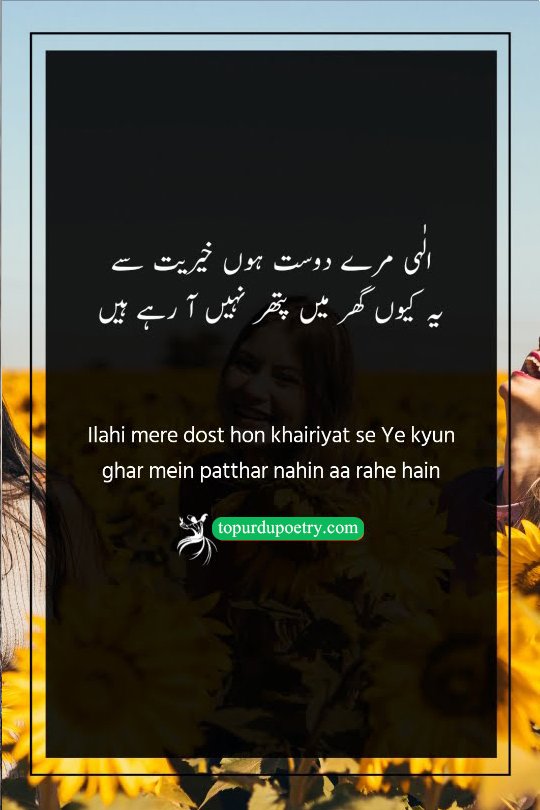
الٰہی مرے دوست ہوں خیریت سے یہ کیوں گھر میں پتھر نہیں آ رہے ہیں
Ilahi mere dost hon khairiyat se Ye kyun ghar mein patthar nahin aa rahe hain
This witty and slightly sarcastic couplet offers a humorous twist for those looking for unique best-friend-poetry-in-urdu. In classical Shayari, a lover is often pelted with stones by society. Here, the poet ironically links the well-being of his friends to the absence of stones hitting his house. He mockingly prays for their health, implying that if they were fine, they would surely be busy teasing or attacking him as usual. It highlights the playful, often mischievous nature of close bonds where friends are your biggest critics. This ironic verse is perfect for readers who share a khatta-meetha relationship built on teasing and deep familiarity.
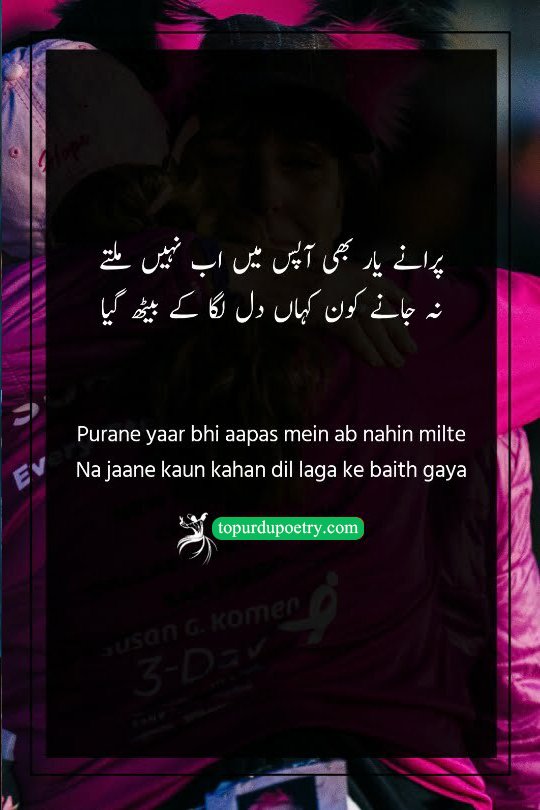
پرانے یار بھی آپس میں اب نہیں ملتے نہ جانے کون کہاں دل لگا کے بیٹھ گیا
Purane yaar bhi aapas mein ab nahin milte Na jaane kaun kahan dil laga ke baith gaya
This nostalgic couplet captures the quiet tragedy of growing up and the inevitable drifting apart of childhood companions. The first line observes a sad reality: people who were once inseparable now rarely see or speak to each other. The second line offers a bittersweet explanation—the phrase 'dil laga ke baith jana' suggests that everyone has found new interests, partners, or life responsibilities that have taken priority over old bonds. It reflects the natural, yet painful, cycle of life where time and distance reshape our social circles. This verse resonates deeply with anyone who misses the simplicity of old friendships while realizing that everyone has moved on to their own separate worlds.
غضب کیا ترے وعدے پہ اعتبار کیا تمام رات قیامت کا انتظار کیا
Ghazab kiya tere vaade pe e’tibar kiya Tamam raat qayamat ka intizar kiya
This classic couplet brilliantly exaggerates the agony of waiting for a beloved who never arrives. In the first line, the poet expresses deep regret, calling his own decision to trust the beloved's promise a catastrophic mistake. The brilliance of the verse lies in the second line, where the poet equates the experience of waiting all night to enduring the horrors of Judgment Day. This powerful metaphor implies that the beloved's broken promise caused apocalyptic emotional turmoil. It beautifully captures the restless, sleepless nights of a lover whose faith has been met with painful absence, highlighting the destructive nature of false hope.
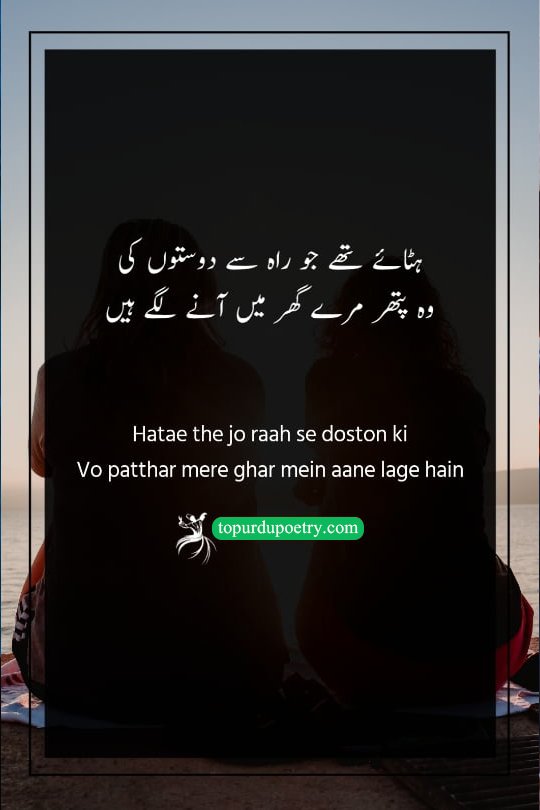
ہٹائے تھے جو راہ سے دوستوں کی وہ پتھر مرے گھر میں آنے لگے ہیں
Hatae the jo raah se doston ki Vo patthar mere ghar mein aane lage hain
This poignant couplet is a stinging commentary on the irony of ingratitude and betrayal within friendships. In the first line, the poet describes his selfless efforts—he spent his life removing obstacles and 'stones' from the paths of his friends to ensure their journey was smooth. However, the second line delivers a heartbreaking twist. Instead of gratitude, those very same stones are now being hurled at his own home. It suggests that the people he protected are now the ones attacking him. This verse perfectly captures the bitter realization that sometimes, the hands you help are the same ones that eventually cause you pain.
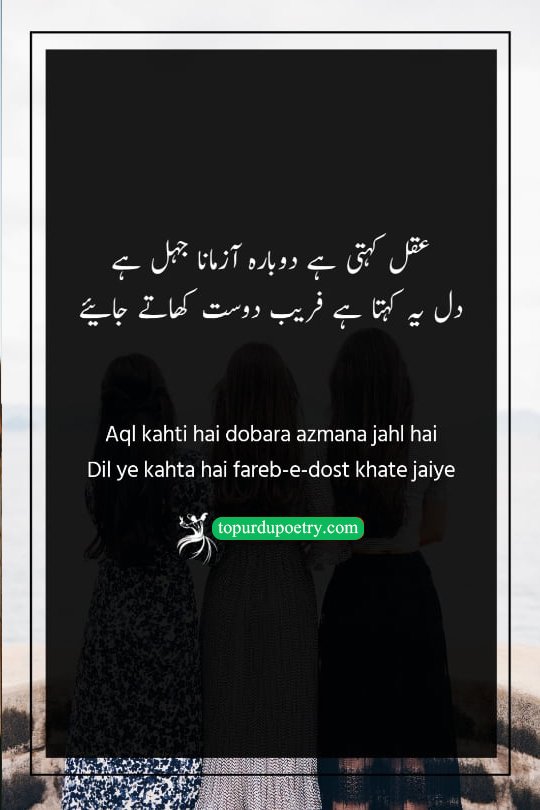
عقل کہتی ہے دوبارہ آزمانا جہل ہے دل یہ کہتا ہے فریب دوست کھاتے جائیے
Aql kahti hai dobara azmana jahl hai Dil ye kahta hai fareb-e-dost khate jaiye
This profound couplet captures the eternal conflict between human intellect and the emotional heart. In the first line, the poet acknowledges the voice of reason: the mind warns that trusting someone who has already betrayed you is a sign of ignorance. Logic demands self-protection and learning from past mistakes. However, the second line presents the irrational, yet beautiful, stubbornness of loyalty. The heart chooses to ignore reality, preferring the sweet deception of a friend over the cold loneliness of truth. It perfectly illustrates the helplessness of a soul that would rather be repeatedly deceived than lose a cherished bond.
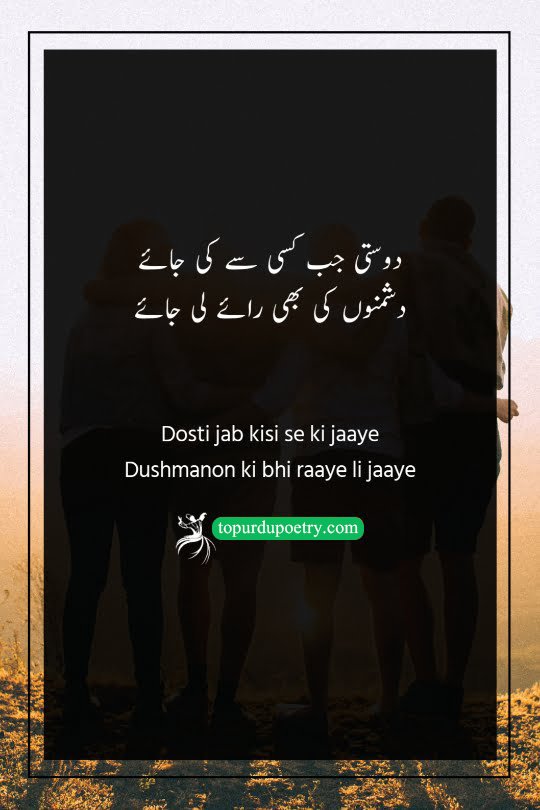
دوستی جب کسی سے کی جائے دشمنوں کی بھی رائے لی جائے
Dosti jab kisi se ki jaaye Dushmanon ki bhi raaye li jaaye
This clever and pragmatic couplet offers a strategic perspective on building relationships. While we usually seek the opinions of friends when forming new bonds, the poet suggests a more radical approach: consulting one’s enemies. The logic is that friends are often blinded by affection or social politeness, whereas an enemy is brutally observant of a person's true flaws and hidden character traits. It implies that to truly know someone, you must see how they are perceived by those who don’t like them. It’s a witty reminder that a 'full character assessment' requires looking at the person from every possible angle, including the most critical ones.
پتھر تو ہزاروں نے مارے تھے مجھے لیکن جو دل پہ لگا آ کر اک دوست نے مارا ہے
Patthar to hazaron ne maare the mujhe lekin Jo dil pe laga aa kar ik dost ne maara hai
This haunting couplet is a powerful example of 2-line-poetry-for-best-friend that explores the painful side of close bonds. The poet reflects on the resilience required to withstand attacks from the world, noting that he could endure thousands of stones thrown by strangers or enemies without much impact. However, the second line delivers a crushing blow: the only stone that truly caused deep, internal damage was the one thrown by a close friend. It beautifully captures the idea that we are most vulnerable to those we trust. While the world's hatred is expected, a friend's betrayal is the only thing that can truly break the heart.
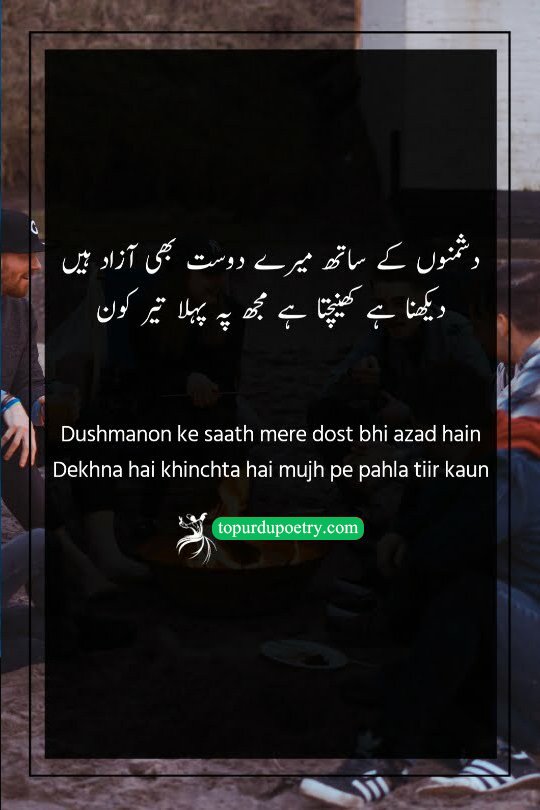
دشمنوں کے ساتھ میرے دوست بھی آزاد ہیں دیکھنا ہے کھینچتا ہے مجھ پہ پہلا تیر کون
Dushmanon ke saath mere dost bhi azad hain Dekhna hai khinchta hai mujh pe pehla tiir kaun
This dramatic and challenging couplet creates a high-stakes scenario where the poet stands completely vulnerable, intentionally granting both his friends and enemies the freedom to strike. By placing them on equal footing, he removes the 'protection' of loyalty to reveal the truth of their hearts. The real tension lies in the second line: the poet is waiting to see who will be the first to betray him. It’s a powerful exploration of the anxiety and cynicism that can haunt even the closest bonds. This verse resonates with anyone who has ever felt that their biggest threat might come from within their own circle.
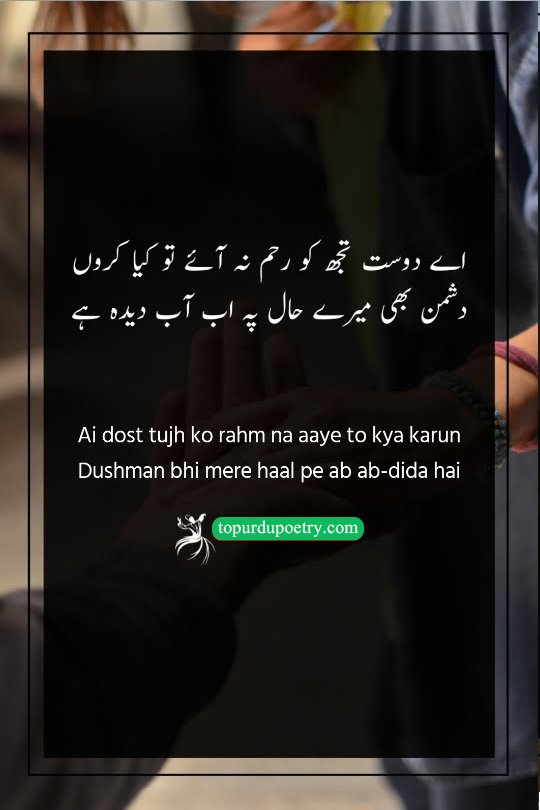
اے دوست تجھ کو رحم نہ آئے تو کیا کروں دشمن بھی میرے حال پہ اب آب دیدہ ہے
Ai dost tujh ko rahm na aaye to kya karun Dushman bhi mere haal pe ab ab-dida hai
This heart-wrenching couplet explores the ultimate irony of emotional neglect and the weight of indifference. The poet addresses a close friend who remains completely unmoved by his visible suffering. To highlight the severity of his pain, he contrasts this coldness with the reaction of his enemies. In a striking reversal of roles, even those who wish him ill are moved to tears by his miserable state. It suggests that the poet’s agony has reached a level so profound that it transcends personal animosity, yet it fails to touch the one heart it truly seeks. This verse perfectly captures the devastating feeling of being ignored by the person whose sympathy matters most.
یہ کہاں کی دوستی ہے کہ بنے ہیں دوست ناصح کوئی چارہ ساز ہوتا کوئی غم گسار ہوتا
Ye kahan ki dosti hai ki bane hain dost naseh Koi charasaz hota koi gham-gusar hota
This iconic Ghalib verse offers a sharp, realistic critique of friendship, making it a profound choice for those seeking beautiful-poetry-for-best-friends-in-urdu. The poet expresses frustration that in his moments of deep suffering, his friends have turned into Nasehs or preachers, offering cold advice instead of warm empathy. He argues that a true friend should be a Chara-saz (healer) who tries to fix the problem, or at least a Gham-gusar (sympathizer) who shares the burden of grief. This couplet resonates because it highlights a universal truth: when we are hurting, we don't need a lecture; we simply need someone to stand by us.
Teri baten hi sunane aaye Dost bhi dil hi dukhane aaye
This poignant couplet captures the subtle yet deep-seated agony caused by the unintended (or sometimes intentional) insensitivity of friends. The poet laments that in his time of grief or during his attempt to move on, his companions only bring up the one person he is trying to escape: the beloved. Instead of providing the healing of silence or a different perspective, they constantly narrate stories of the past. This constant reminder turns friends into accidental tormentors. It highlights how even our closest circle can become a source of heartbreak by keeping our wounds fresh, making it impossible for the soul to find peace or closure.
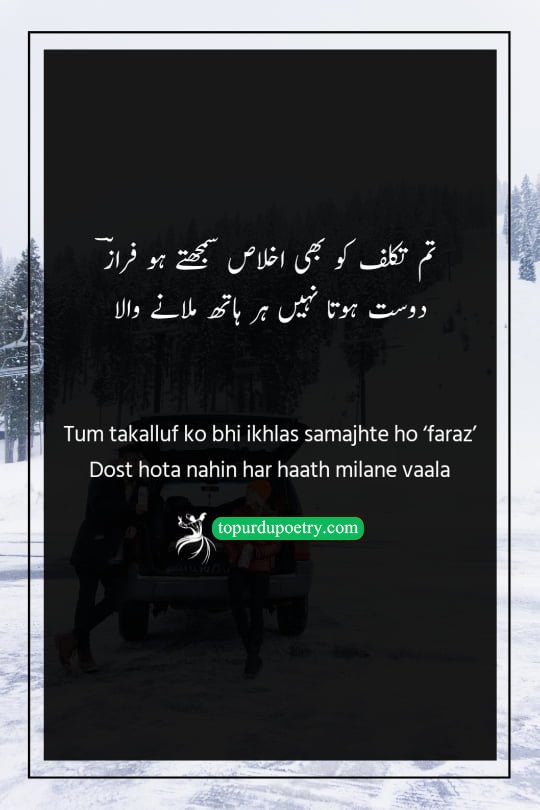
تم تکلف کو بھی اخلاص سمجھتے ہو فرازؔ دوست ہوتا نہیں ہر ہاتھ ملانے والا
Tum takalluf ko bhi ikhlas samajhte ho ‘faraz’ Dost hota nahin har haath milane vaala
This famous couplet by Ahmad Faraz is a sharp warning against social naivety and the superficiality of modern relationships. The poet critiques his own tendency to mistake formal politeness for genuine sincerity. He reminds himself—and the reader—that a mere handshake is often just a social ritual rather than a sign of true companionship. In a world where everyone presents a friendly face, it is crucial to distinguish between those who are simply being polite and those who truly care. This verse resonates with anyone who has ever been disappointed by realizing that social acquaintances are not necessarily loyal friends.
دشمنوں نے جو دشمنی کی ہے دوستوں نے بھی کیا کمی کی ہے
Dushmanon ne jo dushmani ki hai Doston ne bhi kya kami ki hai
This bitter and powerful couplet highlights the tragic irony of betrayal from those closest to us. The poet observes that while his enemies naturally fulfilled their role by showing hostility, his friends were equally diligent in causing him pain. The phrase 'kya kami ki hai' is used sarcastically to suggest that the damage done by friends was just as severe, and perhaps even more heart-wrenching, because it was completely unexpected. It captures the deep cynicism that arises when loyalty is replaced by deception. This verse resonates with anyone who has found that the hardest blows in life often come from the very hands they once held in trust.
Why Best Friend Poetry in Urdu Text is the Perfect Vibe for Your Squad
True friends are the life companions who turn ordinary days into incredible adventures. They are the ones who understand your weirdest quirks and stand by you through every bit of mischief. To celebrate these unique bonds, we’ve included a specific selection of best friend poetry in Urdu text that is easy to copy, paste, and share across your social circles.
Sometimes, the simplest two-line statement captures the essence of a “crazy” friendship better than a lengthy ghazal. These short snippets are brief yet powerful, serving as a reminder of the joy of living freely with people who truly “get” you. From witty roasts to heartwarming tributes, this dost poetry in Urdu will help you appreciate the excitement and honesty your friends bring to your life every single day.
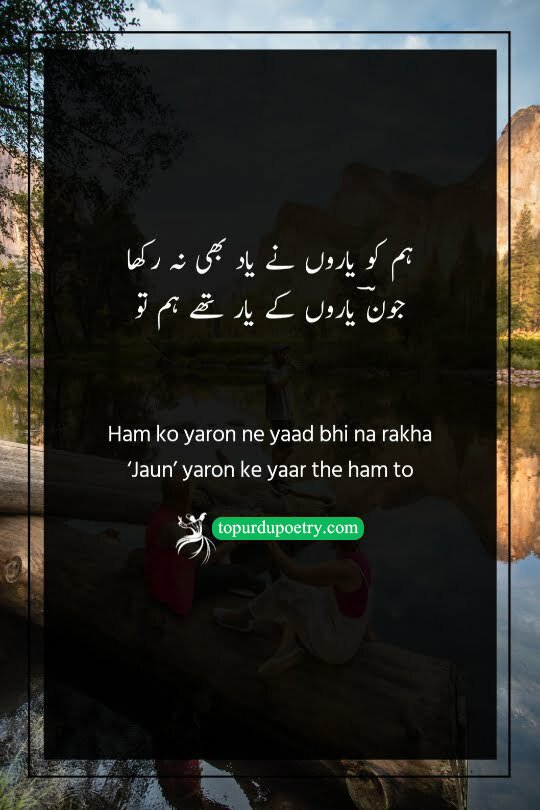
ہم کو یاروں نے یاد بھی نہ رکھا جونؔ یاروں کے یار تھے ہم تو
Ham ko yaron ne yaad bhi na rakha ‘Jaun’ yaron ke yaar the ham to
This masterpiece by the legendary Jaun Elia captures the profound sorrow of unrequited loyalty and the stinging pain of being forgotten. The poet laments that despite his intense devotion and selfless commitment to his friends, he has been completely erased from their memories. By calling himself Yaron ke yaar (a friend to all friends), Jaun highlights his identity as someone who lived for others, making the subsequent neglect even more tragic. This verse resonates with anyone who has prioritized people only to realize they were merely a footnote in those people's lives. It is a raw, emotional look at the loneliness of a loyal soul.
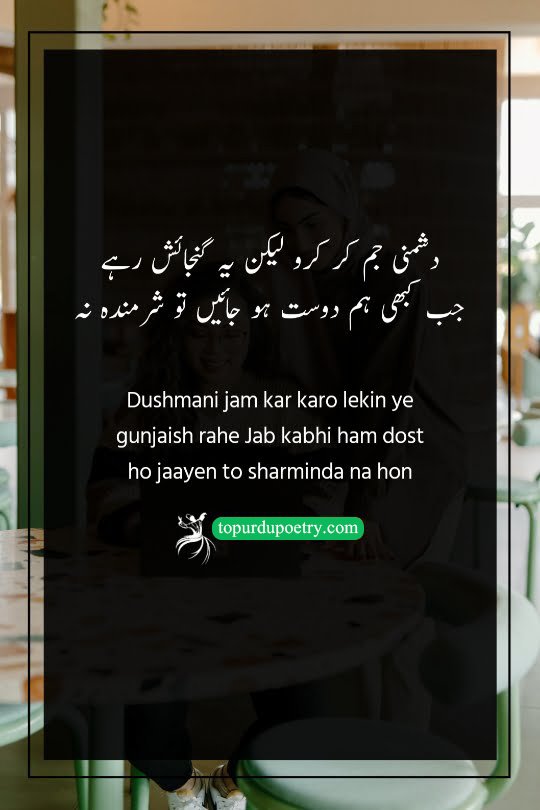
دشمنی جم کر کرو لیکن یہ گنجائش رہے جب کبھی ہم دوست ہو جائیں تو شرمندہ نہ ہوں
Dushmani jam kar karo lekin ye gunjaish rahe Jab kabhi ham dost ho jaayen to sharminda na hon
This wise couplet by Bashir Badr is a masterclass in maturity and ethical conflict. The poet advises that even during intense enmity, one must maintain a level of dignity and restraint. The first line encourages being a firm rival but warns against burning all bridges. The second line provides the reasoning: life is unpredictable, and if circumstances bring former enemies together as friends, there should be no reason for mutual shame or regret. It serves as a powerful reminder that while anger is temporary, one's character and words are permanent. This verse resonates with those who value grace and foresight, even in the heat of a disagreement.
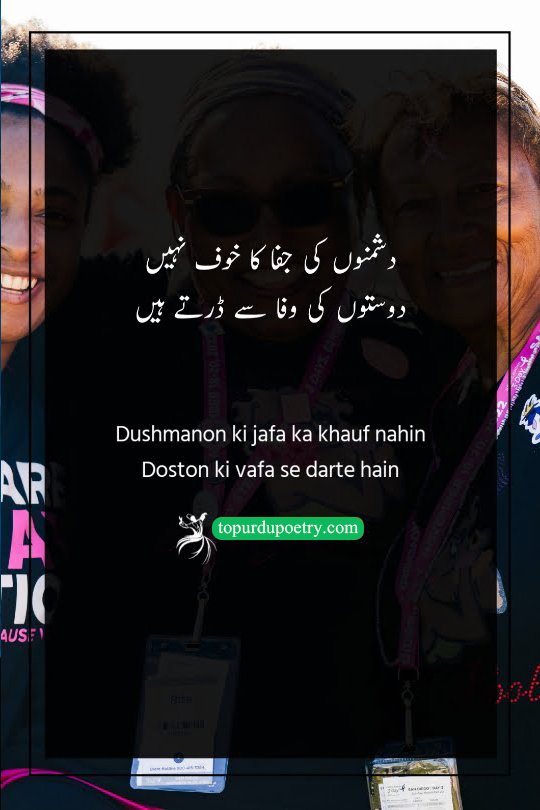
دشمنوں کی جفا کا خوف نہیں دوستوں کی وفا سے ڈرتے ہیں
Dushmanon ki jafa ka khauf nahin Doston ki vafa se darte hain
This paradoxical couplet is a profound addition to poetry-about-best-friend-in-urdu, highlighting the complex and often scary nature of trust. The poet claims to be fearless regarding the cruelty of enemies, as their hostility is expected and transparent. However, the second line introduces a chilling thought: he is terrified of the 'loyalty' of friends. This suggests that while an enemy strikes from the front, a friend’s betrayal is often hidden behind a mask of faithfulness, making it far more devastating. It reflects a heart that has been scarred by broken trust, reminding us that those closest to us hold the greatest power to hurt us.
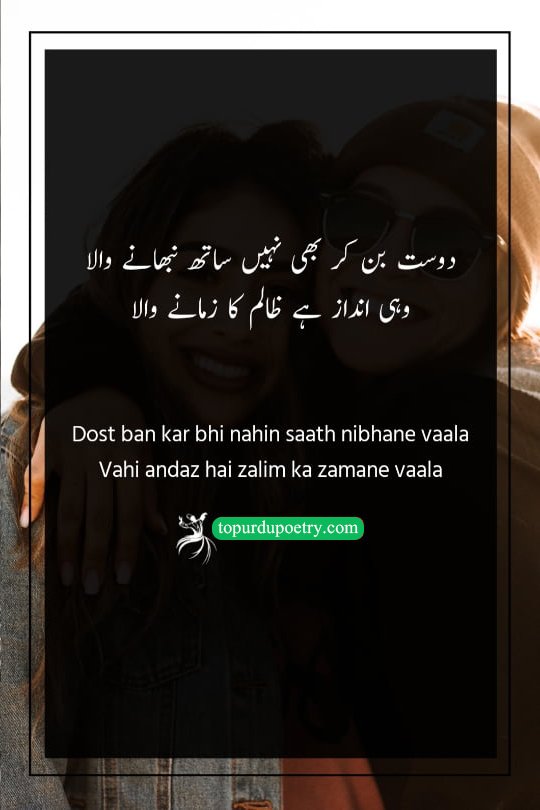
دوست بن کر بھی نہیں ساتھ نبھانے والا وہی انداز ہے ظالم کا زمانے والا
Dost ban kar bhi nahin saath nibhane vaala Vahi andaz hai zalim ka zamane vaala
This couplet serves as a sharp reality check for anyone who has been let down by someone they trusted. The poet laments that simply adopting the title of a friend is not enough to change a person's fundamental nature. Even after entering a closer bond, the individual continues to exhibit the same cold, indifferent, and zalim (cruel) behavior that one expects from a harsh and uncaring world. It suggests that a person’s true character—their andaz—is permanent. This verse is a powerful reminder that we should judge people by their consistent actions and loyalty rather than the convenient labels they choose to wear.
دوستی عام ہے لیکن اے دوست دوست ملتا ہے بڑی مشکل سے
Dosti aam hai lekin ai dost Dost milta hai badi mushkil se
This simple yet profound couplet touches on the rarity of genuine connection in a crowded world. The poet observes that while the concept of friendship is common and everyone claims to be a friend, finding a true friend is an entirely different matter. It draws a sharp line between social acquaintances and soul-deep companions. The second line emphasizes that a person who is truly loyal, sincere, and selfless is a rare treasure that is found only after much searching or through great luck. It serves as a reminder to cherish the few real bonds we have, rather than being fooled by the quantity of superficial relationships around us.
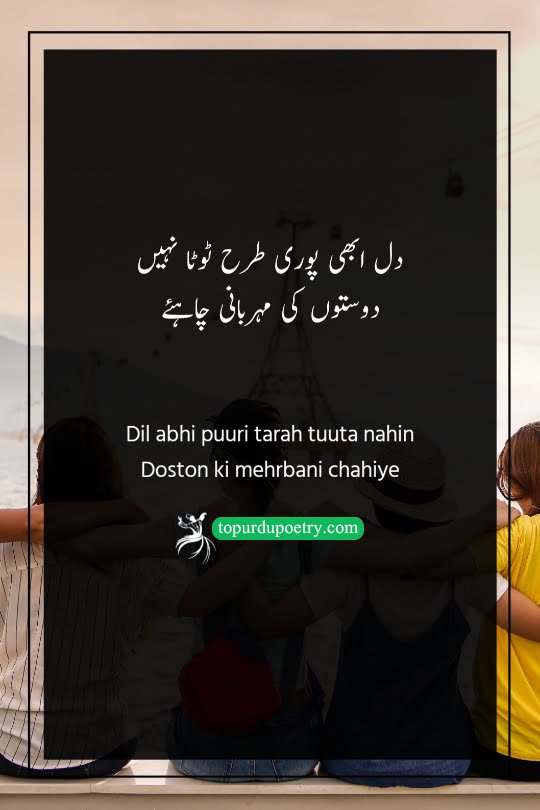
دل ابھی پوری طرح ٹوٹا نہیں دوستوں کی مہربانی چاہئے
Dil abhi puuri tarah tuuta nahin Doston ki mehrbani chahiye
This bitingly sarcastic couplet explores the dark irony of betrayal within close circles. The poet observes that despite his struggles, his heart hasn't been completely shattered just yet. In a masterclass of Urdu satire, he 'requests' the 'kindness' of his friends to complete the destruction. Here, kindness is a sharp metaphor for the emotional wounds that only those closest to us can inflict. It suggests that while the world can bruise you, only a friend has the intimate map of your soul required to truly break it. This verse perfectly captures the cynical realization that our greatest vulnerabilities often lie within our deepest trusts.
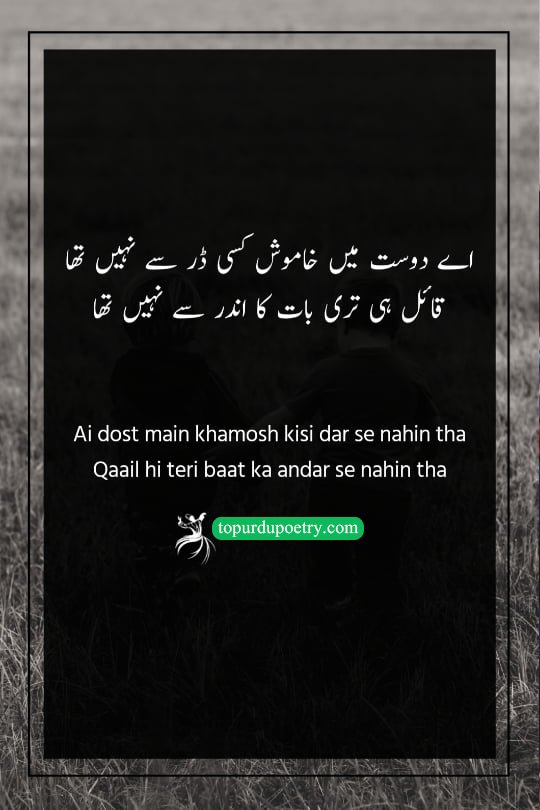
اے دوست میں خاموش کسی ڈر سے نہیں تھا قائل ہی تری بات کا اندر سے نہیں تھا
Ai dost main khamosh kisi dar se nahin tha Qaail hi teri baat ka andar se nahin tha
This striking couplet is a deep reflection for anyone looking for poetry-on-best-friend-in-urdu that deals with honesty and internal boundaries. It addresses the common misunderstanding that silence in a friendship equals agreement or fear. The poet clarifies to his friend that his quietness during a disagreement wasn't because he was intimidated, but rather because he simply wasn't convinced by the friend's perspective in his heart. It emphasizes the importance of maintaining one's own truth even in the closest relationships, proving that real friendship should be based on genuine understanding rather than silent, forced submission.
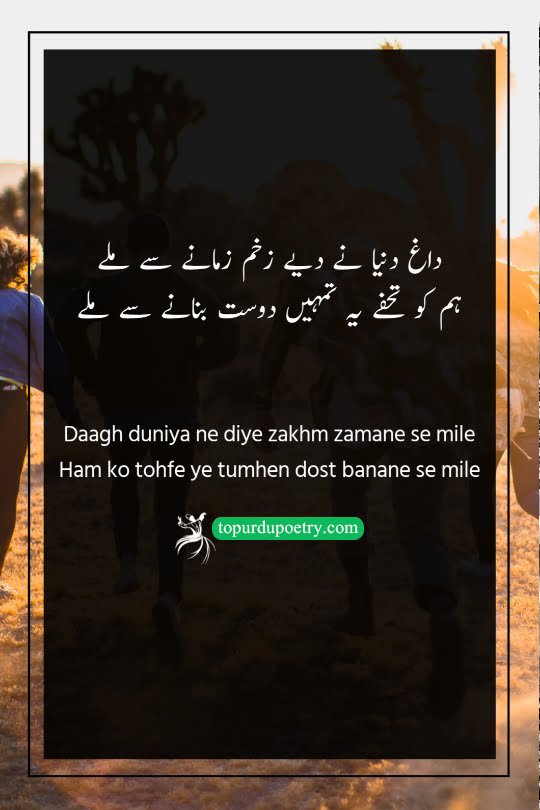
داغ دنیا نے دیے زخم زمانے سے ملے ہم کو تحفے یہ تمہیں دوست بنانے سے ملے
Daagh duniya ne diye zakhm zamane se mile Ham ko tohfe ye tumhen dost banane se mile
This bitingly sarcastic couplet explores the bitter irony of finding suffering through the one person who was supposed to be a refuge. The poet lists the 'stains' of society and the 'wounds' of time as general external hardships. However, the real sting lies in the second line: these pains are described sarcastically as 'gifts' earned specifically by choosing to befriend the person in question. It suggests that by opening his heart to a friend, the poet inadvertently opened the door to his own destruction. It captures the deep cynicism that follows a betrayal, where the very act of trust is seen as the root cause of one's misery.
دشمنوں سے پیار ہوتا جائے گا دوستوں کو آزماتے جائیے
Dushmanon se pyaar hota jaega Doston ko azmate jaiye
This bitingly cynical couplet offers a harsh reality check on the nature of trust and loyalty. In the first line, the poet makes a startling claim: that one will eventually find more peace or 'love' for their enemies. The second line explains why—because the more you put your friends to the test, the more likely they are to disappoint you. It suggests that while an enemy’s hatred is transparent and honest, a friend's betrayal is a far more painful burden to carry. By testing those closest to us, we often uncover truths so bitter that even a declared foe seems more honorable in comparison.
وہ کوئی دوست تھا اچھے دنوں کا جو پچھلی رات سے یاد آ رہا ہے
Vo koi dost tha achchhe dinon ka Jo pichhli raat se yaad aa raha hai
This nostalgic couplet by the legendary Nasir Kazmi evokes a deep sense of longing for the past. The poet recalls a friend who belonged to his 'good days'—a time of happiness, youth, or prosperity that has since slipped away. By mentioning that this memory has been haunting him since 'last night,' he suggests a period of quiet reflection or perhaps loneliness where the silence of the present is filled by the shadows of the past. It beautifully captures how certain people become living symbols of specific eras in our lives.
What Makes topurdupoetry.com the Ultimate Hub for Dosti Shayari
We know you love sharing your favorite moments, which is why every image on this page is custom-sized at 540 x 810 pixels. This specific dimension ensures that our best friends poetry in urdu text looks stunning on WhatsApp statuses and Instagram stories without losing quality. Unlike other sites, we focus on high-definition visuals and clean text, making it easier than ever to find the perfect dost poetry in Urdu.
Share the Love: Join the topurdupoetry.com Community
We hope you enjoyed exploring this collection of the best friend poetry in Urdu. Whether these verses brought a smile to your face or reminded you of a long-lost memory, we would love to hear from you! Please let us know which piece was your favorite in the comment box below or join the conversation on our official Facebook page.
If you found these bestie poetry in Urdu relatable, don’t keep the vibe to yourself! Make sure to share these images and the best friend poetry in Urdu text with your loved ones on WhatsApp, Instagram, Twitter, or Facebook. Your shares help us grow and continue bringing you the highest quality Urdu Shayari on the web.
Thank you for being a part of the topurdupoetry.com family!