50+ Powerful Dushman Poetry in Urdu: Enemy Quotes (دشمن پر شاعری)
Explore our powerful collection of 2-line dushman poetry in Urdu and attitude enemy quotes to handle your critics with grace, recognize your true adversaries, and respond to negativity with unshakeable strength.
Life is full of unexpected turns, and sometimes, the people we cross paths with do not have the best intentions. Disagreements and conflicts are a natural part of the journey. Whether it is a former friend who turned against you, a hidden critic, or someone openly trying to bring you down, dealing with negativity requires immense strength and a clear head.
This powerful collection of dushman poetry in Urdu is designed to give a voice to those exact feelings. Instead of losing your calm or engaging in pointless arguments, poetry offers a sophisticated way to respond. From sharp, attitude-filled dushman quotes in Urdu to reflective دشمن پر شاعری (poetry on enemies) about rising above the hate, these verses will remind you of your own resilience.
Sometimes, the best revenge is simply moving forward with grace, or even finding the courage to forgive and free your own heart. Explore these dushman poetry 2 line verses below, find the perfect response, and download the high-quality images to share directly on your WhatsApp and Facebook statuses. Let your success and your silence do the talking.
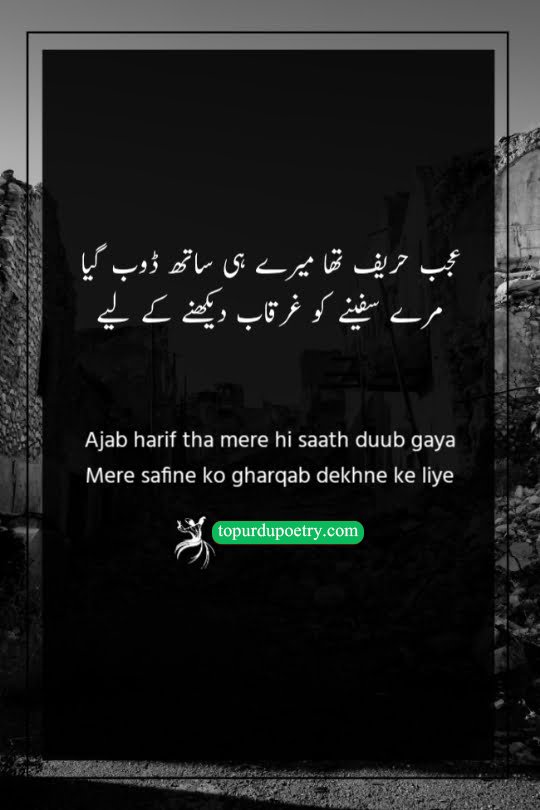
عجب حریف تھا میرے ہی ساتھ ڈوب گیا مرے سفینے کو غرقاب دیکھنے کے لیے
Ajab harif tha mere hi saath duub gaya Mere safine ko gharqab dekhne ke liye
This couplet is a chilling look at the dark side of human nature and toxic rivalry. The poet describes a rival (harif) whose obsession was so intense that they were willing to drown just to witness the poet's ship (safina) go under. It highlights a 'mutually assured destruction' scenario, where hatred becomes more important than survival. This verse is a powerful metaphor for the ultimate act of spite, capturing the essence of an enemy who prioritizes your failure over their own life or success.
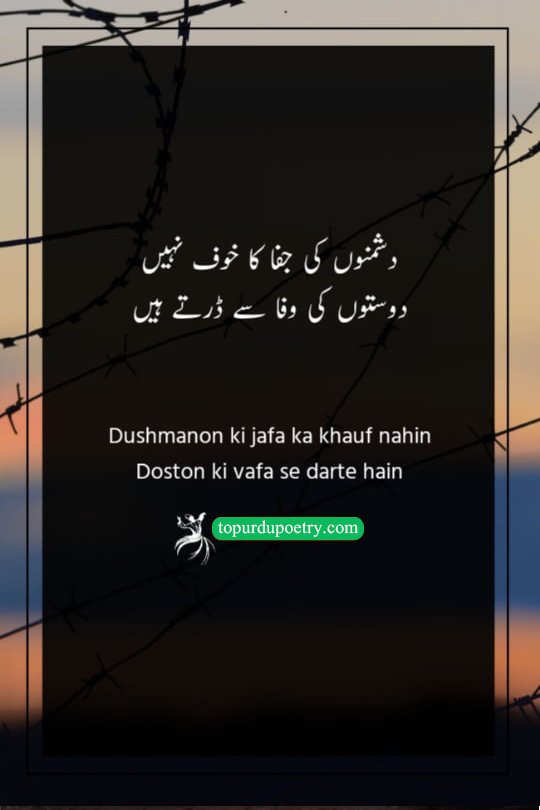
دشمنوں کی جفا کا خوف نہیں دوستوں کی وفا سے ڈرتے ہیں
Dushmanon ki jafa ka khauf nahin Doston ki vafa se darte hain
This couplet explores the ironic vulnerability we feel in our closest relationships, making it a classic for dost dushman poetry. The poet explains that he doesn't fear the cruelty of his enemies because their hostility is expected and open. Instead, he fears the 'vafa' (loyalty) of his friends. This paradox highlights that we are armored against our foes but completely defenseless against our friends. It suggests that betrayal from a loved one is far more damaging than an attack from an enemy, as it strikes at a heart that was left wide open.
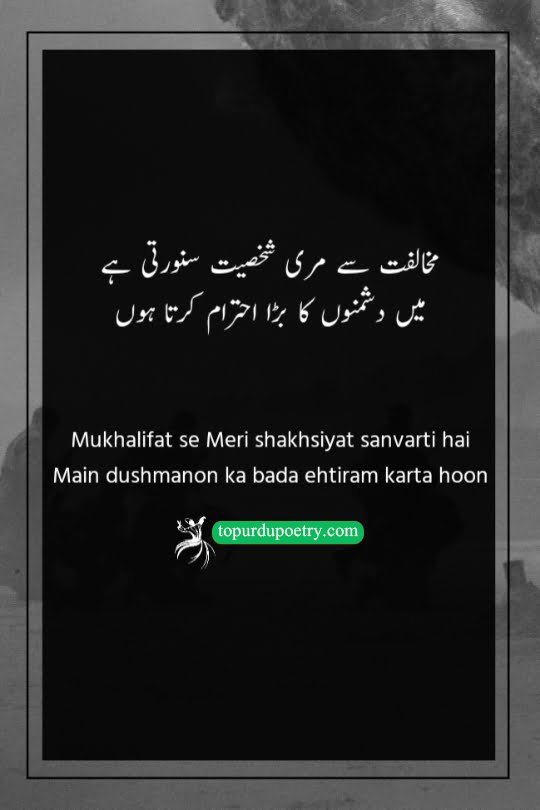
مخالفت سے مری شخصیت سنورتی ہے میں دشمنوں کا بڑا احترام کرتا ہوں
Mukhalifat se Meri shakhsiyat sanvarti hai Main dushmanon ka bada ehtiram karta hoon
This couplet is a powerful anthem for growth and resilience. Instead of resenting opposition, the poet claims that 'mukhalifat' (enmity) is exactly what refines his personality. It suggests that enemies act as a catalyst for self-improvement, keeping us alert and forcing us to sharpen our character. By expressing 'ehtiram' (respect) for his rivals, the poet takes a sophisticated moral high ground, recognizing that challenges are necessary for personal greatness. It is a perfect verse for anyone who views their critics as the silent architects of their success.
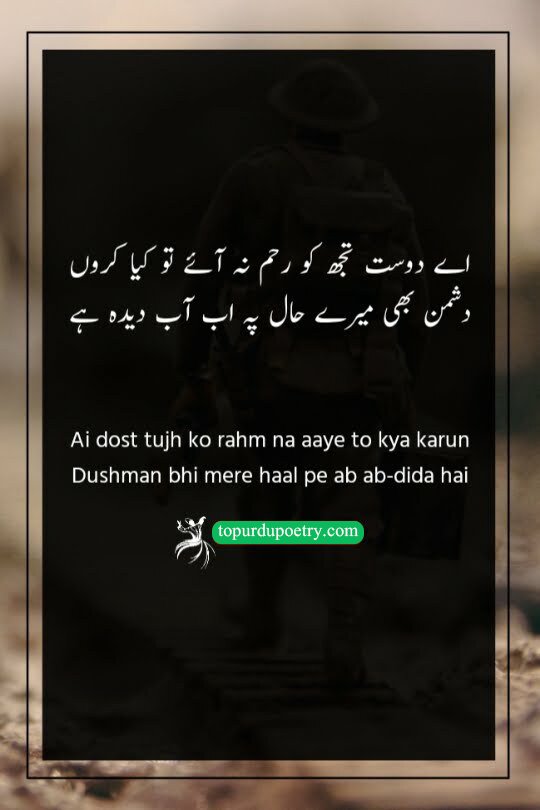
اے دوست تجھ کو رحم نہ آئے تو کیا کروں دشمن بھی میرے حال پہ اب آب دیدہ ہے
Ai dost tujh ko rahm na aaye to kya karun Dushman bhi mere haal pe ab ab-dida hai
This couplet captures the ultimate irony of a failing friendship. The poet laments that while his friend remains indifferent to his suffering, his condition is so tragic that even his enemies are moved to tears (ab-dida). It highlights a painful role reversal: the friend has become heartless, while the enemy has found compassion. This verse is a powerful choice for 'dost dushman poetry,' perfectly describing the feeling of being completely abandoned by a loved one while even strangers or rivals feel pity for your state.
جو دوست ہیں وہ مانگتے ہیں صلح کی دعا دشمن یہ چاہتے ہیں کہ آپس میں جنگ ہو
Jo dost hain vo mangte hain sulh ki dua Dushman ye chahte hain ki aapas mein jang ho
This couplet is a sharp observation of the social dynamics surrounding a personal conflict. The poet highlights the different intentions of people when a relationship hits a rough patch. True friends (dost) are those who pray for peace and reconciliation (sulh) because they value the bond. In contrast, enemies (dushman) hope for conflict (jang), as they find joy in seeing you divided. This verse serves as a powerful reminder for readers to distinguish between their true well-wishers and those who simply want to see them fail.
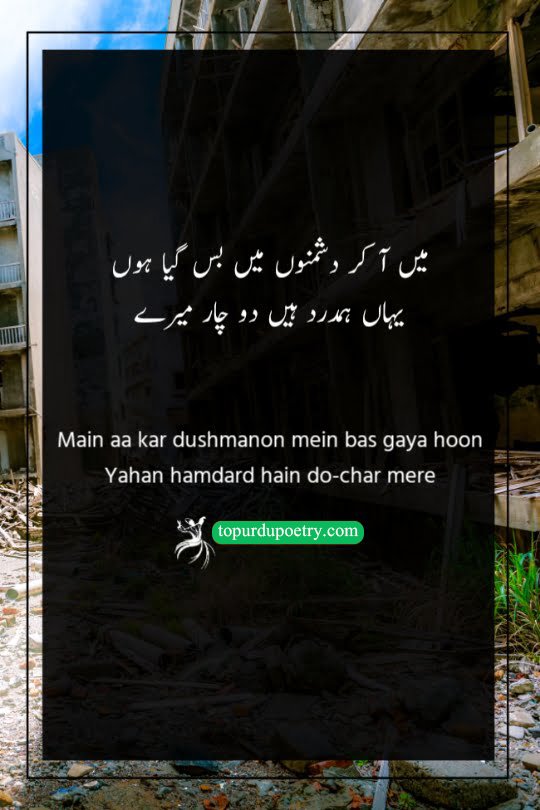
میں آ کر دشمنوں میں بس گیا ہوں یہاں ہمدرد ہیں دو چار میرے
Main aa kar dushmanon mein bas gaya hoon Yahan hamdard hain do-char mere
This couplet is a stinging critique of social hypocrisy. It suggests a situation where a person has been so let down by their own circle that they feel more at home among their enemies. The irony is that in the camp of the opposition, the poet has found a few 'hamdard' (sympathizers)—people who, despite being rivals, show more humanity than those who claimed to be loyal. It’s a powerful choice for anyone who feels like an outsider, highlighting that an honest enemy can sometimes be more compassionate than a false friend.
خدا کے واسطے موقع نہ دے شکایت کا کہ دوستی کی طرح دشمنی نبھایا کر
Khuda ke vaste mauqa na de shikayat ka Ki dosti ki tarah dushmani nibhaya kar
This couplet highlights the idea that even enmity should have its own set of principles and 'tahzib' (etiquette). The poet asks his opponent not to behave in a petty or inconsistent way that leads to complaints. Instead, he demands that if they are to be enemies, they should maintain that enmity with the same dedication and honor one would show in a friendship. It is a powerful statement on personal integrity, suggesting that a person’s character is defined by how they treat their rivals just as much as how they treat their friends.
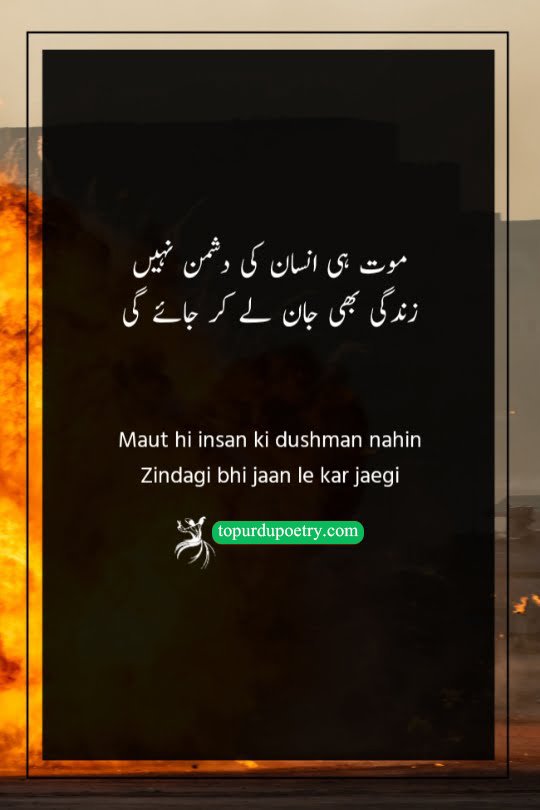
موت ہی انسان کی دشمن نہیں زندگی بھی جان لے کر جائے گی
Maut hi insan ki dushman nahin Zindagi bhi jaan le kar jaegi
This couplet offers a profound and cynical look at existence. The poet challenges the common idea that death is the only enemy of mankind, pointing out a sharp irony: life is just as lethal. While we fear death as the end, it is life that consumes our time and vitality until it eventually 'takes our life' away. It suggests that living is essentially a slow process of dying, making life the journey and death the destination. This verse is a powerful choice for readers who enjoy existentialist themes and deep reflections on the human condition.
Sharp Dushman Poetry in Urdu (دشمن پر شاعری)
When you are fully aware of who is plotting against you, you don’t need to shout to make a point. These 2-line verses act as a quiet warning, showing your adversaries that you are sharp, aware, and completely unshaken by their attempts to bring you down.
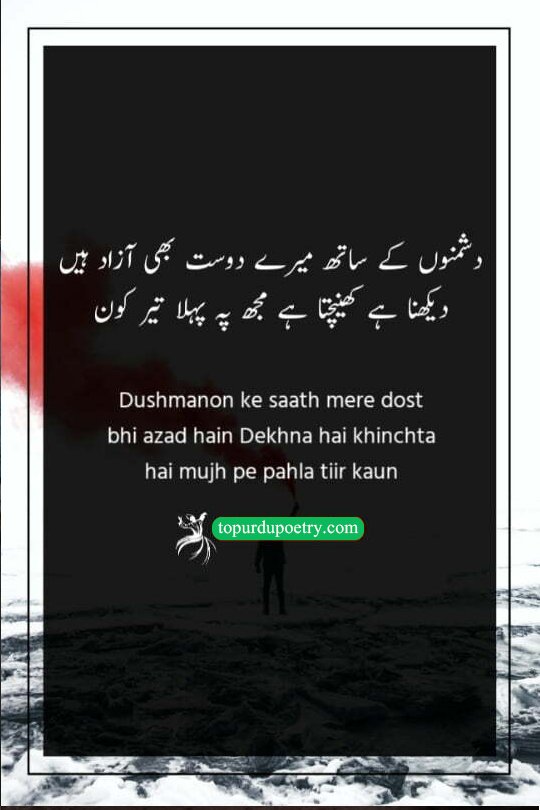
دشمنوں کے ساتھ میرے دوست بھی آزاد ہیں دیکھنا ہے کھینچتا ہے مجھ پہ پہلا تیر کون
Dushmanon ke saath mere dost bhi azad hain Dekhna hai khinchta hai mujh pe pahla tiir kaun
This couplet is a powerful exploration of betrayal and the fragility of loyalty. By saying his friends are 'free' just like his enemies, the poet creates a scenario where he is completely exposed. The real sting is in the wait—he is watching to see if a friend will be the one to strike first. It’s a perfect choice for dushman-poetry because it highlights that while an enemy's arrow is expected, a friend's arrow is the ultimate test of character. It reflects a stoic defiance, where the poet would rather know the truth of a betrayal than live in a false sense of security.
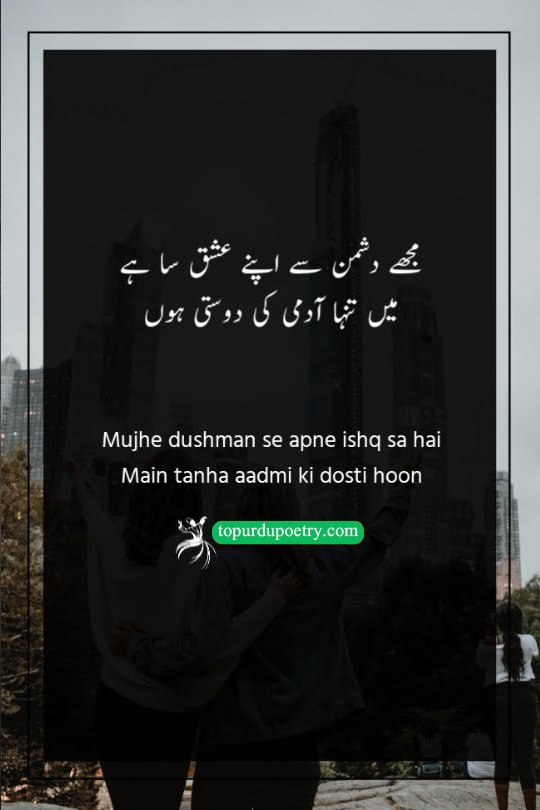
مجھے دشمن سے اپنے عشق سا ہے میں تنہا آدمی کی دوستی ہوں
Mujhe dushman se apne ishq sa hai Main tanha aadmi ki dosti hoon
This couplet explores the paradoxical intimacy of a long-term rivalry. The poet suggests that for a truly lonely person, an enemy can become as central to their life as a lover, describing a bond that feels like 'ishq.' Since an enemy is the only one consistently paying attention, they become a substitute for friendship. It’s a haunting reflection on isolation, where the poet finds companionship in the very person who opposes him, simply because there is no one else.
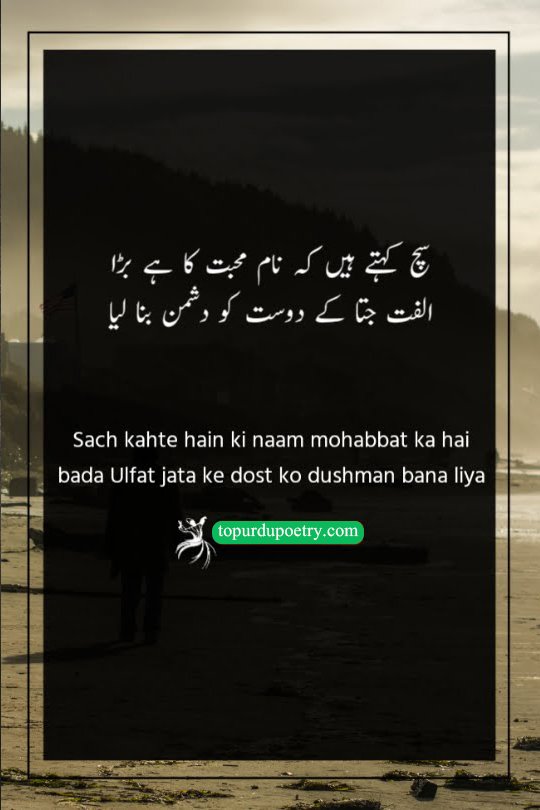
سچ کہتے ہیں کہ نام محبت کا ہے بڑا الفت جتا کے دوست کو دشمن بنا لیا
Sach kahte hain ki naam mohabbat ka hai bada Ulfat jata ke dost ko dushman bana liya
This couplet highlights the painful irony of vulnerability. While 'Love' is celebrated as a noble sentiment, the poet suggests that expressing it can sometimes be a mistake. By showing deep affection (Ulfat) to a friend, the poet ended up turning them into an enemy. It reflects those moments where honesty and vulnerability backfire, proving that some relationships only stay stable as long as the truth remains unspoken. It’s a perfect choice for dushman-poetry that explores the thin line between love and loss.
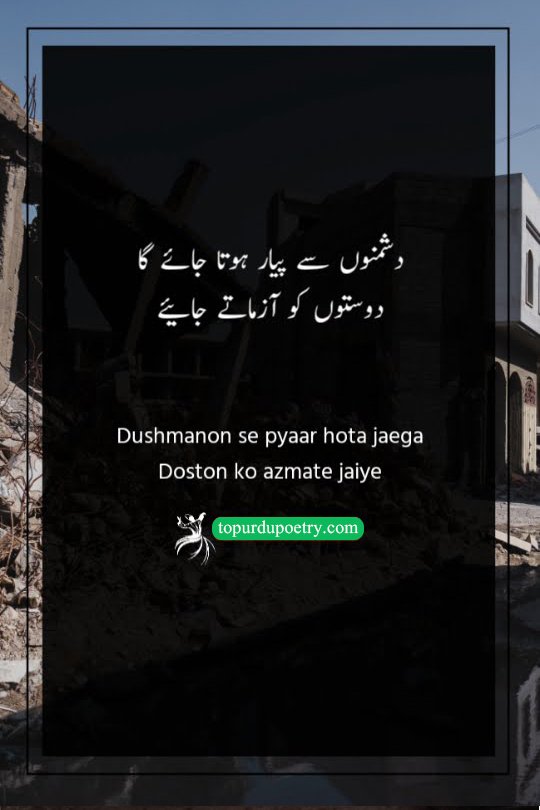
دشمنوں سے پیار ہوتا جائے گا دوستوں کو آزماتے جائیے
Dushmanon se pyaar hota jaega Doston ko azmate jaiye
This couplet offers a bitter but realistic take on the fragility of loyalty. The poet suggests that if you start 'testing' (azmate) your friends, you will likely be met with disappointment. In contrast, because enemies are openly hostile, their behavior is predictable and honest. Over time, the pain of being let down by friends makes the straightforwardness of an enemy seem almost likeable. It’s a powerful choice for dushman-poetry, reflecting the sentiment that an honest foe is far better than a friend who fails the test of loyalty.
آ گیا جوہرؔ عجب الٹا زمانہ کیا کہیں دوست وہ کرتے ہیں باتیں جو عدو کرتے نہیں
Aa gaya ‘jauhar’ ajab ulta zamana kya kahen Dost vo karte hain baten jo adu karte nahin
This couplet is a stinging critique of the modern era, where social norms and loyalties have been flipped upside down. The poet, using his pen name 'Jauhar,' expresses shock that friends (dost) are now behaving in ways that even a sworn enemy (adu) would avoid. It highlights the ultimate betrayal: when those close to you cross lines of decency that even a rival would respect. This verse is ideal for 'dushman-poetry' collections as it highlights the irony that sometimes, a friend can be more hurtful than a foe.
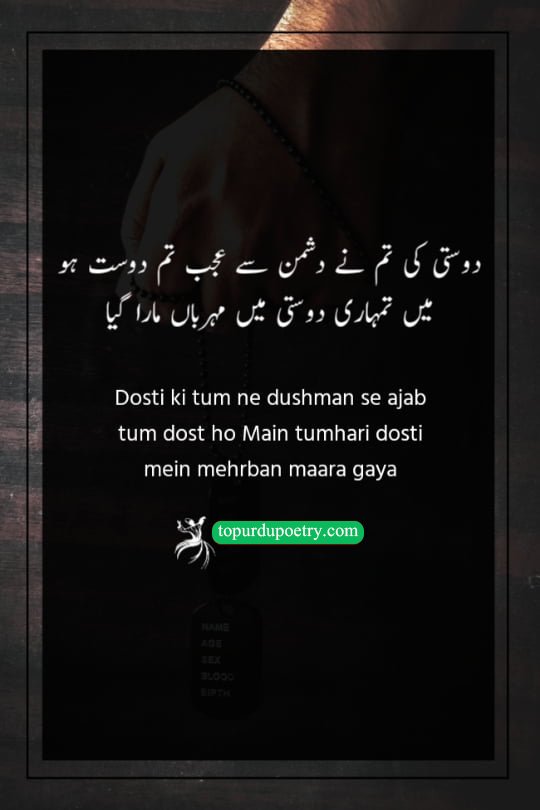
دوستی کی تم نے دشمن سے عجب تم دوست ہو میں تمہاری دوستی میں مہرباں مارا گیا
Dosti ki tum ne dushman se ajab tum dost ho Main tumhari dosti mein mehrban maara gaya
This couplet is a powerful expression of betrayal by a friend who aligns themselves with your enemy. The poet laments the irony of a 'friend' (dost) who can be friendly with a 'foe' (dushman), effectively sacrificing the poet in the process. The phrase 'what a strange friend you are' highlights the sarcasm and disillusionment felt when a loved one’s neutrality or disloyalty causes your downfall. It captures the feeling of being emotionally 'killed' by the very person you expected to stand by you, making it a poignant addition to any dushman-poetry collection.
دشمنوں نے جو دشمنی کی ہے دوستوں نے بھی کیا کمی کی ہے
Dushmanon ne jo dushmani ki hai Doston ne bhi kya kami ki hai
This couplet offers a cynical comparison between the harm caused by enemies and the disappointment brought by friends. While the poet acknowledges the hostility of his rivals, he points out that his friends have 'left no lack' in hurting him as well. It suggests a state of total disillusionment where the distinction between a well-wisher and a foe has blurred. It is a powerful choice for dushman-poetry-in-urdu, perfectly capturing the sentiment of someone who feels equally targeted by their inner circle and their outer rivals.
Attitude Dushman Quotes in Urdu: For the Haters
Sometimes, the best way to handle an enemy is to show them exactly how little they matter to you. This collection of attitude-driven poetry is perfect for asserting your dominance and showing the world that negative people only fuel your success.
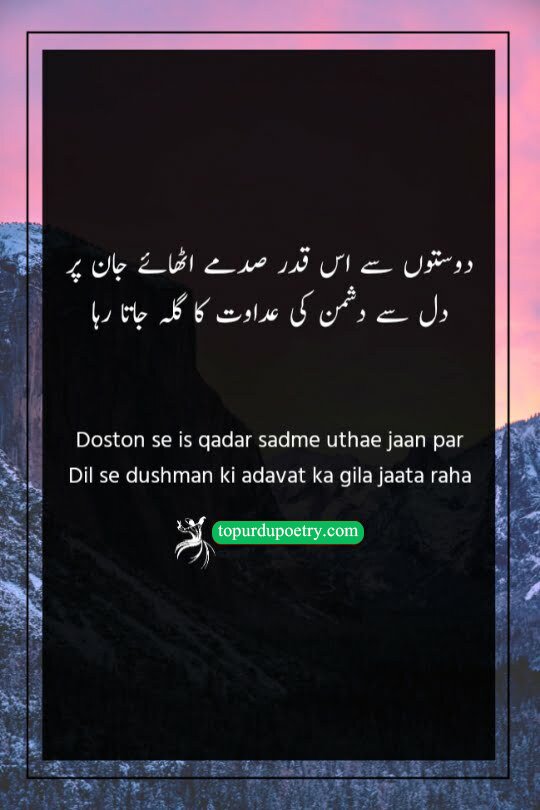
دوستوں سے اس قدر صدمے اٹھائے جان پر دل سے دشمن کی عداوت کا گلہ جاتا رہا
Doston se is qadar sadme uthae jaan par Dil se dushman ki adavat ka gila jaata raha
This couplet explores the hierarchy of pain and betrayal. The poet explains that the shocks (sadme) received from friends have been so severe that he has stopped complaining about the enmity (adavat) of his rivals. It highlights a bitter truth: we expect hostility from an enemy, but when a friend causes pain, it is so devastating that it eclipses all other grudges. This verse is a classic choice for dushman-poetry-in-urdu, perfectly capturing the sentiment that a known enemy is often less hurtful than a false friend.
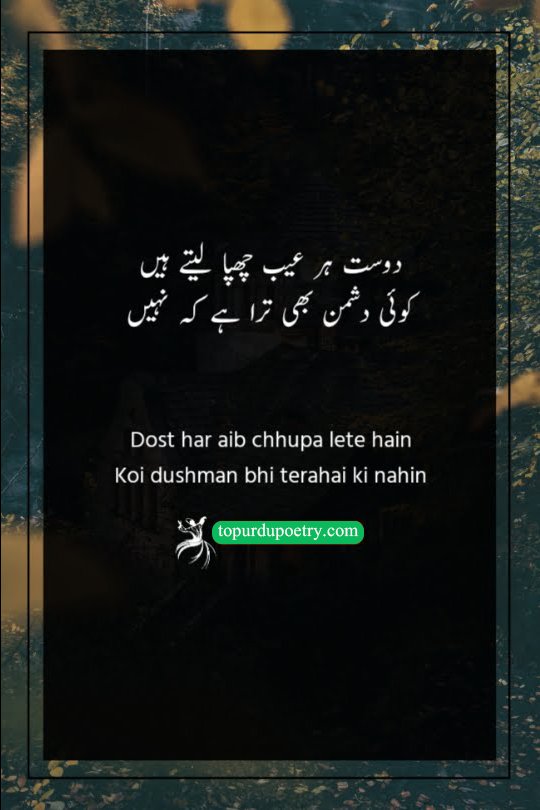
دوست ہر عیب چھپا لیتے ہیں کوئی دشمن بھی ترا ہے کہ نہیں
Dost har aib chhupa lete hain Koi dushman bhi tera hai ki nahin
This couplet presents a fascinating perspective on the value of a rival. The poet notes that friends, driven by affection, often hide our flaws (aib), which can lead to self-deception. He then asks if the reader even has an enemy, suggesting that a foe is necessary to provide the honest, unfiltered criticism that friends are too kind to give. It reframes the concept of dushmani as a catalyst for self-improvement, where an enemy's watchful eye helps us recognize and fix the faults that our loved ones choose to ignore.
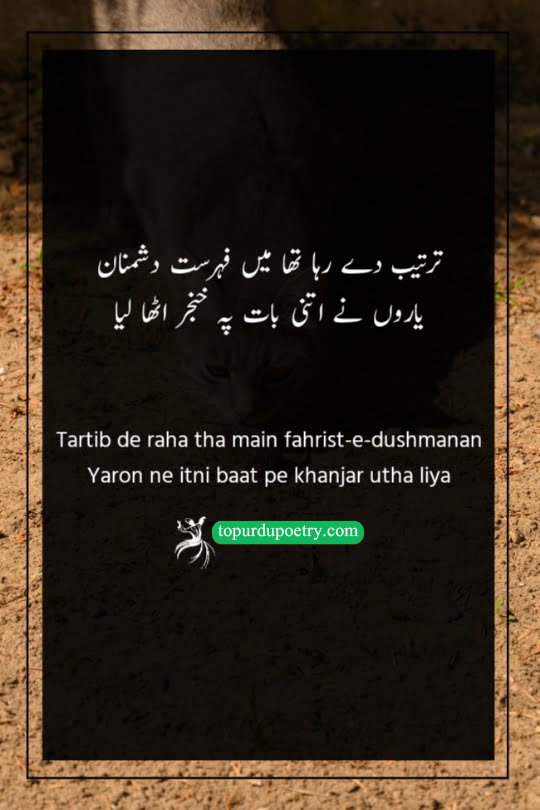
ترتیب دے رہا تھا میں فہرست دشمنان یاروں نے اتنی بات پہ خنجر اٹھا لیا
Tartib de raha tha main fahrist-e-dushmanan Yaron ne itni baat pe khanjar utha liya
This couplet is a sharp and witty take on the 'hidden enemy' trope. The poet describes a moment of dark realization: while he was simply trying to compile a list (fahrist) of his enemies, his own friends (yaron) instinctively drew their daggers (khanjar). It suggests that the act of looking for an enemy was enough to make the false friends reveal their true nature. It’s a perfect choice for dushman-poetry-in-urdu, highlighting that the most dangerous rivals are often those who sit right beside us, waiting for the right moment to strike.
بہاروں کی نظر میں پھول اور کانٹے برابر ہیں محبت کیا کریں گے دوست دشمن دیکھنے والے
Baharon ki nazar mein phuul aur kante barabar hain Mohabbat kya karenge dost dushman dekhne vaale
This couplet offers a sublime, philosophical perspective on human relationships. Using the metaphor of 'Bahar' (Spring), the poet points out that nature does not discriminate between a flower and a thorn—it treats both with equal grace. The second line suggests that true love (Mohabbat) is universal and unconditional. If a person is still preoccupied with distinguishing between friends and enemies, they haven't yet reached the higher state of empathy. It is a beautiful verse for those who believe in rising above petty rivalries and embracing a more inclusive, high-minded view of the world.
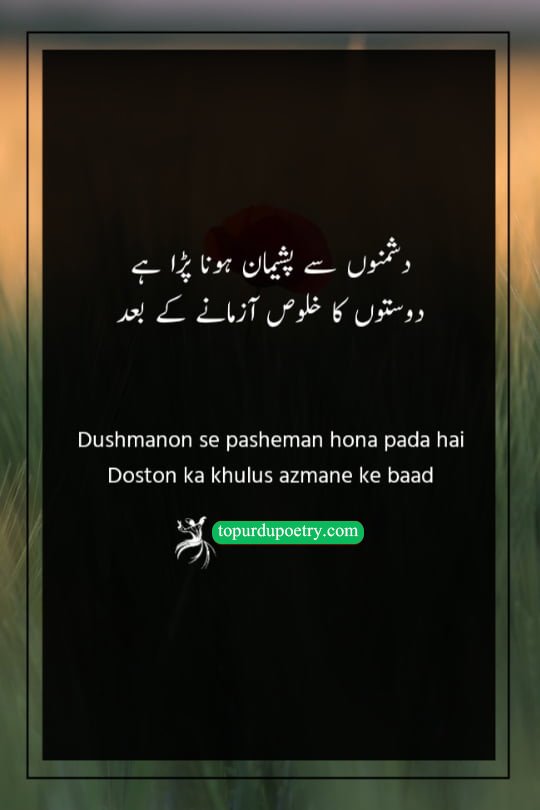
دشمنوں سے پشیمان ہونا پڑا ہے دوستوں کا خلوص آزمانے کے بعد
Dushmanon se pasheman hona pada hai Doston ka khulus azmane ke baad
This couplet captures the bitter irony of misplaced trust. The poet explains that after testing the 'Khulus' (sincerity) of his friends, he was left so disappointed that he felt 'Pasheman' (embarrassed) in front of his enemies. It suggests that while we often defend our friends against our rivals, a friend’s betrayal can make us look foolish or regretful for ever doubting the enemy's honesty. This verse is a powerful choice for poetry-for-dushman, reflecting the sentiment that an honest foe is far more respectable than a friend who fails the test of loyalty.
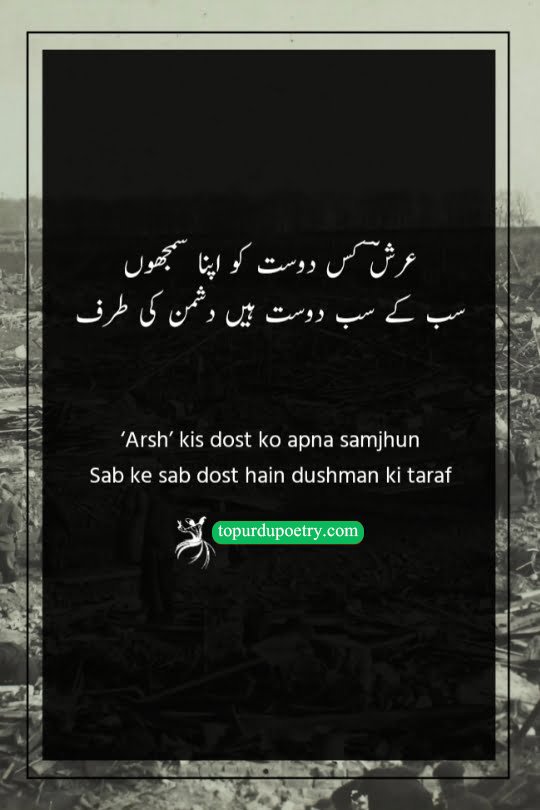
عرشؔ کس دوست کو اپنا سمجھوں سب کے سب دوست ہیں دشمن کی طرف
‘Arsh’ kis dost ko apna samjhun Sab ke sab dost hain dushman ki taraf
This couplet captures the devastating feeling of total social abandonment. The poet, using his pen name 'Arsh,' asks which friend he can still trust, only to realize that every single one of them has joined the enemy's side. It depicts a state of complete isolation where loyalty has vanished and the people who were supposed to be supporters have become part of the opposition. This verse is a powerful choice for poetry-for-dushman, resonating with anyone who has felt the sting of seeing their entire social circle turn against them in favor of a rival.
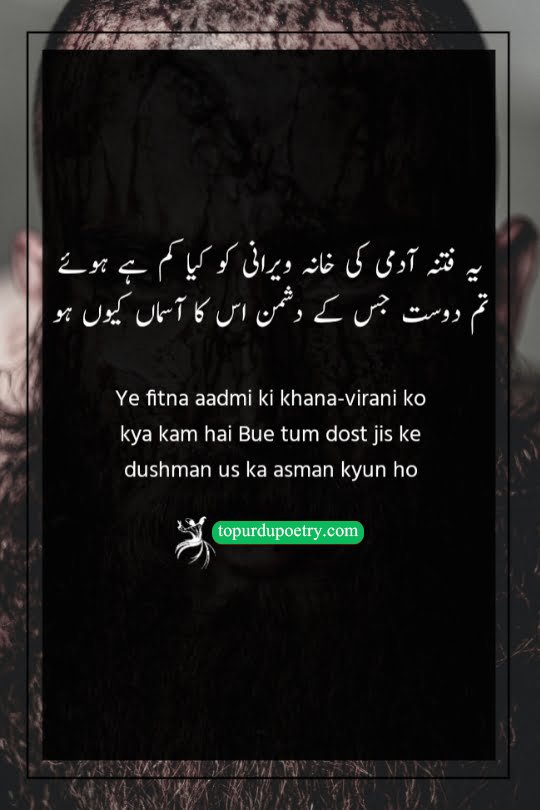
یہ فتنہ آدمی کی خانہ ویرانی کو کیا کم ہے ہوئے تم دوست جس کے دشمن اس کا آسماں کیوں ہو
Ye fitna aadmi ki khana-virani ko kya kam hai Hue tum dost jis ke dushman us ka asman kyun ho
This couplet is a masterclass in sarcasm and biting wit regarding toxic relationships. The poet describes the friend’s presence as a 'fitna' (calamity) that is more than enough to ruin a person's life (khana-virani). He suggests that when someone has a friend like this, they no longer need to fear a hostile Fate or an external enemy, as the friend themselves is a complete disaster. It is a powerful choice for 'poetry-for-dushman,' highlighting a 'friend' who is more dangerous than any sworn rival.
Forgiving the Enemy: Dushman Poetry 2 Line
True emotional intelligence and strength often lie in forgiveness. Forgiving your worst adversaries fills your heart with kindness and frees you from the burden of carrying their negativity. These verses focus on leaving the critics behind and focusing on the greater good.
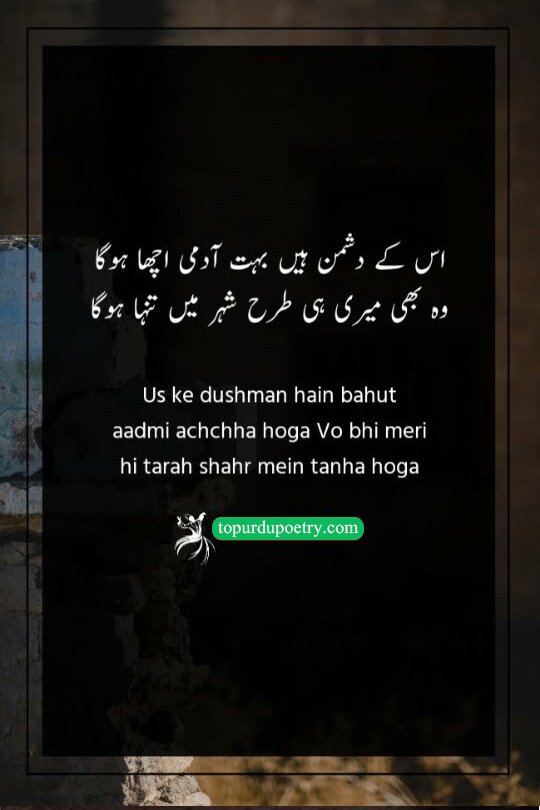
اس کے دشمن ہیں بہت آدمی اچھا ہوگا وہ بھی میری ہی طرح شہر میں تنہا ہوگا
Us ke dushman hain bahut aadmi achchha hoga Vo bhi meri hi tarah shahr mein tanha hoga
This couplet offers a unique perspective on enmity, suggesting that having many rivals is actually a sign of high character. In a world full of compromises, the poet believes that a 'good' (achchha) person is bound to attract enemies because they stand for something. The second line connects this opposition to loneliness, implying that integrity often leads to isolation. It is an empowering verse for anyone who feels targeted by others, framing their struggle as a proof of their goodness and principles.
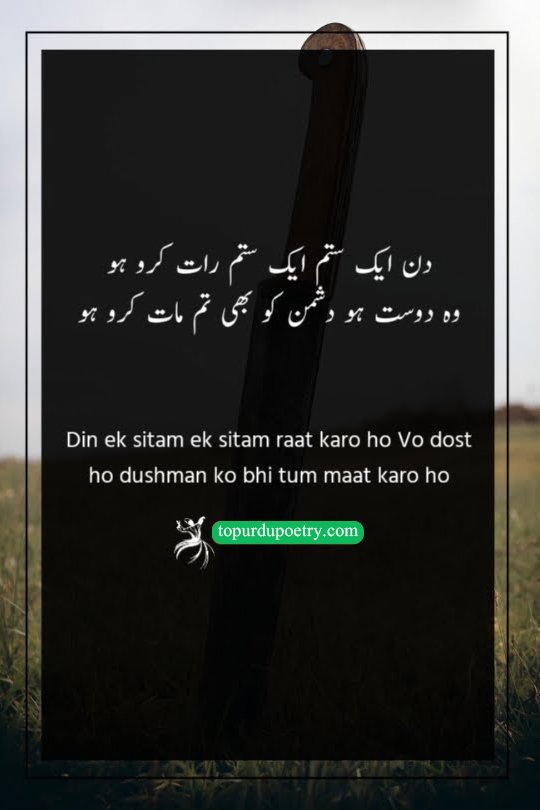
دن ایک ستم ایک ستم رات کرو ہو وہ دوست ہو دشمن کو بھی تم مات کرو ہو
Din ek sitam ek sitam raat karo ho Vo dost ho dushman ko bhi tum maat karo ho
This couplet is a sharp, ironic take on a toxic friendship. The poet laments that he faces constant 'sitem' (cruelty) from this person, day and night. He remarks that while they claim to be a 'friend,' their actions are so consistently hurtful that they have actually surpassed or outdone (maat) the behavior of a sworn enemy. It is a powerful verse for anyone feeling overwhelmed by a loved one’s problematic behavior, suggesting that sometimes a 'friend' can be far more destructive than a rival.
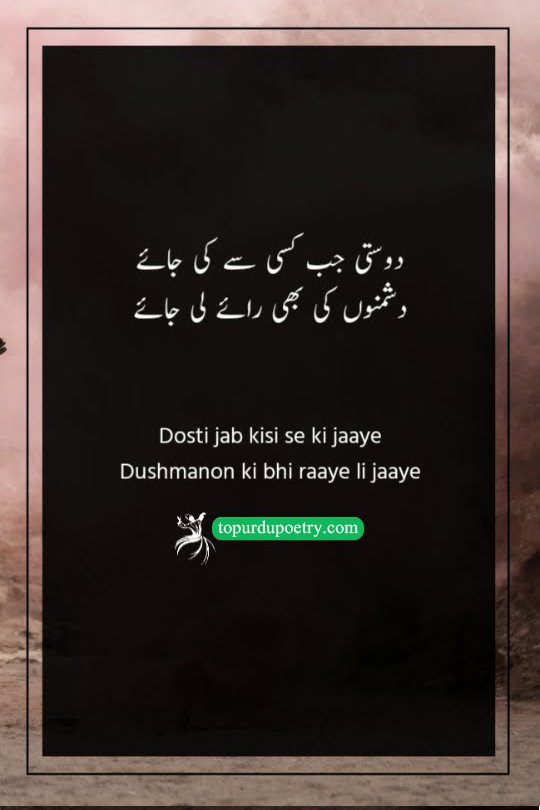
دوستی جب کسی سے کی جائے دشمنوں کی بھی رائے لی جائے
Dosti jab kisi se ki jaaye Dushmanon ki bhi raaye li jaaye
This couplet offers a very pragmatic and wise approach to making new friends. The poet suggests that before fully trusting someone, you should seek the 'raaye' (opinion) of their enemies. The idea is that while friends might hide a person's flaws out of loyalty, an enemy will be brutally honest about their shortcomings. It’s a powerful verse about due diligence and character judgment, reminding us that an enemy's perspective can often reveal the hidden truths that friends choose to overlook.
Final Thoughts on Dealing with Adversaries
Enemies and critics are just a part of life’s background noise. Reacting to every single stone thrown at you will only slow down your own progress. We hope this collection of dushman poetry in Urdu helped you find the right words to express your strength, set your boundaries, or simply let go of the toxicity weighing you down.
Which of these 2-line shayari perfectly matched your current attitude? Have you ever chosen to forgive an enemy rather than fight them?
Drop your favorite lines in the comments below! Do not forget to download your favorite images to update your WhatsApp status and show the world that you remain unbothered. If you are looking for more verses on navigating difficult relationships, be sure to check out our latest posts on the topurdupoetry.com homepage.