Trust is the invisible thread that holds every relationship together. Without it, even the strongest bonds can easily fall apart. If you are looking for the most meaningful bharosa poetry in Urdu (بھروسہ پر شاعری) to express your feelings, you have come to the right place. Our entire world revolves around our ability to rely on others, whether in love, friendship, or family.
We all struggle with trust at some point. Should we trust someone completely until they give us a reason not to, or should we make them earn it over time? Finding the right balance is never easy. Giving trust too quickly can leave you vulnerable to being hurt, but holding it back completely prevents you from experiencing a true, open connection with your partner.
Reading deep trust poetry in Urdu or sharing relatable bharosa quotes in Urdu can beautifully capture this internal struggle. These words act as a mirror, reflecting our own beliefs and reminding us of our inner strength. After all, the bottom line is that trust is a deeply personal experience. Before you can truly trust someone else—whether a higher power or a human being—you must first learn to trust yourself.
To help you navigate these complex emotions, we have compiled a stunning collection of bharosa shayari and 2 line bharosa poetry. Scroll down to find the perfect verses that remind us all why trust is the most expensive gift you can give.
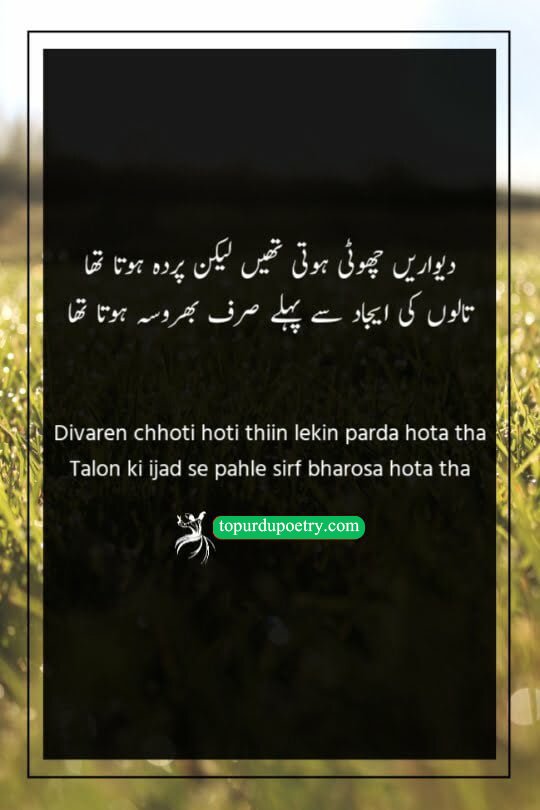
دیواریں چھوٹی ہوتی تھیں لیکن پردہ ہوتا تھا تالوں کی ایجاد سے پہلے صرف بھروسہ ہوتا تھا
Divaren chhoti hoti thiin lekin parda hota tha Talon ki ijad se pahle sirf bharosa hota tha
This nostalgic verse beautifully contrasts the simplicity of the past with the complexities of modern society. In classic Urdu Shayari, the poet reflects on a time when moral values and mutual respect provided more security than physical barriers. He notes that although houses had low walls, people maintained an invisible veil of modesty and boundaries. Before the invention of mechanical locks, society thrived purely on mutual trust and honesty. This profound poetry resonates deeply with those longing for the lost innocence of earlier generations. It is a powerful reminder that true security comes from the integrity of the heart, not iron gates.
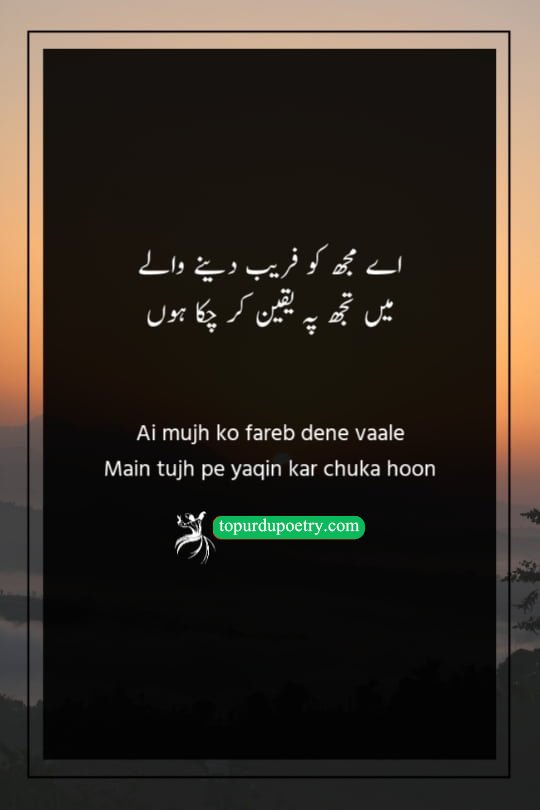
اے مجھ کو فریب دینے والے میں تجھ پہ یقین کر چکا ہوں
Ai mujh ko fareb dene vaale Main tujh pe yaqin kar chuka hoon
This heartbreaking verse is a perfect example of deep bharosa urdu poetry, capturing the tragic irony of blind faith and deception. The poet speaks directly to the one who has betrayed him, calmly acknowledging the deceit. However, the true tragedy lies in the second line: the betrayal almost doesn't matter anymore because the poet has already surrendered his trust completely. It highlights the vulnerability of love—once you give someone your heart and faith, the damage of their deception is already done. This verse resonates deeply with anyone who has suffered at the hands of a loved one, proving that misplaced trust is the heaviest burden to carry.
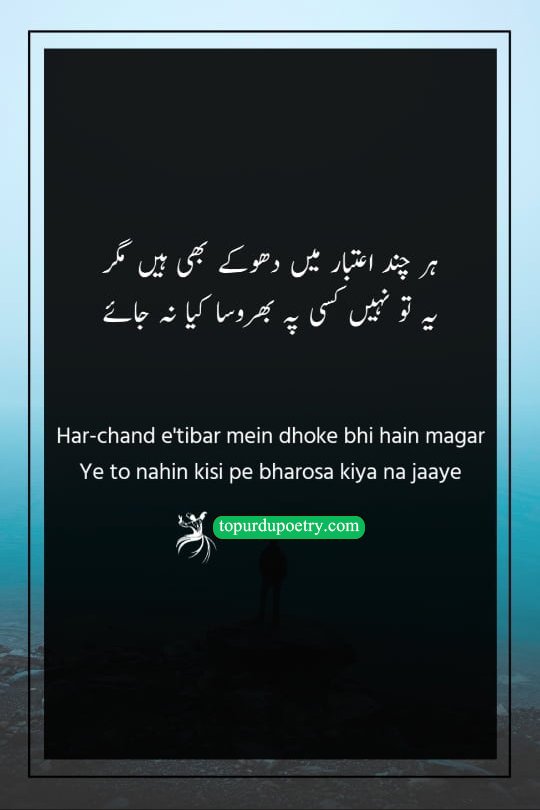
ہر چند اعتبار میں دھوکے بھی ہیں مگر یہ تو نہیں کسی پہ بھروسا کیا نہ جائے
Har-chand e’tibar mein dhoke bhi hain magar Ye to nahin kisi pe bharosa kiya na jaaye
This profound couplet offers a deeply optimistic and resilient perspective on human relationships and the nature of trust. The poet honestly acknowledges a harsh reality of life: that placing your faith in others often opens the door to betrayal and heartbreak. However, the second line delivers a powerful counter-argument against living a life ruled by cynicism and fear. Just because deceit exists in the world does not justify completely shutting our hearts to others. It teaches us that vulnerability is an essential part of the human experience, and true courage lies in choosing to trust again despite knowing the risks involved.
مسافروں سے محبت کی بات کر لیکن مسافروں کی محبت کا اعتبار نہ کر
Musafiron se mohabbat ki baat kar lekin Musafiron ki mohabbat ka etibar na kar
This poignant couplet explores the fleeting nature of temporary connections and the wisdom of guarding one's heart. The poet uses the metaphor of travelers to represent people who are only passing through our lives, lacking the intention to stay. While the first line encourages open communication and the shared experience of discussing romance, the second line delivers a sharp warning against placing deep trust in someone whose very nature is to keep moving. It is a profound reminder that enjoying a temporary bond is acceptable, but expecting permanence from a wanderer will inevitably lead to deep heartbreak and disappointment.
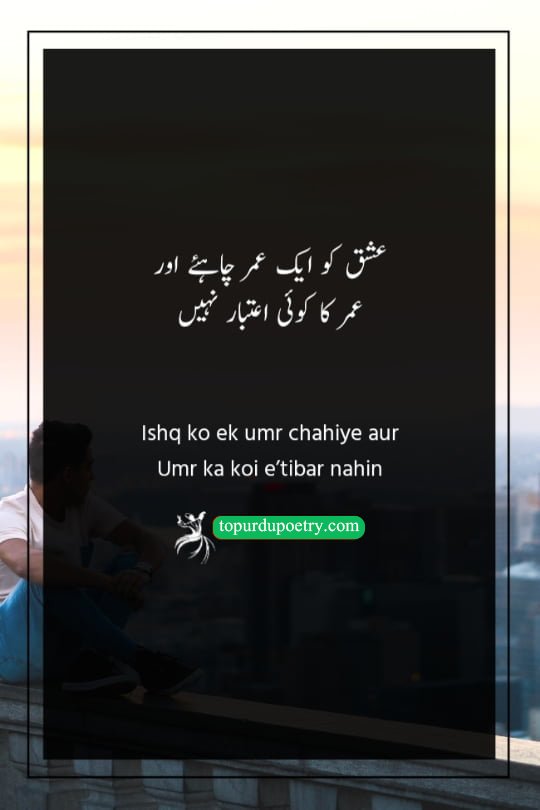
Ishq ko ek umr chahiye aur Umr ka koi e’tibar nahin
This timeless couplet beautifully captures the tragic paradox of love and human mortality. The poet expresses a profound truth: true devotion is not a fleeting emotion but a lifelong journey that demands one's entire existence to fully blossom and be proven. However, the second line introduces a heartbreaking reality. While love demands an eternity, human life is fragile, unpredictable, and entirely unreliable. We do not even know if we have tomorrow. This striking contrast highlights the vulnerability of the human condition, reminding the reader that the grand, eternal promises of the heart are always at the mercy of our temporary, uncertain time on earth.
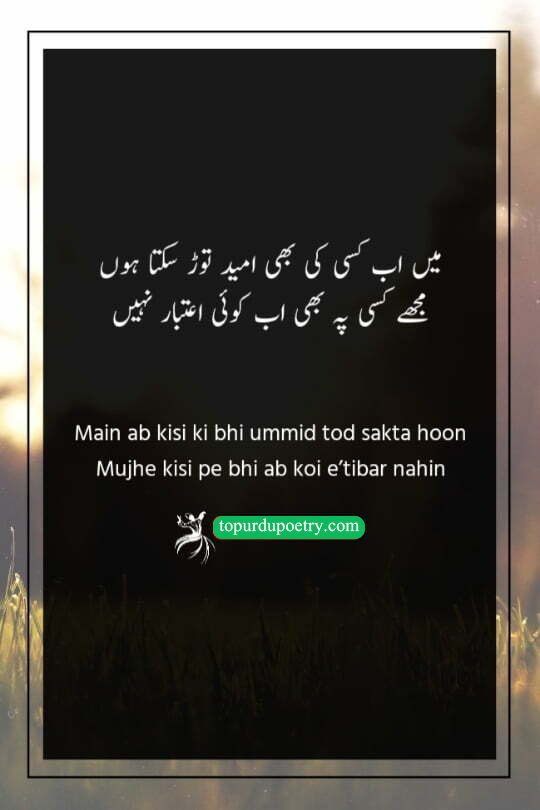
میں اب کسی کی بھی امید توڑ سکتا ہوں مجھے کسی پہ بھی اب کوئی اعتبار نہیں
Main ab kisi ki bhi ummid tod sakta hoon Mujhe kisi pe bhi ab koi e’tibar nahin
This heartbreaking verse explores the dark psychological transformation that occurs after experiencing severe betrayal. The poet confesses to reaching a state of complete emotional numbness and cynicism. In the first line, he admits that he is now capable of breaking others' hopes without feeling guilt. The second line reveals the tragic reason behind this newfound coldness: his own trust has been completely shattered. This couplet perfectly captures the cycle of pain, illustrating how being deeply hurt can turn a once-loving person into someone guarded and harsh. It is a powerful reflection on how trauma alters our capacity to connect with humanity.
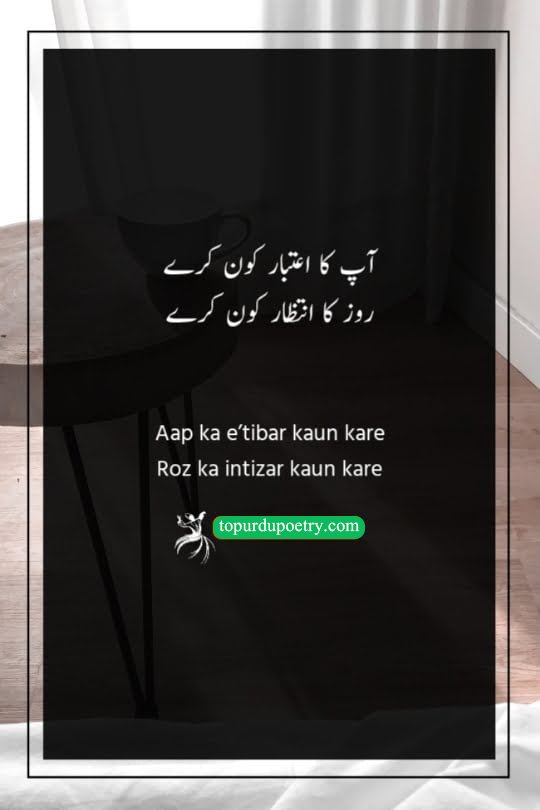
This striking verse captures the sheer emotional exhaustion of loving someone who constantly breaks their promises, making it a perfect example of deep bharosa sad poetry. The poet poses a painful rhetorical question, expressing complete frustration with a partner whose words no longer hold any value. How can anyone trust you when your actions consistently lead to disappointment? The second line emphasizes the daily agony of waiting endlessly for someone who never arrives or commits. It perfectly illustrates the final breaking point in a toxic relationship where patience runs out. This relatable verse resonates with anyone who has finally stopped expecting consistency from an inconsistent lover.
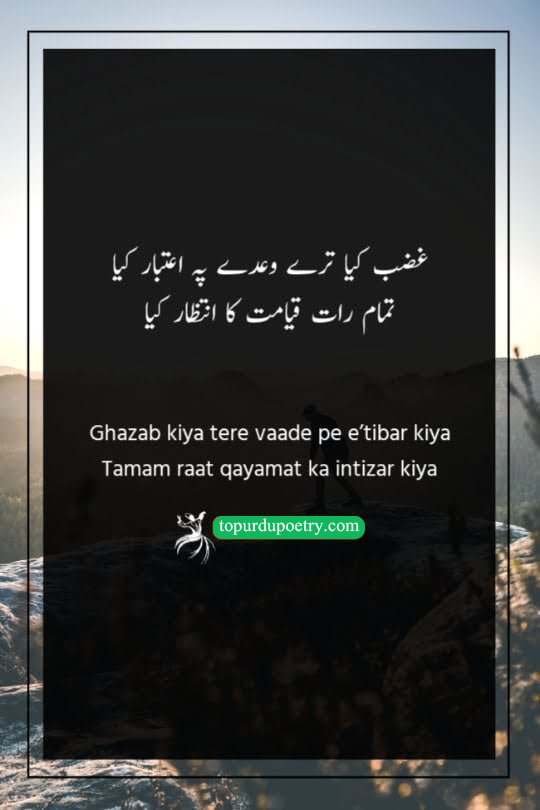
غضب کیا ترے وعدے پہ اعتبار کیا تمام رات قیامت کا انتظار کیا
Ghazab kiya tere vaade pe e’tibar kiya Tamam raat qayamat ka intizar kiya
This classic couplet brilliantly exaggerates the agony of waiting for a beloved who never arrives. In the first line, the poet expresses deep regret, calling his own decision to trust the beloved's promise a catastrophic mistake. The brilliance of the verse lies in the second line, where the poet equates the experience of waiting all night to enduring the horrors of Judgment Day. This powerful metaphor implies that the beloved's broken promise caused apocalyptic emotional turmoil. It beautifully captures the restless, sleepless nights of a lover whose faith has been met with painful absence, highlighting the destructive nature of false hope.
Dard-e-dil kya bayan karun ‘rashki’ Us ko kab e’tibar aata hai
This beautiful couplet by the poet Rashki highlights the profound helplessness of unrequited love when it is met with disbelief. In the first line, the poet questions the very purpose of expressing the agonizing pain in his heart. The second line reveals the tragic reason for his silence: his beloved simply does not believe his confessions of suffering. It is a painful realization that words are useless when the listener lacks trust. This verse resonates deeply with anyone whose genuine emotional vulnerability has been dismissed or doubted by the person they love most, capturing the ultimate isolation of a broken heart.
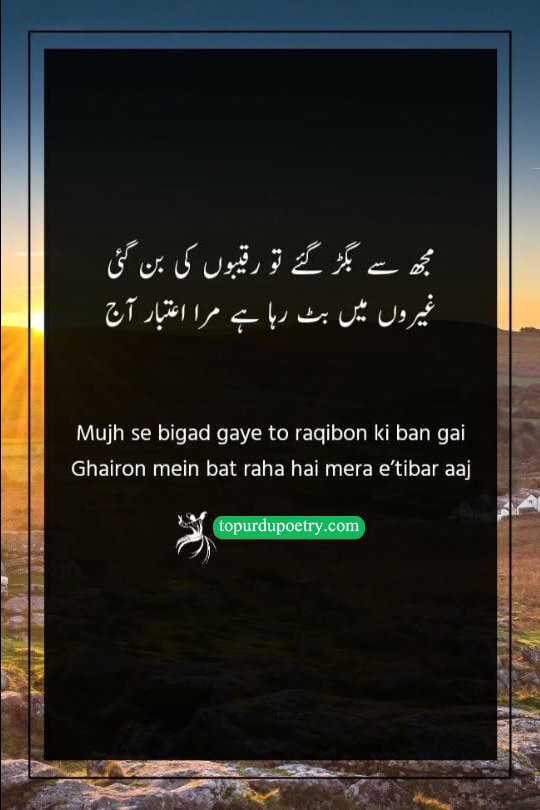
مجھ سے بگڑ گئے تو رقیبوں کی بن گئی غیروں میں بٹ رہا ہے مرا اعتبار آج
Mujh se bigad gaye to raqibon ki ban gai Ghairon mein bat raha hai mera e’tibar aaj
This striking couplet delves into the bitter jealousy and heartbreak of seeing a beloved transfer their affection to rivals. The poet expresses a deep sense of loss in the first line, noting that his falling out with the beloved has directly resulted in the triumph of his enemies. The second line beautifully captures the tragic irony of the situation. The exclusive trust, loyalty, and attention that once rightfully belonged only to the poet are now being freely distributed among strangers. It paints a vivid picture of romantic displacement, capturing the agonizing pain of watching someone else enjoy the love you once possessed.
دل کو تری چاہت پہ بھروسہ بھی بہت ہے اور تجھ سے بچھڑ جانے کا ڈر بھی نہیں جاتا
Dil ko teri chahat pe bharosa bhi bahut hai Aur tujh se bichhad jaane ka dar bhi nahin jaata
This incredibly relatable couplet perfectly captures the profound anxiety that often accompanies deep, true love. In the first line, the poet expresses complete faith and reliance on the beloved's affection, acknowledging a strong foundation of trust. However, the second line reveals a painful emotional paradox. Despite this immense trust, a lingering, haunting fear of separation constantly shadows the poet's heart. This beautiful verse illustrates how loving someone deeply makes you inherently vulnerable to the terror of losing them. It speaks directly to the universal human experience of insecurity within romance, proving that even the strongest bonds cannot completely erase the fear of heartbreak.
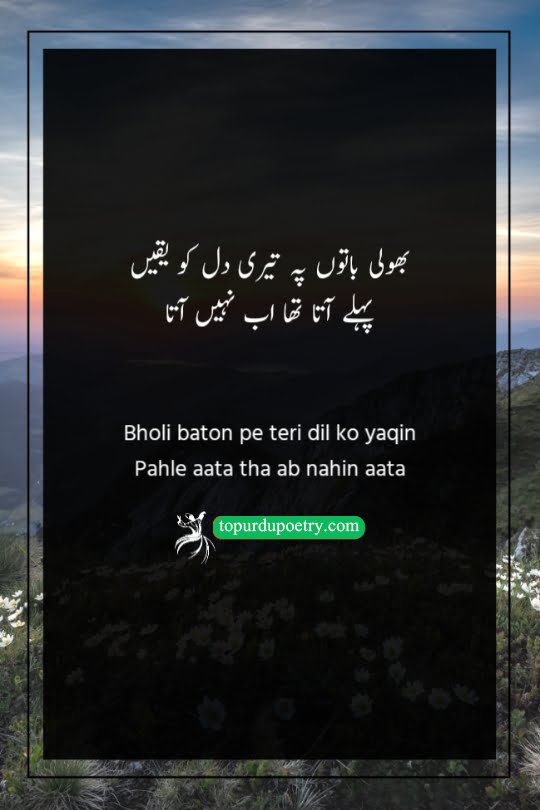
بھولی باتوں پہ تیری دل کو یقیں پہلے آتا تھا اب نہیں آتا
Bholi baton pe teri dil ko yaqin Pahle aata tha ab nahin aata
This poignant verse is a classic example of Urdu poetry bharosa, illustrating the tragic evolution of a relationship where trust has been permanently broken. The poet reflects on a time when they naively believed the sweet, innocent-sounding words of their beloved. However, the second line delivers the harsh reality of the present: the heart has learned its lesson and can no longer be easily deceived. It beautifully captures the exact moment when innocence is replaced by skepticism. This deeply relatable verse speaks to anyone who has outgrown toxic manipulation, proving that once faith is destroyed, sweet words lose all their power.
میں اس کے وعدے کا اب بھی یقین کرتا ہوں ہزار بار جسے آزما لیا میں نے
Main us ke vaade ka ab bhi yaqin karta hoon Hazar baar jise aazma liya main ne
This deeply emotional couplet captures the tragic cycle of blind love and the illogical nature of the human heart. In the first line, the poet confesses a heartbreaking truth: they still choose to believe the promises made by their beloved. The devastating reality is revealed in the second line, where the poet admits they have already tested this person a thousand times and been disappointed every single time. It perfectly illustrates the self-destructive power of attachment, where hope repeatedly triumphs over experience. This verse resonates profoundly with anyone who continues to forgive a loved one, hopelessly wishing that this time, things will finally be different.
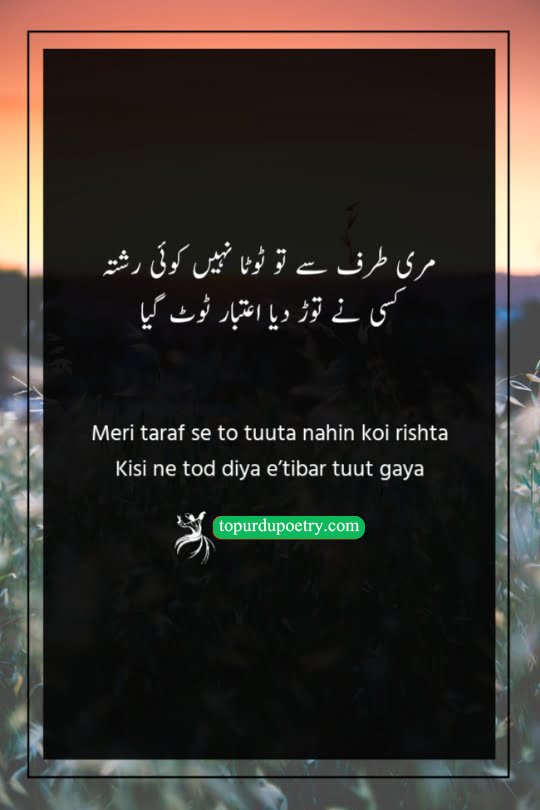
مری طرف سے تو ٹوٹا نہیں کوئی رشتہ کسی نے توڑ دیا اعتبار ٹوٹ گیا
Meri taraf se to tuuta nahin koi rishta Kisi ne tod diya e’tibar tuut gaya
This heartbreaking couplet beautifully captures the essence of loyalty and the devastating impact of broken trust. In the first line, the poet proudly declares their own innocence, emphasizing that they never initiated the end of the relationship. They remained steadfast and committed to the bond. However, the second line delivers a profound truth: a relationship does not only end when someone walks away; it ends the moment trust is shattered. The poet explains that while they kept the connection alive, the other person destroyed the foundation of faith. It perfectly resonates with anyone whose loyalty was ultimately rewarded with betrayal.
یوں نہ قاتل کو جب یقیں آیا ہم نے دل کھول کر دکھائی چوٹ
Yuun na qatil ko jab yaqin aaya Ham ne dil khol kar dikhai chot
This dramatic verse utilizes the classic Urdu metaphor of the beloved as a Qatil or executioner to describe the intensity of romantic suffering. The poet suggests that his pain was so hidden or profound that the beloved remained skeptical of his true agony. In the second line, he describes a moment of extreme vulnerability; to finally prove his sincerity and gain the beloved’s belief, he had to physically or emotionally expose his deepest wounds. It captures the tragic desperation of a lover who feels forced to reveal their absolute brokenness just to be acknowledged. This powerful imagery resonates with anyone whose silent suffering was once doubted by the person they loved.
The Emotional Power of Trust Poetry in Urdu
Trust is incredibly fragile; it takes years to build and only seconds to break. When a promise is shattered, it can leave us speechless. That is exactly where trust broken poetry in Urdu comes in. It gives a voice to our silent pain and helps us process the heavy emotions of betrayal.
Conversely, when someone stands by you and proves their loyalty, sharing bharosa quotes in Urdu is the perfect way to acknowledge their sincerity. Whether you are healing from a deep heartbreak or celebrating an unbreakable bond, this specific collection of 2 line bharosa poetry is crafted to touch the soul. These short, impactful verses are perfect for expressing exactly what is in your heart when everyday words fall short.
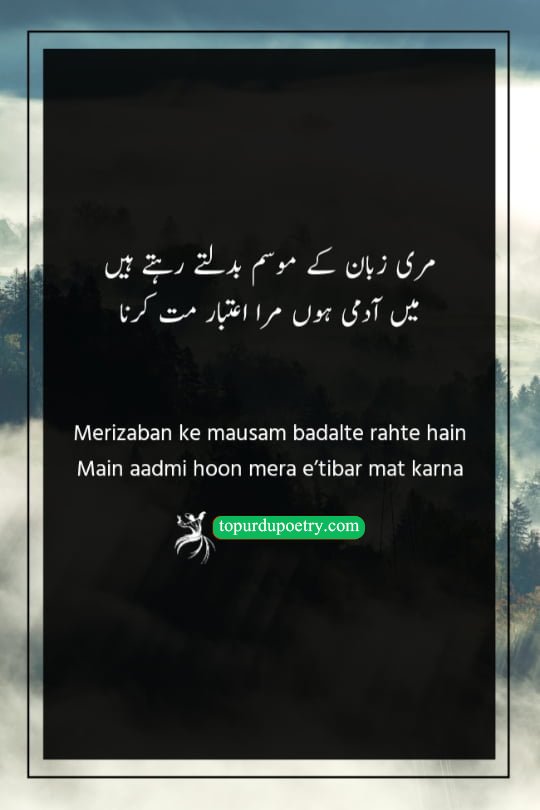
مری زبان کے موسم بدلتے رہتے ہیں میں آدمی ہوں مرا اعتبار مت کرنا
Meri zaban ke mausam badalte rahte hain Main aadmi hoon mera e’tibar mat karna
This honest and somewhat cynical couplet offers a raw look at human fallibility and the fickle nature of words. Instead of blaming a beloved for betrayal, the poet turns the mirror toward himself. He warns the listener not to place absolute trust in his promises, comparing the shifting nature of his speech to the changing seasons. By stating, I am only human, he highlights that inconsistency is a fundamental part of the human condition. This verse is a powerful reminder that human intentions can be as fleeting as the weather. It resonates with readers who appreciate self-aware poetry that acknowledges our own inherent weaknesses.
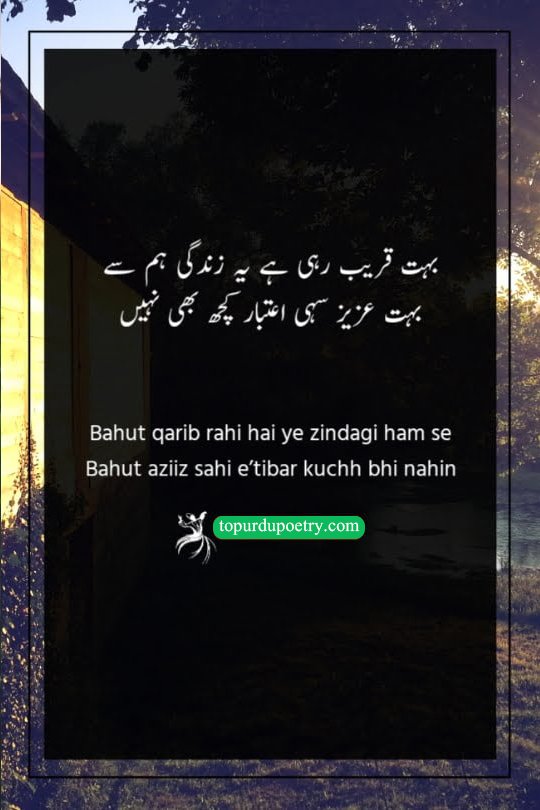
بہت قریب رہی ہے یہ زندگی ہم سے بہت عزیز سہی اعتبار کچھ بھی نہیں
Bahut qarib rahi hai ye zindagi ham se Bahut aziiz sahi e’tibar kuchh bhi nahin
This philosophical couplet reflects on the fragile and unpredictable nature of human existence. The poet acknowledges that life is our closest companion, something we experience every single second and hold incredibly dear. We cherish our life above all else, considering it our most precious possession. However, the second line introduces a profound truth: despite its immense value, life has no reliability. It is entirely untrustworthy and can vanish at any moment without warning. It serves as a stark reminder of our mortality. While we love life deeply, we must remain aware of its temporary and fleeting nature, making this verse deeply thought-provoking for every reader.
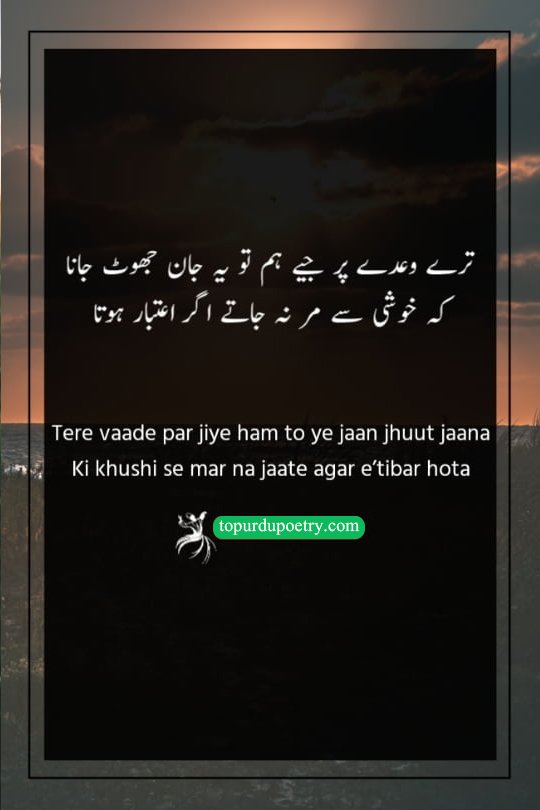
ترے وعدے پر جیے ہم تو یہ جان جھوٹ جانا کہ خوشی سے مر نہ جاتے اگر اعتبار ہوتا
Tere vaade par jiye ham to ye jaan jhuut jaana Ki khushi se mar na jaate agar e’tibar hota
This iconic masterpiece by Mirza Ghalib carries a mood of witty sarcasm mixed with tragic irony. The poet tells his beloved that his continued existence is the ultimate proof that he never truly trusted her word. He argues that if he had actual bharosa poetry 2 lines in her promise, the overwhelming joy of her commitment would have been fatal. By staying alive, he paradoxically exposes both her history of broken promises and his own deep-seated skepticism. This verse touches the heart because it perfectly captures the complex psychology of a lover who survives only because he has lost all faith.
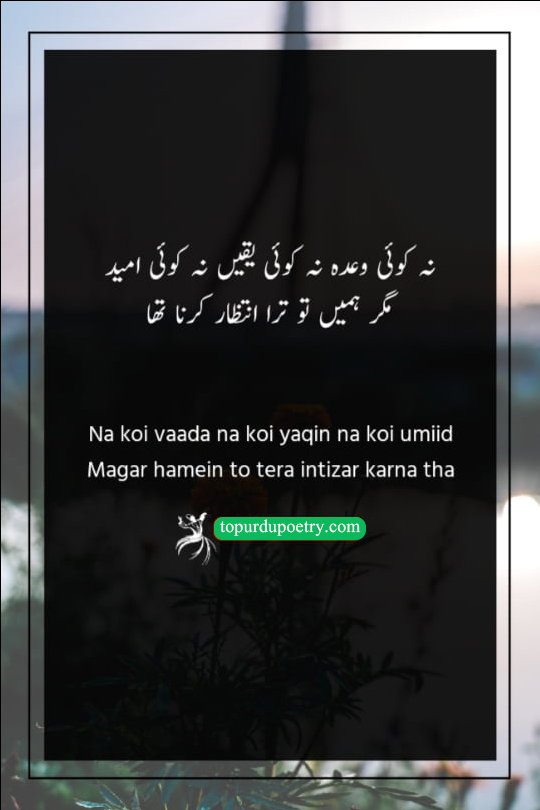
نہ کوئی وعدہ نہ کوئی یقیں نہ کوئی امید مگر ہمیں تو ترا انتظار کرنا تھا
Na koi vaada na koi yaqin na koi umiid Magar hamein to tera intizar karna tha
This poignant couplet explores the depth of unconditional devotion and the selfless nature of waiting in classic Urdu Shayari. The poet describes a state of total emotional emptiness—there is no promise from the beloved, no certainty of their return, and even hope has completely faded away. Usually, waiting requires a logical reason or a shared commitment, but here, the act of waiting becomes a sacred duty of the heart itself. It transcends expectation and reality. This verse touches the reader because it highlights the nobility of loyalty that asks for nothing in return, reflecting a soul that remains faithful even when the future is entirely uncertain.
جھوٹ پر اس کے بھروسا کر لیا دھوپ اتنی تھی کہ سایا کر لیا
Jhuut par us ke bharosa kar liya Dhuup itni thi ki saaya kar liya
This evocative couplet uses brilliant metaphors to explain why people sometimes choose to believe in deception. The intense sun represents a harsh, unbearable reality or the agonizing pain of a situation. The poet admits to knowingly accepting a lie because the truth was simply too painful to endure. In this context, the lie acts as shade, providing a temporary, cool refuge from the heat of misery. It highlights a vulnerable human tendency: sometimes, we seek comfort in false promises just to survive a difficult moment. This deep psychological insight into the necessity of hope resonates with anyone facing desperate circumstances.
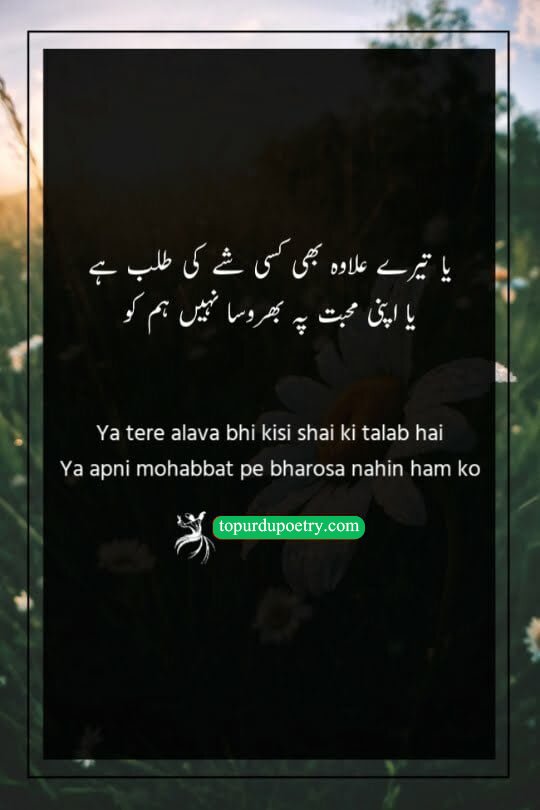
یا تیرے علاوہ بھی کسی شے کی طلب ہے یا اپنی محبت پہ بھروسا نہیں ہم کو
Ya tere alava bhi kisi shai ki talab hai Ya apni mohabbat pe bharosa nahin ham ko
This introspective couplet explores the internal struggle of a lover questioning the purity of their own devotion. In the first line, the poet ponders whether their heart is divided because they still feel a desire for worldly things other than the beloved. This creates a sense of guilt regarding the sincerity of their attachment. The second line offers a deeper psychological conflict: perhaps the issue isn't external distraction, but a fundamental lack of trust in the strength of their own love. This verse touches the heart because it addresses the universal human fear of not being enough or failing to meet the high standards of true devotion.
Adatan tum ne kar diye vaade Adatan ham ne e’tibar kiya
This couplet is a brilliant, slightly cynical evolution of the previous verse. While the last one focused on simplicity, this one shifts the focus to the power of habit. It describes a relationship that has become a predictable cycle of deception and weary acceptance. The poet suggests that the promises are no longer even meant to be kept; they are just a reflex. Similarly, his trust is no longer a choice of the heart, but a mechanical response. It perfectly captures the tragedy of a bond where both parties are simply playing their assigned roles out of routine. This verse resonates deeply with anyone who has ever felt stuck in a loop with someone, where they know they are being lied to but choose to believe anyway, just to keep the peace.
ثبوت ہے یہ محبت کی سادہ لوحی کا جب اس نے وعدہ کیا ہم نے اعتبار کیا
Subut hai ye mohabbat ki sada-lauhi ka Jab us ne vaada kiya ham ne e’tibar kiya
This poignant couplet explores the innocent yet vulnerable nature of trust within deep relationships. The poet uses the term 'sada-lauhi' (naivety or simplicity) to describe the pure-heartedness that often accompanies true affection. He admits that his willingness to believe a promise—without questioning its validity—is the ultimate proof of his devotion. It suggests that in love or friendship, the heart often overrides the skeptical mind, choosing the comfort of hope over the harshness of doubt. This verse perfectly captures the bittersweet reality of those who love without reservations, choosing to believe in the best of people.
What Makes topurdupoetry.com the Best Place for Bharosa Shayari
Finding the perfect words to match your feelings shouldn’t be difficult. That is why every image in our بھروسہ پر شاعری (Bharosa Poetry) collection is custom-designed at 540 x 810 pixels.
We specifically use this dimension so that your favorite bharosa poetry in Urdu looks crystal clear and fits perfectly on your WhatsApp status, Facebook feed, and Instagram stories without any awkward cropping. Unlike cluttered websites, we prioritize high-definition backgrounds and beautifully clear Urdu fonts, making it easier than ever to copy, paste, and share your emotions with the world.
Join the Conversation: Share Your Favorite Bharosa Poetry
We hope this collection of deep trust poetry in Urdu helped you find the exact words your heart was searching for. Did a specific couplet remind you of someone special, or perhaps a past lesson learned? We would love to hear your story! Please let us know which verse resonated with you the most in the comments section below, or join the discussion on our official Facebook page.
If you found these bharosa quotes in Urdu healing or relatable, don’t keep them to yourself. Share these beautiful verses with your friends, family, or someone who might need a reminder of their inner strength today on WhatsApp, Instagram, or Twitter.
Thank you for making topurdupoetry.com your trusted home for Urdu Shayari!










2 Comments
Pingback: 50+ Best Narazgi Poetry in Urdu | Angry & Khafa Shayari 2026
Pingback: Deep Poetry About Life in Urdu (زندگی شاعری) 2026