Sadness is a universal human emotion, and sometimes, the hardest part is not having the right words to explain the heavy feeling in your chest. In these moments, reading heart touching sad poetry in Urdu text (سیڈ شاعری) can be a profound source of comfort. It reminds us that legendary writers and everyday people alike have felt this exact same pain. Whether you are dealing with a personal loss, a sense of loneliness, or simply a melancholic mood, these sad quotes in Urdu acts as a silent companion that understands your tears.
Interestingly, psychologists emphasize that engaging with sad art, literature, and music actually helps us process our grief and sadness, offering a safe space to release negative emotions and begin the healing journey.
If your sadness comes from a specific betrayal, you may find the perfect words to express your feelings in our heartbreaking collection of Bewafa Poetry in Urdu.
Table of Contents
Short & Deep: Sad Poetry in Urdu 2 Lines
When your heart is full, you don’t need long paragraphs to explain how you feel. Our curated selection of heart touching sad poetry in Urdu 2 lines (سیڈ شاعری) delivers maximum emotional impact in just a few words. These short couplets are perfect for capturing that sudden wave of grief or nostalgia. They are easy to read, deeply relatable, and provide an instant connection to the feelings you are holding inside.
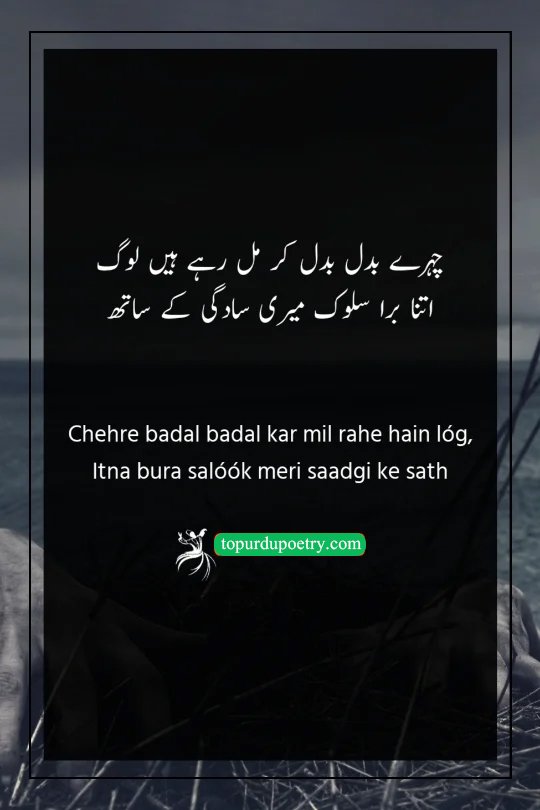
چہرے بدل بدل کر مل رہے ہیں لوگ اتنا برا سلوک میری سادگی کے ساتھ
Chehre badal badal kar mil rahe hain log Itna bura salook meri saadgi ke sath
This powerful sad poetry in Urdu 2 lines laments the loss of authenticity in human relationships. The poet describes a world where people constantly 'change their faces' (chehre badal badal kar), using hypocrisy and masks to hide their true intentions. He feels that his own 'saadgi' (simplicity and innocence) is being mistreated by this environment. It is a deeply relatable verse for those who feel that their honesty is being exploited in a world filled with double standards. A great choice for 'chehra-poetry' that explores social themes and the pain of being a straightforward person in a complex world.
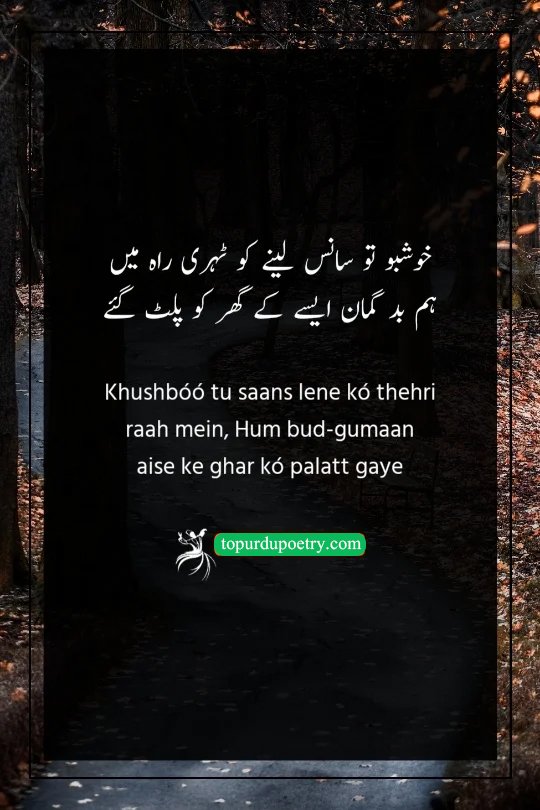
خوشبو تو سانس لینے کو ٹہری راہ میں ہم بد گمان ایسے کے گھر کو پلٹ گئے
Khushboo tu saans lene ko thehri raah mein Hum bad-gumaan aise ke ghar ko palatt gaye
This hauntingly beautiful sad quotes in Urdu explores the theme of 'Bud-gumani' (skepticism) and the fear of happiness. The poet describes a moment where joy and beauty—represented by 'Khushbu' (fragrance)—were waiting for him on his path. However, because of past betrayals and a cynical heart, he couldn't bring himself to trust the moment. Instead of embracing the beauty, he chose to turn back (ghar ko palat gaye). It is a perfect verse for TopUrduPoetry.com to describe the psychological state of a lover who has been hurt so deeply that they are now afraid of their own good fortune.
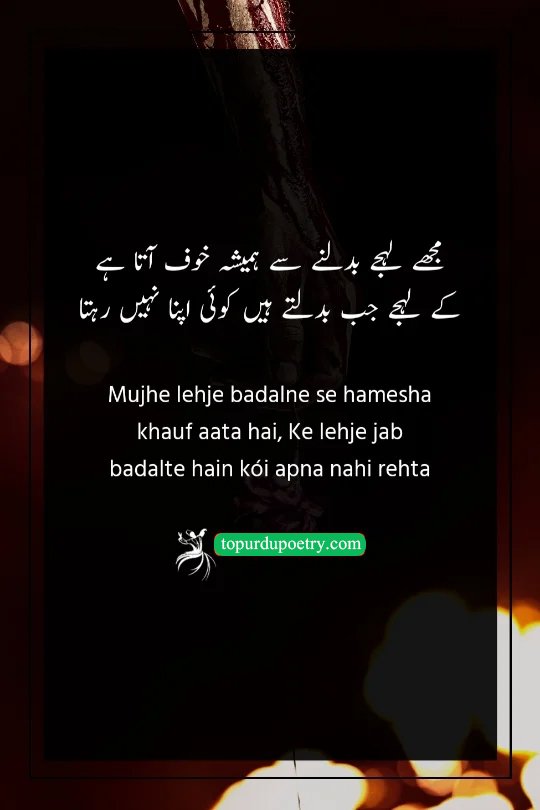
مجھے لہجے بدلنے سے ہمیشہ خوف آتا ہے کے لہجے جب بدلتے ہیں کوئی اپنا نہیں رہتا
Mujhe lehje badalne se hamesha khauf aata hai Ke lehje jab badalte hain koi apna nahi rehta
This heart-wrenching heart touching sad poetry in Urdu explores the fear of emotional distancing. The poet admits that he is terrified of a change in 'Lehja' (tone of voice), because a shifting tone is often the first sign that a relationship is fading. In Urdu poetry, warmth in speech is the glue that holds people together; once that tone turns cold or indifferent, the sense of belonging (apnaiyat) vanishes. It is a perfect verse for your 'sad poetry in urdu' section, resonating with anyone who has felt the sting of a loved one becoming a stranger through their words.
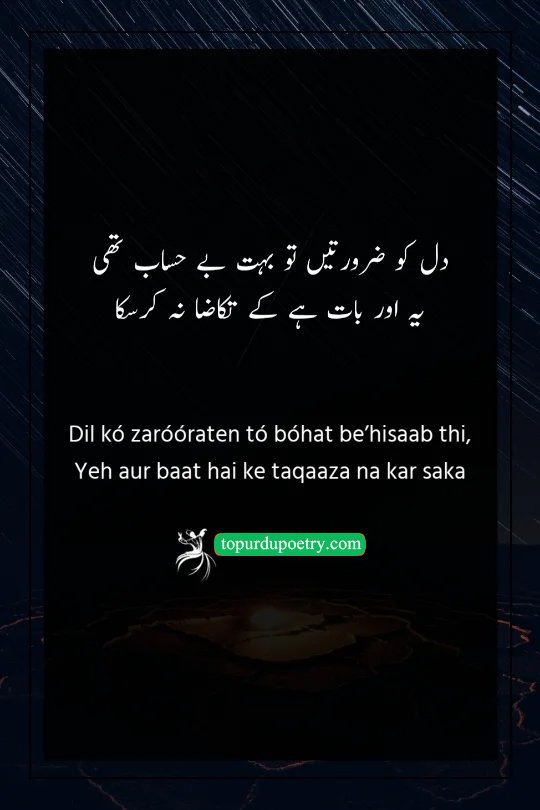
دل کو ضرورتیں تو بہت بے حساب تھی یہ اور بات ہے کے تکاضا نہ کرسکا
Dil ko zaróóraten tó bóhat be’hisaab thi Yeh aur baat hai ke taqaaza na kar saka
This deeply moving couplet explores the conflict between emotional longing and personal dignity. The poet confesses that while his heart's needs were infinite (be-hisaab), he chose not to voice them or make a 'taqaaza' (demand). It reflects the mindset of a lover who values self-respect above all else, believing that if love is true, it should understand needs without them being spoken. A perfect verse for readers who resonate with themes of silent heartbreak and the strength of the quiet soul.
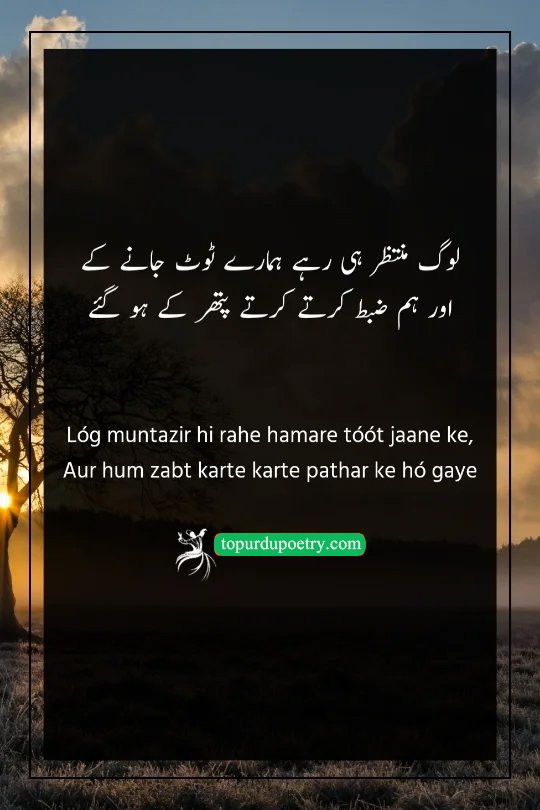
لوگ منتظر ہی رہے ہمارے ٹوٹ جانے کے اور ہم ضبط کرتے کرتے پتھر کے ہو گئے
Log muntazir hi rahe hamare toot jaane ke Aur hum zabt karte karte pathar ke ho gaye
This powerful couplet is a testament to the strength of the human spirit and the cost of endurance. The poet reflects on a world that was waiting for him to fail or 'break' (toot jaana). Instead of giving in, he practiced 'zabt'—the art of emotional restraint—until he became as unyielding and unbreakable as stone (pathar). While it is a victory of resilience, it also carries a tragic undertone: in order to survive the cruelty of others, the poet had to sacrifice his own sensitivity. An essential verse for anyone who has had to stay strong against all odds.
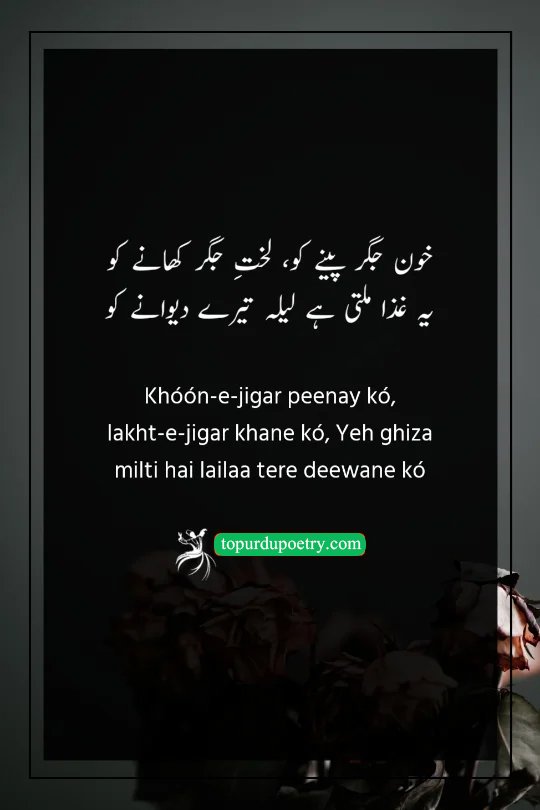
خون جگر پینے کو، لختِ جگر کھانے کو یہ غذا ملتی ہے لیلہ تیرے دیوانے کو
Khóón-e-jigar peenay kó, lakht-e-jigar khane kó, Yeh ghiza milti hai lailaa tere deewane kó
This intense couplet draws from the classic legend of Layla and Majnun to illustrate the extreme self-sacrifice involved in true 'Ishq.' The poet describes a state where the lover no longer needs worldly food, instead sustaining himself on his own sorrow—metaphorically 'drinking the blood' and 'eating the pieces' of his own heart (jigar). It represents the peak of 'Junoon' (madness), where the pain of love becomes the only thing keeping the lover alive. A raw and powerful addition to any collection of sad or classical Urdu poetry.
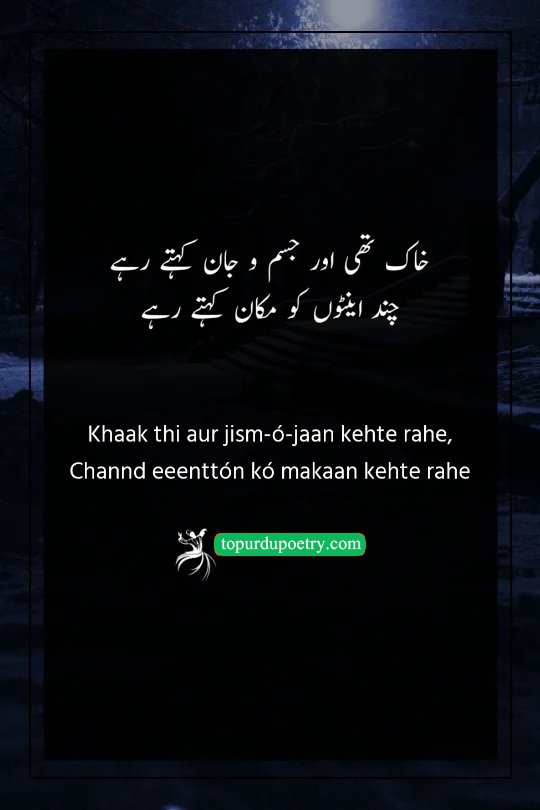
This philosophical couplet highlights the illusion of human existence and material attachments. The poet suggests that we are ultimately made of nothing but 'khaak' (dust), yet we pride ourselves on having a 'jism-o-jaan' (body and soul). Similarly, he points out that a home is merely a collection of 'chand eenton' (a few bricks), though we treat it as a permanent sanctuary. It is a powerful verse for TopUrduPoetry.com that encourages readers to look beyond physical forms and realize the temporary nature of the world.
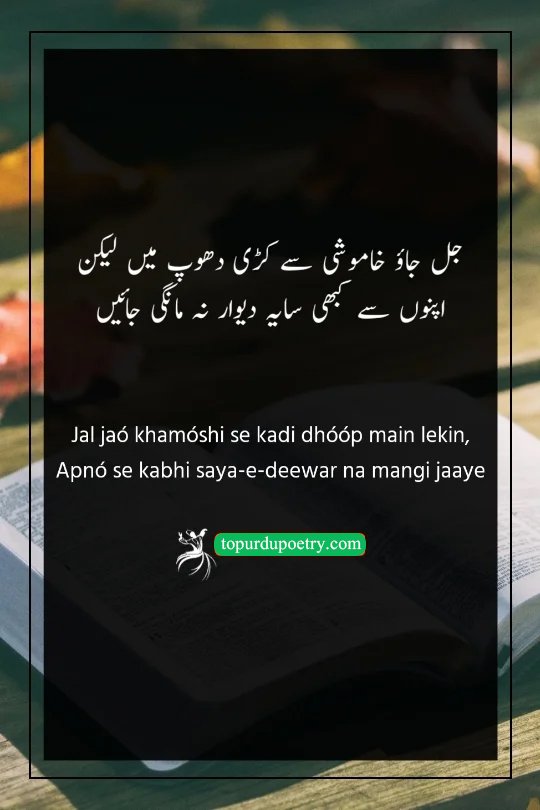
جل جاؤ خاموشی سے کڑی دھوپ میں لیکن اپنوں سے کبھی سایہ دیوار نہ مانگی جائیں
Jal jaó khamóshi se kadi dhóóp main lekin Apnó se kabhi saya-e-deewar na mangi jaaye
This profound sad poetry in Urdu 2 lines is an anthem for self-reliance and pride. The poet advises that it is better to endure the harshest struggles of life (kadi dhoop) in silence than to compromise one's dignity by asking for help from loved ones. It suggests that 'Apnaiyat' (closeness) loses its meaning if one has to beg for support. A perfect verse for TopUrduPoetry.com under the 'Ghairat' or 'Self-Respect' category, resonating with anyone who chooses to stand tall even in the most difficult circumstances.
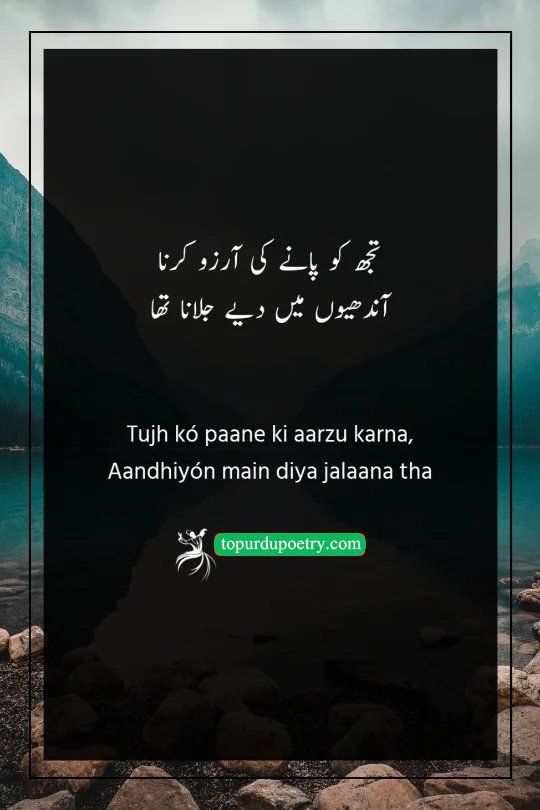
تجھ کو پانے کی آرزو کرنا آندھیوں میں دیے جلانا تھا
Tujh ko paane ki aarzu karna Aandhiyon mein diya jalaana tha
This iconic couplet captures the essence of 'Mehroomi' (deprivation) and the pain of an impossible love. The poet compares the act of desiring the beloved to the act of trying to keep a tiny lamp (diya) lit during a violent storm (aandhi). It suggests that the relationship was doomed from the start, and the lover's hope was a fragile thing that never stood a chance against the harsh winds of reality. It is a quintessential piece for any sad-poetry collection, representing a brave but hopeless struggle of the heart.
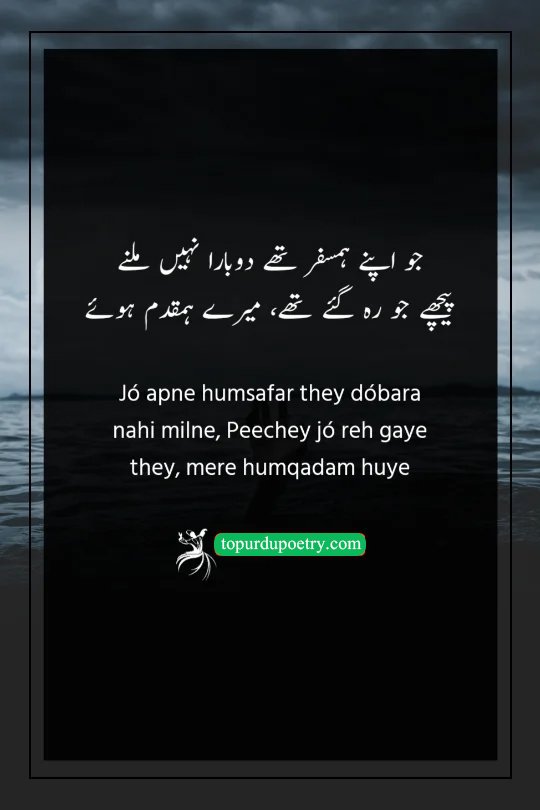
جو اپنے ہمسفر تھے دوبارا نہیں ملنے پیچھے جو رہ گئے تھے، میرے ہمقدم ہوئے
Jó apne humsafar they dóbara nahi milne Peechey jó reh gaye they, mere humqadam huye
This deep and reflective sad quotes in Urdu explores the irony of companionship. The poet laments that the people he once prioritized as his 'humsafar' (travel companions) are gone and will never return. However, in a beautiful twist of fate, the ones who were once 'left behind' (peechey reh gaye) or ignored have now become his 'humqadam'—the ones walking beside him in true soul-sync. It is a powerful verse for TopUrduPoetry.com that speaks to the changing seasons of life and the value of those who stay when everyone else leaves.
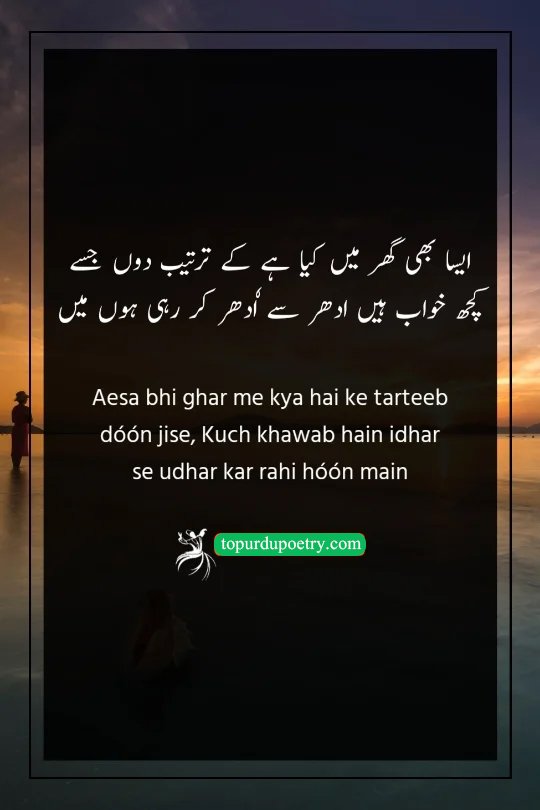
ایسا بھی گھر میں کیا ہے کے ترتیب دوں جسے کچھ خواب ہیں ادھر سے اٗدھر کر رہی ہوں میں
Aesa bhi ghar me kya hai ke tarteeb dóón jise Kuch khawab hain idhar se udhar kar rahi hóón main
This deeply relatable couplet captures the state of a restless mind. The poet dismisses the need to organize her physical surroundings (tarteeb), suggesting that her house feels empty of material value. Instead, she confesses that her only 'work' is rearranging her unfulfilled dreams (khawab). It’s a powerful metaphor for the internal clutter of a dreamer—someone who may look idle to the world but is constantly moving the heavy weight of their thoughts and desires within their soul.
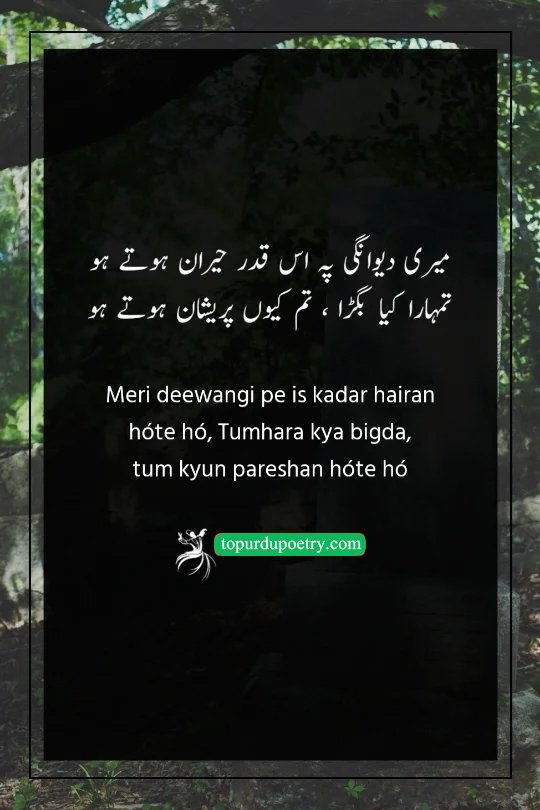
میری دیوانگی پہ اس قدر حیران ہوتے ہو تمہارا کیا بگڑا ، تم کیوں پریشان ہوتے ہو
Meri deewangi pe is kadar hairan hóte hó, Tumhara kya bigda, tum kyun pareshan hóte hó
This defiant couplet addresses the critics and onlookers who judge a lover's intense grief or 'deewangi' (madness). The poet asks a blunt question: if his obsession isn't causing any harm to others (tumhara kya bigda), why are they so concerned or bothered by it? It is a powerful expression of personal pain and the rejection of societal judgment. A perfect verse for those who feel that their sorrow is a private matter that the world has no right to critique. Use this on TopUrduPoetry.com for readers who appreciate 'Attitude-meets-Sadness' vibes.
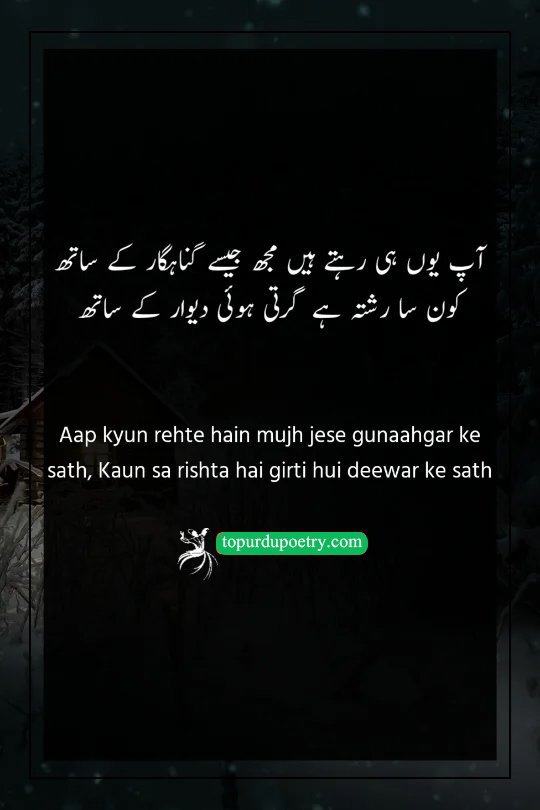
آپ یوں ہی رہتے ہیں مجھ جیسے گناہگار کے ساتھ کون سا رشتہ ہے گرتی ہوئی دیوار کے ساتھ
Aap kyun rehte hain mujh jese gunaahgar ke sath Kaun sa rishta hai girti hui deewar ke sath
This touching couplet explores the theme of unconditional loyalty and the feeling of unworthiness. The poet compares himself to a 'girti hui deewar' (a falling wall)—something broken and without a future—and wonders why the beloved still chooses to stay with a 'gunaahgar' (sinner) like him. It captures the moment of realization that true love or devotion doesn't look for perfection; it stays even when the other person is at their weakest point. A moving selection for TopUrduPoetry.com under themes of Humility, Devotion, or Sadness.
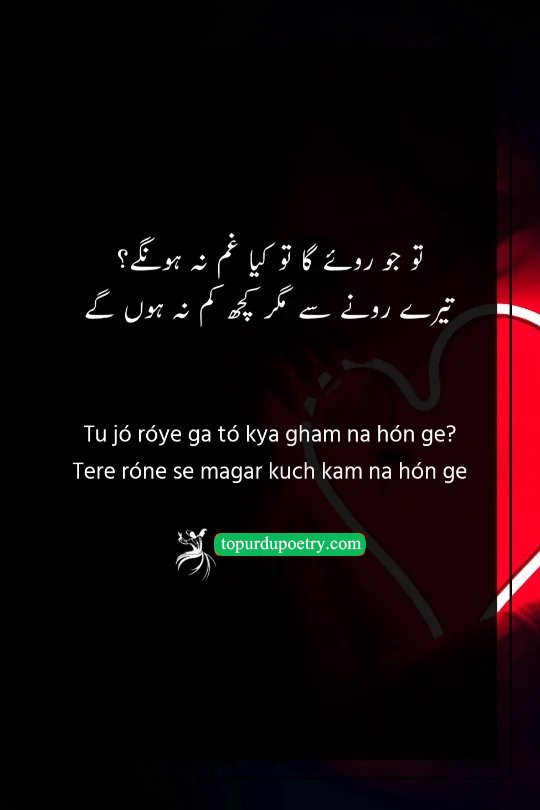
تو جو روئے گا تو کیا غم نہ ہونگے؟ تیرے رونے سے مگر کچھ کم نہ ہوں گے
Tu jó róye ga tó kya gham na hón ge? Tere róne se magar kuch kam na hón ge
This deep and realistic heart touching sad poetry in Urdu explores the bitter truth about grief and helplessness. The poet acknowledges that while crying is a natural response to pain, tears do not have the power to diminish the 'gham' (sorrows) of life. It’s a philosophical reflection on the fact that the universe remains indifferent to our suffering, and our emotional outbursts do not change the reality of our circumstances. A perfect verse for those who appreciate poetry that speaks the hard, unvarnished truth about life.
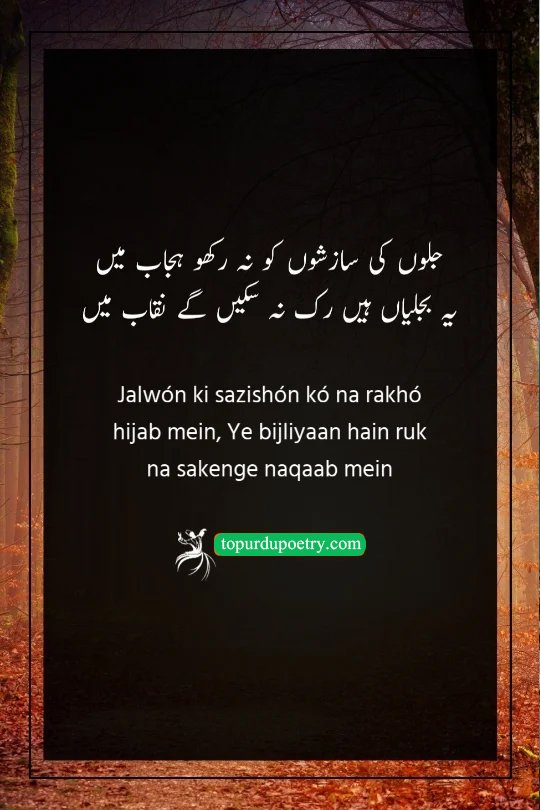
جلوں کی سازشوں کو نہ رکھو ہجاب میں یہ بجلیاں ہیں رک نہ سکیں گے نقاب میں
Jalwón ki sazishón kó na rakhó hijab mein, Ye bijliyaan hain ruk na sakenge naqaab mein
This striking couplet focuses on the theme of 'Be-hijabi'—the inability to conceal true splendor. The poet argues that the radiance of the beloved (jalwa) is like a conspiracy that cannot be hidden by a veil. By comparing this beauty to lightning (bijliyaan), he emphasizes that it is a force of nature that will pierce through any 'naqaab' (mask). It is a perfect verse for those who believe that true grace and truth are impossible to suppress.
Heartbreaking Sad Love Poetry in Urdu
The pain of separation (hijr) or unrequited love is a central theme in classic Urdu literature. If you are missing someone special or mourning a relationship that has ended, our collection of sad love poetry in Urdu (سیڈ شاعری) will speak directly to your soul. These heart touching sad poetry in Urdu beautifully articulate the emptiness of a world without your beloved, turning your personal heartbreak into timeless art.
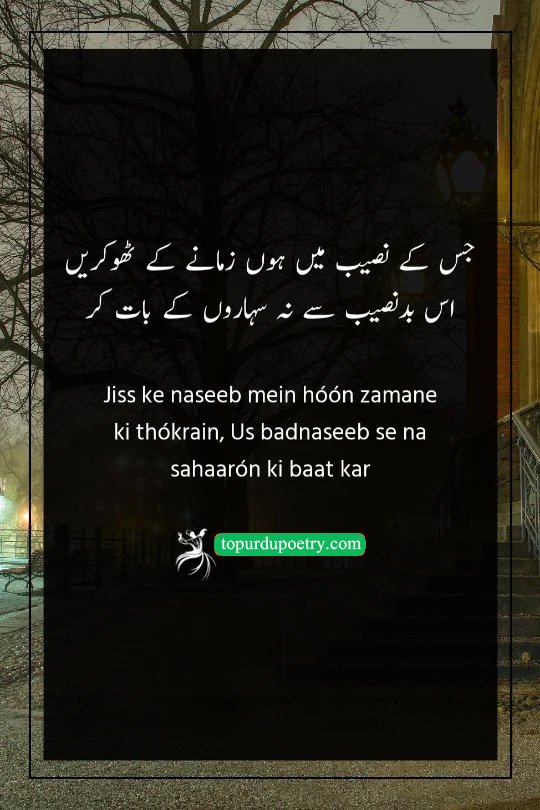
جس کے نصیب میں ہوں زمانے کے ٹھوکریں اس بدنصیب سے نہ سہاروں کے بات کر
Jiss ke naseeb mein hóón zamane ki thókrain, Us badnaseeb se na sahaarón ki baat kar
This heart-wrenching sad love poetry in Urdu explores the exhaustion of a soul burdened by constant misfortune. The poet suggests that for someone whose destiny is marked by the 'thokrain' (blows/rejections) of the world, discussing 'sahaara' (support) is meaningless. It portrays a level of sadness where the sufferer has become so accustomed to their pain that they no longer believe in the possibility of help. A poignant selection for those looking for 'sad poetry in urdu text' that captures the depth of hopelessness and social isolation.
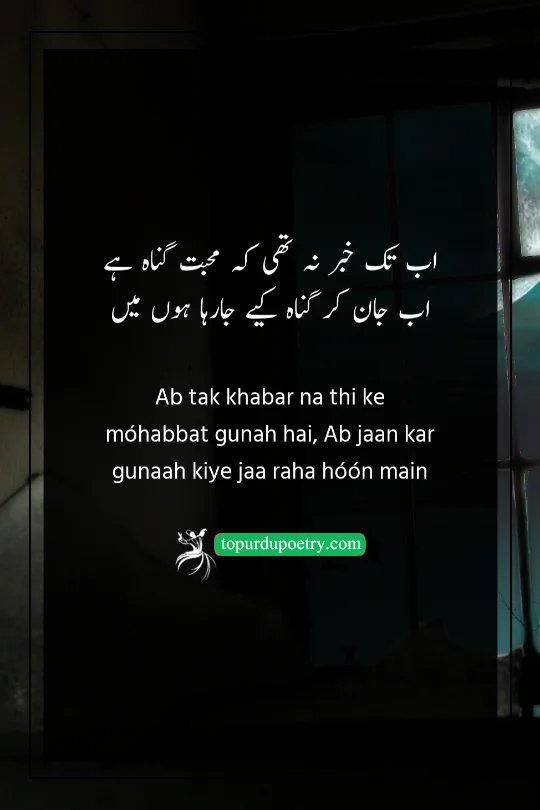
اب تک خبر نہ تھی کہ محبت گناہ ہے اب جان کر گناہ کیے جارہا ہوں میں
Ab tak khabar na thi ke mohabbat gunah hai Ab jaan kar gunaah kiye jaa raha hoon main
This bold and defiant couplet explores the transition from innocent love to conscious rebellion. The poet admits that he initially didn't realize that his love would be viewed as a 'gunah' (sin) by the world. However, the second line reveals a powerful choice: even after knowing the risks and the labels attached to his feelings, he continues to love. It celebrates the idea that true 'Ishq' is worth the price of being called a sinner. An excellent choice for your collection under 'Ishq-e-Baghawat' or 'Rebellious Love'.
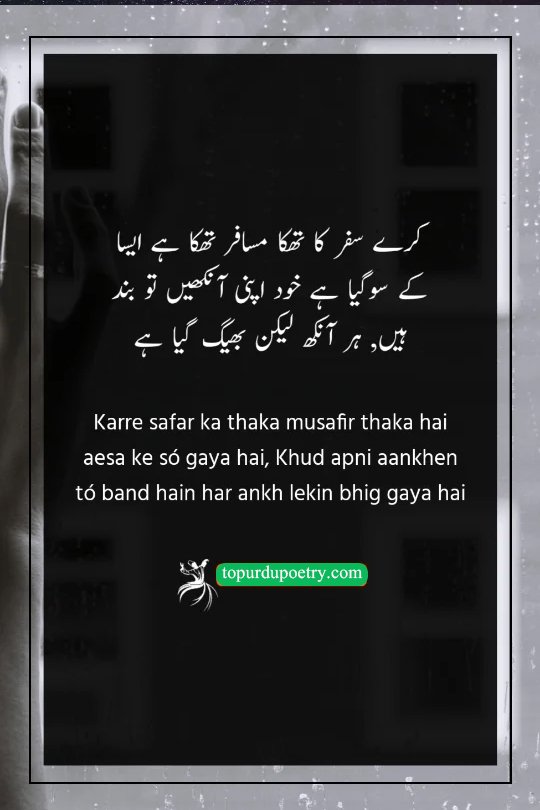
کرے سفر کا تھکا مسافر تھکا ہے ایسا کے سوگیا ہے خود اپنی آنکھیں تو بند ہیں، ہر آنکھ لیکن بھیگ گیا ہے
Karre safar ka thaka musafir thaka hai aesa ke só gaya hai, Khud apni aankhen tó band hain har ankh lekin bhig gaya hai
This poignant sad poetry in Urdu 2 lines uses the metaphor of a 'tired traveler' (thaka musafir) to describe the end of life’s journey. The poet suggests that death is a form of deep, well-earned sleep after the long exhaustion of living. While the traveler’s eyes are closed in eternal peace, the second line captures the grief of the world left behind, noting that every other eye is 'wet' with tears. It is a masterpiece of 'Dard' poetry, perfect for reflecting on loss, finality, and the quiet dignity of a soul at rest.
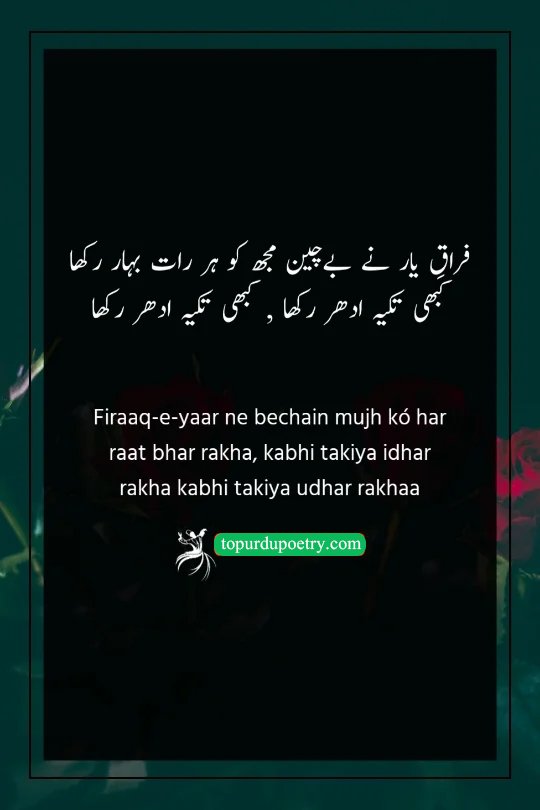
فراقِ یار نے بےچین مجھ کو ہر رات بھر رکھا کبھی تکیہ ادھر رکھا ، کبھی تکیہ ادھر رکھا
Firaaq-e-yaar ne bechain mujh kó har raat bhar rakha, kabhi takiya idhar rakha kabhi takiya udhar rakha
This iconic couplet captures the physical reality of 'Firaaq' (separation). While many poets talk about the pain in the heart, this verse describes the literal tossing and turning of a restless lover. By mentioning the act of moving the 'takiya' (pillow) from one side to the other, the poet illustrates a night spent in total discomfort, where no physical adjustment can soothe the emotional ache of being away from the beloved. A masterpiece of simplicity and deep relatability for any sad poetry collection.
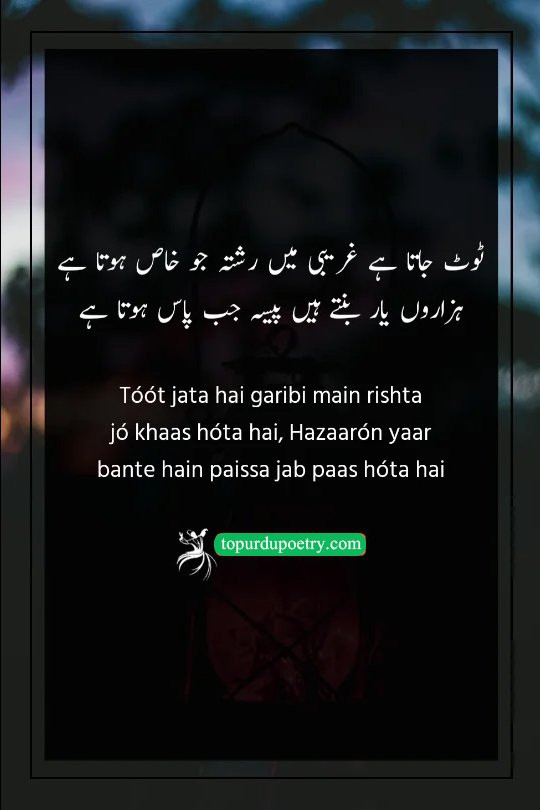
ٹوٹ جاتا ہے غریبی میں رشتہ جو خاص ہوتا ہے ہزاروں یار بنتے ہیں پیسہ جب پاس ہوتا ہے
Tóót jata hai garibi main rishta jó khaas hóta hai, Hazaarón yaar bante hain paissa jab paas hóta hai
This hard-hitting sad quotes in Urdu exposes the materialistic nature of human society. The poet laments that poverty (garibi) has the power to break even the most cherished and 'special' relationships. In contrast, wealth acts as a magnet, attracting 'thousands of friends' who are often only there for the benefit of the money. It is a powerful piece for anyone who has experienced the changing attitudes of people based on financial status. A must-have for any 'life sad poetry in urdu' collection.
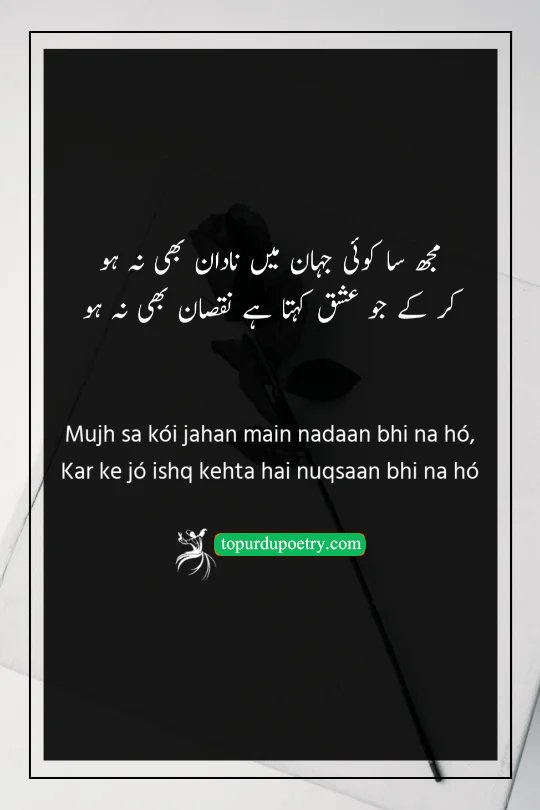
مجھ سا کوئی جہان میں نادان بھی نہ ہو کر کے جو عشق کہتا ہے نقصان بھی نہ ہو
Mujh sa kói jahan main nadaan bhi na hó, Kar ke jó ishq kehta hai nuqsaan bhi na hó
This witty and profound couplet explores the inherent risks of 'Ishq' (love). The poet mocks his own naivety (nadaan), questioning how anyone could be so foolish as to fall in love and yet expect to come out of it without any 'nuqsaan' (loss or damage). It serves as a reminder that love is a high-stakes gamble where sacrifice is the entry fee. A great choice for readers who appreciate poetry that balances deep emotion with a touch of self-deprecating humor.
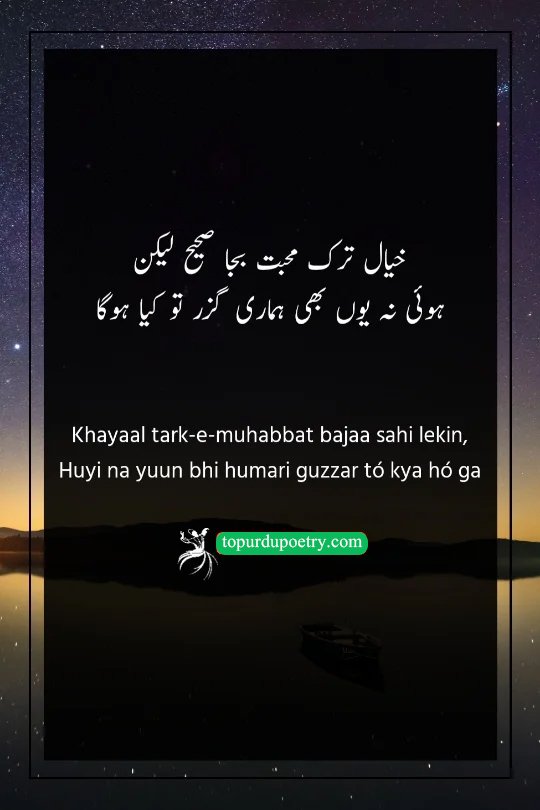
خیال ترک محبت بجا صحیح لیکن ہوئی نہ یوں بھی ہماری گزر تو کیا ہوگا
Khayaal tark-e-muhabbat bajaa sahi lekin Huyi na yuun bhi humari guzzar tó kya hó ga
This profound heart touching sad poetry in Urdu by Sahir Ludhianvi explores the fear of the void that follows a heartbreak. While logic suggests that one should give up on a painful love (tark-e-muhabbat), the poet is haunted by a deeper question: what if life becomes even more unbearable without that pain? It perfectly captures the struggle of a soul that has become so accustomed to loving that it fears the emptiness of a 'logical' life. A brilliant choice for your 'Falsafa' (Philosophy) or 'Dard' categories.
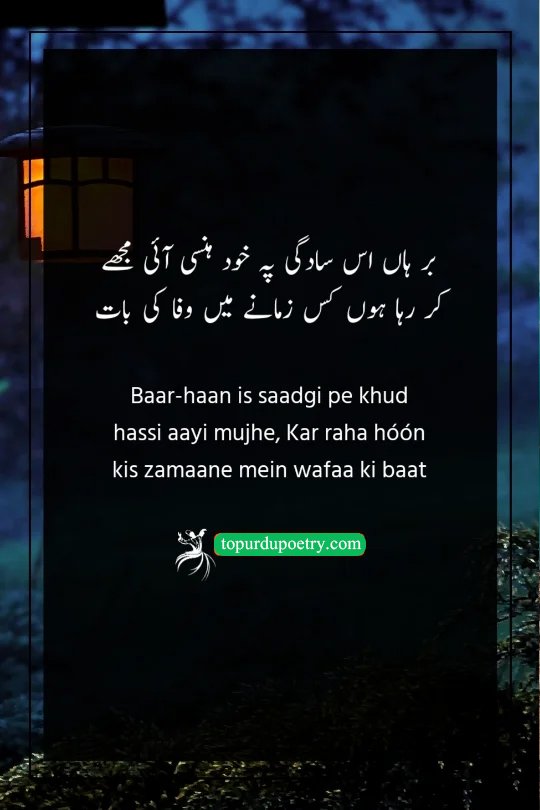
بار ہا اس سادگی پہ خود ہنسی آئی مجھے کر رہا ہوں کس زمانے میں وفا کی بات
Baar-haan is saadgi pe khud hassi aayi mujhe, Kar raha hóón kis zamaane mein wafaa ki baat
This iconic couplet captures the irony of holding onto old-school values in a modern, cynical world. The poet mocks his own 'saadgi' (naivety) for expecting loyalty (wafaa) in an era where it no longer exists. It is a powerful reflection on being a 'misfit'—someone whose heart is governed by principles that the rest of the world has long since forgotten. A brilliant addition to your 'Reality' or 'Daur-e-Hazir' (Modern Era) categories.
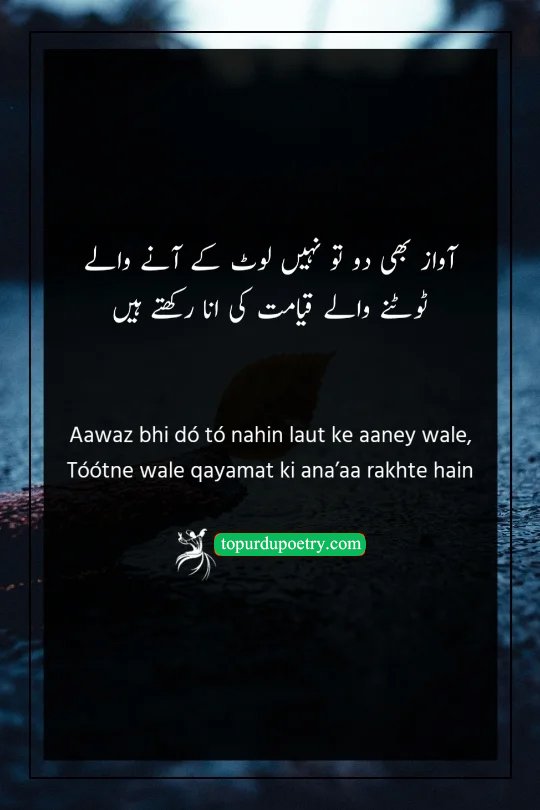
آواز بھی دو تو نہیں لوٹ کے آنے والے ٹوٹنے والے قیامت کی انا رکھتے ہیں
Aawaz bhi dó tó nahin laut ke aaney wale, Tóótne wale qayamat ki ana’aa rakhte hain
This powerful couplet celebrates the fierce dignity of a broken heart. The poet suggests that when a person of high self-respect (Anaa) is hurt, their exit is final. Even if the other person calls out to them or tries to apologize, they will never return. By comparing their pride to 'Qayamat' (Judgment Day), the poet highlights that their silence is not a sign of weakness, but a testament to their unbreakable spirit. An essential verse for the 'Self-Respect' or 'Attitude' category on TopUrduPoetry.com.
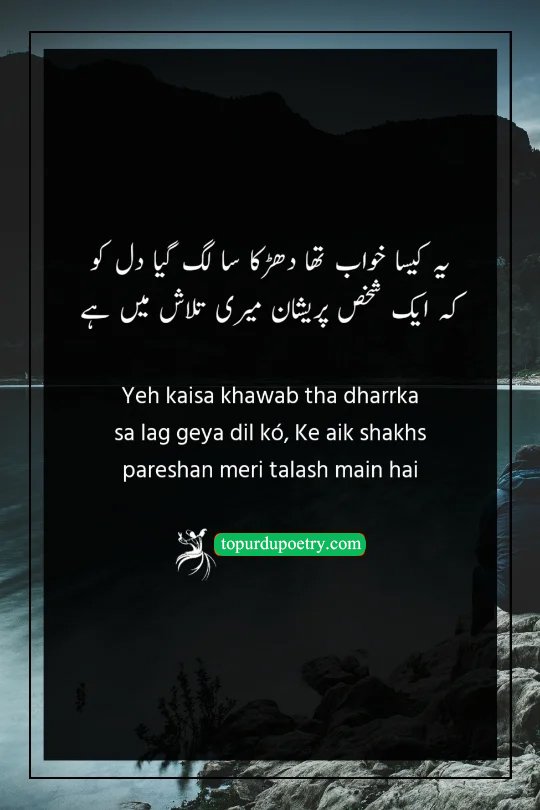
یہ کیسا خواب تھا دھڑکا سا لگ گیا دل کو کہ ایک شخص پریشان میری تلاش میں ہے
Yeh kaisa khawab tha dharrka sa lag geya dil kó Ke aik shakhs pareshan meri talash main hai
This soul-stirring sad love poetry in Urdu explores the spiritual link between lovers. The poet describes a restless dream that leaves their heart pounding with anxiety (dharrka). The cause of this restlessness is the realization that someone, somewhere, is searching for them in a state of deep distress (pareshan). It captures the haunting feeling of being missed by someone you cannot reach. An evocative piece for those who appreciate 'Dard' poetry that touches on dreams and telepathic connections.
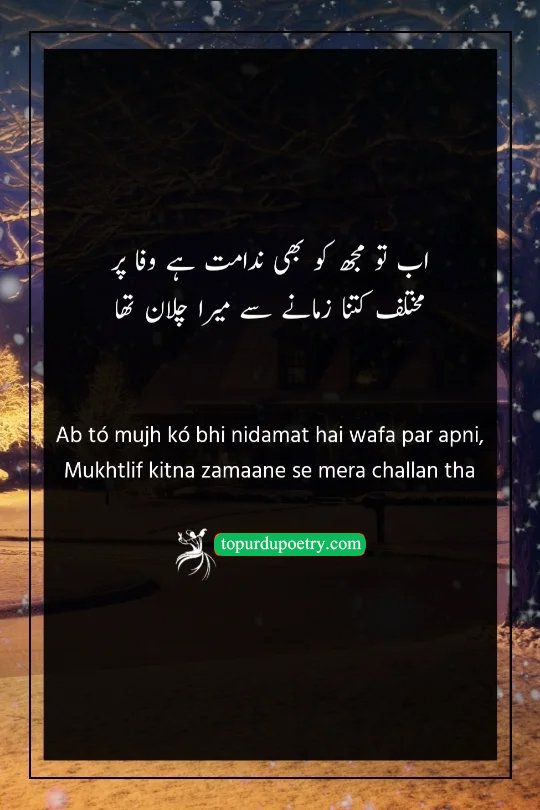
اب تو مجھ کو بھی ندامت ہے وفا پر مختلف کتنا زمانے سے میرا چلان تھا
Ab tó mujh kó bhi nidamat hai wafa par apni, Mukhtlif kitna zamaane se mera challan tha
This soul-aching couplet explores the regret of being 'too good' in a cynical world. The poet confesses to feeling 'nidamat' (remorse) for his own loyalty, realizing that his 'challan' (conduct) was completely out of sync with the selfish nature of society. It resonates deeply with anyone who has ever felt like a misfit for choosing honesty and faithfulness over worldly tactics. A powerful addition to your 'Reality' or 'Daur-e-Hazir' categories.
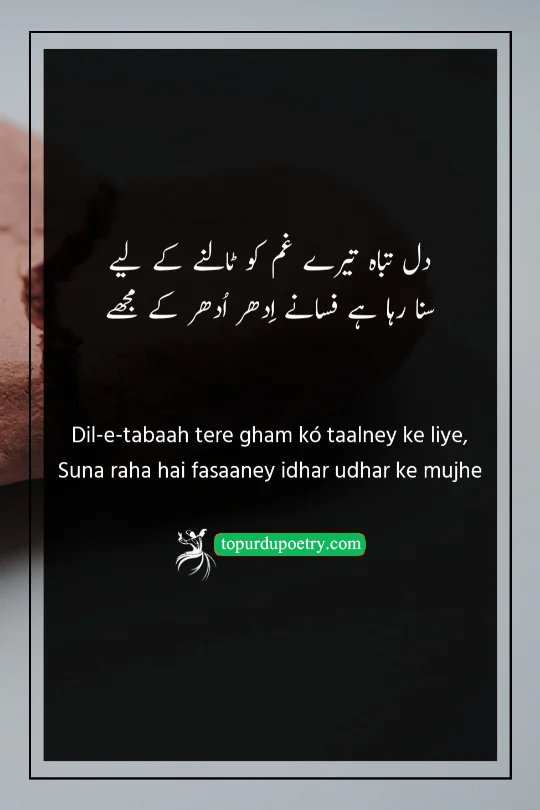
دل تباہ تیرے غم کو ٹالنے کے لیے سنا رہا ہے فسانے اِدھر اُدھر کے مجھے
Dil-e-tabaah tere gham kó taalney ke liye Suna raha hai fasaaney idhar udhar ke mujhe
This profound sad quotes in Urdu explores the heart's attempt at self-preservation. The poet describes how his devastated heart (dil-e-tabaah) tries to hide from the agonizing grief of the beloved by distracting itself with random, unrelated stories (fasaaney idhar udhar ke). It is a beautiful metaphor for the 'distraction phase' of grief, where the mind tries to focus on everything except the one thing that hurts the most. A perfect selection for your 'Dard' or 'Psychological Poetry' category.
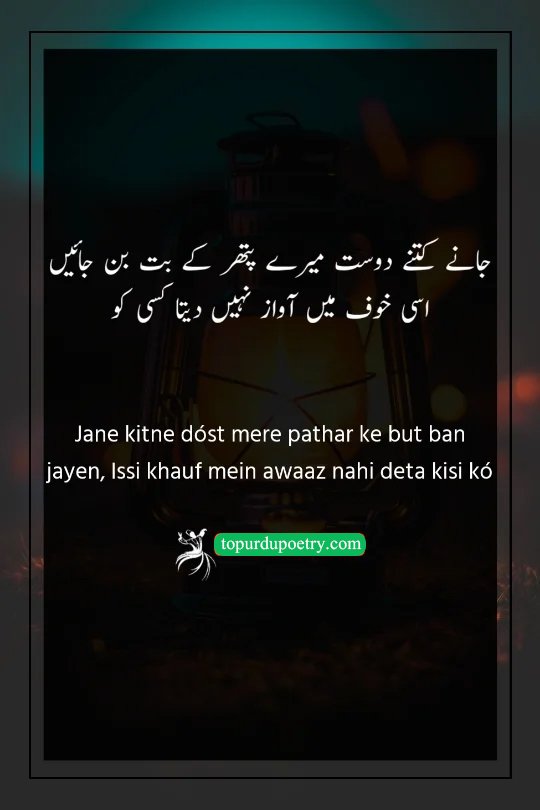
جانے کتنے دوست میرے پتھر کے بت بن جائیں اسی خوف میں آواز نہیں دیتا کسی کو
Jane kitne dóst mere pathar ke but ban jayen, Issi khauf mein awaaz nahi deta kisi kó
This haunting couplet explores the fear of discovering the indifference of others. The poet admits that he avoids calling out to his friends (awaaz dena) because he is terrified that they might not respond, revealing they have become 'pathar ke but' (stone idols)—cold and heartless. It captures the psychological state of someone who chooses loneliness over the risk of being ignored by those they love. A powerful addition to your 'Friendship' or 'Sad Poetry' categories.
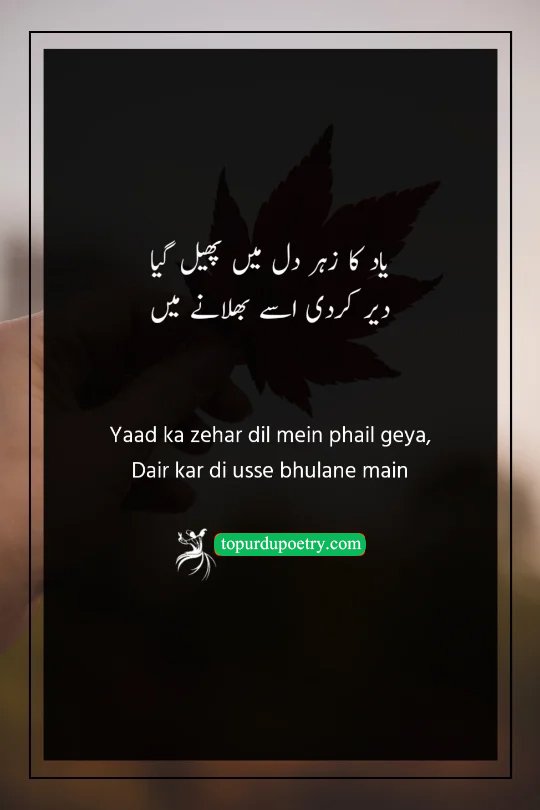
یاد کا زہر دل میں پھیل گیا دیر کردی اسے بھلانے میں
Yaad ka zehar dil mein phail geya, Dair kar di usse bhulane main
This haunting two-liner captures the destructive power of past memories. The poet describes 'Yaad' (memory) as a poison that has already seeped into the heart, suggesting that the damage is now irreversible. The tragedy lies in the regret of 'Dair kar di' (being too late)—realizing that the effort to move on should have started much sooner. It is a powerful reminder that holding onto a painful past can eventually become toxic to one's own soul. A top pick for 'sad poetry in urdu text sms' collections.
Meaningful Sad Quotes in Urdu for Deep Reflection
Sometimes, the pain is so raw that it doesn’t need rhyming couplets; it just needs absolute truth. Our collection of heart touching sad quotes in Urdu offers profound wisdom for those moments when you feel completely understood by a simple, heavy sentence. These sad quotes about pain (سیڈ شاعری) are perfect for text-based status updates, tweeting, or adding a thoughtful caption to your photos. They give a voice to the silent struggles of the heart, reminding us that sorrow is a shared human experience. Read through these carefully selected sad quotes in Urdu and find the quote that perfectly mirrors your current emotional state
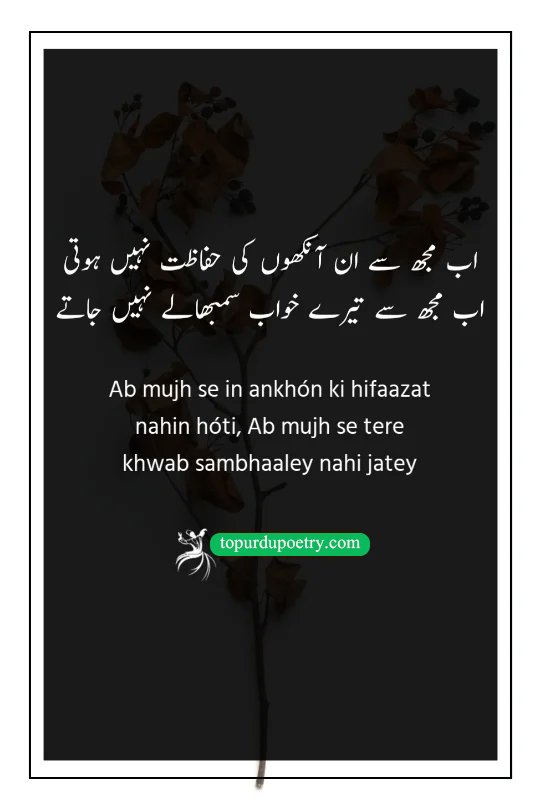
اب مجھ سے ان آنکھوں کی حفاظت نہیں ہوتی اب مجھ سے تیرے خواب سمبھالے نہیں جاتے
Ab mujh se in ankhón ki hifaazat nahin hóti, Ab mujh se tere khwab sambhaaley nahi jatey
This deeply moving couplet captures the final stage of emotional burnout. The poet admits that he can no longer 'protect' his eyes from tears, signaling a total surrender to grief. Furthermore, the beautiful dreams of the beloved, which once brought joy, have now become an unbearable burden that he no longer has the strength to carry. It is a masterpiece for those who feel the heavy weight of memories and the exhaustion of a long, lonely wait. A top choice for your 'sad poetry in urdu 2 lines' collection.
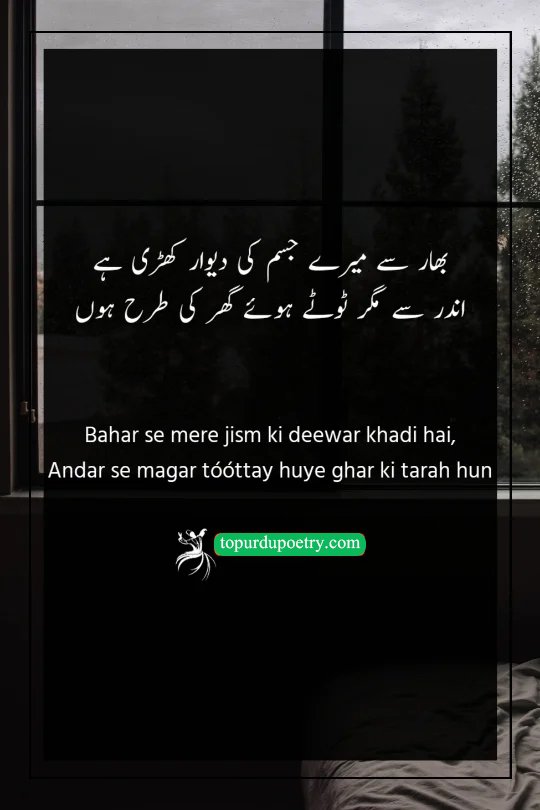
باہر سے میرے جسم کی دیوار کھڑی ہے اندر سے مگر ٹوٹے ہوئے گھر کی طرح ہوں
Bahar se mere jism ki deewar khadi hai, Andar se magar tóóttay huye ghar ki tarah hun
This deeply emotional sad love poetry in Urdu explores the contrast between appearance and reality. The poet uses the metaphor of a 'wall' (deewar) to describe his physical self—standing tall and appearing strong to the world. However, the second line reveals the painful truth: inside, he is like a 'toota hua ghar' (broken house), filled with ruins and emptiness. It is a powerful representation of internal struggle and the silent battles people fight behind a brave face. A must-have for your 'Dard' or 'Zindagi' (Life) poetry collection.
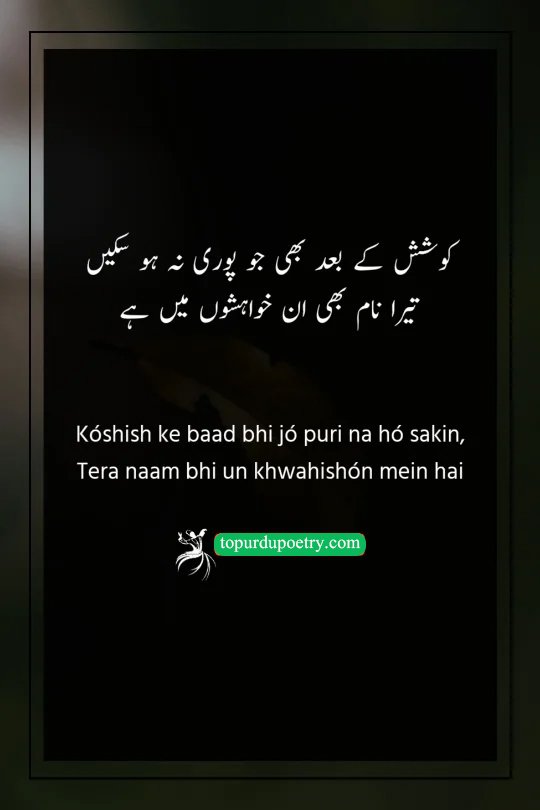
کوشش کے بعد بھی جو پوری نہ ہو سکیں تیرا نام بھی ان خواہشوں میں ہے
Kóshish ke baad bhi jó puri na hó sakin, Tera naam bhi un khwahishón mein hai
This poignant couplet captures the bitterness of unrequited effort. The poet reflects on the many dreams in life that remain unfulfilled despite 'koshish' (effort). By placing the beloved's name in this list of failed desires, the verse expresses a deep sense of defeat and resignation. It is a masterpiece for anyone who has fought hard for a relationship only to realize that some things are simply not meant to be. A top-tier addition to your 'sad poetry in urdu' collection.
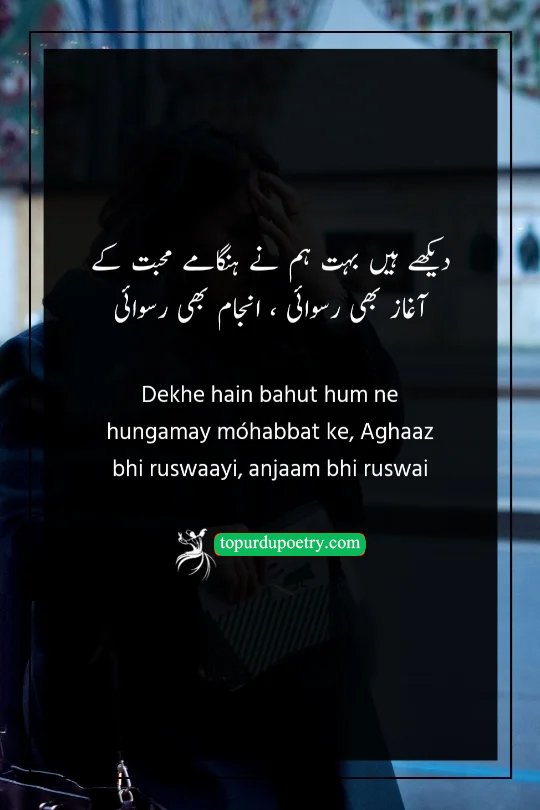
دیکھے ہیں بہت ہم نے ہنگامے محبت کے آغاز بھی رسوائی ، انجام بھی رسوائی
Dekhe hain bahut hum ne hungamay móhabbat ke, Aghaaz bhi ruswaayi, anjaam bhi ruswai
This sharp and realistic heart touching sad poetry in Urdu deconstructs the romanticized image of love. The poet describes the 'hungamay' (commotions) of love as nothing more than a path to public disgrace. By stating that both the 'aghaaz' (beginning) and the 'anjaam' (end) lead to 'ruswai' (dishonor), the verse warns that love often costs a person their reputation and peace of mind. A powerful selection for those who have grown cynical of the drama associated with modern romance.
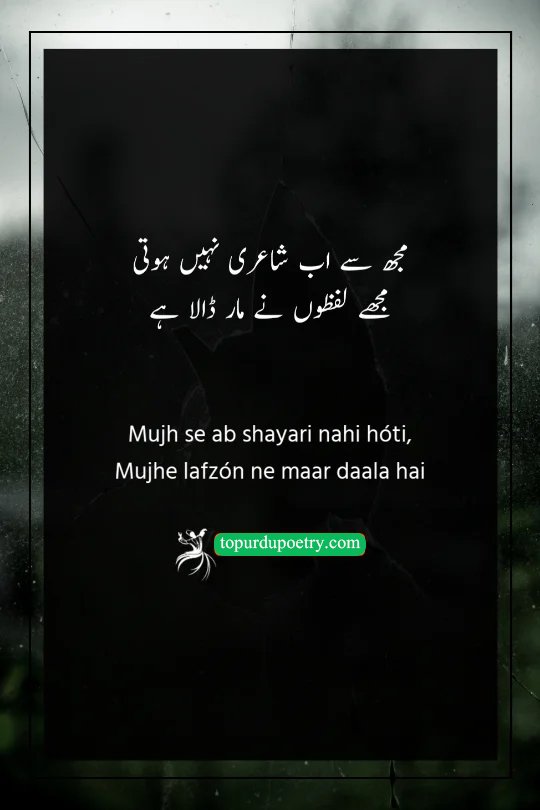
مجھ سے اب شاعری نہیں ہوتی مجھے لفظوں نے مار ڈالا ہے
Mujh se ab shayari nahi hóti, Mujhe lafzón ne maar daala hai
This haunting couplet describes the 'death of the artist' within a person. The poet confesses that they can no longer find the strength to write poetry (shayari), as the emotional toll of expressing their pain has become too great. In a tragic twist, the very 'words' (lafz) that once provided an outlet for grief have now become the cause of their soul's exhaustion. A deeply relatable verse for anyone who has ever felt that their own thoughts and expressions have become a burden too heavy to carry.
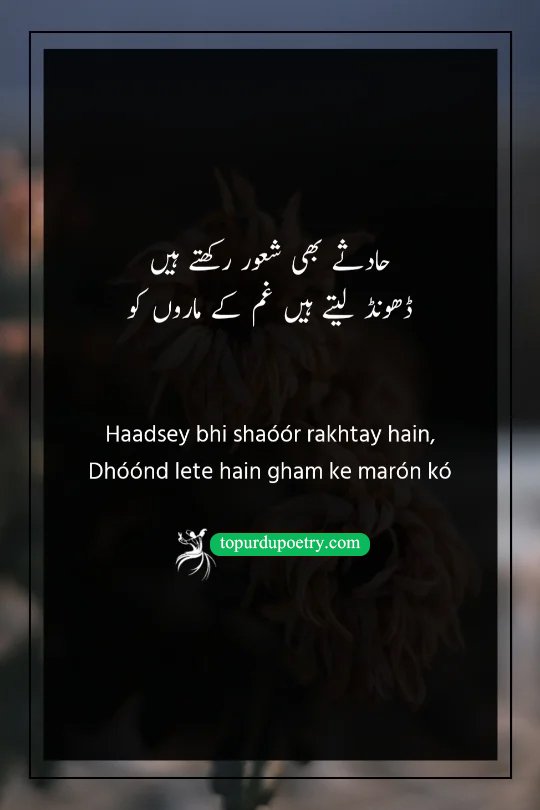
حادثے بھی شعور رکھتے ہیں ڈھونڈ لیتے ہیں غم کے ماروں کو
Haadsey bhi shaóór rakhtay hain, Dhóónd lete hain gham ke marón kó
This chillingly profound couplet personifies 'Haadsa' (tragedy) as an intelligent force. The poet argues that disasters are not random; they possess 'shaoor' (awareness) and specifically seek out those who are already 'gham ke maarey' (burdened by grief). It captures the feeling that misfortune follows the vulnerable, making it a powerful piece for anyone who feels that life's struggles never come one at a time. A standout choice for 'Dard' or 'Taqdeer' (Fate) categories.
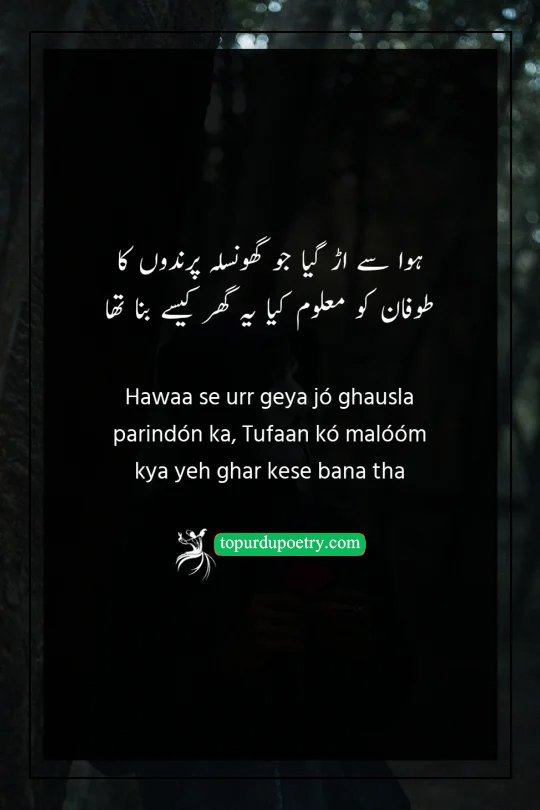
ہوا سے اڑ گیا جو گھونسلہ پرندوں کا طوفان کو معلوم کیا یہ گھر کیسے بنا تھا
Hawaa se urr geya jó ghausla parindón ka Tufaan kó malóóm kya yeh ghar kese bana tha
This heart-wrenching couplet explores the fragility of human effort against the cruelty of fate. The poet uses a bird's nest (ghausla) as a metaphor for a home or a life built with immense patience, one straw at a time. He laments that the 'storm' (tufaan)—representing harsh circumstances or indifferent forces—destroys everything in a moment, never understanding the years of sacrifice that went into its creation. It is a powerful reflection on the pain of losing one's life's work to a world that doesn't care.
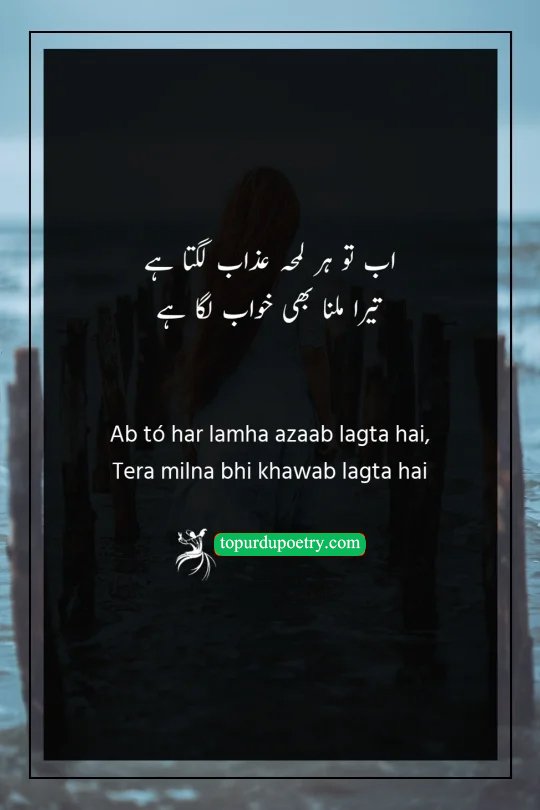
اب تو ہر لمحہ عذاب لگتا ہے تیرا ملنا بھی خواب لگا ہے
Ab tó har lamha azaab lagta hai, Tera milna bhi khawab lagta hai
This soul-crushing sad quotes in Urdu captures the weight of absolute loneliness and the fading of hope. The poet describes his current state as one of constant 'azaab' (torment), where every passing second is a struggle. The tragedy is heightened by the realization that being with the beloved now seems like an impossible 'khawab' (dream). It is a perfect selection for those experiencing the deep ache of separation and the exhaustion of a heart that has lost its anchor.
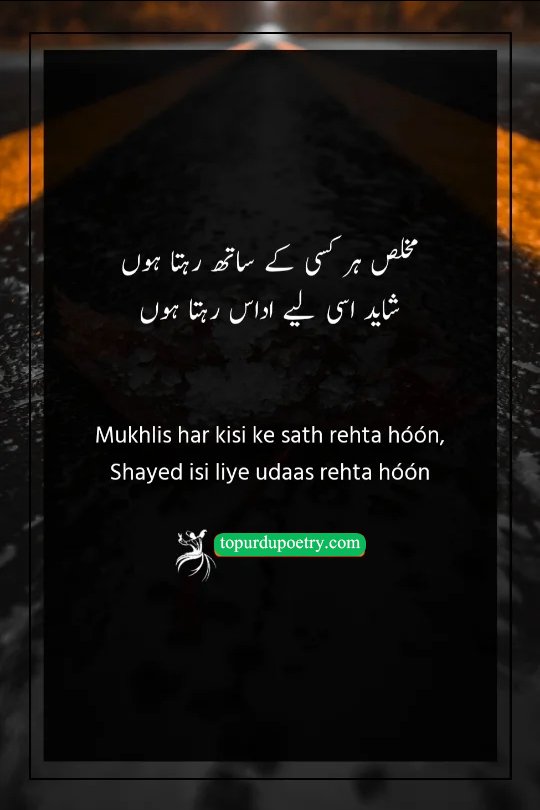
مخلص ہر کسی کے ساتھ رہتا ہوں شاید اسی لیے اداس رہتا ہوں
Mukhlis har kisi ke sath rehta hóón, Shayed isi liye udaas rehta hóón
This relatable couplet explores the irony of goodness. The poet reflects on his nature of being 'mukhlis' (sincere) with everyone, only to realize that this very quality is the root of his 'udaasi' (sadness). It highlights the painful truth that in a transactional world, those who love and give without conditions are often the ones left feeling the most lonely. A perfect verse for those who feel like misfits because of their own kindness.
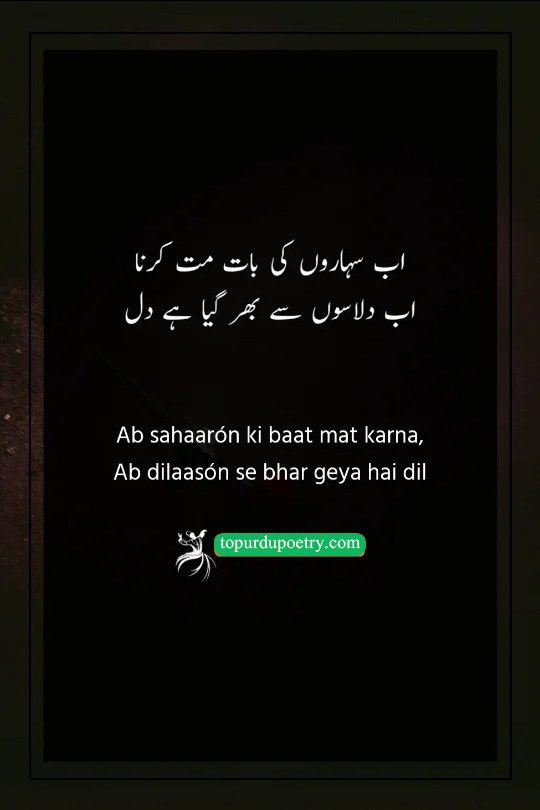
اب سہاروں کی بات مت کرنا اب دلاسوں سے بھر گیا ہے دل
Ab sahaarón ki baat mat karna, Ab dilaasón se bhar geya hai dil
This hard-hitting sad poetry in Urdu 2 lines captures the moment of emotional finality. The poet rejects the idea of 'sahaara' (support) and 'dilaasa' (consolation), expressing a deep weariness with empty words of comfort. It resonates with anyone who has been disappointed by people too many times and has finally decided to carry their own burden in silence. A perfect addition to your 'Self-Respect' or 'Deep Sadness' categories.
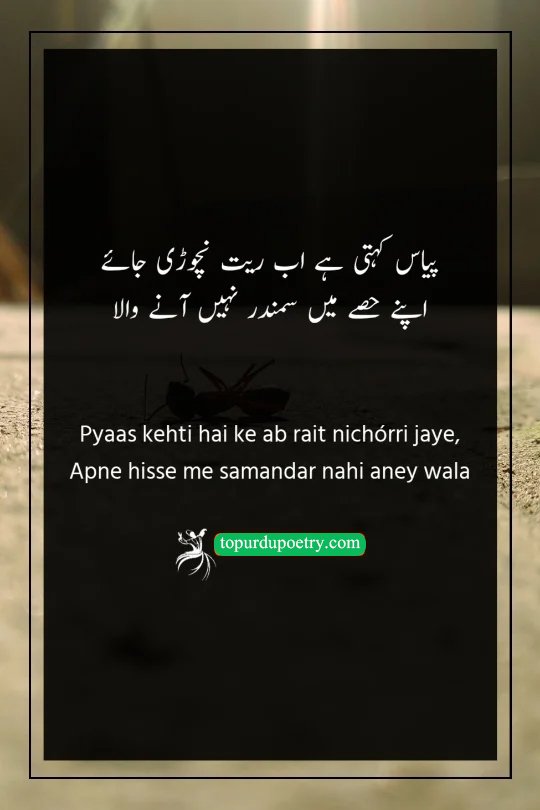
پیاس کہتی ہے اب ریت نچوڑی جائے اپنے حصے میں سمندر نہیں آنے والا
Pyaas kehti hai ke ab rait nichórri jaye, Apne hisse me samandar nahi aney wala
This profound heart touching sad poetry in Urdu captures the peak of human desperation and the acceptance of a difficult destiny. The poet uses the striking image of 'squeezing sand' (rait nichorrna) to describe the impossible struggle of someone whose needs are vast but resources are non-existent. The realization that the 'samandar' (ocean of relief or success) is not in one's fate leads to a haunting sense of self-reliance born out of hopelessness. A top-tier choice for your 'sad poetry in urdu text' collection.
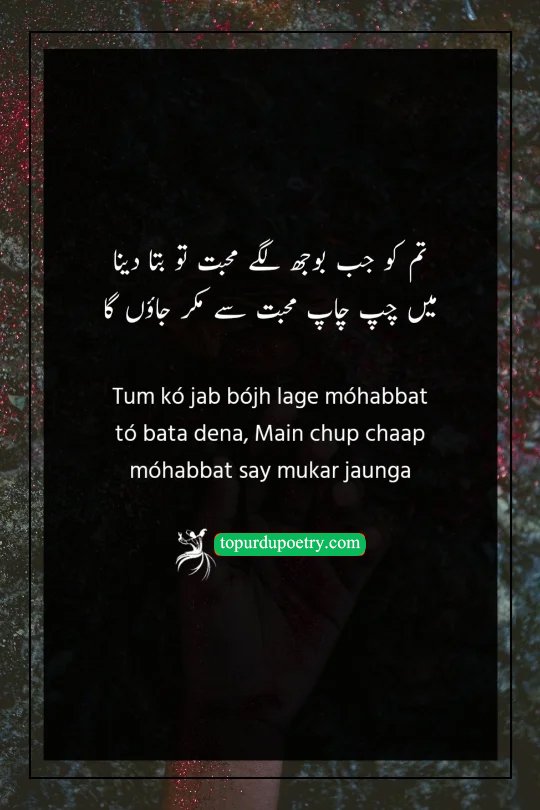
تم کو جب بوجھ لگے محبت تو بتا دینا میں چپ چاپ محبت سے مکر جاؤں گا
Tum kó jab bójh lage móhabbat tó bata dena, Main chup chaap móhabbat say mukar jaunga
This iconic couplet represents the height of 'Ikhlas' (sincerity) in love. It portrays a lover who is so devoted that they would rather lie about their own feelings than let their love become a 'bojh' (burden) for the other person. By promising to 'mukar jana' (deny the love), the speaker offers a way out that is free of guilt and drama. It is a powerful choice for 'Sad Poetry' or 'Selfless Love' categories.
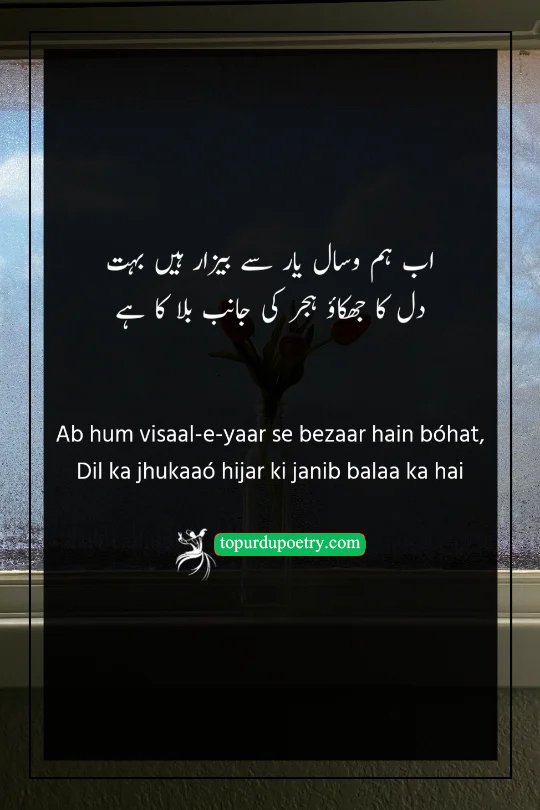
اب ہم وسال یار سے بیزار ہیں بہت دل کا جھکاؤ ہجر کی جانب بلا کا ہے
Ab hum visaal-e-yaar se bezaar hain bóhat, Dil ka jhukaaó hijr ki janib balaa ka hai
This sophisticated sad love poetry in Urdu deconstructs the traditional romantic narrative. Instead of longing for 'Visal' (union), the poet expresses a profound weariness ('bezaar') with being together. The verse suggests that the heart has found a strange, intense ('balaa ka') comfort in 'Hijr' (separation). It reflects a state where the struggle and longing of distance feel more authentic than the presence of the beloved. A perfect selection for 'Sad Poetry' or 'Philosophy of Love' collections.
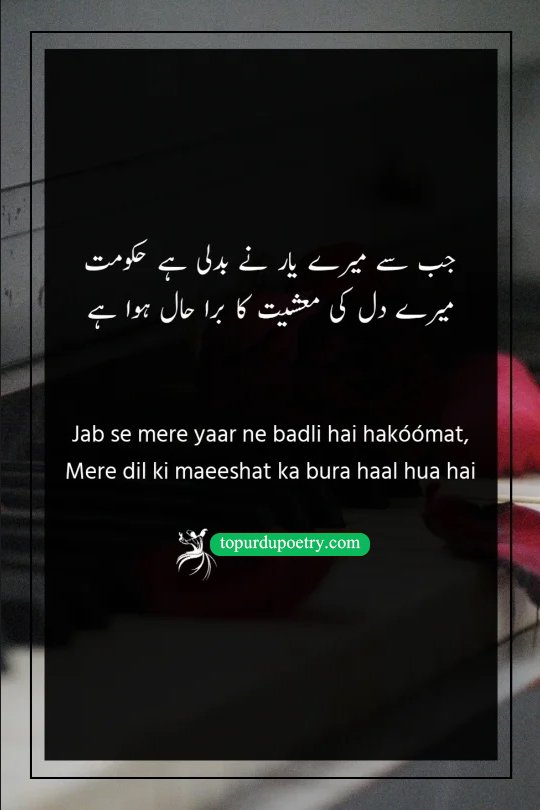
جب سے میرے یار نے بدلی ہے حکومت میرے دل کی معیشت کا برا حال ہوا ہے
Jab se mere yaar ne badli hai hakóómat, Mere dil ki maeeshat ka bura haal hua hai
This clever and contemporary couplet uses the language of politics and economics to describe the pain of a breakup. The poet compares the beloved to a ruling government (hakoomat); when the beloved's heart changes or they leave, it causes a total 'economic collapse' (maeeshat ka bura haal) within the poet's soul. It is a witty, relatable, and sharp piece of poetry that perfectly captures the feeling of a world being turned upside down by a change in a relationship.
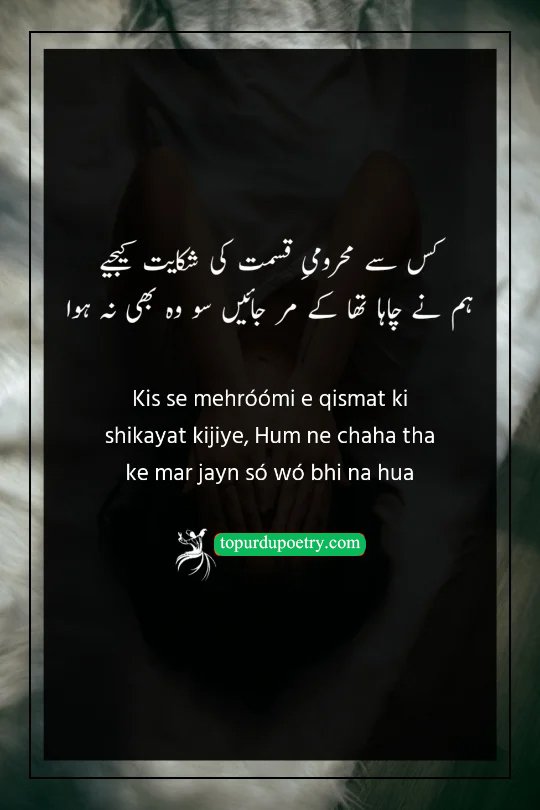
کس سے محرومیِ قسمت کی شکایت کیجیے ہم نے چاہا تھا کے مر جائیں سو وہ بھی نہ ہوا
Kis se mehróómi e qismat ki shikayat kijiye, Hum ne chaha tha ke mar jayn só wó bhi na hua
This heart-wrenching couplet explores the ultimate depth of bad luck and hopelessness. The poet laments that his 'mehroomi-e-qismat' (deprivation of fate) is so absolute that he has no one left to complain to. The tragedy reaches its peak when he confesses that even his wish for death—the final escape from suffering—was denied to him. It is a masterpiece for those who feel trapped by circumstances and an essential piece for any 'life sad poetry in urdu' collection.
Heart Touching Sad Poetry in Urdu Text
There are certain verses that do more than just rhyme; they reach deep into your soul and validate your hidden tears. Our collection of heart touching sad poetry in Urdu text (سیڈ شاعری) is gathered specifically for those moments when the pain feels overwhelming. These sad quotes in Urdu resonate with the silent weeping of a broken heart, capturing the fragile emotions that we often hide from the rest of the world.
When you read these deeply moving couplets (سیڈ شاعری), you will feel a sense of shared empathy, realizing that the most profound grief has been beautifully immortalized by poets who have walked the same difficult path. Let these verses soothe your spirit and provide the gentle embrace your heart needs today.
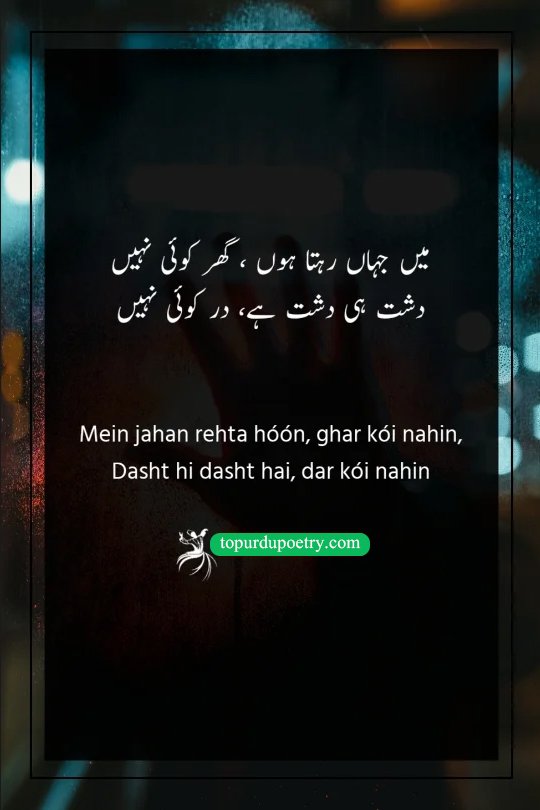
میں جہاں رہتا ہوں ، گھر کوئی نہیں دشت ہی دشت ہے، در کوئی نہیں
Mein jahan rehta hóón, ghar kói nahin, Dasht hi dasht hai, dar kói nahin
This haunting sad poetry in Urdu 2 lines captures the essence of absolute isolation. The poet describes a state of 'internal homelessness,' where despite being physically present, he feels no sense of 'Ghar' (home/belonging). By comparing his surroundings to a 'Dasht' (wilderness) without a 'Dar' (door), he illustrates a loneliness so vast that it has no boundaries and no escape. It is a powerful piece for those who feel like strangers in their own lives, searching for a threshold of peace that doesn't exist.
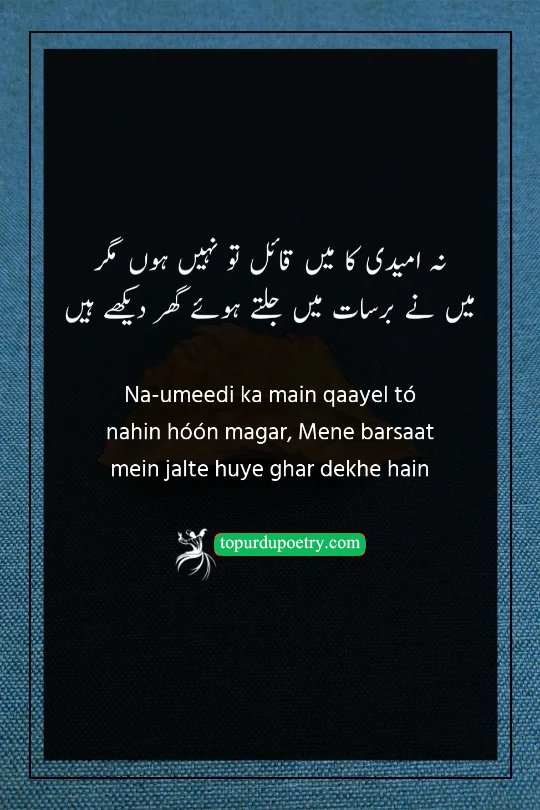
نہ امیدی کا میں قائل تو نہیں ہوں مگر میں نے برسات میں جلتے ہوئے گھر دیکھے ہیں
Na-umeedi ka main qaayel tó nahin hóón magar, Mene barsaat mein jalte huye ghar dekhe hain
This profound couplet explores the clash between hope and a devastating reality. The poet admits that while he is not a pessimist by nature, his life experiences have forced him into despair. By using the powerful paradox of 'houses burning in the rain' (barsaat mein jalte huye ghar), he illustrates that some tragedies are so deep that even natural sources of relief cannot stop them. It is a masterpiece for those who have witnessed the impossible cruelty of fate. A must-have for your 'Reality' or 'Dard' categories.
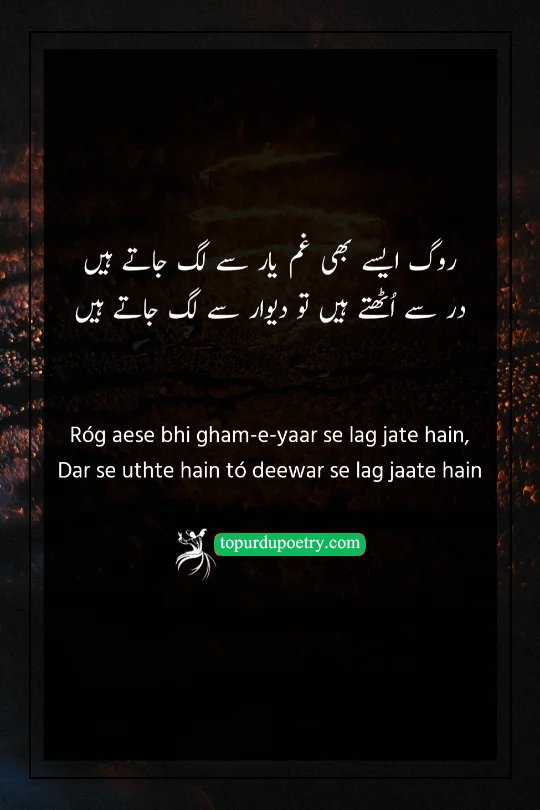
روگ ایسے بھی غم یار سے لگ جاتے ہیں در سے اُٹھتے ہیں تو دیوار سے لگ جاتے ہیں
Róg aese bhi gham-e-yaar se lag jate hain, Dar se uthte hain tó deewar se lag jaate hain
This hauntingly beautiful couplet portrays the physical toll of emotional heartbreak. The poet describes the grief of love as a 'Rog' (chronic ailment) that drains a person of all their strength. The imagery in the second line—moving from the beloved's doorstep (Dar) only to lean against a wall (Deewar)—perfectly captures the state of a broken person who is too weak to stay, yet too shattered to walk away. A masterpiece for your 'sad poetry in urdu text' or 'Dard' collection.
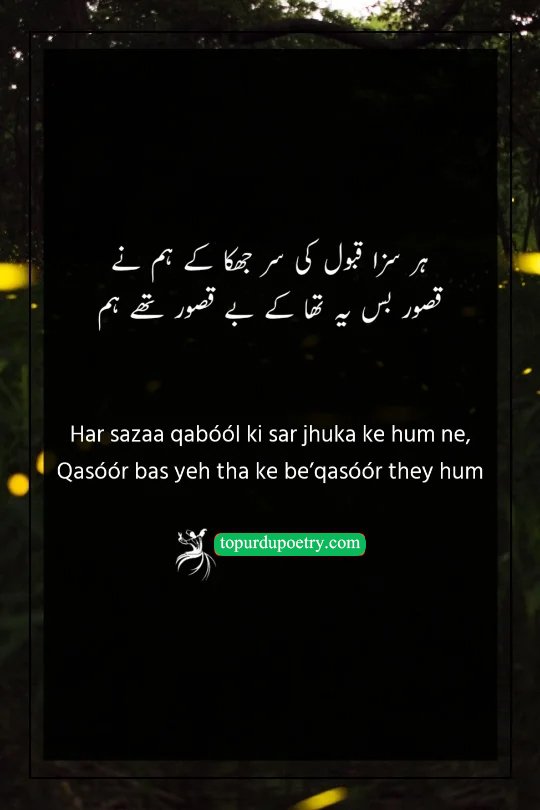
ہر سزا قبول کی سر جھکا کے ہم نے قصور بس یہ تھا کے بے قصور تھے ہم
Har sazaa qabóól ki sar jhuka ke hum ne, Qasóór bas yeh tha ke be’qasóór they hum
This deeply resonant couplet explores the tragic irony of being 'too good' in a cynical world. The poet describes a state of total submission to unfair 'sazaa' (punishment), accepting it with a bowed head. The ultimate reveal is the heartbreaking truth: the only reason for this suffering was 'be-qasoor' (innocence). It is a powerful voice for anyone who has been blamed for things they didn't do, or whose kindness was used against them. A standout choice for 'Sad Poetry' and 'Life Lessons' collections.
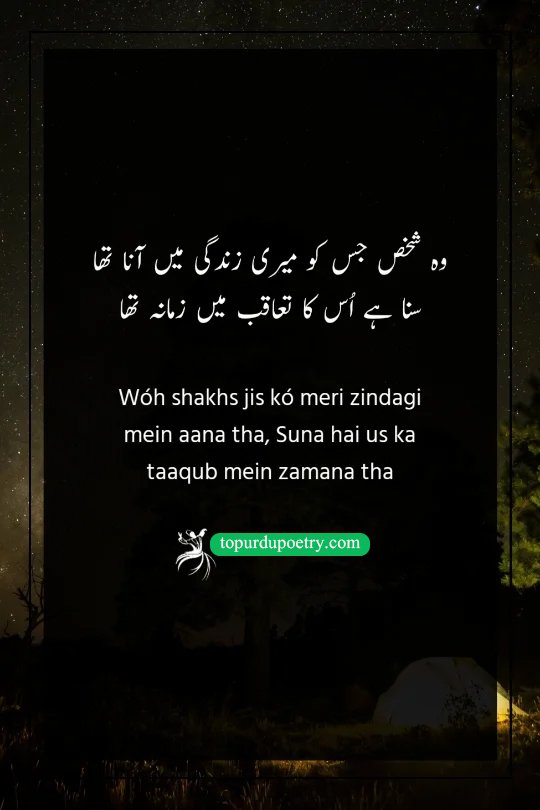
وہ شخص جس کو میری زندگی میں آنا تھا سنا ہے اُس کا تعاقب میں زمانہ تھا
Wóh shakhs jis kó meri zindagi mein aana tha, Suna hai us ka taaqub mein zamana tha
This elegant couplet captures the heartache of loving someone who belongs to the world. The poet reflects on a person who was 'meant' to be part of his life, only to realize that he was competing with the 'Zamana' (the world) for their attention. It portrays the beloved as an extraordinary figure—someone so special that everyone was in pursuit of them. It is a perfect selection for those who have loved someone 'larger than life' and lost them to the crowd. A classic for 'Sad Poetry' and 'Famous Urdu Verses'.
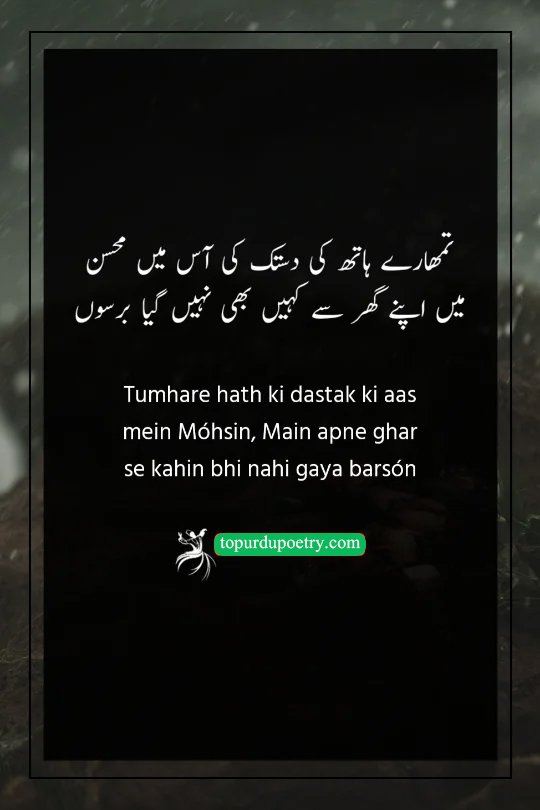
تمھارے ہاتھ کی دستک کی آس میں محسن میں اپنے گھر سے کہیں بھی نہیں گیا برسوں
Tumhare hath ki dastak ki aas mein Móhsin, Main apne ghar se kahin bhi nahi gaya barsón
This iconic couplet by Mohsin Naqvi explores the paralyzing power of hope. The poet describes a life on hold, where he has stayed within the 'four walls' of his own waiting for years, fearing he might miss the 'dastak' (knock) of his beloved. It is a powerful representation of loyalty taken to a tragic extreme, where one's own growth and movement are sacrificed for a single moment of reunion. A must-have for collections focusing on 'Intezar' (Waiting) and 'Wafa' (Loyalty).
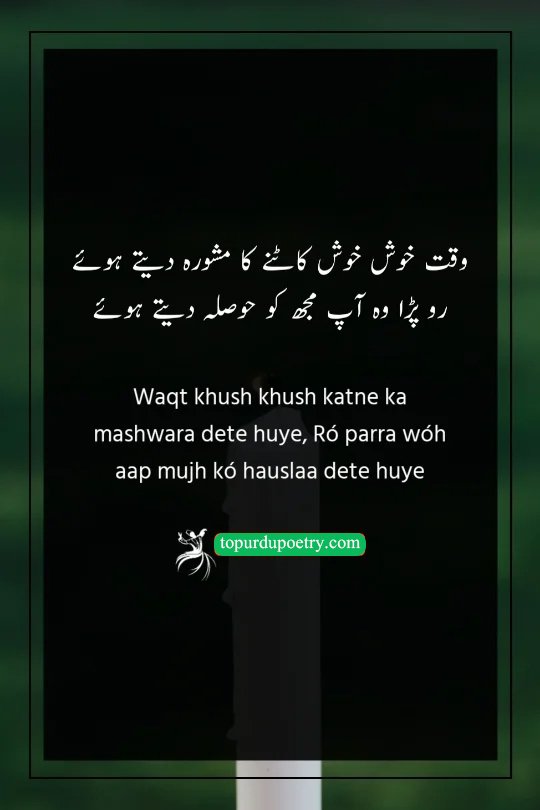
وقت خوش خوش کاٹنے کا مشورہ دیتے ہوئے رو پڑا وہ آپ مجھ کو حوصلہ دیتے ہوئے
Waqt khush khush katne ka mashwara dete huye, Ro parra woh aap mujh ko hausla dete huye
This iconic heart touching sad poetry in Urdu text portrays a moment of heartbreaking vulnerability. It describes a scene where a beloved or friend, while giving advice to stay strong and happy ('hausla dete huye'), cannot bear the weight of their own shared grief and breaks down in tears. The tragedy lies in the moment the comfort crumbles, and the one offering strength becomes the one needing it. A profound selection for 'Sad Poetry' and 'Dard' (Pain) collections focusing on the paradox of shared suffering. A classic must-have verse.
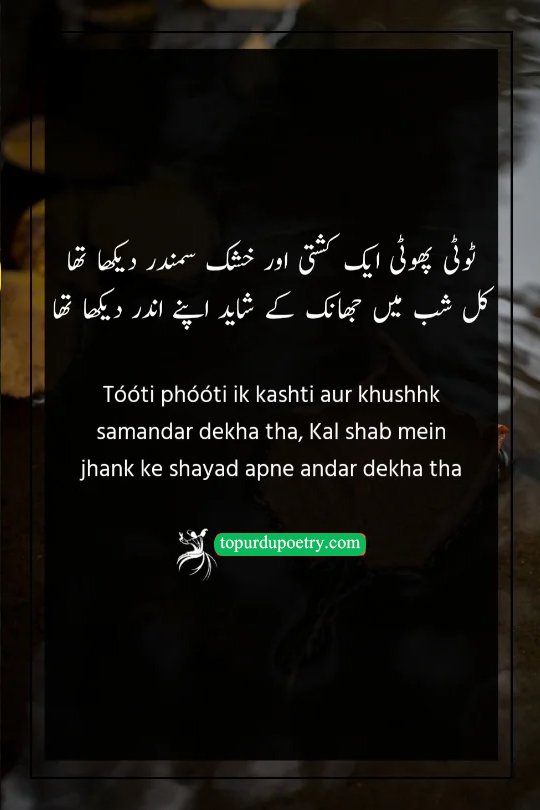
ٹوٹی پھوٹی ایک کشتی اور خشک سمندر دیکھا تھا کل شب میں جھانک کے شاید اپنے اندر دیکھا تھا
Tóóti phóóti ik kashti aur khushhk samandar dekha tha, Kal shab mein jhank ke shayad apne andar dekha tha
This haunting couplet uses surreal imagery to describe absolute internal desolation. The poet speaks of a 'broken boat' and a 'dry ocean'—symbols of a journey that has ended in failure and a life that has lost its emotional depth. The second line reveals that this barren landscape is actually the poet's own soul. It is a masterpiece for those who feel emotionally bankrupt or hollow inside. A high-value addition to your 'Life's Reality' and 'Deep Sadness' categories.
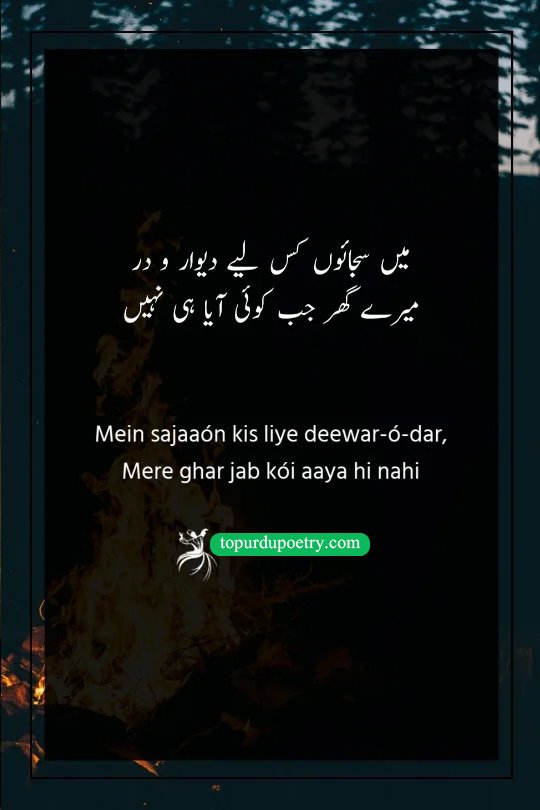
میں سجائوں کس لیے دیوار و در میرے گھر جب کوئی آیا ہی نہیں
Mein sajaaón kis liye deewar-ó-dar, Mere ghar jab kói aaya hi nahi
This poignant couplet explores the loneliness of a life that feels like a 'waiting room' for a guest who never arrives. The poet questions the point of 'sajaana' (decorating/beautifying) his surroundings when there is no one to appreciate it. It highlights the bittersweet truth that the beauty of a home—or a life—is often found in the people who visit it, rather than the walls themselves. A perfect choice for 'Sad Poetry' and 'Loneliness' categories.
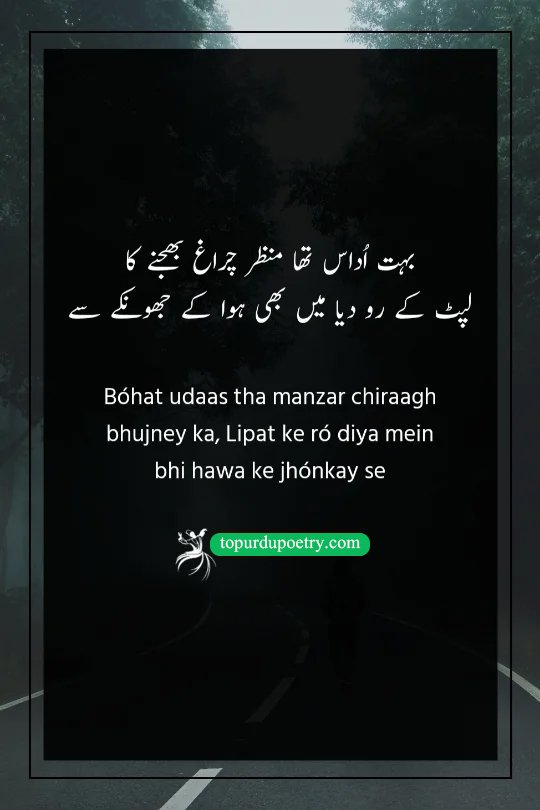
بہت اُداس تھا منظر چراغ بھجنے کا لپٹ کے رو دیا میں بھی ہوا کے جھونکے سے
Bóhat udaas tha manzar chiraagh bhujney ka, Lipat ke ró diya mein bhi hawa ke jhónkay se
This hauntingly beautiful couplet portrays the ultimate state of loneliness and heartbreak. The poet describes the extinguishing of a 'chiraagh' (lamp)—a symbol of hope or a beloved—as a deeply melancholic event. In a tragic twist, the poet finds himself embracing the very 'hawa ka jhonka' (gust of wind) that blew the light out. It illustrates a level of despair where one seeks comfort even from the source of their pain, simply because there is no one else left to turn to. A masterpiece for your 'Sad Poetry' and 'Deep Emotions' categories.
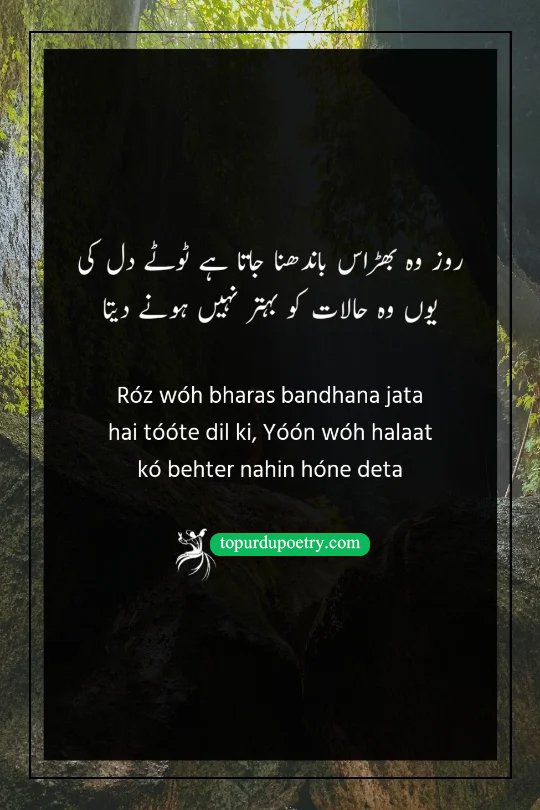
روز وہ بھڑاس باندھنا جاتا ہے ٹوٹے دل کی یوں وہ حالات کو بہتر نہیں ہونے دیتا
Róz wóh bharas bandhana jata hai tóóte dil ki, Yóón wóh halaat kó behter nahin hóne deta
This deep and thought-provoking couplet explores the 'habit' of sadness. It describes how someone might constantly revisit their pain, venting their 'bharas' (emotions) daily, only to realize that this cycle is what prevents their life from moving forward. It is a powerful reminder that while expressing grief is necessary, dwelling on it indefinitely can become the very thing that stops us from healing. A perfect selection for 'Sad Quotes in Urdu' and 'Life Lessons' sections.
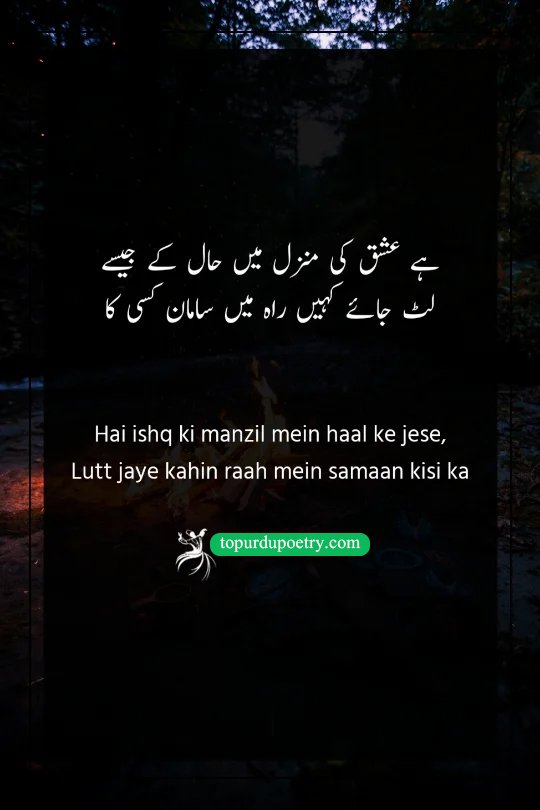
ہے عشق کی منزل میں حال کے جیسے لٹ جائے کہیں راہ میں سامان کسی کا
Hai ishq ki manzil mein haal ke jese, Lutt jaye kahin raah mein samaan kisi ka
This striking couplet uses the metaphor of a traveler being robbed to describe the emotional toll of love. The poet suggests that embarking on the path of 'Ishq' is like a journey where one inevitably loses their 'samaan' (belongings)—symbolizing their peace, sanity, and heart. It captures the feeling of being left empty-handed and broken-hearted while still in the middle of the 'raah' (path). A perfect addition to your 'Ishq' and 'Gham' (Sorrow) categories.
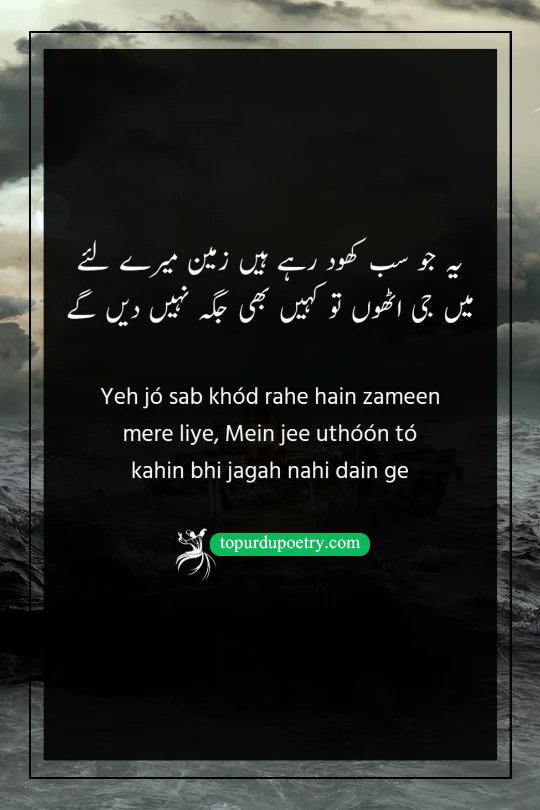
یہ جو سب کھود رہے ہیں زمین میرے لئے میں جی اٹھوں تو کہیں بھی جگہ نہیں دیں گے
Yeh jó sab khód rahe hain zameen mere liye, Mein jee uthóón tó kahin bhi jagah nahi dain ge
This hard-hitting couplet exposes the ultimate hypocrisy of society. The poet points out the irony of people who are busy digging a grave ('khod rahe hain zameen') for him, appearing to be helpful in his death. However, he sharply notes that if he were to return to life, these very same people wouldn't give him an inch of space ('jagah') to live. It is a powerful reflection on how the world only values individuals once they are gone, but offers no support while they are alive. A must-have for your 'Social Hypocrisy' and 'Reality of Life' categories.
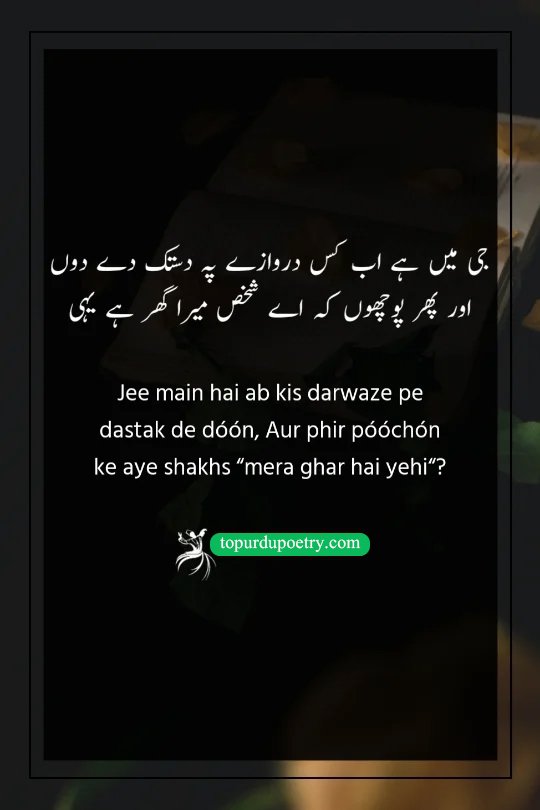
جی میں ہے اب کس دروازے پہ دستک دے دوں اور پھر پوچھوں کہ اے شخص میرا گھر ہے یہی
Jee main hai ab kis darwaze pe dastak de dóón, Aur phir póóchón ke aye shakhs “mera ghar hai yehi“?
This profound couplet explores the theme of internal exile and the loss of identity. The poet portrays a soul so disoriented that it wanders from door to door, not looking for a new home, but looking for someone to identify his own. It captures the haunting feeling of being a stranger in your own life and the desperation of trying to find a 'Ghar' (home) that no longer feels familiar. A masterpiece for those who feel lost within themselves. A great addition to your 'Ghareeb-ul-Watni' or 'Existential Sadness' categories.
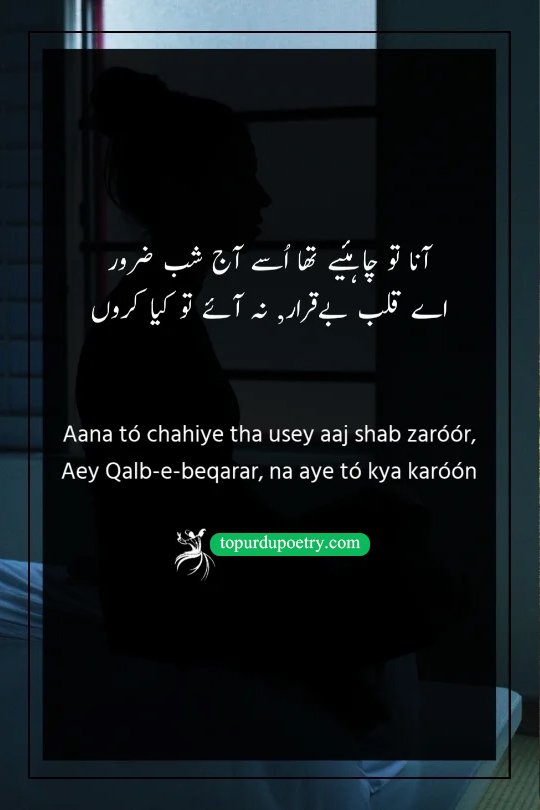
آنا تو چاہئیے تھا اُسے آج شب ضرور اے قلب بےقرار, نہ آئے تو کیا کروں
Aana tó chahiye tha usey aaj shab zaróór, Aey Qalb-e-beqarar, na aye tó kya karóón
This classic Jaun Elia heart touching sad poetry in Urdu captures the agonizing wait for someone who never arrives. The poet acknowledges that the beloved 'should' have come, but is left to face his own 'Qalb-e-beqarar' (restless heart) in their absence. It portrays the helplessness of a lover who has no control over the beloved's actions and no cure for his own internal turmoil. A must-have for any collection dedicated to Jaun Elia's unique brand of sorrow and existential waiting.
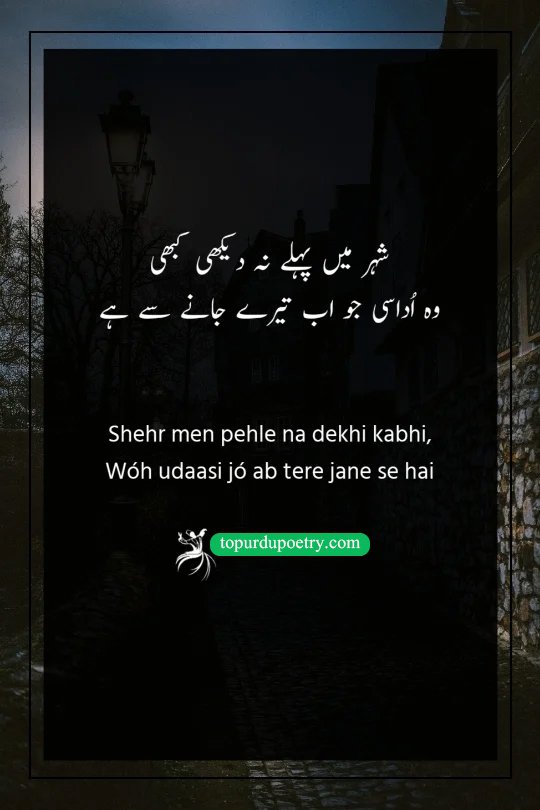
شہر میں پہلے نہ دیکھی کبھی وہ اُداسی جو اب تیرے جانے سے ہے
Shehr men pehle na dekhi kabhi, Wóh udaasi jó ab tere jane se hai
This poignant couplet explores the way a personal loss can change one's entire environment. The poet observes that the 'Shehr' (city), once full of life, is now draped in an 'udaasi' (sadness) he has never witnessed before. It highlights the profound impact of 'Hijr' (separation), where the absence of a loved one makes even the most crowded places feel desolate. A perfect choice for 'Sad Poetry' and 'Judai' (Separation) categories.
Final Thoughts on Sad Poetry in Urdu
While sadness is a difficult emotion to sit with, it is also what makes us beautifully human. We hope this collection of udaas shayari (سیڈ شاعری) has provided a little bit of comfort and the right words for your unspoken pain.
Which of these verses resonated with your heart today? Feel free to save your favorite sad poetry dp and share your feelings in the comments below. Remember, after every dark night, there is always a dawn.