50+ Beautiful Face Poetry in Urdu: Chehra Shayari (چہرہ شاعری)
Explore the most captivating collection of face poetry in Urdu to praise true elegance. Share these romantic chehra poetry in Urdu and beautiful face shayari to make your loved one feel truly special, admired, and cherished.
True beauty is a perfect reflection of both a captivating presence and a kind heart. While a stunning appearance can easily catch your eye, it is a person’s caring demeanor, character, and inner warmth that truly capture your soul. Face poetry in Urdu beautifully highlights this balance, praising not just the physical features, but the glowing light that shines from within.
Whether you are completely mesmerized by someone’s chand sa chehra (moon-like face) or you want to remind them of their inner strength and elegance, sharing chehra poetry in Urdu is the ultimate way to express your admiration. This collection of Urdu shayari on beautiful face is guaranteed to make anyone blush. Perfect for an independent, charming lady or a romantic partner, these 2-line couplets are ideal for a heartfelt text message, a greeting card, or a WhatsApp status. Let’s explore the most mesmerizing beautiful face poetry in Urdu!
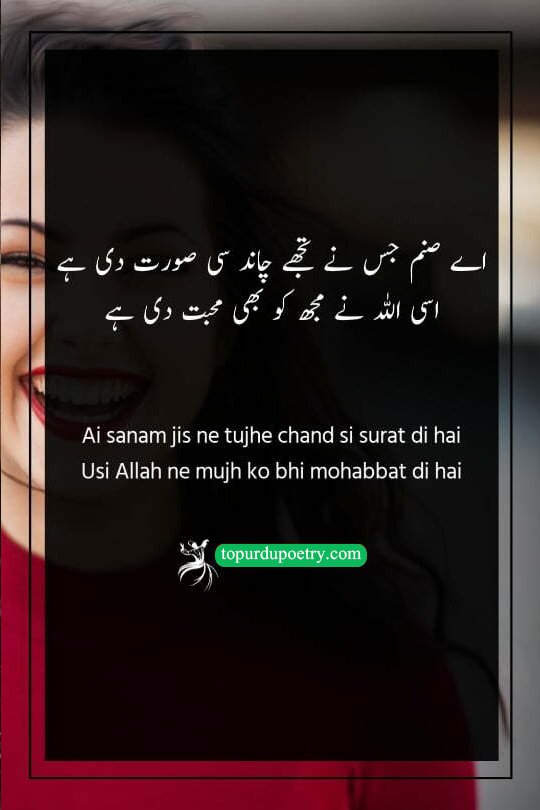
اے صنم جس نے تجھے چاند سی صورت دی ہے اسی اللہ نے مجھ کو بھی محبت دی ہے
Ai sanam jis ne tujhe chand si surat di hai Usi Allah ne mujh ko bhi mohabbat di hai
This soul-stirring couplet attributes both beauty and love to a divine source. The poet addresses the beloved, noting that the same Creator who fashioned their radiant, moon-like face (chand si surat) is the one who planted the seed of intense love (mohabbat) in the poet's heart. It suggests a spiritual connection between the two; if the beauty is a gift from God, then the love it inspires is equally sacred and predestined. This is an exquisite choice for chehra-poetry, perfect for those who view their love as a divine blessing.
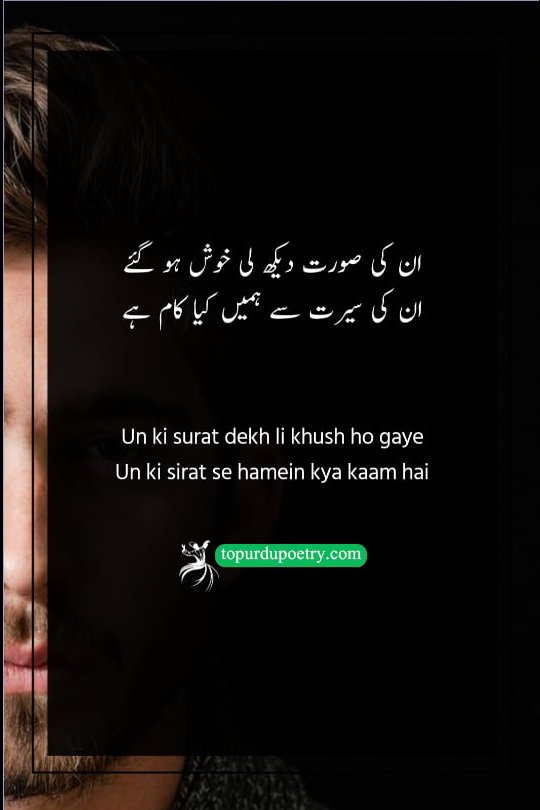
ان کی صورت دیکھ لی خوش ہو گئے ان کی سیرت سے ہمیں کیا کام ہے
Un ki surat dekh li khush ho gaye Un ki sirat se hamein kya kaam hai
This witty and bold couplet celebrates the overwhelming power of physical beauty. The poet confesses that simply seeing the beloved's face (surat) is enough to fill his heart with happiness. With a touch of playful honesty, he declares that he has no concern for their 'sirat' (character or inner nature). It captures that intoxicating stage of love where the beloved's visual presence is so mesmerizing that their flaws or personality become irrelevant. It is a lighthearted and candid verse, perfect for those who appreciate the sheer aesthetic joy of looking at a loved one.
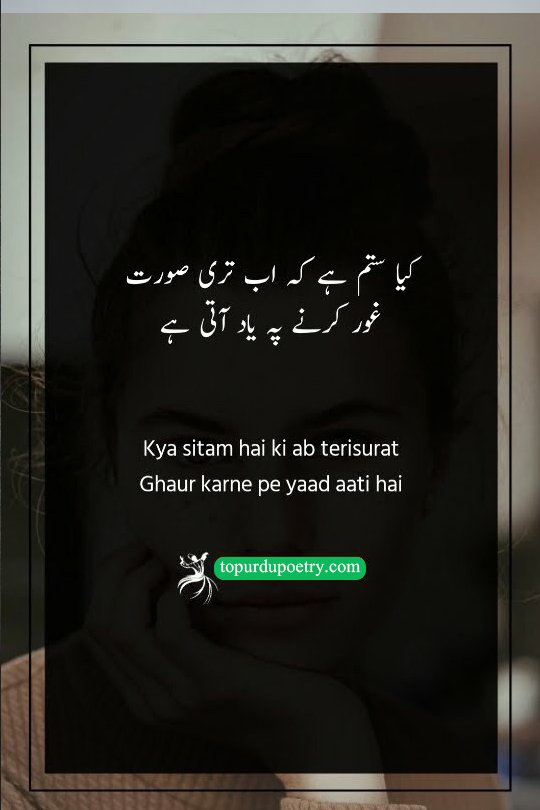
Kya sitam hai ki ab terisurat Ghaur karne pe yaad aati hai
This poignant couplet by Nasir Kazmi explores the tragic fading of memory over time. The poet describes it as a 'sitam' (a great cruelty or injustice) that the face of his beloved is no longer clear in his mind. The heartbreak lies in the second line: he now has to focus intensely (ghaur karne pe) just to recall how they looked. It perfectly captures the quiet agony of realizing that a person who was once your constant thought is slowly becoming a blur, showing that time eventually erases even the most cherished images from our hearts.
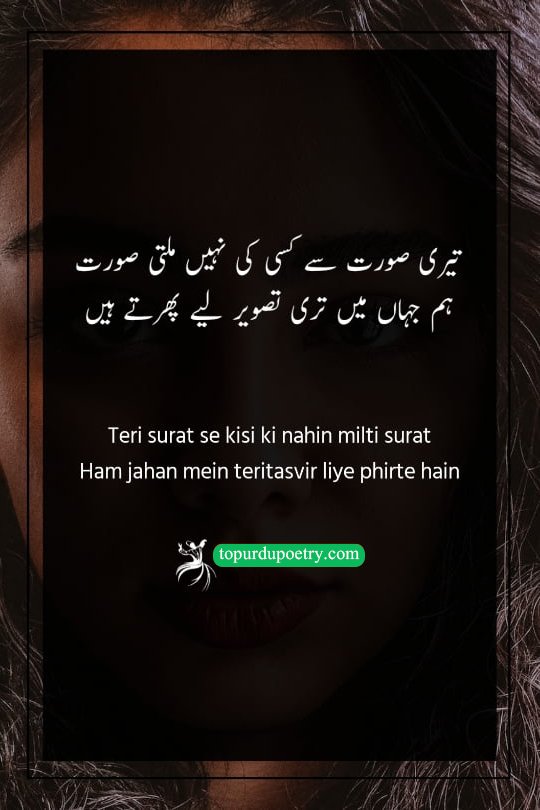
تیری صورت سے کسی کی نہیں ملتی صورت ہم جہاں میں تری تصویر لیے پھرتے ہیں
Teri surat se kisi ki nahin milti surat Ham jahan mein teritasvir liye phirte hain
This couplet is a profound tribute to the uniqueness of a loved one. The poet declares that in the entire world, there isn't a single face that resembles the beloved (teri surat se kisi ki nahin milti). To him, the beloved is incomparable and one of a kind. He describes his devotion by saying he wanders through the world carrying their 'tasvir' (image) in his heart. It beautifully conveys the idea that once you have seen the perfection of your true love, you spend your life looking for that same grace everywhere else, even though you know it is unique to them.
چاندنی راتوں میں چلاتا پھرا چاند سی جس نے وہ صورت دیکھ لی
Chandni raton mein chillata phira Chand si jis ne vo surat dekh li
This striking couplet explores the powerful, almost hypnotic impact of a 'moon-like' beauty. The poet describes someone who has lost their peace and wanders through moonlit nights (chandni raton) in a state of restless obsession. The cause of this madness is revealed in the second line: the sheer radiance of the beloved's face (chand si surat). It suggests that once a person witnesses such divine beauty, they can no longer live a normal life. This is a brilliant choice for chand-chehra-poetry, capturing the fine line between being mesmerized by a face and being driven to madness by its perfection.
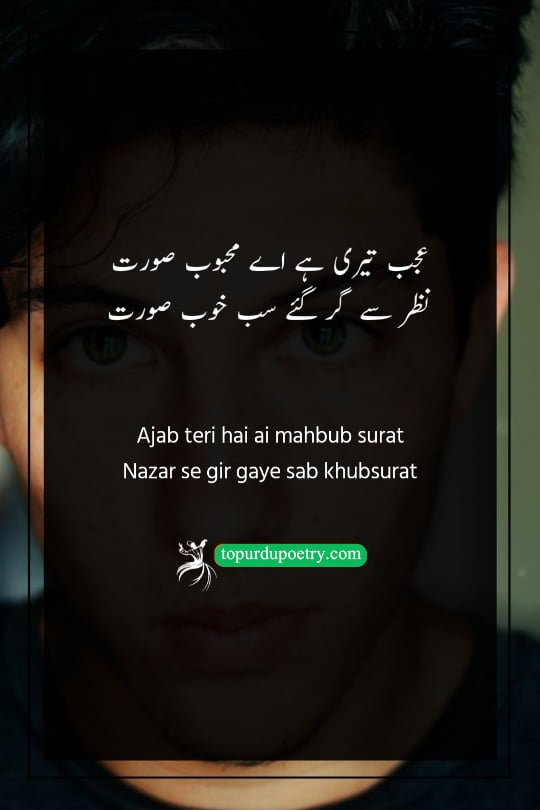
عجب تیری ہے اے محبوب صورت نظر سے گر گئے سب خوب صورت
Ajab teri hai ai mahbub surat Nazar se gir gaye sab khubsurat
This couplet explores the singular focus of a lover's heart. The poet describes the beloved's face (surat) as 'ajab'—wondrous and incomparable. Using a clever play on words, he explains that after seeing this one face, all other 'khubsurat' (beautiful) people have 'fallen from his eyes' (nazar se gir gaye). It beautifully illustrates the idea that true love makes the rest of the world's beauty fade into insignificance. Once you find your 'ajab' beloved, no one else—no matter how traditionally attractive—can ever capture your attention again.
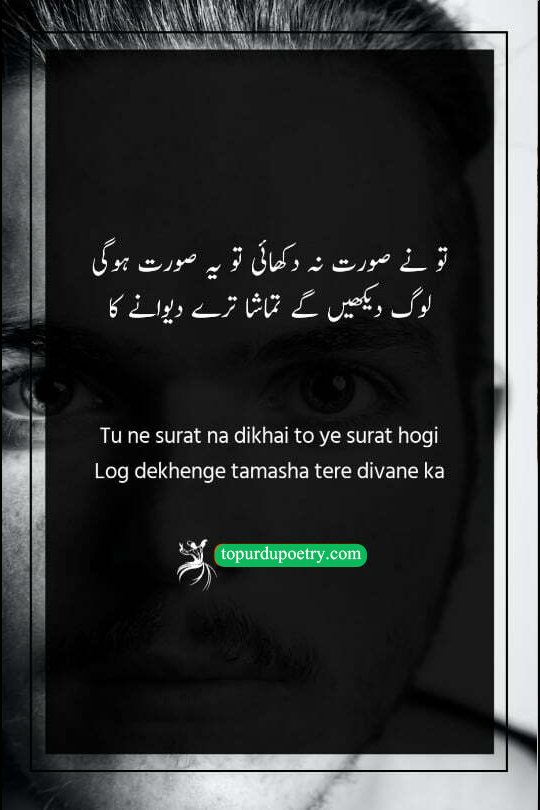
تو نے صورت نہ دکھائی تو یہ صورت ہوگی لوگ دیکھیں گے تماشا ترے دیوانے کا
Tu ne surat na dikhai to ye surat hogi Log dekhenge tamasha tere divane ka
This couplet brilliantly utilizes the double meaning of the word 'surat' (meaning both 'face' and 'condition'). The poet warns the beloved that if they do not show their face (surat na dikhai), a tragic situation (surat) will arise. He explains that he will lose his sanity to such an extent that he will become a public spectacle (tamasha) for the world to watch. It is a powerful expression of how a lover's mental peace and dignity are entirely dependent on the presence of their beloved. A classic verse for expressing the desperation and 'divangi' of deep love.
Romantic Face Poetry in Urdu for Her (چہرہ شاعری)
When you are in love, that one specific face becomes the center of your entire universe. This collection of romantic face poetry in Urdu is perfect for telling her just how attractive, witty, and stunning she is to you. Send these verses to make her smile and let her know she is always on your mind.
آ کہ میں دیکھ لوں کھویا ہوا چہرہ اپنا مجھ سے چھپ کر مری تصویر بنانے والے
Aa ki main dekh luun khoya hua chehra apna Mujh se chhup kar meri tasvir banane vaale
This profound couplet by Ahmad Faraz explores the search for self-identity through the eyes of a lover. The poet addresses someone who secretly admires him and 'paints his picture' in their heart or on canvas. He asks them to come forward so he can see his own 'lost face' (khoya hua chehra). It suggests that through the trials of life, the poet has lost his sense of self, and he believes that only the portrait made by someone who truly loves him can show him who he really is. It is a beautiful, soul-searching verse about finding oneself in the devotion of another.
بھلا دیں ہم نے کتابیں کہ اس پری رو کے کتابی چہرے کے آگے کتاب ہے کیا چیز
Bhula diin hum ne kitaben ki us pari-ru ke Kitabi chehre ke aage kitab hai kya chiiz
This charming couplet celebrates a beauty so captivating that it renders all formal education and books useless. The poet confesses to abandoning his studies and forgetting his books (bhula diin kitaben) because he is mesmerized by the beloved's 'pari-ru' (fairy-like) appearance. Using a clever play on words, he asks what a mere book (kitab) is worth when compared to the beloved's 'kitabi chehra'—a perfectly oval and symmetrical face often described in classical Urdu beauty standards. It is a playful and highly romantic verse about finding all the wisdom and beauty one needs in the face of a loved one.
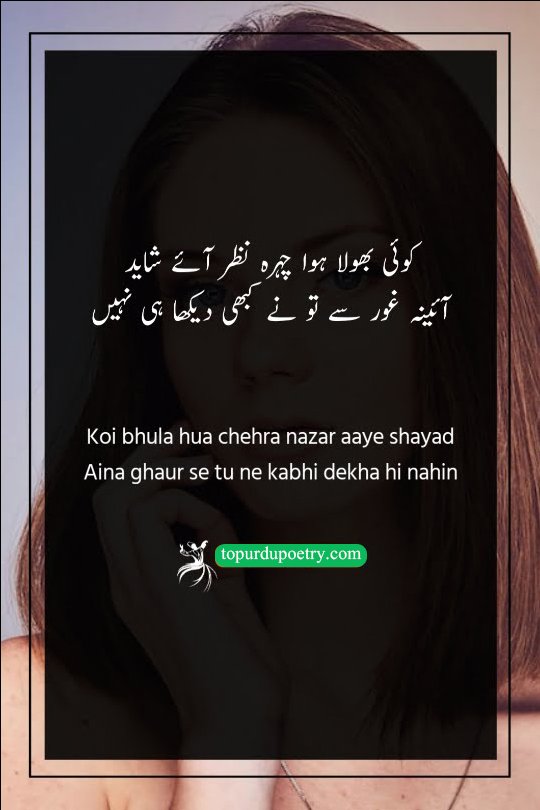
کوئی بھولا ہوا چہرہ نظر آئے شاید آئینہ غور سے تو نے کبھی دیکھا ہی نہیں
Koi bhula hua chehra nazar aaye shayad Aina ghaur se tu ne kabhi dekha hi nahin
This deep and reflective couplet explores the idea of losing one's identity over time. The poet suggests that if we were to look into a mirror with true focus (ghaur se), we might catch a glimpse of a 'forgotten face' (bhula hua chehra)—the version of ourselves that existed before life's struggles changed us. It serves as a reminder that we often look at our reflections without truly seeing our souls. This is a profound choice for chehra-poetry, perfect for readers who appreciate themes of self-discovery and the passage of time.
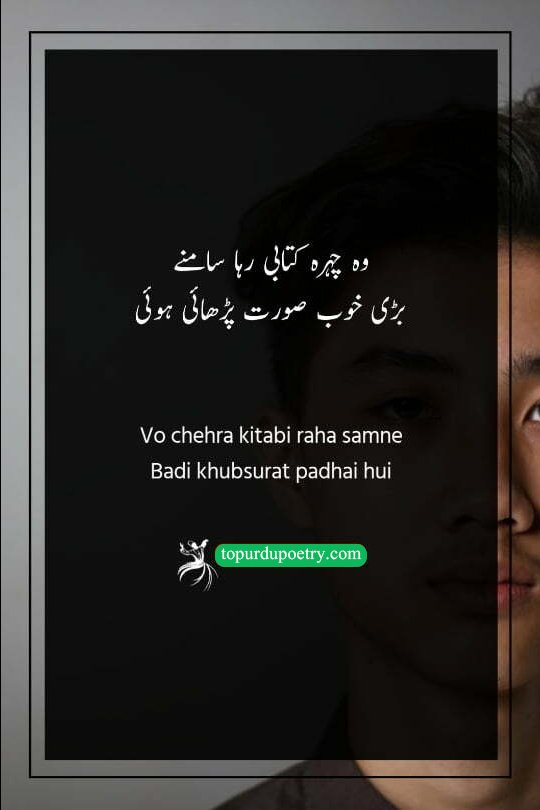
Vo chehra kitabi raha samne Badi khubsurat padhai hui
This witty and charming couplet is a favorite for students and lovers alike. The poet plays with the term 'kitabi chehra' (a face as perfect as a book), claiming that because such a beautiful face was right in front of him, his 'studies' (padhai) became a beautiful experience. Instead of reading actual books, he spent his time 'reading' the beloved's features. It is a playful and highly romantic take on the 2-line-best-poetry-chehra theme, suggesting that some of the best lessons in life are learned not from ink and paper, but from gazing at the person you love.
شبنم کے آنسو پھول پر یہ تو وہی قصہ ہوا آنکھیں مری بھیگی ہوئی چہرہ ترا اترا ہوا
Shabnam ke aansu phuul par ye to vahi qissa hua Ankhen meri bhigi hui chehra tera utra hua
This poignant couplet uses the delicate imagery of nature to mirror human sorrow. The poet compares his wet eyes (ankhen bhigi hui) and the beloved's saddened face (chehra utra hua) to the classic scene of dewdrops resting on a flower at dawn. It suggests that their shared pain is as natural and inevitable as 'shabnam' (dew) on a petal. This verse is an exceptional choice for those looking for 2-line-best-poetry-chehra that captures the soft, melancholic side of love, where the beloved's face reflects the sadness of the lover's heart.
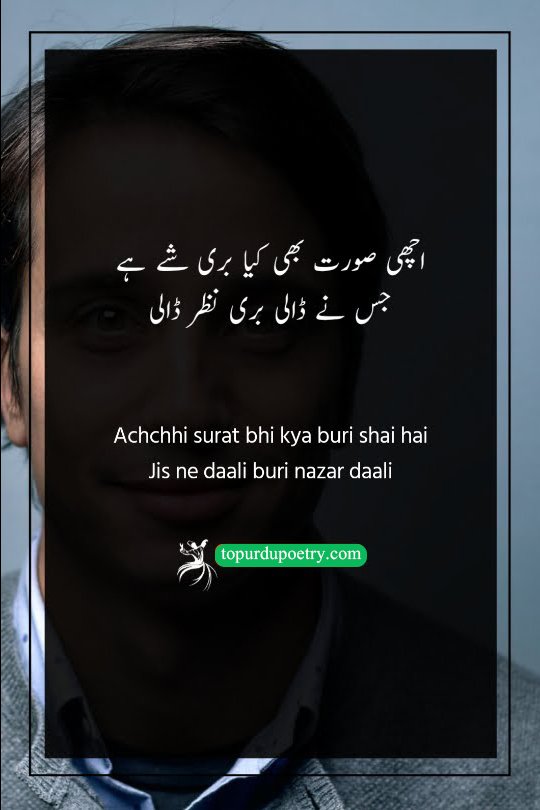
اچھی صورت بھی کیا بری شے ہے جس نے ڈالی بری نظر ڈالی
Achchhi surat bhi kya buri shai hai Jis ne daali buri nazar daali
This couplet offers a witty and ironic take on the burden of beauty. The poet suggests that having a beautiful face (achchhi surat) can actually be a 'bad thing' (buri shai) because of the world's reaction to it. He notes that instead of being admired purely, beauty often attracts 'buri nazar'—the evil eye of envy or the negative gaze of society. It’s a brilliant verse for your 2-line-best-poetry-chehra collection, highlighting that while beauty is a gift, it often comes with the challenge of dealing with the world's unwanted attention and jealousy.
جسے پڑھتے تو یاد آتا تھا تیرا پھول سا چہرہ ہماری سب کتابوں میں اک ایسا باب رہتا تھا
Jise padhte to yaad aata tha tera phuul sa chehra Hamari sab kitabon mein ik aisa baab rahta tha
This nostalgic couplet explores how love intertwines with our daily routines and learning. The poet describes a 'baab' (chapter) in his books that served as a constant reminder of the beloved's 'phuul sa chehra' (flower-like face). It suggests that for a lover, every book contains a hidden gateway to the memory of their partner, turning even the most serious study into a moment of romantic reflection. A poignant and relatable verse for any collection focusing on the intersection of memory, books, and beauty.
Chand Sa Chehra Poetry: Urdu Shayari on Beautiful Face
Comparing a beloved’s face to the glowing moon is one of the oldest and most beautiful traditions in Urdu literature. These classic verses capture the flawless, radiant elegance of a “chand sa chehra.” They are perfect for expressing deep admiration for someone whose beauty lights up your darkest nights.
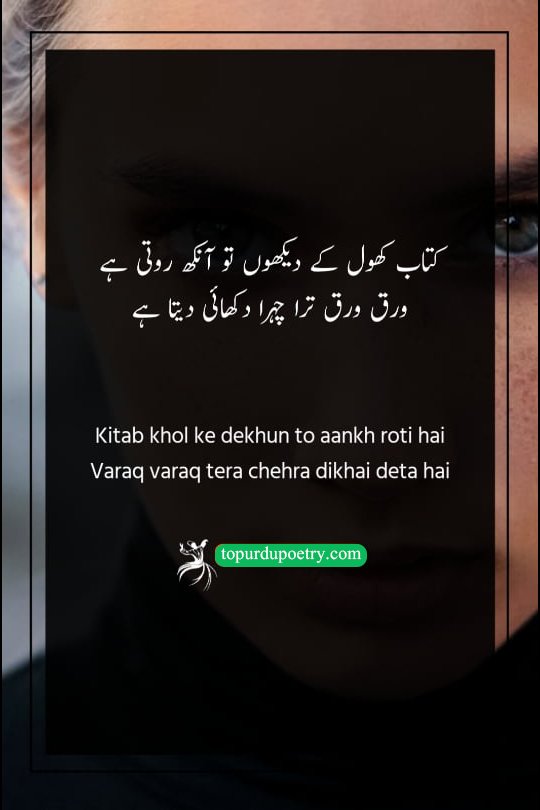
کتاب کھول کے دیکھوں تو آنکھ روتی ہے ورق ورق ترا چہرا دکھائی دیتا ہے
Kitab khol ke dekhun to aankh roti hai Varaq varaq tera chehra dikhai deta hai
This poignant couplet captures the agonizing state of being haunted by a memory. The poet describes how he can no longer even open a book without being overcome by tears (aankh roti hai). This is because the beloved's image has become so pervasive that he sees their face on every single page (varaq varaq). It perfectly illustrates the 'tasavvur' (constant mental image) of a loved one that overwrites everything else in a person's life, turning a source of knowledge or escape into a painful reminder of loss. A must-have for any 2-line-best-poetry-chehra collection that explores the melancholic side of love.
تشبیہ ترے چہرے کو کیا دوں گل تر سے ہوتا ہے شگفتہ مگر اتنا نہیں ہوتا
Tashbih tere chehre ko kya duun gul-e-tar se Hota hai shagufta magar itna nahin hota
This couplet is a classic example of 'Mubaligha' (beautiful exaggeration) in Urdu literature. The poet questions how he can possibly compare the beloved's face to a 'gul-e-tar'—a fresh, dew-kissed rose. While a rose is the symbol of peak natural beauty and is undoubtedly 'shagufta' (blooming and radiant), the poet argues that its radiance is pale in comparison to the beloved. This verse is a masterpiece for any chehra poetry in urdu collection, asserting that human beauty, when touched by love, far outshines the most perfect elements of nature.
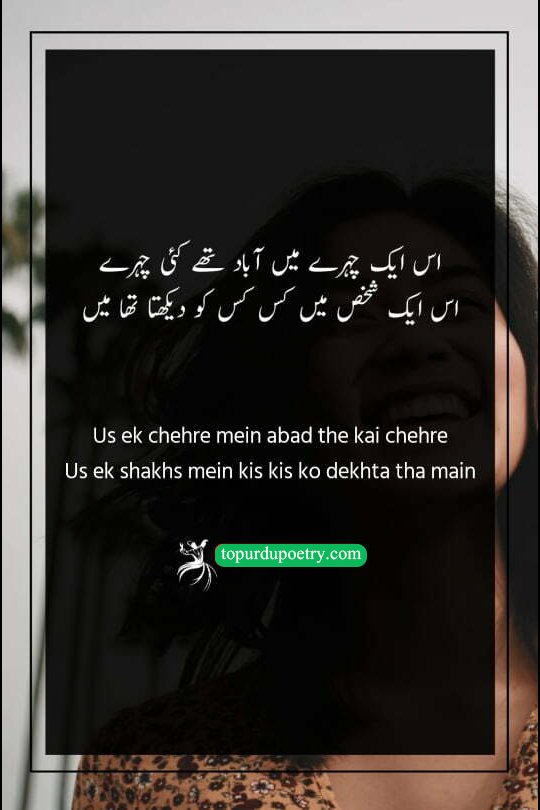
اس ایک چہرے میں آباد تھے کئی چہرے اس ایک شخص میں کس کس کو دیکھتا تھا میں
Us ek chehre mein abad the kai chehre Us ek shakhs mein kis kis ko dekhta tha main
This deeply psychological couplet moves beyond physical beauty to explore the multifaceted nature of human personality. The poet reflects on how a single face (ek chehra) seemed to inhabit 'many faces' (kai chehre), representing the different moods, versions, and complexities of the person he loved. The second line highlights the lover's own journey of discovery, questioning how many different people or ideals he was actually seeing within that one individual. It is a profound verse for any chehra-poetry-in-urdu collection, perfect for expressing the depth and mystery of a complex relationship.
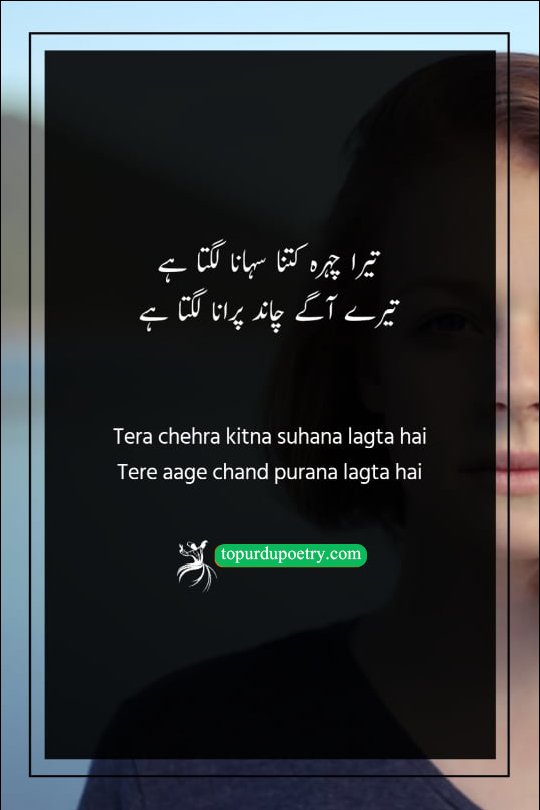
تیرا چہرہ کتنا سہانا لگتا ہے تیرے آگے چاند پرانا لگتا ہے
Tera chehra kitna suhana lagta hai Tere aage chand purana lagta hai
This iconic couplet takes the traditional moon metaphor and gives it a fresh, romantic twist. The poet describes the beloved's face as 'suhana'—a beauty that is pleasant and heartwarming. He then claims that in the presence of the beloved, the moon itself appears 'purana' (old and faded). By suggesting that the moon is now an outdated version of beauty compared to the beloved's radiance, the poet offers the ultimate compliment. It is a perfect verse for any chand-chehra-poetry collection, celebrating a beauty that outshines the stars.
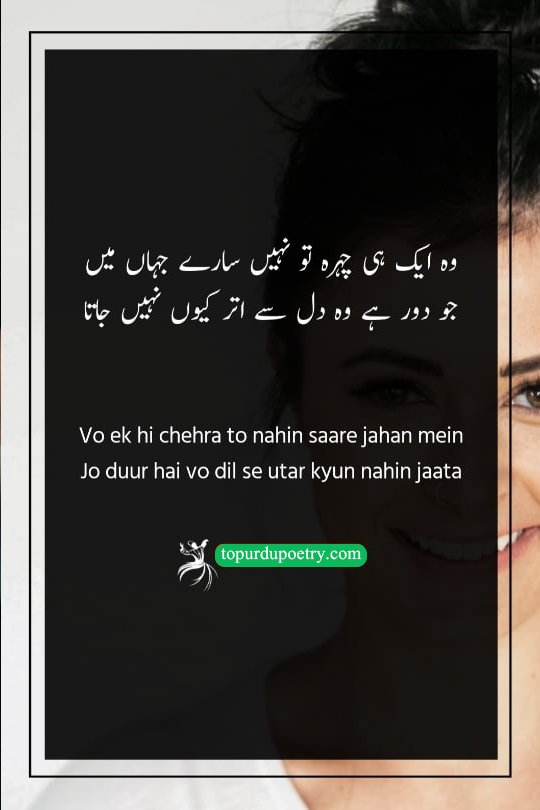
وہ ایک ہی چہرہ تو نہیں سارے جہاں میں جو دور ہے وہ دل سے اتر کیوں نہیں جاتا
Vo ek hi chehra to nahin saare jahan mein Jo duur hai vo dil se utar kyun nahin jaata
This poignant couplet explores the internal battle between logic and the heart's obsession. The poet rationally acknowledges that the world is full of many faces and that no one individual is the only one (ek hi chehra to nahin). Yet, he struggles with the irony of distance: why is it that someone who is physically far away (duur) refuses to leave the heart (dil se utarna)? It is a relatable and deeply emotional verse for anyone who has found that physical distance does not necessarily lead to emotional detachment, capturing the lingering presence of a 'lost' love.
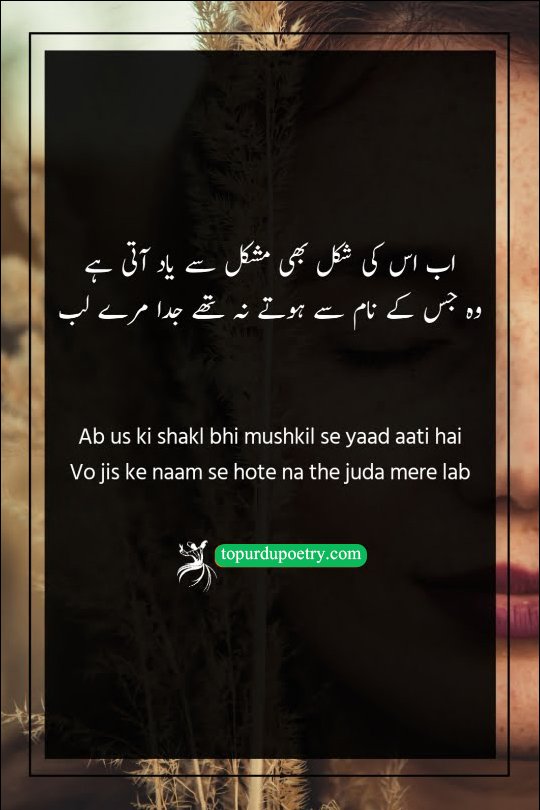
اب اس کی شکل بھی مشکل سے یاد آتی ہے وہ جس کے نام سے ہوتے نہ تھے جدا مرے لب
Ab us ki shakl bhi mushkil se yaad aati hai Vo jis ke naam se hote na the juda mere lab
This poignant couplet reflects on the fading of memory and the passage of time. The poet contrasts a past where a loved one's name was constantly on his lips (naam se hote na the juda mere lab) with a present where he struggles to even remember what they looked like (shakl bhi mushkil se yaad aati hai). It beautifully captures the 'second death' of a relationship—not when the person leaves, but when their image finally begins to vanish from the mind. A deeply relatable verse for anyone exploring themes of moving on and the eventual silence of the heart.
2-Line Chehra Poetry in Urdu for WhatsApp Status
Sometimes you don’t need a long paragraph to praise someone’s beauty. These short, 2-line quotes on face are crafted specifically for social media. They are catchy, elegant, and perfect for updating your Instagram captions or WhatsApp status to indirectly praise the one you admire.
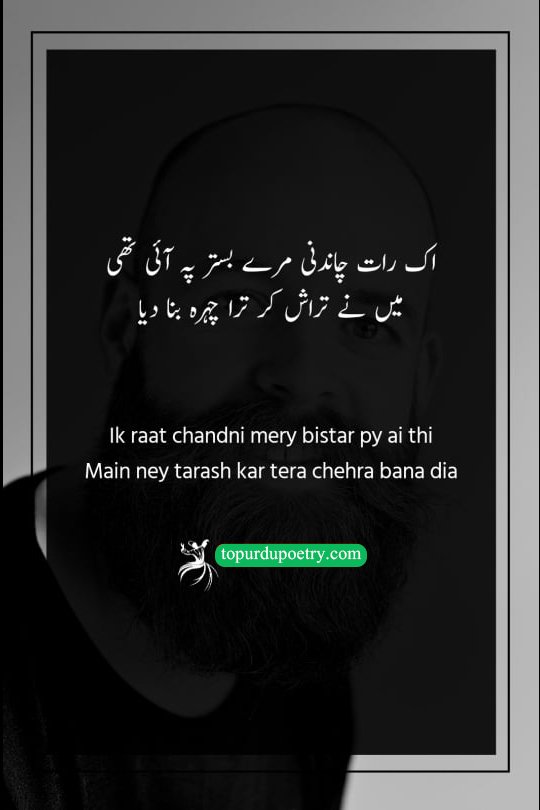
اک رات چاندنی مرے بستر پہ آئی تھی میں نے تراش کر ترا چہرہ بنا دیا
Ik raat chandni mery bistar py ai thi Main ney tarash kar tera chehra bana dia
This exquisite couplet elevates the 'moon-like face' metaphor to an artistic level. The poet describes a night where moonlight (chandni) visited him, and he, like a master sculptor, 'carved' (tarash kar) that light to create the image of the beloved's face. It implies that the beloved's beauty is not just 'like' the moon, but is actually the most refined and perfected form of celestial light itself. A brilliant choice for chand-sa-roshan-chehra-poetry, capturing the creative and obsessive nature of a lover's heart.
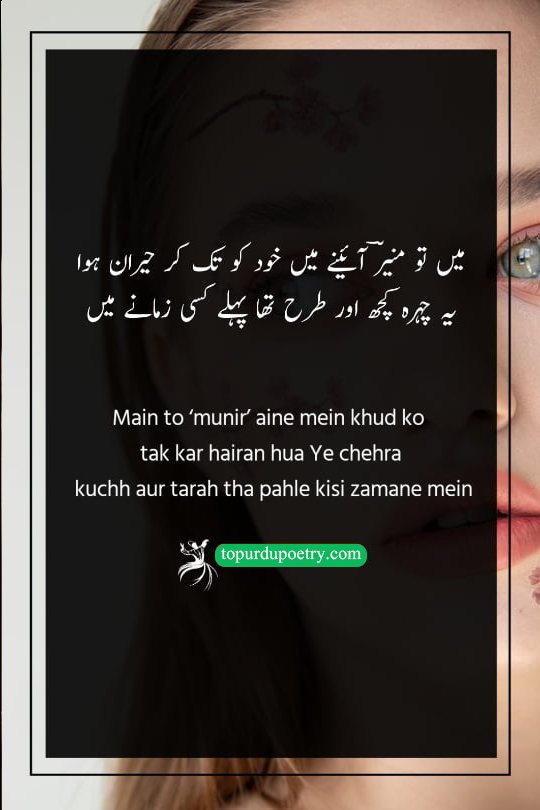
میں تو منیرؔ آئینے میں خود کو تک کر حیران ہوا یہ چہرہ کچھ اور طرح تھا پہلے کسی زمانے میں
Main to ‘munir’ aine mein khud ko tak kar hairan hua Ye chehra kuchh aur tarah tha pahle kisi zamane mein
This haunting couplet by Munir Niazi explores the theme of self-alienation and the internal changes brought by time. The poet describes being shocked (hairan) while staring at his own reflection, realizing that he no longer recognizes himself. He notes that in a 'different time' (pahle kisi zamane mein), his face was entirely different. It suggests that life’s hardships don't just age us physically, but they alter our very essence, making us strangers to the people we used to be. A powerful choice for chehra-poetry that focuses on introspection and the passage of life.
چہرہ کھلی کتاب ہے عنوان جو بھی دو جس رخ سے بھی پڑھو گے مجھے جان جاؤ گے
Chehra khuli kitab hai unvan jo bhi do Jis rukh se bhi padhoge mujhe jaan jaoge
This bold and honest couplet uses the 'open book' (khuli kitab) metaphor to describe a person of complete transparency. The poet suggests that their face reveals everything about their soul, regardless of the 'unvan' (title or label) society chooses to give them. It conveys the idea that from any 'rukh' (perspective or angle) one looks, the true essence of the person is easily understood. It is a brilliant verse for anyone who values authenticity and believes that a person's true character is always visible in their expressions.
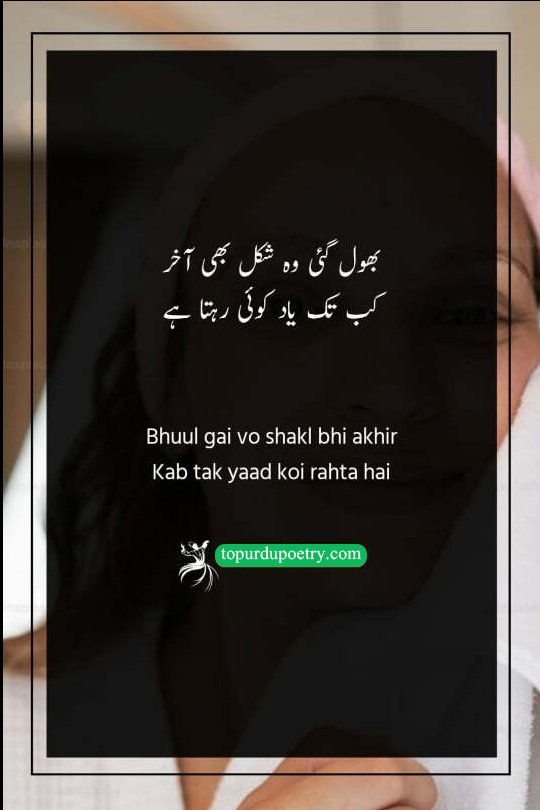
Bhuul gai vo shakl bhi akhir Kab tak yaad koi rahta hai
This poignant couplet explores the inevitable fading of memory over time. The poet admits that 'akhir' (finally), even the most cherished face has been forgotten. Through a rhetorical question, he asks how long any person can truly remain in one's memory, suggesting that time eventually erases even the deepest attachments. It is a powerful verse for those reflecting on the final stages of moving on, where the pain of loss is replaced by the quiet silence of forgetting.
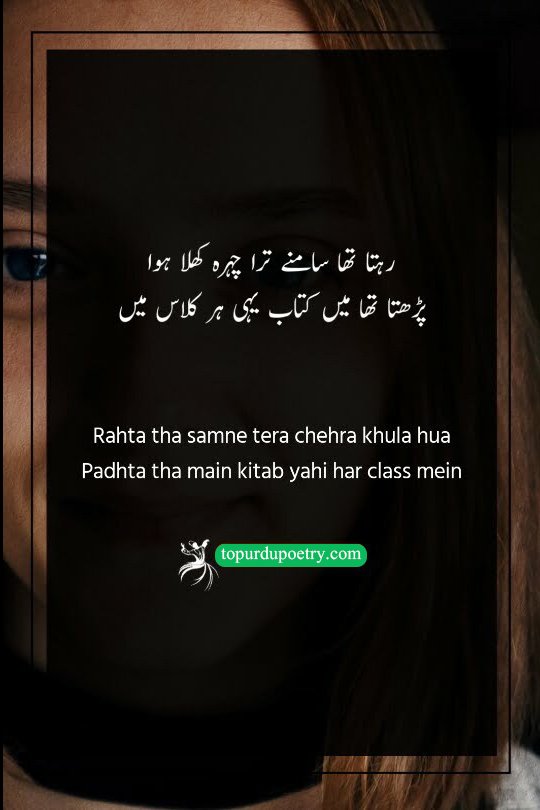
رہتا تھا سامنے ترا چہرہ کھلا ہوا پڑھتا تھا میں کتاب یہی ہر کلاس میں
Rahta tha samne tera chehra khula hua Padhta tha main kitab yahi har class mein
This charming and witty couplet is the ultimate tribute to classroom daydreams and young love. The poet playfully confesses that while he was physically present in every class, he never actually read his schoolbooks. Instead, he treated the beloved's 'open face' (chehra khula hua) as his true textbook. By claiming he 'read' this same face in every lesson, he highlights how love can make the most important academic subjects seem irrelevant compared to the person you adore. It's a perfect selection for your 2-line-best-poetry-chehra collection, especially for younger audiences.
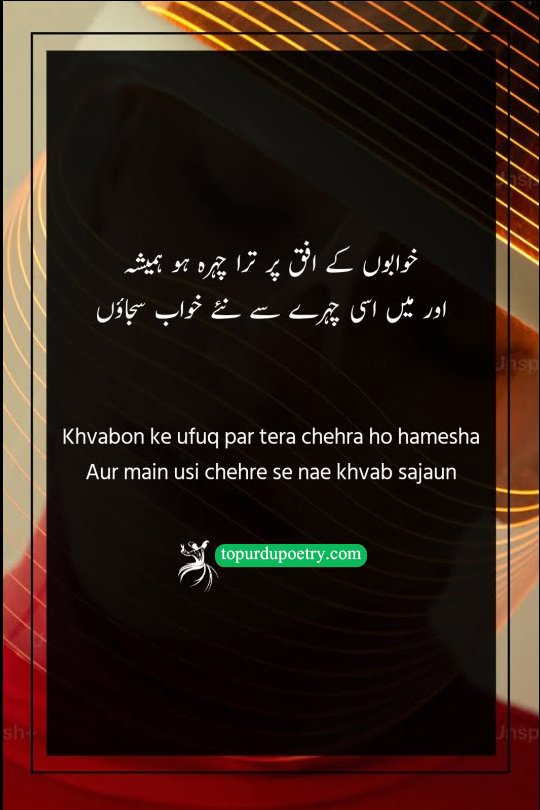
خوابوں کے افق پر ترا چہرہ ہو ہمیشہ اور میں اسی چہرے سے نئے خواب سجاؤں
Khvabon ke ufuq par tera chehra ho hamesha Aur main usi chehre se nae khvab sajaun
This deeply imaginative couplet explores the role of a loved one as a constant source of inspiration. The poet wishes for the beloved's face to remain forever on the 'ufuq' (horizon) of his dreams, serving as the ultimate boundary of his thoughts. He describes how this one face allows him to 'sajaun' (decorate) or create entirely new dreams, suggesting that true beauty never becomes repetitive—it constantly inspires new hopes and visions. An exquisite and hopeful verse for any urdu-poetry-on-chehra collection.
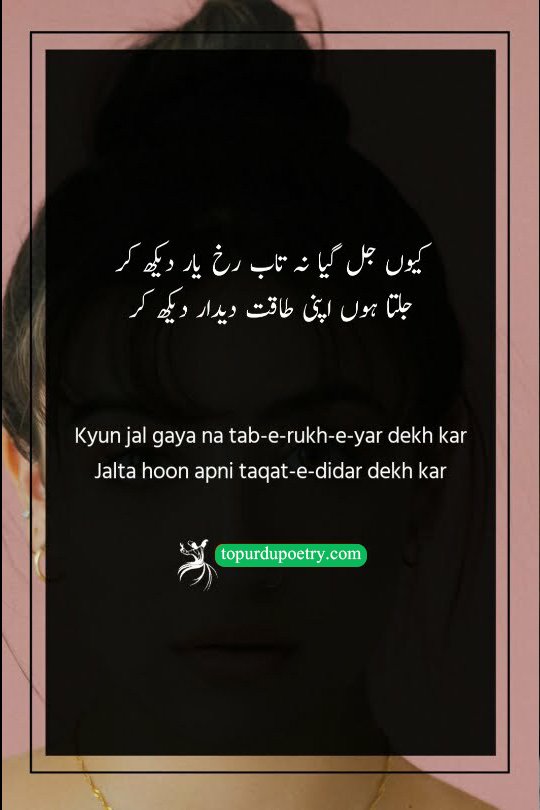
کیوں جل گیا نہ تاب رخ یار دیکھ کر جلتا ہوں اپنی طاقت دیدار دیکھ کر
Kyun jal gaya na tab-e-rukh-e-yar dekh kar Jalta hoon apni taqat-e-didar dekh kar
In this profound couplet, Mirza Ghalib explores a fascinating paradox of love. He wonders why he didn't turn to ashes when confronted with the 'tab-e-rukh-e-yar' (the overwhelming radiance of the beloved's face). Instead of celebrating his ability to gaze at such beauty, he feels a sense of 'jalta hoon' (burning frustration) at his own 'taqat-e-didar' (strength of sight). To Ghalib, the fact that he could survive such a divine vision suggests that his devotion isn't intense enough to consume him. It is a brilliant, intellectual take on the 'chehra' theme, where the lover's own strength becomes his greatest regret.
ابر میں چاند گر نہ دیکھا ہو رخ پہ زلفوں کو ڈال کر دیکھو
Abr mein chand gar na dekha ho Rukh pe zulfon ko daal kar dekho
This iconic couplet is a masterclass in visual metaphor. The poet suggests that if one has never witnessed the beauty of the moon peering through the clouds (abr mein chand), they only need to look at the beloved. By draping dark tresses (zulf) over a radiant face (rukh), a scene is created that rivals the majesty of the night sky. It perfectly captures the contrast between light and shadow, making it a quintessential verse for both 'chand-chehra' and 'zulf' poetry collections. It’s a timeless way of saying that the beloved's beauty doesn't just resemble nature—it surpasses it.
بڑے سیدھے سادھے بڑے بھولے بھالے کوئی دیکھے اس وقت چہرا تمہارا
Bade sidhe-sadhe bade bhole-bhale Koi dekhe is vaqt chehra tumhara
This charming and playful couplet captures the irony of a beloved's 'innocent' expression. The poet describes the beloved as looking incredibly 'sidhe-sadhe' (simple) and 'bhole-bhale' (naive). However, the second line reveals the mischief: the poet is highlighting a specific moment where the beloved is acting innocent to hide their playful cruelty or charm. It perfectly illustrates that 'masoom' (innocent) look that lovers often use to hide their secrets. A witty and lighthearted addition to any collection of urdu-poetry-on-chehra.
Final Thoughts on Praising True Beauty
Praising someone’s beauty is a wonderful way to boost their confidence and make them feel cherished. A beautiful face becomes even more attractive when it belongs to a kind and intelligent soul. We hope this collection of face poetry in Urdu helped you find the exact words to compliment the special people in your life.
Which of these verses of Urdu shayari on beautiful face is your absolute favorite? Have you ever used poetry to make someone blush?
Share your thoughts in the comments below! Don’t forget to download your favorite images to share on your WhatsApp and Facebook statuses. If you enjoy reading expressive verses, be sure to browse our other romantic poetry collections right here at topurdupoetry.com.











2 Comments
Pingback: Romantic Poetry on Hairs in Urdu | Zulfain Shayari 2026
Pingback: 50+ Romantic Chand Poetry in Urdu (چاند پر شاعری) 2026