Time is the only constant in our lives, moving forward without ever looking back. In the world of literature, waqt poetry in Urdu (وَقْت شاعری) serves as a mirror, reflecting how our circumstances, relationships, and even our own selves change as the clock ticks. Whether you are going through a difficult phase and looking for comfort, or you want to remind others of the value of every passing moment, time poetry in urdu offers deep wisdom that resonates with everyone. From classic couplets by legendary poets to modern verses, our collection captures the essence of life’s most precious resource.
There is a unique beauty in how poets describe the “sadiyon ka safar” (the journey of centuries) in just two simple lines. When we read urdu poetry waqt, we are reminded that neither good times nor bad times last forever. This realization brings a sense of patience and maturity.
Interestingly, experts who study time perception note that our emotional state and our most meaningful experiences heavily influence how fast or slow we feel time is moving. This explains why a moment of sorrow feels like an eternity, while moments of joy vanish in a heartbeat. By sharing these verses, you connect with a timeless tradition of philosophical thinking and emotional resilience.
If these verses about time inspire you to reflect on your journey, you may also find deep meaning in our collection of Zindagi (Life) Poetry in Urdu to explore the broader story of our existence.
Table of Contents
The Relentless Flow: Urdu Poetry Waqt
Poets have often described time as a river—it never flows backward. Our curated selection of urdu poetry waqt focuses on the lessons we learn as the years pass by. These verses are perfect for those moments of deep thought when you realize how much has changed around you. Each couplet (وَقْت شاعری) is a reminder to value the “now” and to respect the silent power that time holds over our destinies.
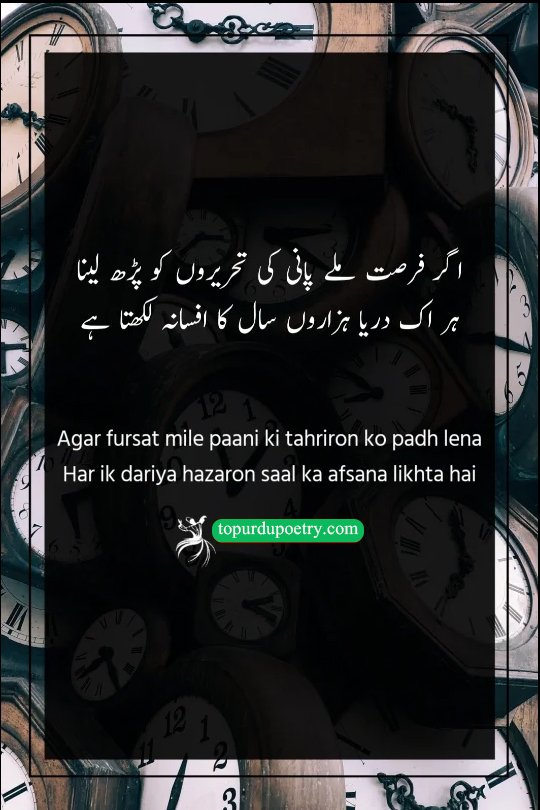
اگر فرصت ملے پانی کی تحریروں کو پڑھ لینا ہر اک دریا ہزاروں سال کا افسانہ لکھتا ہے
Agar fursat mile paani ki tahriron ko padh lena Har ik dariya hazaron saal ka afsana likhta hai
This deeply philosophical waqt poetry in Urdu encourages us to look at nature as a living archive of time. The poet suggests that if we have the 'fursat' (leisure), we should try to understand the 'tahriron' (writings) of the water. Each river is portrayed as an ancient historian, carrying and writing an 'afsana' (story) of thousands of years. It serves as a beautiful reminder that while human life is fleeting, the flow of 'waqt' (time) is etched into the very landscapes around us.
یہ محبت کا فسانہ بھی بدل جائے گا وقت کے ساتھ زمانہ بھی بدل جائے گا
Ye mohabbat ka fasana bhi badal jaega Vaqt ke saath zamana bhi badal jaega
This deep and realistic time poetry in Urdu explores the inevitability of change. The poet reflects on how even a deeply cherished 'Mohabbat ka fasana' (story of love) is subject to the passage of 'Waqt' (time). By stating that the 'Zamana' (the world/era) will also change, the verse serves as a powerful reminder that nothing in this life—neither our pain nor our passions—is permanent. It is a perfect selection for those looking for philosophical or stoic Urdu poetry.
جب آ جاتی ہے دنیا گھوم پھر کر اپنے مرکز پر تو واپس لوٹ کر گزرے زمانے کیوں نہیں آتے
Jab aa jaati hai duniya ghuum phir kar apne markaz par To vapas laut kar guzre zamane kyuun nahin aate
This deep and reflective Urdu poetry waqt explores the paradox of a cyclical universe and linear time. The poet observes that while the Earth regularly returns to its starting point ('markaz') through its orbits, the 'guzre zamane' (past times) remain lost forever. It is a powerful meditation on the longing for the past and the frustration of knowing that while nature repeats itself, human moments never do.
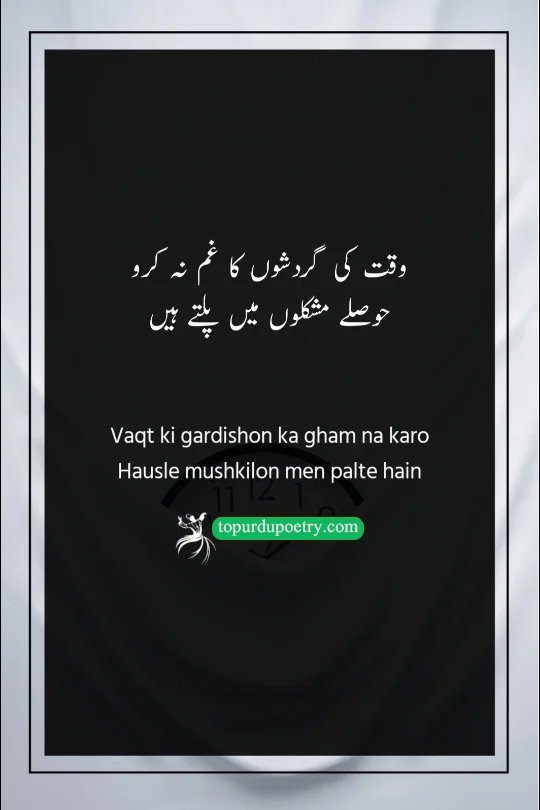
وقت کی گردشوں کا غم نہ کرو حوصلے مشکلوں میں پلتے ہیں
Vaqt ki gardishon ka gham na karo Hausle mushkilon men palte hain
This motivational poetry on waqt in Urdu serves as a reminder that difficult phases in life are actually opportunities for growth. The poet advises us not to be disheartened by 'Vaqt ki gardishon' (the ups and downs of time), as these are temporary. Instead, it highlights that true 'Hausla' (courage) is 'palte hain' (nurtured) only within the fires of adversity. It is an inspiring verse for anyone navigating through a challenging period in their life.
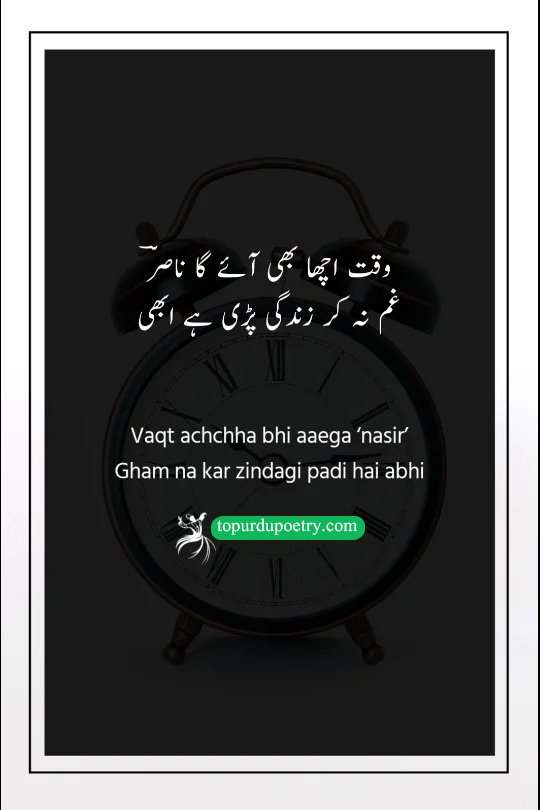
وقت اچھا بھی آئے گا ناصرؔ غم نہ کر زندگی پڑی ہے ابھی
Vaqt achchha bhi aaega ‘nasir’ Gham na kar zindagi padi hai abhi
This iconic couplet by Nasir Kazmi is a timeless reminder of hope and resilience. The poet consoles a grieving heart by promising that 'Vaqt achchha bhi aaega' (good times will surely return). He advises us not to let a temporary period of 'Gham' (sorrow) define us, because 'zindagi padi hai abhi' (life is still waiting to be lived). It is the perfect verse for those seeking comfort and a reason to keep moving forward.
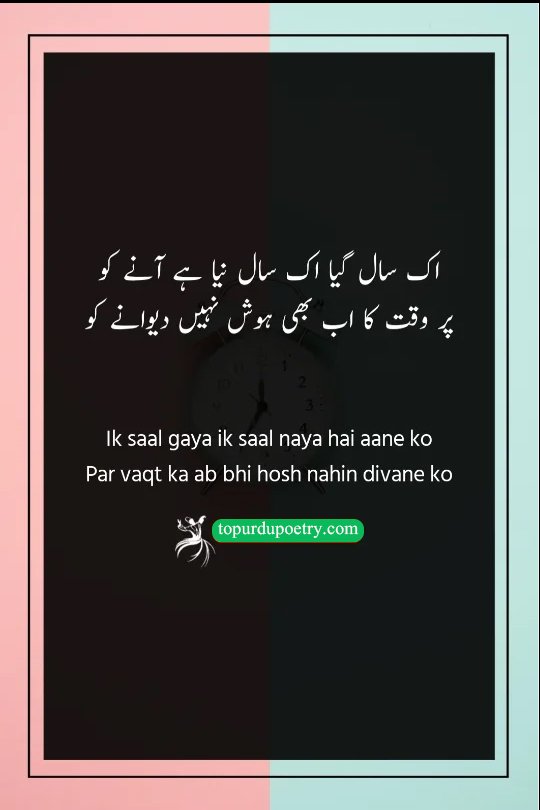
اک سال گیا اک سال نیا ہے آنے کو پر وقت کا اب بھی ہوش نہیں دیوانے کو
Ik saal gaya ik saal naya hai aane ko Par waqt ka ab bhi hosh nahin divane ko
This deep and reflective waqt quotes in Urdu explores the indifference of a true lover toward the passing of time. While the world marks the end of one year and the start of another, the 'divane' (one mad in love) remains lost in their own world, completely unaware of the calendar's change. It is a beautiful piece for the New Year, reminding us that for some, the heart stays in the same moment regardless of how many years pass.
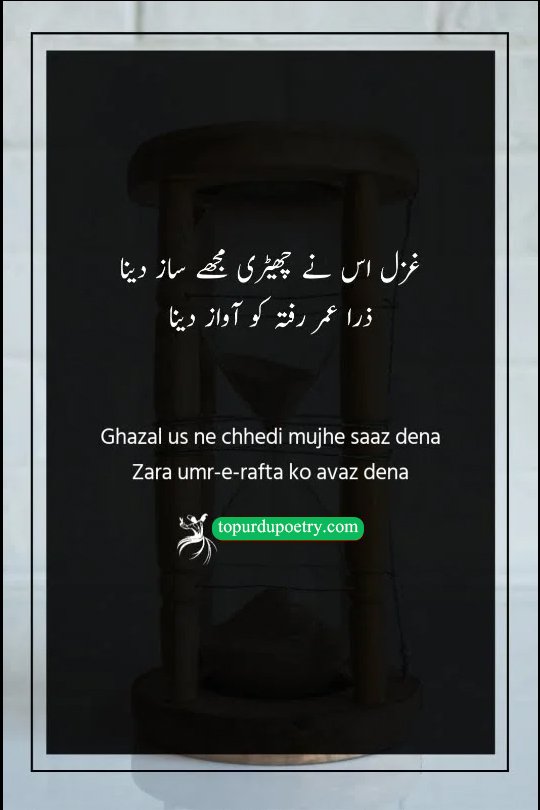
غزل اس نے چھیڑی مجھے ساز دینا ذرا عمر رفتہ کو آواز دینا
Ghazal us ne chhedi mujhe saaz dena Zara umr-e-rafta ko avaz dena
This deeply aesthetic time poetry in Urdu captures the intersection of music, memory, and time. The poet describes a moment where the beloved has 'chhedi' (started) a ghazal, and in response, he asks for his 'saaz' (instrument). Beautifully, he asks to summon his 'umr-e-rafta' (bygone life) to join the moment, suggesting that true poetic inspiration comes from calling back the years that have already passed. A stunning choice for those who appreciate nostalgia and the 'Waqt' that shapes our souls.
The Healing Power of Time Poetry in Urdu
Life often moves in cycles, and during our toughest moments, we look for a sign that things will eventually get better. This is where time poetry in urdu becomes a source of great strength. Whether it’s the classic idea that “waqt har zakhm bhar deta hai” (time heals every wound) or the realization that our current struggles are just a temporary chapter, these poetry on time in Urdu offer a perspective that only the passing of years can provide.
Reading waqt shayari 2 lines urdu (وَقْت شاعری) helps us embrace the patience required to let life unfold naturally. It reminds us that while we cannot control the clock, we can control how we choose to respond to the moments we are given.
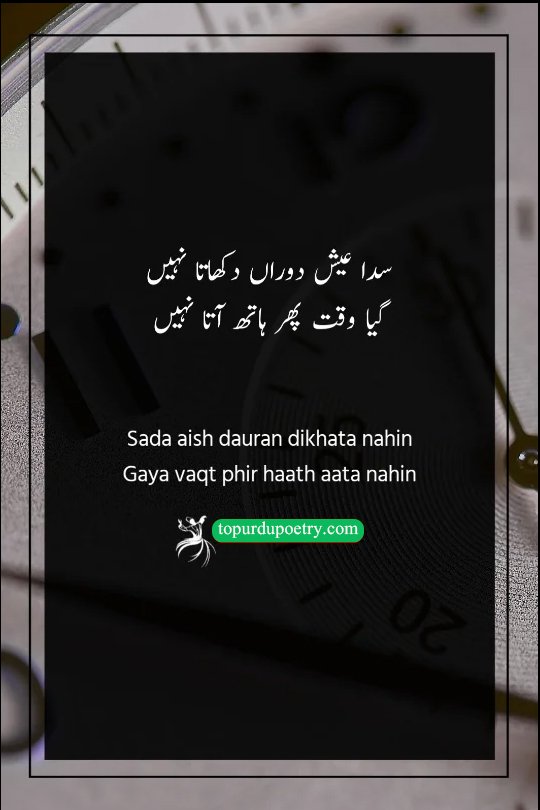
سدا عیش دوراں دکھاتا نہیں گیا وقت پھر ہاتھ آتا نہیں
Sada aish dauran dikhata nahin Gaya waqt phir haath aata nahin
This timeless and cautionary couplet serves as a vital lesson on the value of time. The poet reminds us that 'Sada aish' (continuous luxury) is not the law of life; seasons change and hardships can arrive without warning. Most importantly, it stresses that 'Gaya waqt' (lost time) is gone forever and can never be reclaimed. An essential verse for your 'Advice,' 'Life Lessons,' and 'Waqt' categories.
کہتے ہیں عمر رفتہ کبھی لوٹتی نہیں جا مے کدے سے میری جوانی اٹھا کے لا
Kahte hain umr-e-rafta kabhi lautti nahin Ja mai-kade se meri javani utha ke la
This witty and nostalgic waqt poetry in urdu challenges the universal law of time. While everyone says that 'Umr-e-Rafta' (bygone life) can never return, the poet humorously suggests that his youth isn't lost—it is simply stored in the 'Mai-kada' (tavern) of his memories and passions. It is a perfect verse for those who refuse to grow old at heart and believe that joy can bridge the gap between the past and the present.
Subh hoti hai shaam hoti hai Umr yunhi tamam hoti hai
This iconic couplet by Amir Minai is a profound reflection on the silent passage of time. It describes how life isn't lost in a single moment, but is gradually spent within the simple cycle of mornings and evenings. It serves as a haunting reminder that while we are preoccupied with the routine of 'Subh' and 'Shaam,' our entire 'Umr' (life) is quietly slipping away.
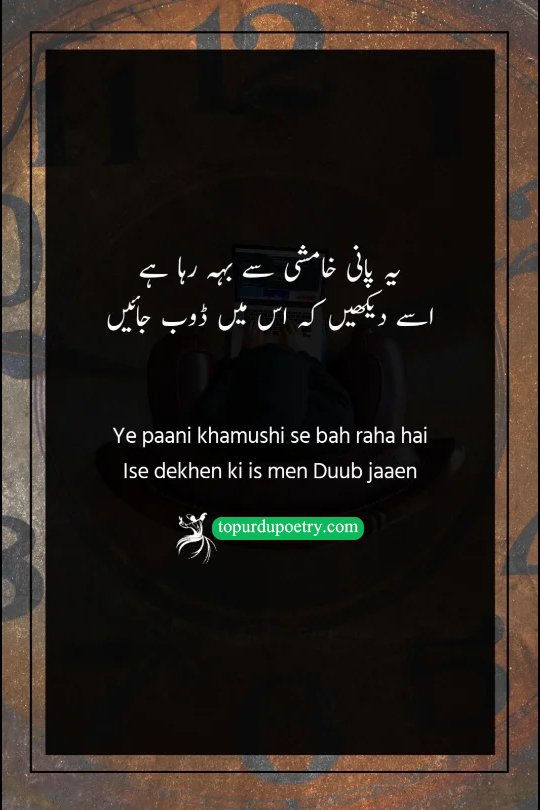
یہ پانی خامشی سے بہہ رہا ہے اسے دیکھیں کہ اس میں ڈوب جائیں
Ye paani khamushi se bah raha hai Ise dekhen ki is men Duub jaaen
This stunningly deep poetry on waqt explores the silent but relentless flow of existence. The poet stands by the water’s edge, symbolizing the edge of time itself. He wonders whether it is better to remain a distant spectator of life ('ise dekhen') or to fully immerse oneself and get lost in its depths ('is men duub jaaen'). It is a perfect selection for your 'Philosophy,' 'Nature,' and 'Deep Thoughts' categories, resonating with anyone who has ever felt overwhelmed by the quiet power of the passing moments.
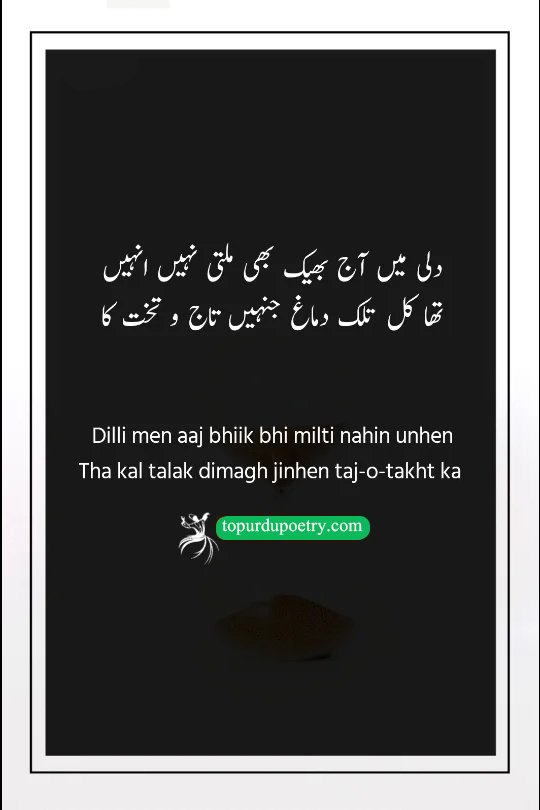
دلی میں آج بھیک بھی ملتی نہیں انہیں تھا کل تلک دماغ جنہیں تاج و تخت کا
Dilli men aaj bhiik bhi milti nahin unhen Tha kal talak dimagh jinhen taj-o-takht ka
This powerful historical waqt poetry in Urdu serves as a sobering reminder of the instability of worldly power. The poet describes the tragic downfall of the elite in Delhi, noting that those who once possessed the 'taj-o-takht' (crown and throne) are now reduced to a state where they cannot even find 'bhiik' (alms). It is a classic reflection on the cruelty of 'Waqt' and the humbling nature of fate. A must-have for your 'History,' 'Life Lessons,' and 'Changing Times' categories.
ہمیں ہر وقت یہ احساس دامن گیر رہتا ہے پڑے ہیں ڈھیر سارے کام اور مہلت ذرا سی ہے
Hamen har vaqt ye ehsas daman-gir rahta hai Pade hain Dher saare kaam aur mohlat zara si hai
This highly relatable Urdu poetry waqt explores the constant pressure of time and the shortness of life. The poet describes a persistent 'ehsas' (feeling) that haunts him: the realization that there is so much 'kaam' (work/ambition) to complete, yet the 'mohlat' (time/respite) granted by life is incredibly brief. It is a powerful reflection on the anxiety of existence and the struggle to achieve our dreams before our time runs out.
Vaqt karta hai parvarish barson Hadisa ek dam nahin hota
This philosophical couplet by Sahir Hoshiarpuri challenges our perception of 'accidents.' It suggests that no 'Hadisa' (tragedy or event) is truly sudden; rather, it is something that 'Waqt' (Time) has been nurturing and preparing for 'barson' (years). It is a powerful meditation on causality and the deep, often invisible, layers of time that shape our reality. Perfect for readers who appreciate deep logic and life lessons.
Wisdom for Life: Waqt Quotes in Urdu
Sometimes, a poetic quote is all you need to change your perspective on a situation. Sharing waqt quotes in urdu is a great way to inspire your friends and followers on social media. These quotes highlight the importance of patience (sabar) and the fact that time eventually reveals the true face of people and situations. If you are looking for a meaningful caption for your next post, these words of wisdom (وَقْت شاعری) about waqt poetry in Urdu will surely leave an impact.
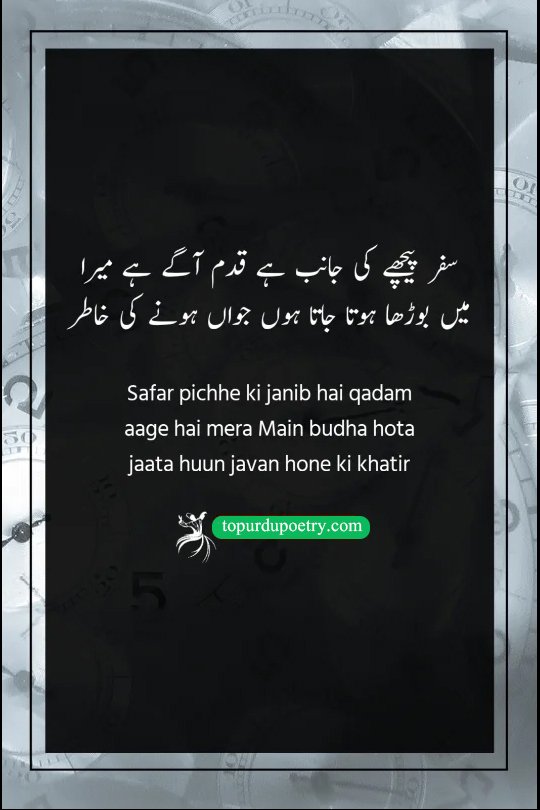
سفر پیچھے کی جانب ہے قدم آگے ہے میرا میں بوڑھا ہوتا جاتا ہوں جواں ہونے کی خاطر
Safar pichhe ki janib hai qadam aage hai mera Main budha hota jaata huun javan hone ki khatir
This deep and paradoxical waqt poetry 2 lines explores the relationship between aging and the soul's journey. While the physical 'qadam' (step) moves forward into old age, the poet describes his 'safar' (journey) as moving backward toward a state of eternal youth. It beautifully suggests that the process of getting 'budha' (old) is actually a path toward 'javan' (young) spiritual renewal. A perfect addition for your 'Sufi Poetry' or 'Deep Philosophy' categories.
ان کا ذکر ان کی تمنا ان کی یاد وقت کتنا قیمتی ہے آج کل
Un ka zikr un ki tamanna un ki yaad Waqt kitna qimti hai aaj kal
In this romantic and witty verse, the poet redefines the value of time. He claims that his 'Waqt' (Time) has become incredibly 'qimti' (precious) because every second is occupied by the 'Zikr' (mention), 'Tamanna' (longing), and 'Yaad' (memory) of his beloved. It is a perfect couplet for those who find themselves lost in the thoughts of someone special, making it a great choice for your 'Romantic' or 'Love' categories.
وقت رہتا نہیں کہیں ٹک کر عادت اس کی بھی آدمی سی ہے
vaqt rahta nahin kahin Tik kar Aadat is ki bhi aadmi si hai
In this witty and observant waqt quotes in Urdu, the poet personifies Time as a restless traveler. By saying that time's habit is 'aadmi si' (like a human), the verse suggests that time is just as unpredictable and prone to moving on as we are. It is a brilliant reflection on the fleeting nature of life, reminding us that neither the clock nor the people around us are meant to stand still. A perfect choice for a modern take on the 'Waqt' theme.
Us vaqt ka hisab kya duun Jo tere baghair kat gaya hai
This heart-wrenching poetry waqt explores the void left by separation. The poet reflects on the time spent away from his beloved, claiming that such moments are impossible to account for ('hisab') because they were devoid of life and meaning. It beautifully captures the sentiment that existence without love is merely 'katna' (passing time) rather than truly living. A deep and moving addition to your 'Sad Poetry' and 'Judai' (Separation) collections.
گزرنے ہی نہ دی وہ رات میں نے گھڑی پر رکھ دیا تھا ہاتھ میں نے
Guzarne hi na di vo raat main ne Ghadi par rakh diya tha haath main ne
In this beautifully innocent and romantic waqt poetry in Urdu, the poet expresses a desire to freeze time. He describes a night so precious that he didn't want it to end, and in a moment of emotional desperation, he 'placed his hand on the clock' to stop it. It perfectly illustrates how we try to hold onto our happiest moments, even when we know that time is an unstoppable force.
Shareable Waqt Shayari 2 Lines Urdu
In today’s fast-paced world, short and punchy verses are the most popular. Our collection of waqt shayari 2 lines urdu is designed specifically for easy sharing on WhatsApp, Instagram, and Facebook. Whether it’s a playful remark about being late or a serious reflection on the passing of youth, these two-liners (وَقْت شاعری) deliver a powerful message in very few words. Browse through and find the verse that perfectly matches your current phase of life.
سب کچھ تو ہے کیا ڈھونڈتی رہتی ہیں نگاہیں کیا بات ہے میں وقت پہ گھر کیوں نہیں جاتا
Sab kuchh to hai kya dhundti rahti hain nigahen Kya baat hai main waqt pe ghar kyuun nahin jaata
This deeply reflective couplet explores the theme of urban loneliness and existential search. Despite having all life's comforts ('Sab kuchh'), the poet feels a mysterious void, symbolized by his eyes constantly searching for something unknown. His hesitation to return home 'on time' (waqt pe) suggests that his physical house lacks the peace his heart craves. It’s a perfect verse for those who feel a sense of displacement in a crowded world.
اور کیا چاہتی ہے گردش ایام کہ ہم اپنا گھر بھول گئے ان کی گلی بھول گئے
Aur kya chahti hai gardish-e-ayyam ki ham Apna ghar bhuul gae un ki gali bhuul gae
This deeply melancholic bura waqt poetry explores the devastating impact of life's struggles on the human spirit. The poet questions 'Gardish-e-ayyam' (the cycle of fate/time), asking what more it could possibly demand. He laments that the hardship of surviving has caused him to forget 'apna ghar' (his own home/identity) and the 'gali' (street) of his beloved. It is a powerful reflection on how the 'rat race' and difficult times can distance us from the things that truly matter.
وہ وقت کا جہاز تھا کرتا لحاظ کیا میں دوستوں سے ہاتھ ملانے میں رہ گیا
Vo vaqt ka jahaz tha karta lihaz kya Main doston se haath milane men rah gaya
This relatable and bittersweet waqt shayari highlights the conflict between social life and the fast-paced nature of opportunity. The poet uses the metaphor of a 'Jahaz' (ship/plane) to describe time—a force that has no 'lihaz' (regard) for anyone's personal delays. It reflects the regret of a person who was so occupied with 'haath milana' (greeting friends) that he missed the moment to move forward in life. A perfect choice for your 'Regret' and 'Time' categories.
وقت کس تیزی سے گزرا روزمرہ میں منیرؔ آج کل ہوتا گیا اور دن ہوا ہوتے گئے
Vaqt kis tezi se guzra roz-marra men ‘munir’ Aaj kal hota gaya aur din hava hote gae
In this profound verse, Munir Niazi reflects on the deceptive speed of time within our daily routines. He observes how 'Aaj' (Today) instantly dissolves into the past, and how entire days 'hava hote gae' (vanished like the wind) while we were busy with the mundane tasks of life. It is a powerful reminder to pause and value the present before it evaporates into the void of 'yesterday.'
Final Thoughts on Time Poetry
Time waits for no one, but a beautiful verse can capture a moment forever. We hope this collection of waqt poetry in Urdu has given you a new way to look at the hours and days of your life.
Which of these waqt shayari 2 lines urdu (وَقْت شاعری) hit home for you today? Do you believe that time is the best healer? Share your thoughts in the comments below, and don’t forget to save these custom poetry images for your status!