The word dard (pain) is perhaps the most universally understood emotion in human history. In the realm of literature, dard poetry in urdu serves as a sanctuary for those whose hearts have been shattered. Whether it is the agony of unrequited love, the sting of betrayal, or the silent ache of loneliness, these verses give a voice to the sorrow we often hide from the world. Interestingly, psychologists studying the effects of emotional pain and social rejection have discovered that our brains process heartbreak and isolation in the exact same neural regions that process physical injury. This scientific reality explains why the ache in your chest feels so unbearably real, and why turning to poetry provides such profound comfort—it validates a pain that the naked eye cannot see. By reading and sharing these deeply empathetic couplets, you are participating in a timeless tradition of healing through art.
If your heart is heavy with the memory of a broken promise or a lost relationship, you may also find comfort in our deep collection of Bewafa (Betrayal) Poetry in Urdu.
Table of Contents
Midnight Reflections: Dard Poetry in Urdu for Silent Tears
When the world goes to sleep, a wounded heart often wakes up to its deepest sorrows. The quiet hours of the night can amplify our feelings of isolation, making the ache feel heavier than during the day. Our carefully selected dard poetry in Urdu serves as a perfect companion for those lonely midnight hours when the silence simply becomes too loud. Sometimes, the pain is so overwhelming that it cannot be spoken, only expressed through silent, solitary tears. These specific couplets (درد محبت شاعری) capture that very essence of unspoken agony, offering a sense of quiet companionship. Reading these lines reminds you that even in your darkest and most isolated moments, your profound grief has been felt, understood, and immortalized by the greatest poets.
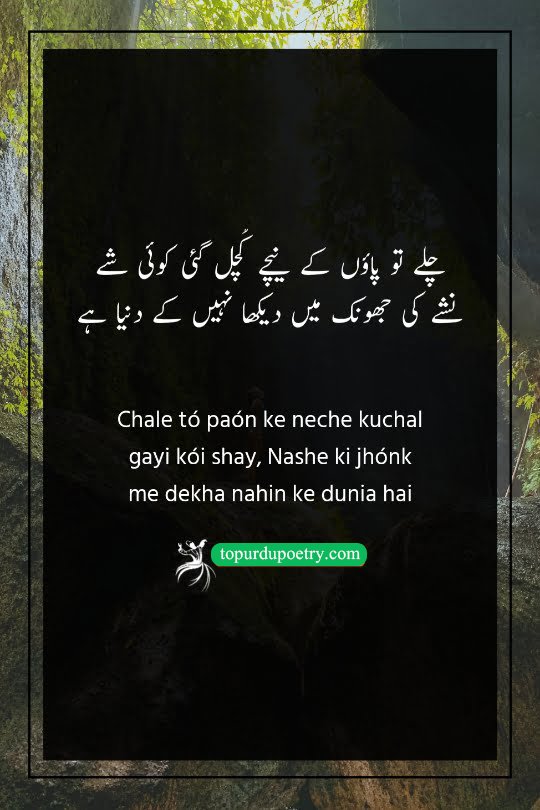
چلے تو پاؤں کے نیچے کُچل گئی کوئی شے نشے کی جھونک میں دیکھا نہیں کے دنیا ہے
Chale tó paón ke neche kuchal gayi kói shay, Nashe ki jhónk me dekha nahin ke dunia hai
In this profound and chilling dard poetry in Urdu, the poet explores the destructive nature of ego and indifference. He describes how a person blinded by 'Nasha' (the intoxication of power, pride, or passion) can unknowingly crush the lives and worlds of others. The tragedy lies in the lack of awareness—the damage is done not out of malice, but out of a total disregard for reality. It is a powerful reflection for anyone contemplating the 'blind spots' of success, serving as a reminder that when we stop looking down, we risk destroying the very world we stand on.
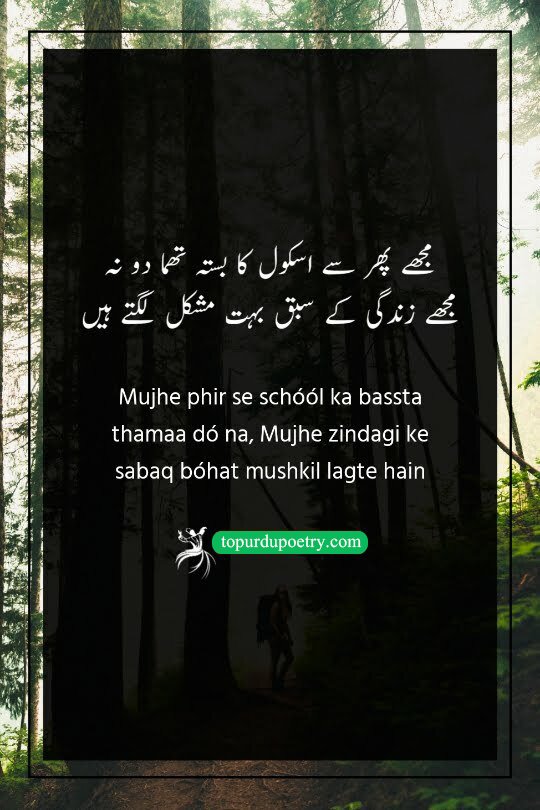
مجھے پھر سے اسکول کا بستہ تھما دو نہ مجھے زندگی کے سبق بہت مشکل لگتے ہیں
Mujhe phir se school ka basta thama do na Mujhe zindagi ke sabaq bohat mushkil lagte hain
In this deeply moving and nostalgic dard poetry in urdu, the poet expresses a longing to return to the simplicity of childhood. He contrasts the 'Basta' (school bag)—a symbol of manageable, academic burdens—with the 'Sabaq' (lessons) of life, which are often unpredictable and painful. It highlights the exhaustion of adulthood, where the rules are unclear and the failures are permanent. This couplet resonates with anyone who has ever felt overwhelmed by the complexities of the world and wished, even for a moment, to be a child again whose only worry was a math problem.
ثابت ہوا کہ تو بھی زمانے کے ساتھ ہے ثابت ہوا کہ تو بھی ہمارا نہیں ہے
Sabit hua ke tu bhi zamane ke sath hai Sabit hua ke tu bhi hamara nahin hai
In this strikingly resolute dard shayari Urdu, the poet explores the finality of a broken trust. He acknowledges that the beloved has finally conformed to the ways of the 'Zamana' (the world)—becoming just another person who chooses convenience over loyalty. The repetition of 'Sabit hua' highlights the moment of cold realization where all doubts are cleared and the truth is laid bare: the person who was supposed to be different is exactly like everyone else. It is a powerful reflection for anyone who has watched a unique bond dissolve into common indifference, capturing the lonely dignity of accepting a harsh truth.
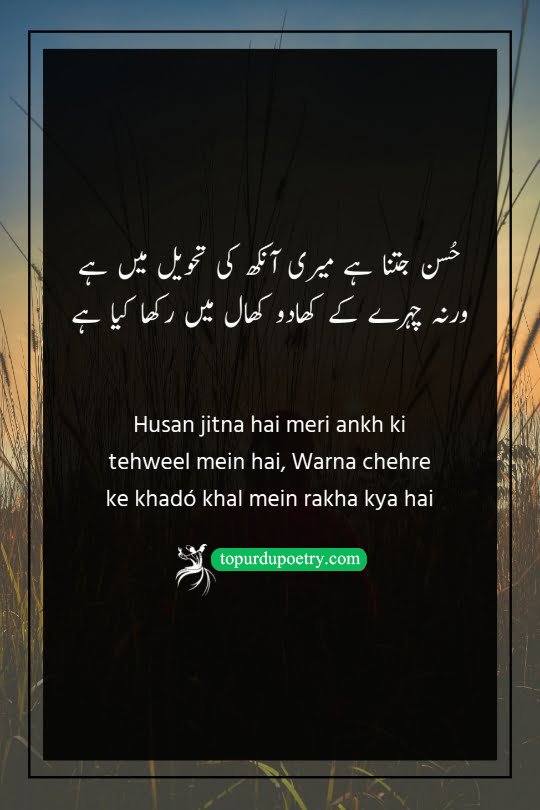
حُسن جتنا ہے میری آنکھ کی تحویل میں ہے ورنہ چہرے کے کھادو کھال میں رکھا کیا ہے
Husan jitna hai meri ankh ki tehweel mein hai Warna chehre ke khadó khal mein rakha kya hai
In this profound and insightful hurt poetry in Urdu, the poet explores the idea that 'beauty lies in the eye of the beholder.' He argues that physical features are just a structure, devoid of magic, until they are viewed through the lens of devotion and desire. By stating that all beauty is in the 'possession' of his eye, the poet highlights the transformative power of love—it doesn't just find beauty; it 'gives' beauty. This couplet is a classic critique of superficiality and a celebration of the unique, personal world that love creates.
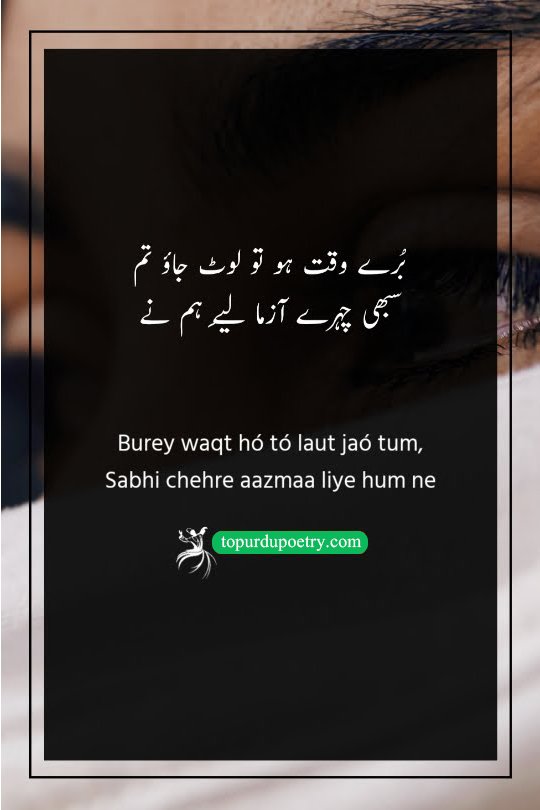
بُرے وقت ہو تو لوٹ جاؤ تم سبھی چہرے آزما لِیے ہم نے
Burey waqt hó tó laut jaó tum, Sabhi chehre aazmaa liye hum ne
In this fiercely independent dard poetry in urdu, the poet explores the clarity that comes with hardship. He dismisses those who are only present for the good times, telling them to 'return' if they find his 'Burey Waqt' (bad times) too difficult. The weight of the poem lies in the second line: a weary admission that through his struggles, he has 'tested all faces' and seen their true nature. It is a powerful reflection for anyone who has realized that a crisis is the ultimate filter for fake people, capturing the moment you stop fighting for those who aren't willing to fight for you.
جانے کس راہ چلوں کون سے رُخ مُڑ جائوں مجھ سے مت مِل کے زمانے کی ہوا ہوں میں بھی
Jane kis raah chalón kón se rukh mud jaón, Mujh se mat mil ke zamane ki hawa hóón me bhi
In this strikingly honest verse, the poet issues a heartbreaking warning to anyone trying to get close to him. Instead of blaming the world for his pain, he confesses that the world has shaped him into something equally unpredictable and fickle. By comparing himself to 'Zamane ki Hawa' (the wind of the times), he admits to a profound lack of direction and stability. It is a powerful reflection for anyone who feels so broken by past betrayals that they purposefully push people away, fearing they will only end up hurting those who try to love them.
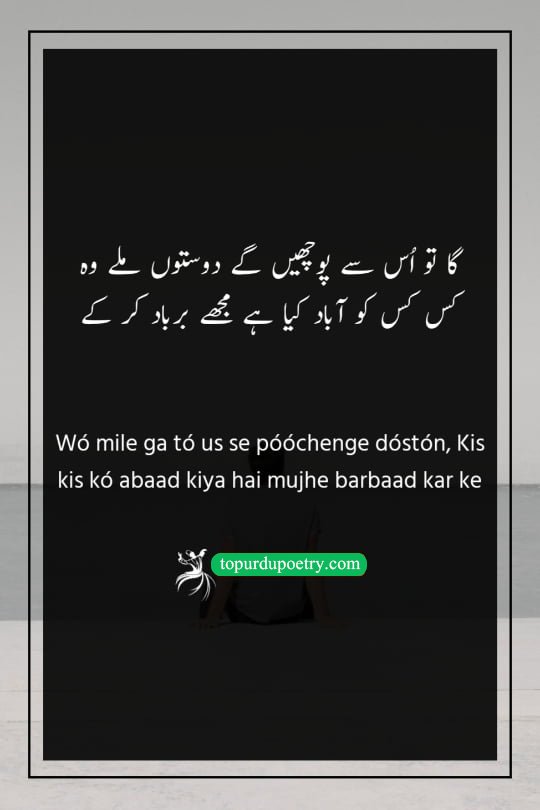
وہ ملے گا تو اس سے پوچھیں گے دوستوں کس کس کو آباد کیا ہے مجھے برباد کر کے
Wo mile ga to us se poochenge doston Kis kis ko abaad kiya hai mujhe barbaad kar ke
In this sharply accusatory dard poetry in Urdu, the poet explores the aftermath of a devastating betrayal. He speaks of a future confrontation where he intends to ask the beloved a single, piercing question: who else benefited from his ruin? By contrasting 'Abaad' (to build or settle) with 'Barbaad' (to destroy), the poet highlights the cruel trade-off often found in toxic relationships. It is a powerful reflection for anyone who has felt like their sacrifice was used as fuel for someone else's happiness, capturing the bitter realization that your destruction was a calculated choice.
Express Your Grief: Dard Shayari Urdu (درد پر اشعار)
Sometimes, the hurt is so profound that ordinary conversations fail to capture it. Our collection of dard shayari Urdu provides a beautifully poetic outlet for your deepest sorrows. These short, 2-line couplets focus on the raw reality of grief, making them perfect for those moments when you want to update your social media status or simply read something that completely understands your tears. Let these dard bhari poetry speak for you when your own voice falters.
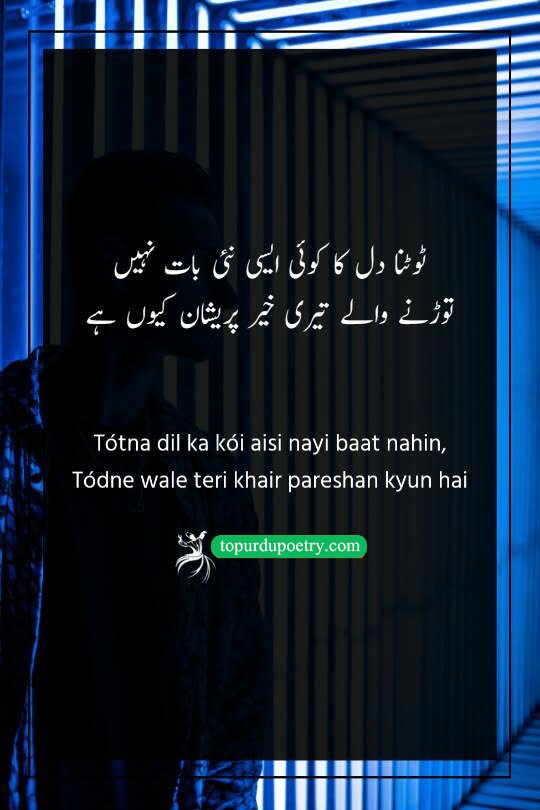
ٹوٹنا دل کا کوئی ایسی نئی بات نہیں توڑنے والے تیری خیر پریشان کیوں ہے
Tótna dil ka kói aisi nayi baat nahin, Tódne wale teri khair pareshan kyun hai
In this powerfully stoic 2 line dard shayari Urdu, the poet explores the quiet dignity of a person who has become 'used' to heartbreak. Instead of showing pain, he dismisses the breaking of his heart as an everyday occurrence. The irony peaks in the second line, where he questions why the person who hurt him looks so worried. It highlights a fascinating psychological truth: sometimes, the calm of the victim is more haunting than their tears, leaving the 'Tódne Wala' (breaker) to deal with the weight of their own guilt. It is a perfect reflection for anyone who has found strength in silence after a betrayal.
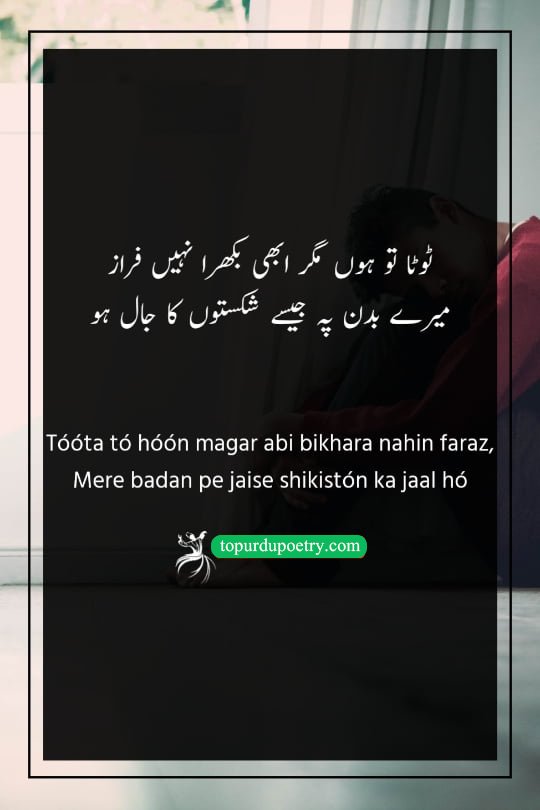
ٹوٹا تو ہوں مگر ابھی بکھرا نہیں فراز میرے بدن پہ جیسے شکستوں کا جال ہو
Tóóta tó hóón magar abi bikhara nahin faraz, Mere badan pe jaise shikistón ka jaal hó
In this iconic hurt poetry in Urdu, Ahmed Faraz explores the 'strength of the broken.' He acknowledges that while life has fractured him, he has not yet lost his form. The 'shikaston ka jaal' (web of defeats) serves as a powerful metaphor for resilience—suggesting that the very failures we endure can become the structure that holds us together in times of crisis. It is a profound reflection for anyone who has felt defeated but refuses to give up, highlighting that there is a quiet, haunting dignity in surviving multiple heartbreaks.
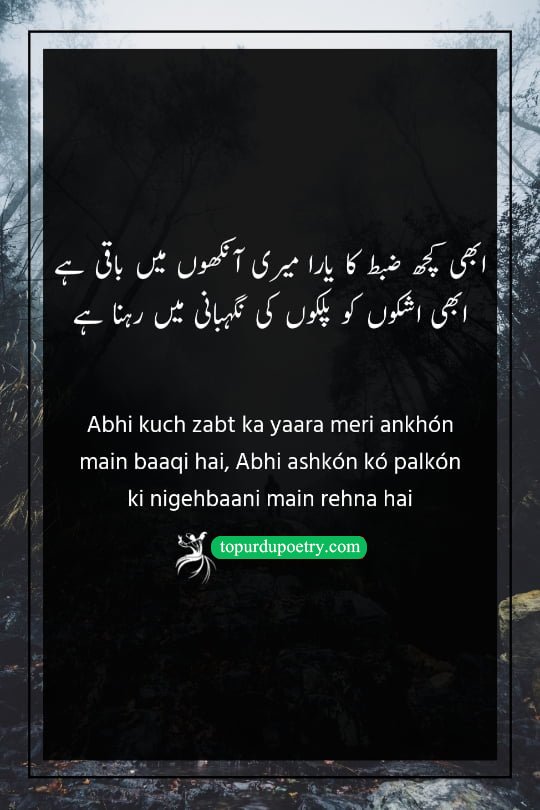
ابھی کچھ ضبط کا یارا میری آنکھوں میں باقی ہے ابھی اشکوں کو پلکوں کی نگہبانی میں رہنا ہے
Abhi kuch zabt ka yaara meri ankhón main baaqi hai, Abhi ashkón kó palkón ki nigehbaani main rehna hai
In this elegantly stoic dard shayari, the poet explores the theme of 'Zabt' (restraint). He speaks of the silent war between the urge to cry and the pride that keeps those tears at bay. By describing the eyelashes as 'guards' (Nigehbaan) over his tears, he highlights the immense effort required to hide one's vulnerability from the world. It is a powerful reflection for anyone who has had to stay strong in public while being broken in private, capturing that fragile moment where the heart is full, but the eyes remain dry for the sake of dignity.
بڑا ہے درد کا رشتہ یہ دل غریب سہی تمہارے نام پہ آئیں گے غمگسار چلے
Bada hai dard ka rishta yeh dil ghareeb sahi, Tumhare naam pe aayenge ghamgusar chaley
In this legendary dard e dil shayari Urdu by Faiz Ahmed, the poet celebrates the sacred 'bond of pain.' He suggests that while a heart may be 'Ghareeb' (poor) in joy, it becomes wealthy through its capacity to love and suffer. The mention of the beloved's name serves as a rallying cry for 'Ghamgusars' (sympathizers), proving that shared sorrow creates a community stronger than any other connection. It is a powerful reflection for anyone who has found comfort in the company of those who understand their struggle, capturing the quiet dignity of a pained heart.
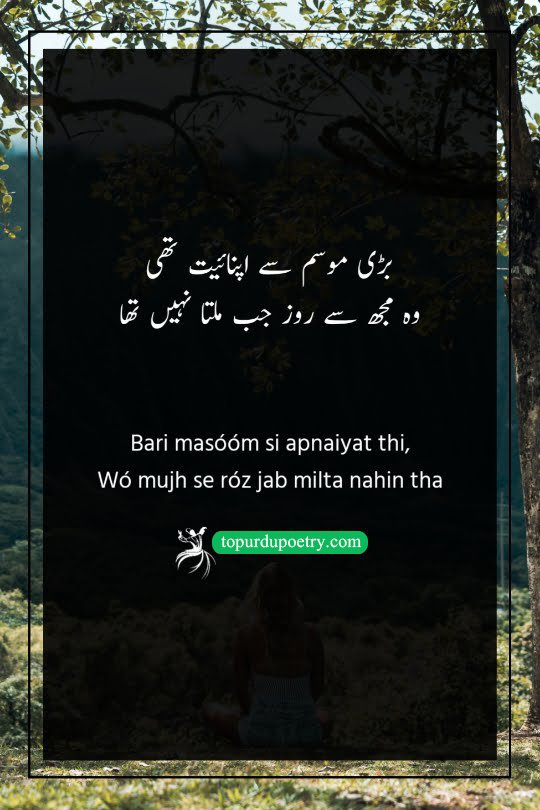
بڑی معصوم سے اپنائیت تھی وہ مجھ سے روز جب ملتا نہیں تھا
Bari masoom si apnaiyat thi, Wó mujh se róz jab milta nahin tha
In this subtly tragic verse (درد محبت شاعری), the poet explores the 'beauty of longing.' He reflects on a time when his connection with the beloved was 'Mausam si' (like the seasons)—fresh, natural, and cherished. The heartbreak lies in the second line, which suggests that this sense of belonging existed only as long as they didn't meet every day. It is a powerful reflection for anyone who has realized that sometimes, distance is the very thing that keeps love 'Masoom' (innocent), and that constant presence can ironically make two people feel further apart.
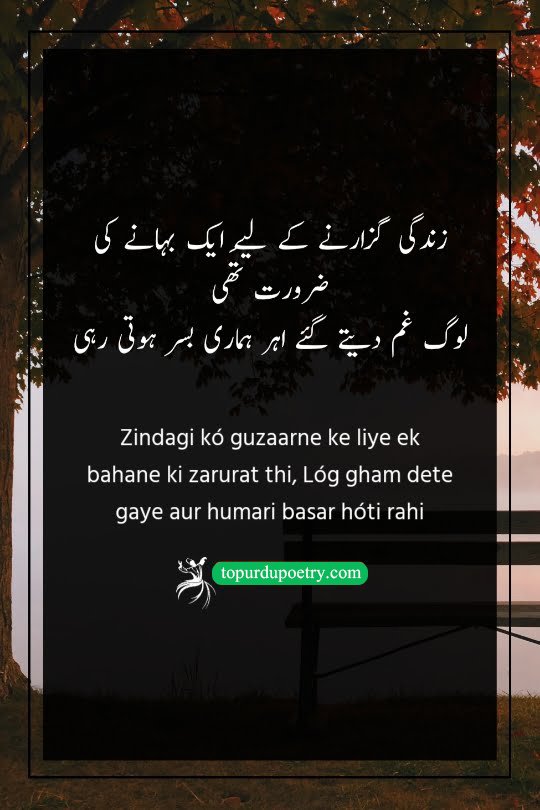
زندگی گزارنے کے لِیے ایک بہانے کی ضرورت تھی لوگ غم دیتے گئے اور ہماری بسر ہوتی رہی
Zindagi kó guzaarne ke liye ek bahane ki zarurat thi, Lóg gham dete gaye aur humari basar hóti rahi
In this darkly ironical verse, the poet explores the resilience found in absolute despair. He reflects on how, in the absence of hope, even 'Gham' (sorrow) can become a reason to endure another day. By stating that life 'passed' on the grief given by others, the poet highlights a haunting truth: for some, the struggle itself becomes the only 'Bahana' (excuse) left for existing. It is a powerful reflection for anyone who has found the strength to survive on the very things that were meant to destroy them, turning every heartbreak into a milestone of endurance.
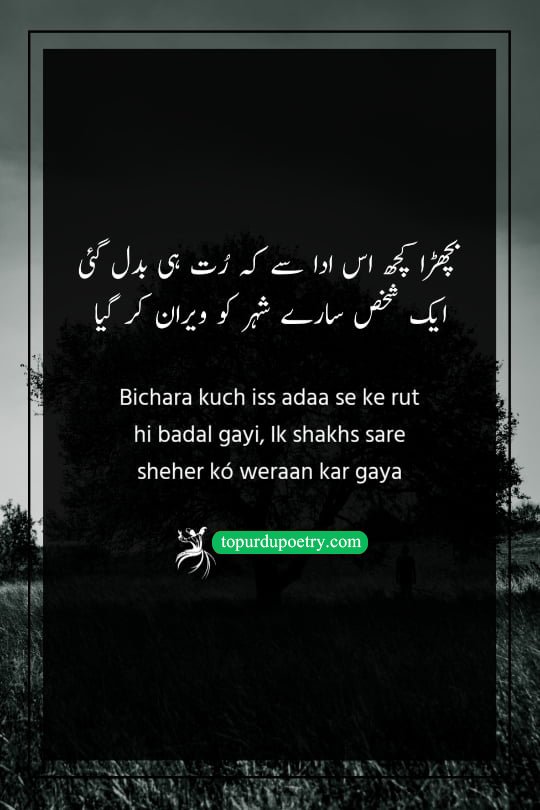
بچھڑا کچھ اس ادا سے کہ رُت ہی بدل گئی ایک شخص سارے شہر کو ویران کر گیا
Bichara kuch iss adaa se ke rut hi badal gayi, Ik shakhs sare sheher kó weraan kar gaya
In this hauntingly beautiful dard shayari Urdu, the poet explores the 'butterfly effect' of a single heartbreak. He describes how the departure of a beloved doesn't just end a relationship—it changes the very 'Rut' (season) of one's existence. The second line captures the ultimate paradox of loneliness: how a crowded, bustling city can feel like a silent 'Weraan' (wasteland) just because one specific person is no longer there. It is a profound reflection for anyone who has realized that their entire world was anchored to a single soul, and that without them, even the brightest lights lose their shine.
Regional Resonance: Dard Saraiki Poetry
While classical Urdu provides immense elegance, regional languages often carry a raw, unfiltered emotional weight that is completely unmatched. We have included a special selection of dard saraiki poetry, known for its deep connection to the soil and its poignant, piercing expressions of longing and heartbreak. If you resonate with the soulful, folk-driven cadence of Saraiki literature, these verses will speak directly to the core of your grief.
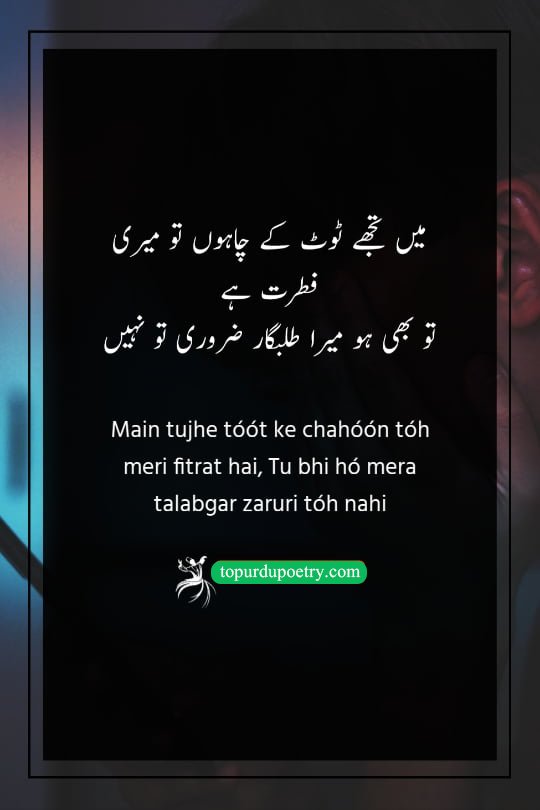
میں تجھے ٹوٹ کے چاہوں تو میری فطرت ہے تو بھی ہو میرا طلبگار ضروری تو نہیں
Main tujhe tóót ke chahóón tóh meri fitrat hai, Tu bhi hó mera talabgar zaruri tóh nahi
In this deeply dignified dard saraiki poetry , the poet explores the concept of unconditional love. He differentiates between his own 'Fitrat' (innate nature) to love intensely and the beloved's right to choose their own path. By stating 'Zaruri toh nahi' (It isn't necessary), the poet releases the beloved from any obligation, finding peace in the purity of his own feelings. It is a powerful reflection for anyone dealing with unrequited love, serving as a reminder that the beauty of your love lies in your heart, not in whether it is returned.
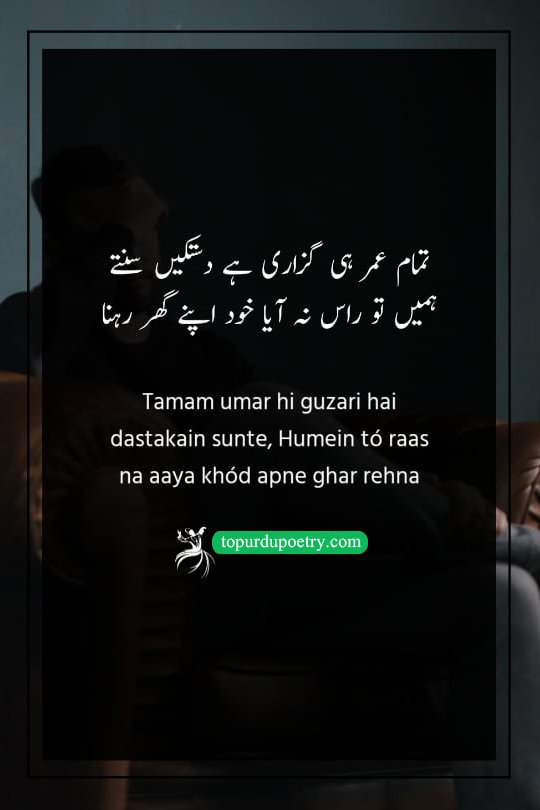
تمام عمر ہی گزاری ہے دستکیں سنتے ہمیں تو راس نہ آیا خود اپنے گھر رہنا
Tamam umar hi guzari hai dastakain sunte, Humein tó raas na aaya khód apne ghar rehna
In this deeply introspective verse, the poet explores the 'Dard' (pain) of self-alienation. He reflects on a life spent reacting to the world—waiting for 'Dastakain' (knocks) from others—while neglecting his own inner sanctuary. By admitting that he never felt at home within himself, the poet highlights the tragedy of modern existence: we are so busy entertaining the world that we forget how to live with our own souls. It is a powerful reflection for anyone who feels like a stranger in their own skin, capturing the haunting loneliness of a heart that has forgotten its own address.
اتنی مضبوطی سے ویرانوں کے در بند کر دیے دل میں اُتری نہ کوئی ذات تیری ذات کے بعد
Itni mazbóóti se viraanón ke dar band kiye, Dil mein utri na kói zaat teri zaat ke baad
In this strikingly resolute verse, the poet explores the theme of 'Eternal Loyalty.' He describes a heart that has been intentionally sealed off from the rest of the world after the departure of a specific person. By 'closing the doors of desolation,' the poet chooses the dignity of solitude over the clutter of shallow relationships. It is a powerful reflection for anyone who has loved so deeply that they no longer have the space or the desire to let anyone else in. It captures the moment a heart stops being a waiting room and becomes a shrine to a single, unforgettable 'Zaat' (essence).
یہ جو ہم چپ ہیں تو اس کو بھی غنیمت جانو ہم اگر صبر نہ کرتے تو قیامت کرتے
Yeh jó hum chup hain tó is kó bhi ghaneemat janó, Hum agar sabar na karte tó qayamat karte
In this strikingly intense heart touching saraiki poetry , the poet explores the 'Dard' (pain) of suppressed emotions and the weight of silence. He warns that his quietness should not be mistaken for surrender; rather, it is a deliberate act of 'Sabar' (patience) that protects the world from the storm within his heart. The phrase 'Qayamat karte' highlights the devastating potential of his words if he ever chose to speak his full truth. It is a powerful reflection for anyone who chooses dignity over conflict, proving that the strongest people are often the ones who stay silent when they have every reason to scream.
تعارف روگ بن جائے تو اِس کو بھولنا اچھا تعلق بوجھ بن جائے تو اس کو توڑنا اچھا
Taaruf róg ban jaye tó is kó bhóólna acha, Taaluq bójh ban jaye tó is kó tódna acha
In this strikingly practical and empowering dard poetry in urdu, the poet advocates for emotional hygiene and self-preservation. He suggests that no relationship or acquaintance is worth losing your peace of mind over. By labeling a toxic connection as a 'Rog' (disease) and a 'Bojh' (burden), he gives the reader permission to walk away with their dignity intact. It is a powerful reflection for anyone struggling to let go, serving as a reminder that breaking a heavy bond is often the first step toward finding freedom.
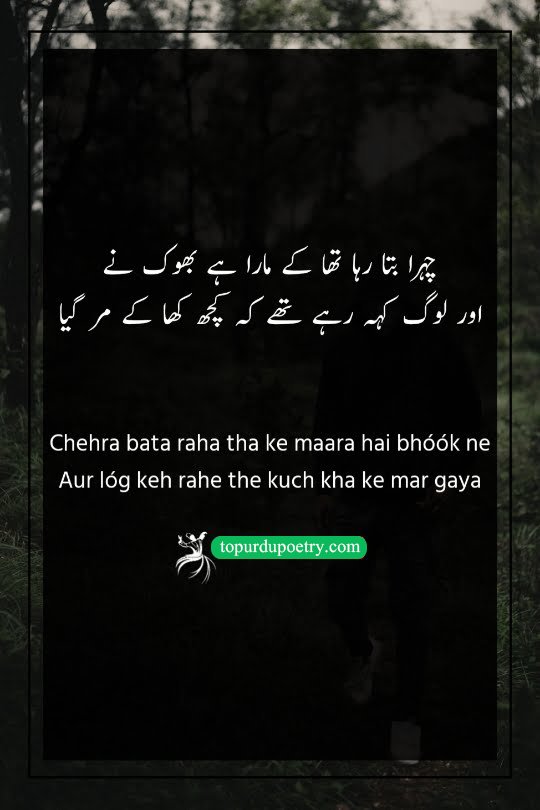
چہرا بتا رہا تھا کے مارا ہے بھوک نے اور لوگ کہہ رہے تھے کہ کچھ کھا کے مر گیا
Chehra bata raha tha ke maara hai bhóók ne Aur lóg keh rahe the kuch kha ke mar gaya
In this devastatingly sharp dard shayari Urdu, the poet exposes the cruelty of social indifference. He contrasts the visible evidence of 'Bhook' (hunger) on a man's face with the careless rumors spread by 'Log' (the people). It highlights a tragic reality: society would rather believe a lie—that someone died by their own hand or a mistake—than admit they allowed someone to starve. It is a powerful reflection for anyone exploring themes of social justice and the 'Dhoka' (deception) of public perception, capturing the lonely death of a truth that no one wanted to hear.
وہ ایک خط جو تو نے کبھی لکھا ہی نہیں میں روز بیٹھ کے اُس کا جواب لکھتا ہوں
Wó aik khat jó tu ne kabhi likha hi nahi, Main róz baith ke uss ka jawab likhta hóón
In this hauntingly beautiful dard shayari in urdu 2 lines, the poet explores the height of emotional isolation. He describes a one-sided dialogue where, in the absence of any word from the beloved, he begins to reply to letters that were never even sent. It is a powerful reflection of 'Umeed' (hope) turned into an obsession—where the mind chooses to live in a fictional world of letters and replies rather than face the silent reality of being alone. It captures the lonely dignity of a heart that keeps a dead relationship alive through the power of imagination.
Acknowledging the Pain: Hurt Poetry in Urdu
Acknowledging your pain is always the first step toward healing. Our curated selection of hurt poetry in Urdu is designed specifically for those who have been deeply wronged but choose to endure their circumstances with quiet grace. These poetry about hurt feelings in Urdu beautifully articulate the dignity of a wounded soul, offering words of solace and understanding to help you navigate through the darkest and most isolating of nights.
میں زمانے میں بد نام فقط اس لِیے ہوں مجھے لوگوں کی طرح بدل جانا نہیں آتا
Main zamaane mein badnaam faqat is liye hóón, Mujhe lógón ki tarah badal jana nahin aata
In this strikingly resolute hurt poetry in Urdu , the poet explores the 'cost of character.' He reflects on how society often labels those who are honest and consistent as 'Badnaam' (infamous) simply because they refuse to play the game of deception. By admitting he doesn't know how to 'change like others,' he highlights a profound moral stance: it is better to be disliked for who you are than to be loved for a mask you wear. It is a powerful reflection for anyone who has ever felt like an outcast for staying true to their principles in a fickle world.
سنا ہوگا درد کی ایک حد بھی ہوتی ہے مِلو ہم سے ہم اس کے اکثر پار جاتے ہیں
Suna hóga dard ki ek hadh bhi hóti hai, Miló humse hum us ke aksar paar jaate hain
In this strikingly intense hurt poetry, the poet challenges the conventional wisdom that human suffering has a 'Hadh' (limit). He invites the world to see his reality, claiming to exist in a state where he 'Aksar paar jaate hain' (often goes beyond) the threshold of normal endurance. It is a powerful reflection for anyone who feels their 'Dard' (pain) is so deep it can no longer be measured, capturing the haunting resilience of a soul that has survived what should have been impossible.
Dil-e-nadaan zara móhtaaat rehna, Móhabbat bhi tijaarat hó gayi hai
In this strikingly modern and cynical verse, the poet warns his 'Dil-e-Nadaan' (innocent heart) to stay on guard. He observes that in the world today, love is no longer a selfless emotion but has turned into a 'Tijaarat' (business). It is a powerful reflection on the transactional nature of modern relationships, where people calculate profit and loss even in matters of the heart. This couplet serves as a reminder for anyone who loves too deeply: in a world of traders, a pure heart must be careful not to be sold for a bargain.
مجھ کو کسی پہ ٹوٹ کے مرنے نہیں دیا دُنیا نے ڈھنگ سے عشق بھی کرنے نہیں دیا
Mujh kó kisi pe tóót ke marne nahin diya, Duniya ne dhang se ishq bhi karne nahin diya
In this powerfully rebellious dard e dil shayari Urdu, the poet laments how societal restrictions suffocate the soul's deepest desires. He expresses a profound regret that he was never allowed to experience 'Toot ke marna'—the kind of all-consuming love that defines legends. By accusing the 'Duniya' (world) of not letting him love 'Dhang se' (properly), the poet highlights the tragedy of a passion that was policed, judged, and ultimately left unfulfilled. It is a perfect reflection for anyone who has felt their heart's path blocked by the rigid expectations of the world.
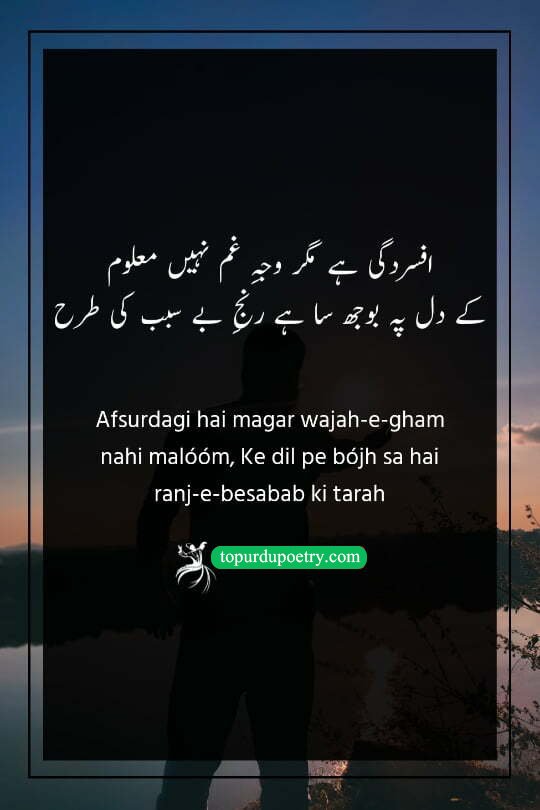
افسردگی ہے مگر وجہِ غم نہیں معلوم کے دل پہ بوجھ سا ہے رنجِ بے سبب کی طرح
Afsurdagi hai magar wajah-e-gham nahi malóóm, Ke dil pe bójh sa hai ranj-e-besabab ki tarah
In this deeply relatable sad hurt poetry in Urdu , the poet captures the essence of 'Ranj-e-Besabab'—grief without a cause. It describes that heavy, unexplained 'Afsurdagi' (melancholy) that often settles on the heart like a physical weight, even when there is no specific tragedy to blame. It is a powerful reflection for anyone who has experienced the 'Bojh' (burden) of existential sadness, acknowledging that sometimes the pain we cannot explain is the hardest one to carry.
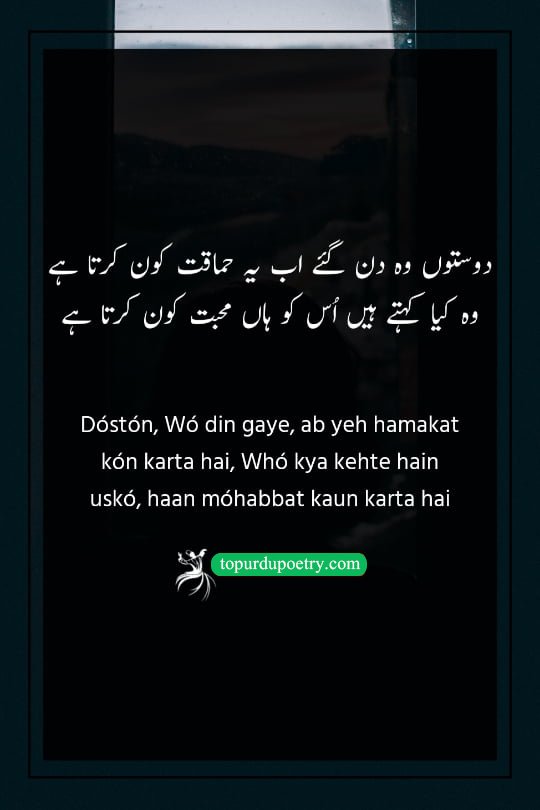
دوستوں وہ دن گئے اب یہ حماقت کون کرتا ہے وہ کیا کہتے ہیں اُس کو ہاں محبت کون کرتا ہے
Dóstón, Wó din gaye, ab yeh hamakat kón karta hai, Whó kya kehte hain uskó, haan móhabbat kaun karta hai
In this sharply cynical and witty verse, the poet explores the 'Dard' (pain) of disillusionment. He adopts a persona of mock-indifference, labeling love as a 'Hamakat' (folly) that belongs to a bygone era. The brilliance lies in the second line, where he pretends to forget the very word for love, suggesting that it has become irrelevant in the modern, transactional world. It is a powerful reflection for anyone who uses sarcasm as a shield to hide a broken heart, capturing the moment when one decides to laugh at love rather than cry over it.
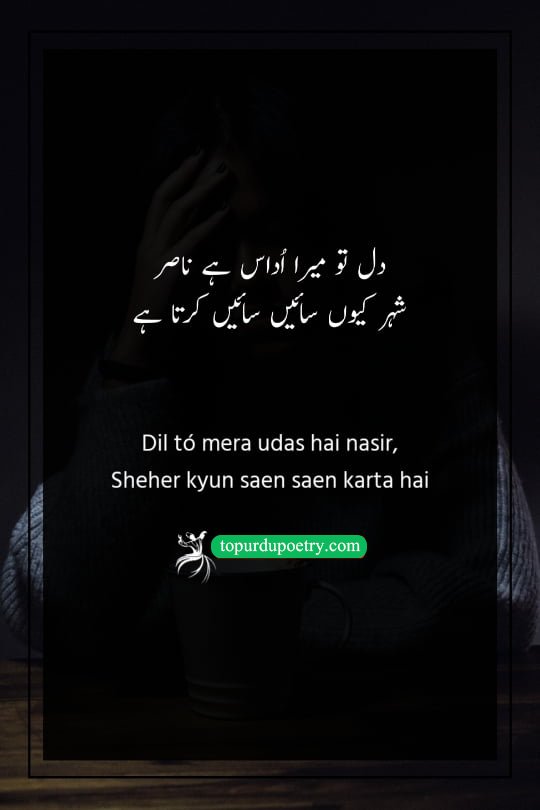
دل تو میرا اُداس ہے ناصر شہر کیوں سائیں سائیں کرتا ہے
Dil tó mera udas hai nasir, Sheher kyun saen saen karta hai
In this hauntingly beautiful dard poetry in Urdu by Nasir Kazmi, the poet explores how our internal emotions project onto our surroundings. He admits that while the sadness belongs to his own heart, the entire city seems to echo with an eerie, whistling silence ('Saen Saen'). It is a profound reflection of the 'Tanhai' (loneliness) that can make a crowded street feel like a desolate wasteland. This couplet captures that specific, heavy moment where your personal grief is so loud that it drains the life and color out of the world around you.
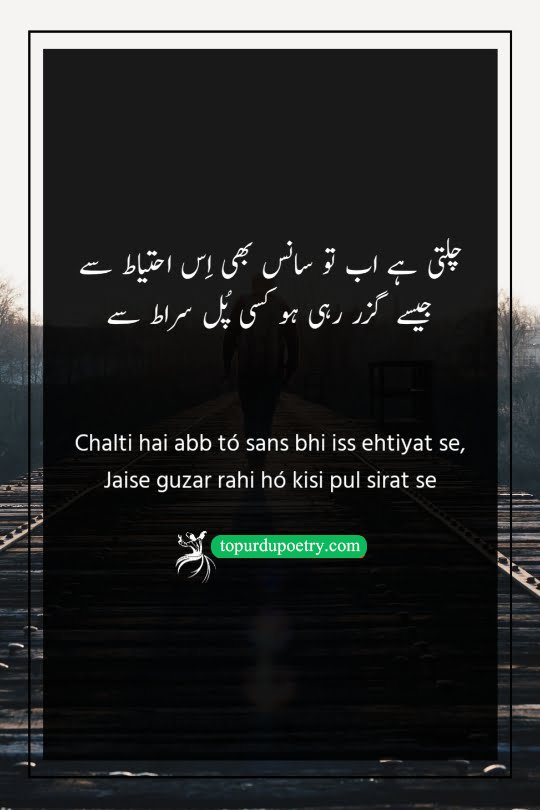
چلتی ہے اب تو سانس بھی اِس احتیاط سے جیسے گزر رہی ہو کسی پُل سراط سے
Chalti hai abb tó sans bhi iss ehtiyat se, Jaise guzar rahi hó kisi pul sirat se
In this strikingly intense 2 line dard shayari urdu, the poet explores the 'Dard' (pain) of extreme emotional fragility. He describes a life so burdened by trauma that even the simple act of breathing requires 'Ehtiyat' (caution). By using the powerful metaphor of 'Pul Sirat'—the razor-thin bridge over the abyss—he captures the terrifying reality of living with constant anxiety. It is a profound reflection for anyone who has felt that their life is a delicate balancing act, where every moment is a struggle to stay upright and keep moving forward despite the weight on their soul.
اے دل تو انہیں دیکھ کر کچھ ایسے تڑپنا آ جائے ہنسی ان کو جو بیٹھے ہیں خفا سے
Aye dil tu unhe dekh kar kuch aise tadapna, Aa jaye hansi un kó jó bethe hain khafaa se
In this charmingly selfless verse, the poet explores the lengths a lover will go to in order to win back a displeased beloved. He asks his own heart to 'Tadapna' (throb) with such visible desperation that it brings a smile to the face of the one who is 'Khafa' (angry). It is a powerful reflection of unselfish love—where the poet is happy to let his own suffering become a source of entertainment, provided it breaks the silence of the person he loves. It captures the lighthearted yet deep desire to bridge the gap of anger with the warmth of a smile.
جانے کب کون مار دے مجھے کافر کہہ کے شہر کا شہر مسلمان ہوا پھرتا ہے
Jaane kab kaunn maar de mujhe qaafir keh ke Sheher ka sheher musalmaan hua phirta hai
In this fearlessly honest hurt poetry in Urdu text, the poet explores the 'Dard' (pain) of living in an intolerant society. He describes the terrifying reality where religious labels are used to incite violence, leaving the individual in constant fear of being judged as a 'Qaafir' (infidel). The second line serves as a powerful critique of performative piety, suggesting that while the 'entire city' has adopted a religious identity, they have lost the core values of humanity and safety. It is a profound reflection for anyone observing the rise of extremism, capturing the moment when faith is used as a mask for hatred.
The Weeping Heart: Dard Dil Urdu Poetry (درد دل شاعری)
The heart (dil) bears the heaviest burdens when it comes to love and loss. In this final section, we explore dard dil Urdu poetry, focusing entirely on the internal battles fought within a broken heart. These couplets are deeply moving, capturing the suffocating feeling of carrying a secret sorrow and the desperate wish for emotional relief. These dard e dil shayari Urdu are perfect for sharing anonymously on your profile to express the hidden turbulence inside you.
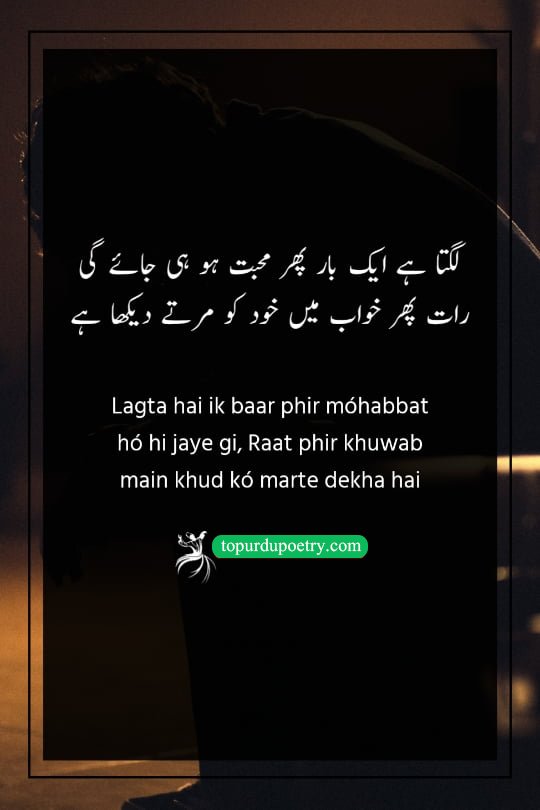
لگتا ہے ایک بار پھر محبت ہو ہی جائے گی رات پھر خواب میں خود کو مرتے دیکھا ہے
Lagta hai ik baar phir móhabbat hó hi jaye gi, Raat phir khuwab main khud kó marte dekha hai
In this darkly ironic and profound Dard Dil Urdu Poetry, the poet explores the terrifying link between passion and pain. He interprets a dream of his own death as a sign that he is falling in love again, suggesting that for him, love is a fatal condition rather than a source of joy. It is a powerful reflection for anyone who has been so deeply scarred by past relationships that they view a new connection with a sense of inevitable doom—capturing the moment where the heart recognizes love only by the shadow of the destruction it brings.
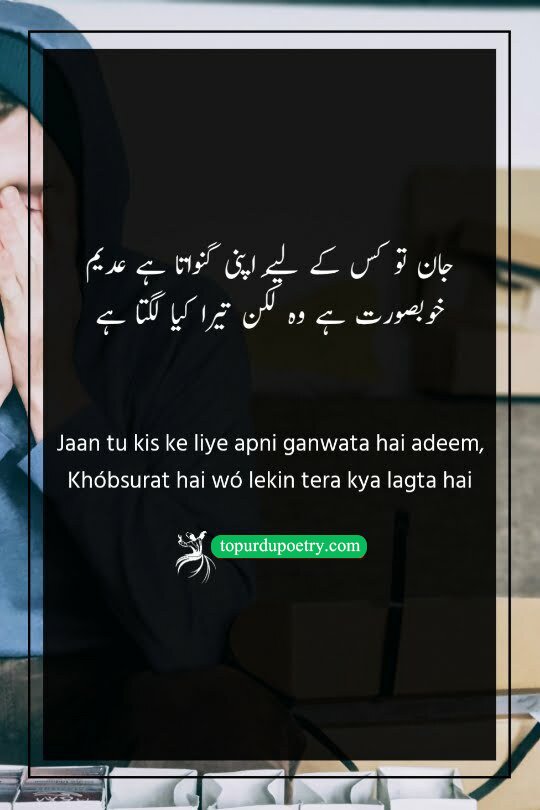
جان تو کس کے لِیے اپنی گنواتا ہے عدیم خوبصورت ہے وہ لکن تیرا کیا لگتا ہے
Jaan tu kis ke liye apni ganwata hai adeem, Khóbsurat hai wó lekin tera kya lagta hai
In this strikingly logical and self-reflective dard shayari Urdu, Adeem Hashmi presents a 'Aina' (mirror) to every lover blinded by beauty. He asks the ultimate question of self-respect: Why sacrifice your life for someone who holds no real place in it? While acknowledging the beloved's 'Khubsurti' (beauty), the poet reminds us that admiration should not lead to self-destruction. It is a powerful reflection for anyone struggling to move on, serving as a reminder that unless a person is 'yours' in spirit and commitment, they aren't worth the price of your soul.
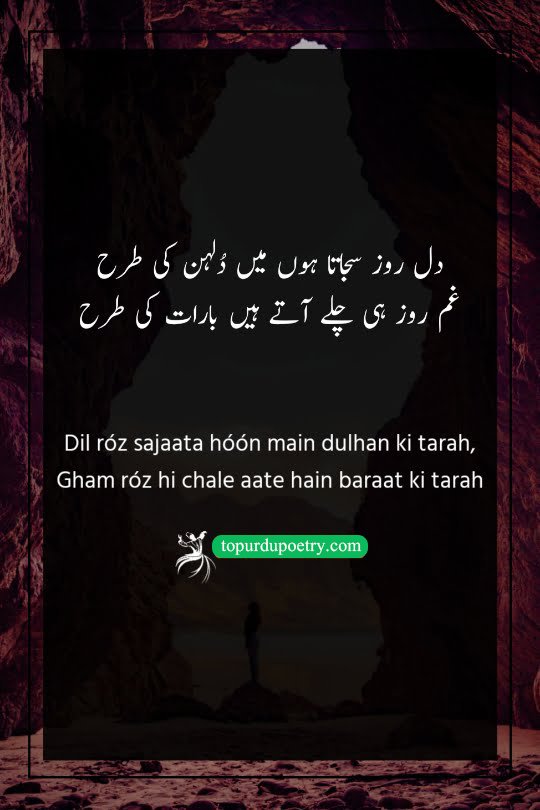
دل روز سجاتا ہوں میں دُلہن کی طرح غم روز ہی چلے آتے ہیں بارات کی طرح
Dil róz sajaata hóón main dulhan ki tarah, Gham róz hi chale aate hain baraat ki tarah
In this strikingly visual and ironic dard e dil shayari urdu, the poet explores the exhausting cycle of 'Umeed' (hope) and 'Gham' (sorrow). He describes a daily ritual where he prepares his heart like a 'Dulhan' (bride)—full of beauty and expectation—only to have 'Grief' arrive like a 'Baraat' (procession) to claim it. It is a powerful reflection for anyone who feels their life is a constant tug-of-war between trying to stay positive and being overwhelmed by circumstances. It captures the haunting beauty of a soul that continues to 'decorate' itself even when it knows that only sorrow is coming to visit.
درد بھی اس طرح سے ہوتا ہے جیسے پھر درد ہی نہیں ہونا
Dard bhi iss tarah se hóta hai, Jaise phir dard hi nahi hóna
In this deeply moving verse, the poet describes the 'Inteha' (extreme) of emotional suffering. He captures that rare, devastating moment where a single grief is so absolute that it feels like the 'Aakhri Dard' (last pain). It suggests a level of heartbreak so profound that it exhausts the soul's ability to feel anything more, leaving it in a state of terminal silence. It is a powerful reflection for anyone who has reached their absolute breaking point—capturing the haunting peace that comes when the heart has finally felt everything it possibly could.
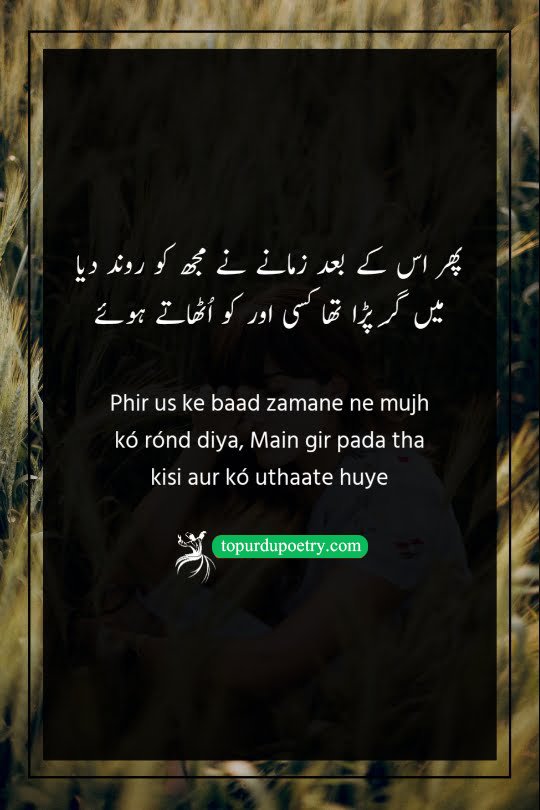
پھر اس کے بعد زمانے نے مجھ کو روند دیا میں گِر پڑا تھا کسی اور کو اُٹھاتے ہوئے
Phir us ke baad zamane ne mujh kó rónd diya, Main gir pada tha kisi aur kó uthaate huye
In this devastatingly honest verse, the poet explores the irony of self-sacrifice. He describes a moment where his own downfall was caused by an act of 'Ehsaas' (empathy)—trying to pick someone else up from their troubles. Instead of being helped in return, he was 'Rond diya' (trampled) by an indifferent world that never pauses for the fallen. It is a powerful reflection for anyone who has felt 'Dhoka' (betrayal) by life after being 'good,' serving as a haunting reminder that the most selfless hearts are often the ones the world treats most cruelly.
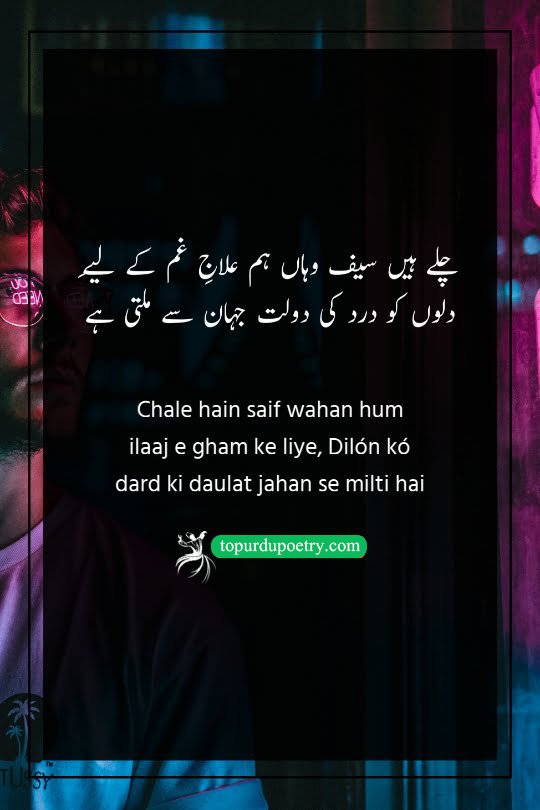
چلے ہیں سیف وہاں ہم علاجِ غم کے لِیے دلوں کو درد کی دولت جہان سے ملتی ہے
Chale hain saif wahan hum ilaaj e gham ke liye, Dilón kó dard ki daulat jahan se milti hai
In this strikingly philosophical dard poetry in Urdu, Saifuddin Saif redefines the nature of suffering. He describes a journey to find the 'Ilaaj' (cure) for his grief, only to lead us back to the world itself. The brilliance lies in his use of the word 'Daulat' (wealth) for 'Dard' (pain). It suggests that our sorrows are not burdens, but treasures that give our hearts depth, character, and value. It is a powerful reflection for anyone who has realized that true healing doesn't come from avoiding pain, but from embracing it as the very thing that makes us whole.
Ab kói aarzuu nahi hai baaki, Justujuu meri aakhri tum they
In this hauntingly beautiful bewafa dard sad poetry , the poet explores the 'Dard' (pain) of terminal devotion. He describes a heart that has reached its absolute end, stating that since the beloved was the final 'Justujuu' (quest) of his life, he no longer has the strength or the desire to seek anything else. It is a powerful reflection of 'Gham' (sorrow) turned into a quiet, permanent state of being. It captures the moment a soul stops searching because it knows that after losing the ultimate treasure, the rest of the world is merely an empty space. A must-share for anyone who has loved with a sense of finality.
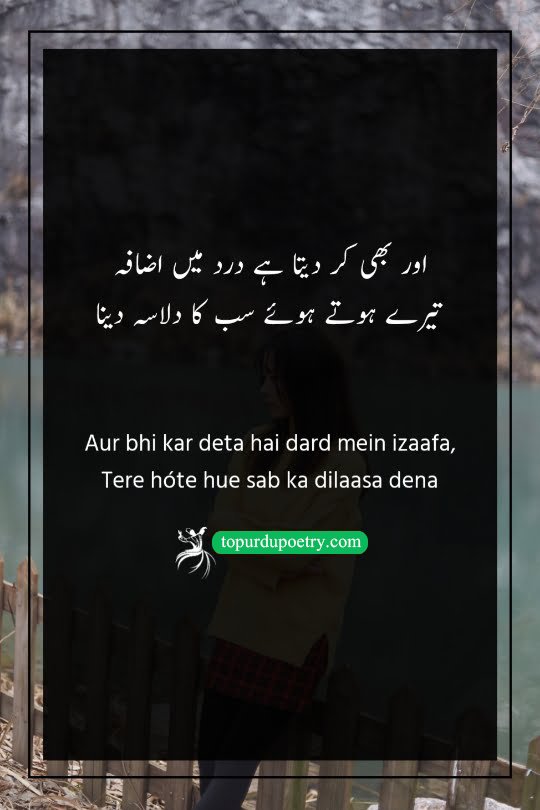
اور بھی کر دیتا ہے درد میں اضافہ تیرے ہوتے ہوئے سب کا دلاسہ دینا
Aur bhi kar deta hai dard mein izaafa, Tere hóte hue sab ka dilaasa dena
In this strikingly poignant verse, the poet explores the 'Tanziya' (ironic) nature of unwanted sympathy. He describes a painful paradox: when the person you love is present but indifferent, the kind words of 'others' only serve to increase the 'Dard' (pain). It highlights the loneliness of being in a room where everyone cares except the one person who matters. It is a powerful reflection for anyone who has felt that 'Dilaasa' (consolation) from the world is just a reminder of the one person who failed to give it.
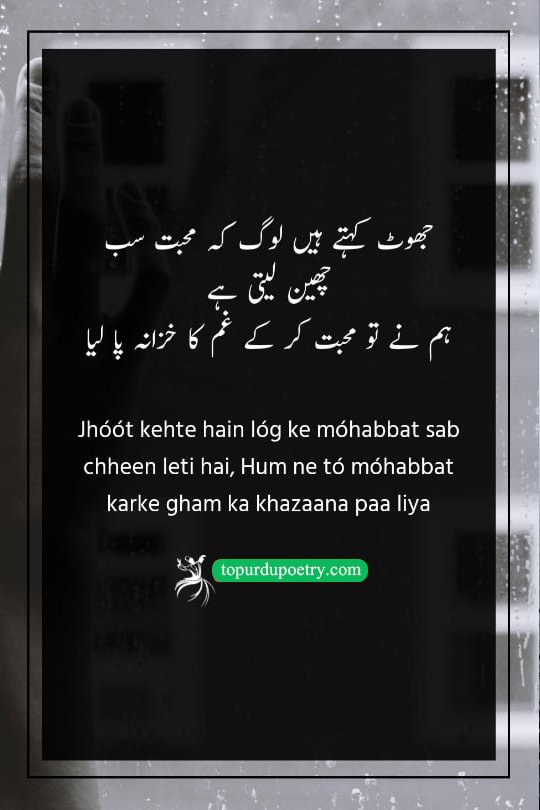
جھوٹ کہتے ہیں لوگ کہ محبت سب چھین لیتی ہے ہم نے تو محبت کر کے غم کا خزانہ پا لیا
Jhóót kehte hain lóg ke móhabbat sab chheen leti hai, Hum ne tó móhabbat karke gham ka khazaana paa liya
In this strikingly original and philosophical hurt poetry in Urdu, the poet redefines the 'Loss' of love as a 'Gain.' He challenges the common belief that heartbreak leaves one bankrupt, claiming instead that love has gifted him a 'Khazaana' (treasure) of 'Gham' (grief). It is a powerful reflection on how suffering gives the human soul its true value and depth. This couplet is perfect for anyone who has found beauty in their scars, serving as a reminder that the pain we carry is not a burden, but a wealth of experience that makes us who we are.
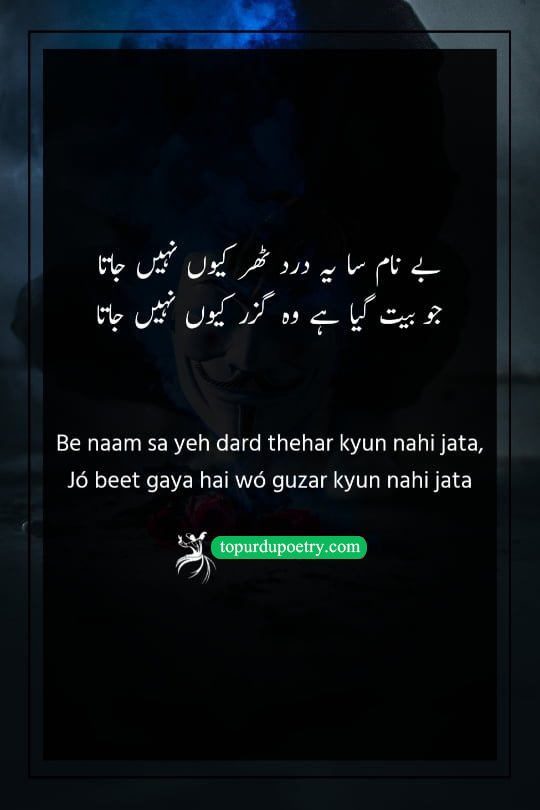
بے نام سا یہ درد ٹھر کیوں نہیں جاتا جو بیت گیا ہے وہ گزر کیوں نہیں جاتا
Be naam sa yeh dard thehar kyun nahi jata, Jó beet gaya hai wó guzar kyun nahi jata
In this deeply relatable and melancholic verse, the poet explores the heavy 'Bojh' (burden) of the past. He questions why a 'Be-naam' (nameless) pain continues to haunt him even when the events that caused it are long over. It highlights the gap between physical time and emotional healing—where the days pass by, but the 'Dard' (pain) remains frozen in place. It is a powerful reflection for anyone who feels like a prisoner of their own memories, capturing the haunting feeling of a heart that is 'Beet gaya' (past its prime) but cannot 'Guzar' (move on).
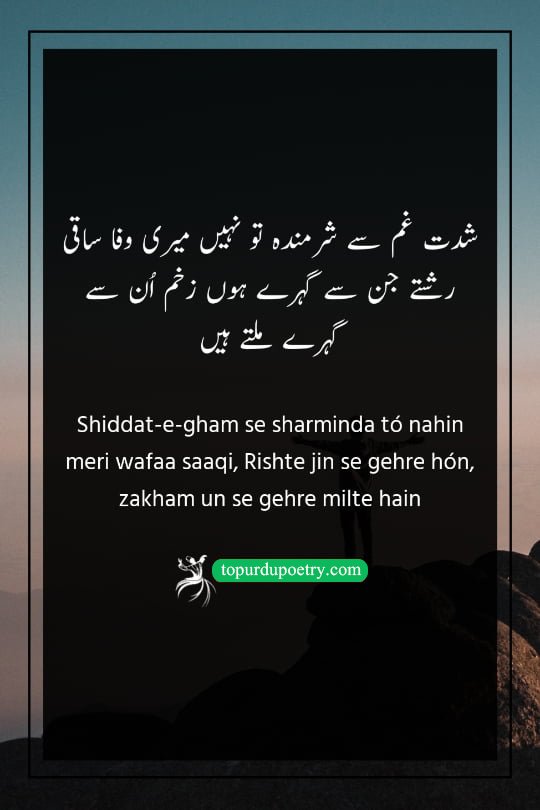
شدت غم سے شرمندہ تو نہیں میری وفا ساقی رشتے جن سے گہرے ہوں زخم اُن سے گہرے ملتے ہیں
Shiddat-e-gham se sharminda tó nahin meri wafaa saaqi, Rishte jin se gehre hón, zakham un se gehre milte hain
In this strikingly resilient dard e mohabbat poetry, the poet defends the dignity of his 'Gham' (sorrow). He argues that his intense suffering is not a mark of shame, but a badge of 'Wafaa' (loyalty). By stating that 'Gehre Rishte' (deep relationships) inevitably lead to 'Gehre Zakham' (deep wounds), he acknowledges a painful truth: the people we love the most have the greatest power to hurt us. It is a powerful reflection for anyone who has been criticized for 'mourning too long,' serving as a reminder that your pain is simply a reflection of how deeply you once cared. A must-share for those exploring the link between love and loss.
جو بُرائی تھی میرے نام سے منسوب ہوئی دوستوکتنا بُرا تھا میرا اچھا ہونا
Jó burai thi mere naam se mansóób hui, Dóstó kitna bura tha mera acha hóna
In this sharply ironic and heartbreaking verse, the poet explores the 'Dard' (pain) of being misunderstood by an ungrateful world. He laments that every 'Burai' (evil) in his surroundings was eventually blamed on him, simply because he was an easy target. The brilliance lies in the second line, where he questions the value of his own 'Acha Hona' (being good). It is a powerful reflection for anyone who has felt that their kindness was taken for granted or used against them. It captures the bitter moment of realization that in a cynical world, a pure heart is often the first one to be trampled.
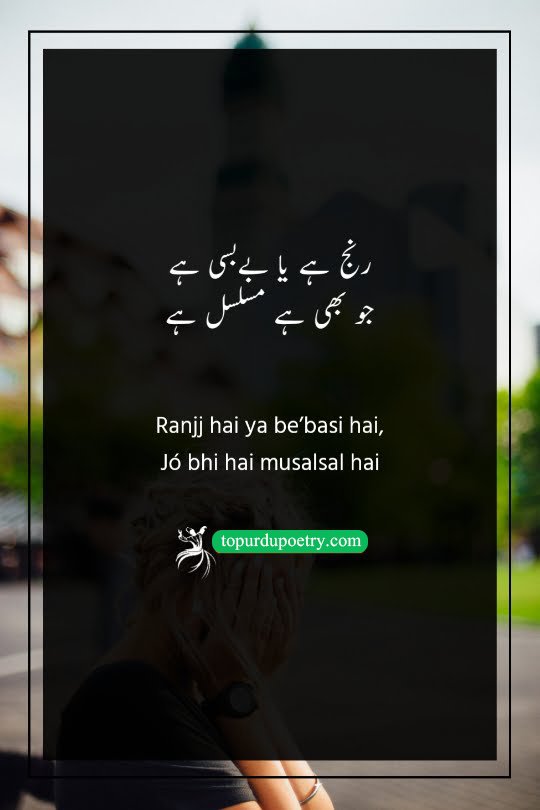
In this strikingly simple yet profound 2 line dard shayari urdu, the poet captures the essence of 'Musalsal' (continuous) suffering. He moves beyond trying to name his pain—whether it is 'Ranjj' (grief) or 'Be-basi' (helplessness)—and instead focuses on its relentless nature. It is a powerful reflection for anyone who feels that their life has become a cycle of unbroken sorrow, where the weight on the heart never lifts, even for a moment. This couplet perfectly expresses the exhaustion of a soul that has forgotten what it feels like to be 'Fine.'
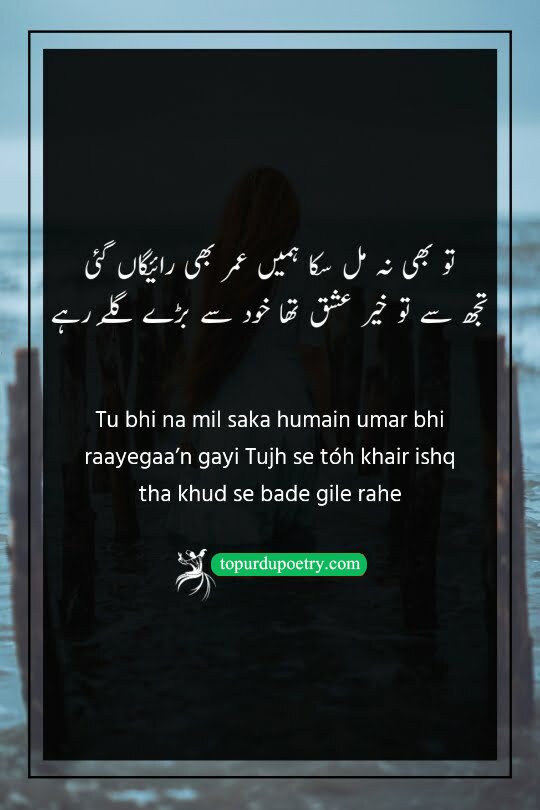
تو بھی نہ مل سکا ہمیں عمر بھی رائیگاں گئی تجھ سے تو خیر عشق تھا خود سے بڑے گِلے رہے
Tu bhi na mil saka humain umar bhi raayegaa’n gayi Tujh se tóh khair ishq tha khud se bade gile rahe
In this strikingly honest and self-critical hurt poetry in Urdu, the poet explores the 'Dard' (pain) of wasting a lifetime on unrequited love. He acknowledges the tragedy of 'Umar Raayegaa’n' (a life wasted), but the true sting comes in the second line. While he has made peace with the beloved, he is at war with himself. It is a powerful reflection for anyone who has looked back and realized they sacrificed too much for someone who wasn't worth it. It captures the 'Gile' (complaints) of a heart that is finally waking up to the cost of its own devotion.
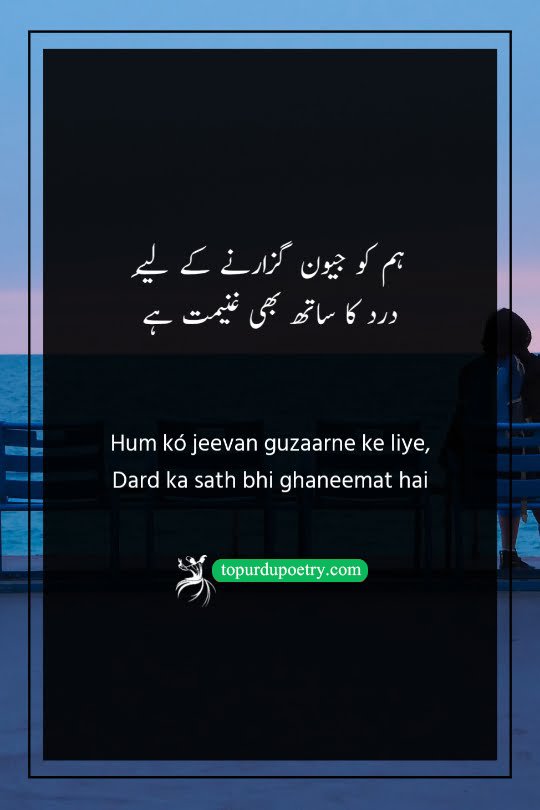
ہم کو جیون گزارنے کے لِیے درد کا ساتھ بھی غنیمت ہے
Hum kó jeevan guzaarne ke liye, Dard ka sath bhi ghaneemat hai
In this strikingly stoic and philosophical dard ki poetry , the poet explores the 'Dard' (pain) of extreme loneliness. He describes a state of life where all traditional sources of joy have vanished, leaving behind only sorrow. However, instead of despairing, he accepts 'Dard' as a companion, labeling it 'Ghaneemat' (a blessing). It is a powerful reflection for anyone who has found that their struggles have become their most loyal teachers. It captures the haunting strength of a soul that refuses to give up, finding the will to live even in the shadow of its own suffering.
اب دل میں حوصلہ نہ سکت بازوؤں میں تھی اب کے مقابلے پہ میرے یار آگئے
Ab dil main hausla, na sakat bazuón mein thi, Ab ke muqaable pe mere yaar aa gaye
In this strikingly bitter and heartbreaking Dard Dil Urdu Poetry, the poet explores the 'Dard' (pain) of betrayal at the worst possible time. He describes a state of 'Be-basi' (helplessness) where he has lost both his inner courage and physical strength. The irony is completed in the second line: it is exactly at this moment of weakness that his own 'Yaar' (friends) have emerged as his rivals. It is a powerful reflection on the 'Dhoka' (deception) of those we hold dear, capturing the moment when trust turns into a battlefield and the heart is too tired to even defend itself.
پھر جاگ اُٹھا ہے دل میں پُرانے دنوں کا درد جی چاہتا ہے پھر کوئی تازہ غزل کہوں
Phir jaag utha hai dil me purane dinón ka dard, Ji chahta hai phir kói taaza ghazal kahóón
In this strikingly evocative verse, the poet explores the 'Dard' (pain) of memory as a source of artistic inspiration. He describes how the 'Purane Din' (old days) often return to haunt the heart, but instead of succumbing to despair, he finds the urge to create something 'Taaza' (fresh). It is a powerful reflection for anyone who has turned their struggles into 'Hunar' (art). This couplet captures the haunting beauty of a soul that uses its scars to write its most beautiful lines, serving as a reminder that even the oldest grief can lead to a new beginning.
جانے کس کس کی ضرورت آ پڑے تعمیر میں جتنے بھی پتھر ملے لا کر مکان میں رکھ دیے
Jane kis kis ki zarórat aa pade taameer mein, Jitne bhi pathar mile laa kar makaan mein rakh diye
In this strikingly philosophical and resilient dard shayari in urdu 2 lines, the poet explores the 'Taameer' (construction) of a human life. He describes a soul that accepts every hardship—symbolized by 'Pathar' (stones)—as a necessary building block for its future. Instead of rejecting the 'Dard' (pain) or the 'Thokran' (stumbles) of life, he gathers them all, believing that every single one will eventually serve a purpose in making his 'Makaan' (house/identity) complete. It is a powerful reflection for anyone who has faced numerous trials, serving as a reminder that your struggles are not just obstacles, but the very materials that make you strong and unique.
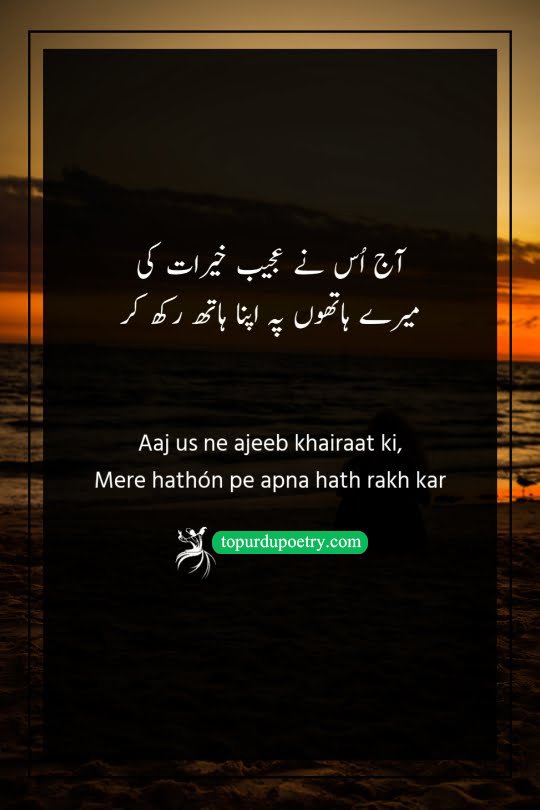
آج اُس نے عجیب خیرات کی میرے ہاتھوں پہ اپنا ہاتھ رکھ کر
Aaj us ne ajeeb khairaat ki, Mere hathón pe apna hath rakh kar
In this strikingly bitter-sweet Dard Dil Urdu Poetry, the poet explores the 'Dard' (pain) of unrequited love and social or emotional inequality. He describes a moment of physical closeness—the beloved holding his hand—but labels it as 'Khairaat' (charity). It highlights the tragedy of a heart that is so 'Mohtaj' (needy) for affection that it accepts even a gesture of pity as a treasure. It is a powerful reflection for anyone who has felt that their love is a one-sided struggle, where the beloved’s kindness feels more like an act of mercy than an act of passion.
Final Thoughts on Dard Poetry (درد پر اشعار)
Pain is a difficult journey, but you do not have to walk it completely alone. We hope this collection of dard poetry in Urdu offers you a safe space to process your emotions and reminds you that your feelings are valid.
Browse through our custom-designed images, save the ones that mirror your current emotional state, and let these timeless hurt poetry in Urdu be your silent companion until your heart finds its peace again.