In the world of literature, the gaze of a beloved can tell a story that a thousand books cannot. Urdu poetry on eyes (آنکھیں شاعری) has a unique way of capturing the magic of a single look, from the innocence of a smile to the depth of a silent tear. Whether you are looking for words to describe the beauty of someone’s gaze or you want to express the unspoken language of the heart, ankhain poetry in urdu provides the perfect medium. These verses don’t just describe physical beauty; they delve into the emotions and secrets that lie beneath the surface.
Interestingly, the human connection through sight is more than just poetic; it is biological. Experts who study the power of eye contact note that looking into someone’s eyes can trigger the release of oxytocin, often called the “love hormone,” creating an instant bond between two people. This scientific reality is why shayari on eyes in urdu resonates so deeply with us—it captures a physical and emotional truth that we all feel. By reading and sharing these couplets, you are participating in a timeless tradition of celebrating the most expressive part of the human face.
The beauty of eyes is often the beginning of a great story. If these shayari on eyes in Urdu have touched your heart, you might also enjoy our collection of Beautiful Poetry on Smile in Urdu for more romantic inspiration.
Table of Contents
The Magic of Gaze: Shayari on Eyes in Urdu
The “nazar” or the gaze is a central theme in romantic Urdu literature. Our curated selection of shayari on eyes in Urdu (آنکھیں شاعری) focuses on the power that a single look can hold. From the “shokhi” (playfulness) of a glance to the “parda” (modesty) of lowered lids, these verses capture every nuance of emotion. These love poetry on eyes are perfect for sharing with someone special to let them know how much their eyes mean to you.
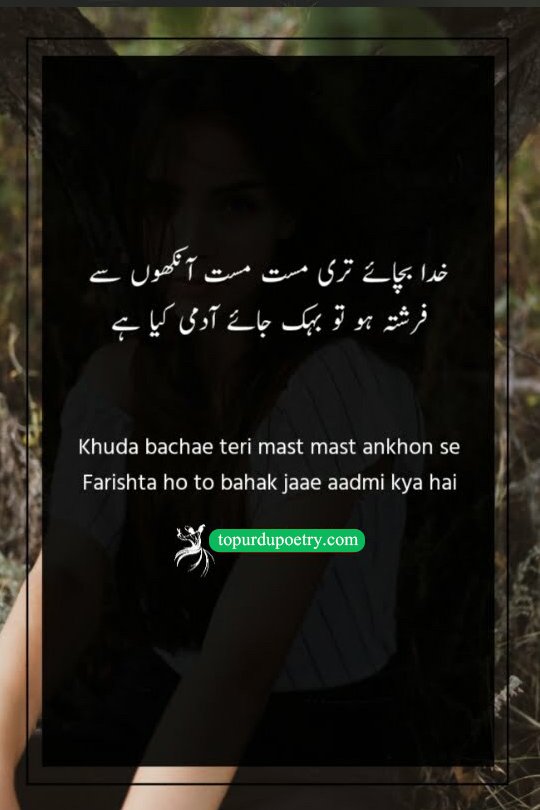
خدا بچائے تری مست مست آنکھوں سے فرشتہ ہو تو بہک جائے آدمی کیا ہے
Khuda bachae teri mast mast ankhon se Farishta ho to bahak jaae aadmi kya hai
This urdu poetry on eyes is a classic tribute to the overwhelming power of the beloved's gaze. It explores the 'Ehsaas' (realization) that certain beauty is so profound it challenges divine order. The poet uses the term 'Mast mast' to describe eyes that are not just beautiful, but 'intoxicating' or 'drunk with charm.' The second line employs a powerful comparison: if even a 'Farishta' (angel)—a being defined by sinless perfection and unwavering discipline—could be tempted or 'Bahak jaae' (lose their way) by looking into those eyes, then a simple 'Aadmi' (human) is naturally powerless to resist. It portrays a love that is irresistibly magnetic and beautifully dangerous.
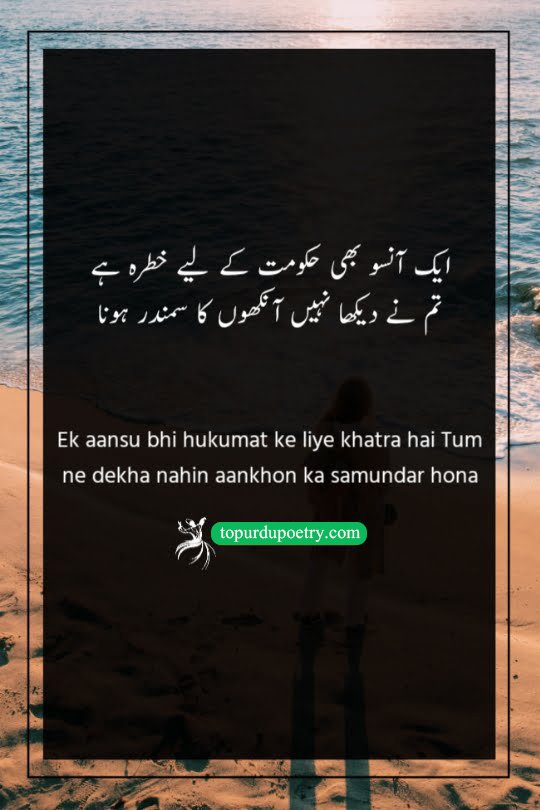
ایک آنسو بھی حکومت کے لیے خطرہ ہے تم نے دیکھا نہیں آنکھوں کا سمندر ہونا
Ek aansu bhi hukumat ke liye khatra hai Tum ne dekha nahin aankhon ka samundar hona
This shayari on eyes in Urdu is a powerful inquiry into the strength of the oppressed and the collective power of human emotion. It moves away from traditional romance into the realm of 'Inqilabi' (revolutionary) poetry. It explores the 'Ehsaas' (realization) that a single 'Aansu' (tear) shed in injustice is a spark of dissent that can unsettle a 'Hukumat' (government/regime). The second line serves as a stern warning: when individual grief unites, it becomes a 'Samundar' (ocean)—an unstoppable force of public awakening. It portrays the idea that while power may seem absolute, it is incredibly fragile when faced with the truth of the people's pain.
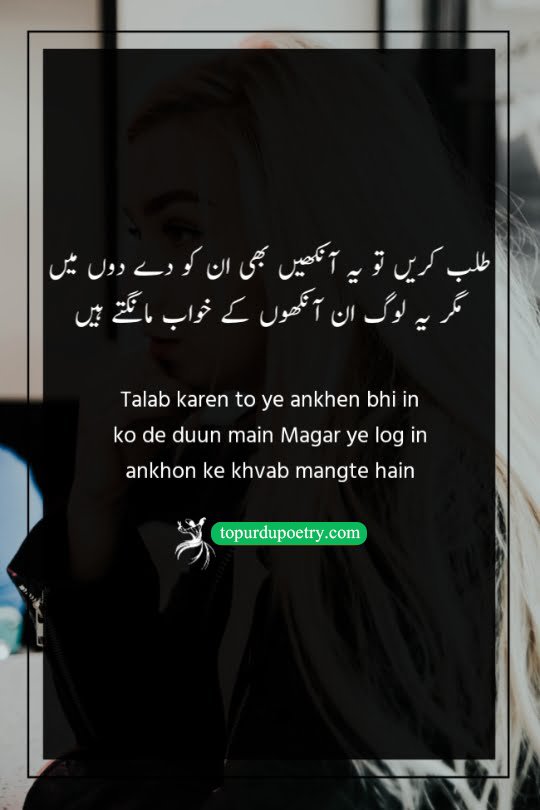
طلب کریں تو یہ آنکھیں بھی ان کو دے دوں میں مگر یہ لوگ ان آنکھوں کے خواب مانگتے ہیں
Talab karen to ye ankhen bhi in ko de duun main Magar ye log in ankhon ke khvab mangte hain
This verse is a profound reflection on the boundary between physical sacrifice and the sanctity of the soul. It explores the 'Ehsaas' (realization) that while a person may be willing to offer their most precious physical assets—their 'Ankhen' (eyes)—out of devotion, there is an internal limit. The second line serves as a poignant critique of society: it suggests that people are often not satisfied with tangible sacrifices; they greedily seek to possess your 'Khvab' (dreams), which represent your hope, identity, and inner vision.
بزدلی ہوگی چراغوں کو دکھانا آنکھیں ابر چھٹ جائے تو سورج سے ملانا آنکھیں
Buz-dili hogi charaghon ko dikhana ankhen Abr chhat jaae to suraj se milana ankhen
This eyes quotes in urdu is a powerful call to courage and self-respect, urging an individual to measure their strength against true giants rather than the weak. It awakens a defiant (internal realization) that intimidating those of lesser stature—symbolized by 'charaghon' (lamps)—is nothing but 'Buz-dili' (cowardice). Instead, the poet challenges the spirit to wait for the 'Abr' (clouds) of mediocrity or temporary obstacles to clear, so one can truly test their mettle by locking 'Ankhen' (eyes) with the 'Suraj' (sun).
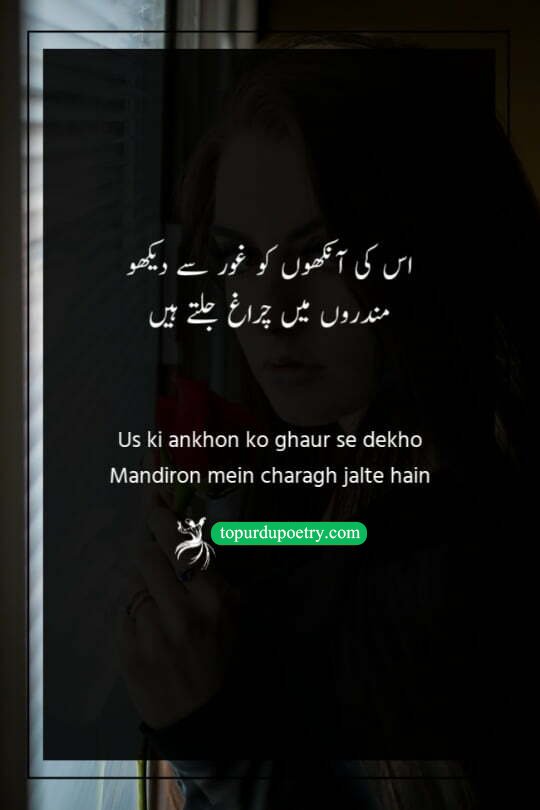
اس کی آنکھوں کو غور سے دیکھو مندروں میں چراغ جلتے ہیں
Us ki ankhon ko ghaur se dekho Mandiron mein charagh jalte hain
This beautiful ankhain poetry in Urdu creates a stunning parallel between divine illumination and human beauty. It unveils the spiritual reverence and mesmerizing brightness found in a gaze, suggesting that her eyes are not merely beautiful but hold a sacred, comforting light, much like the flickering 'charagh' (lamps) that illuminate the sanctity of a 'mandir' (temple).
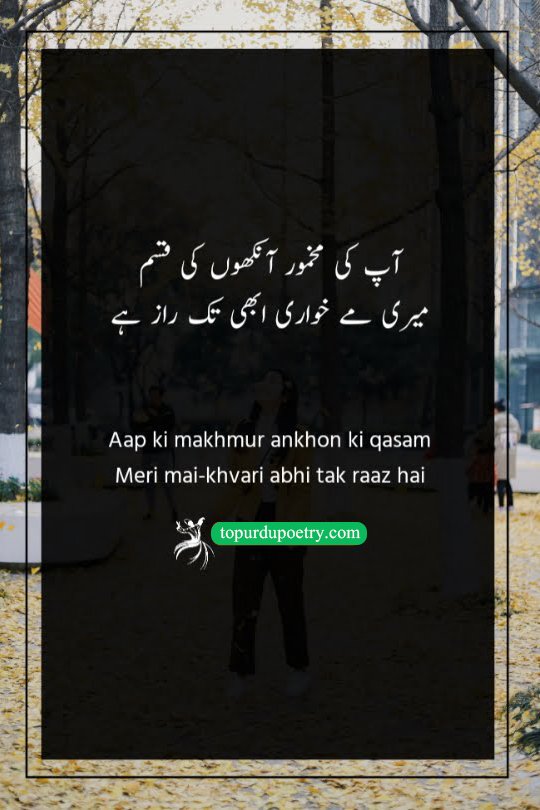
آپ کی مخمور آنکھوں کی قسم میری مے خواری ابھی تک راز ہے
Aap ki makhmur ankhon ki qasam Meri mai-khvari abhi tak raaz hai
This eyes quotes in Urdu captures the enchanting and intoxicating power of a beloved's gaze, equating its impact to the effects of wine. It weaves a subtle 'Ehsaas' (shimmering realization) that the narrator's state of being 'lost' is not due to physical wine, but is a direct consequence of looking into those 'makhmur' (drunken) eyes. By swearing an oath on her gaze, the poet suggests that his true addiction—his 'mai-khvari'—remains a hidden 'raaz' (secret) because the world looks for bottles, while he finds his ecstasy in a single look.
اداس آنکھوں سے آنسو نہیں نکلتے ہیں یہ موتیوں کی طرح سیپیوں میں پلتے ہیں
Udaas ankhon se aansu nahin nikalte hain Ye motiyon ki tarah sipiyon mein palte hain
This poetry on eyes offers a profound perspective on the dignity of silent grief and the value of hidden pain. It breathes life into a refined 'Ehsaas' (artistic perception) that true sadness does not always manifest in visible weeping. Instead, the poet suggests that tears which remain within the heart are transformed into something precious and enduring—much like a pearl forming within the protective sanctuary of a seashell. It portrays the idea that internal sorrow, when kept private and nurtured with patience, becomes a mark of character.
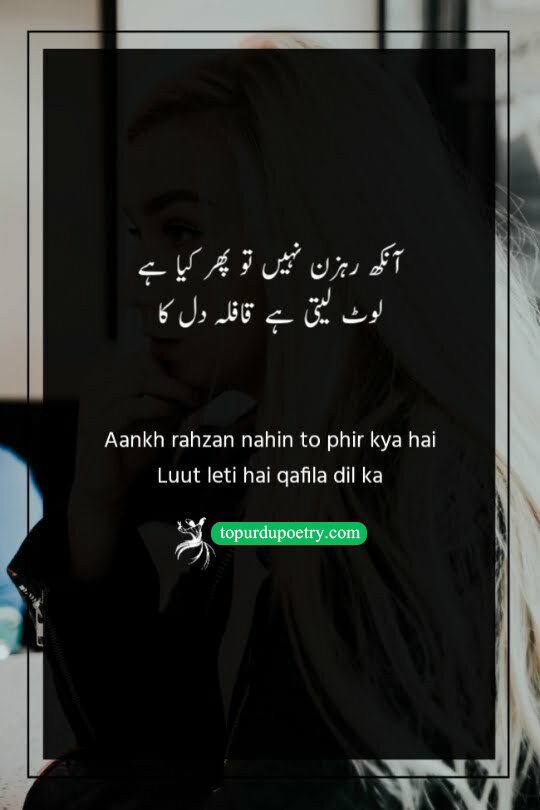
آنکھ رہزن نہیں تو پھر کیا ہے لوٹ لیتی ہے قافلہ دل کا
Aankh rahzan nahin to phir kya hai Luut leti hai qafila dil ka
This poetry on eyes by ghalib personifies the gaze as a masterful thief, highlighting the involuntary surrender of the heart's peace upon a single glance. It unfolds a mesmerizing 'Ehsaas' (vivid sentiment) that the eye is not merely a feature of the face but a highwayman of the emotional world. It suggests that while a person might guard their feelings carefully, the beauty of a look acts as a 'rahzan' (robber), ambushing the soul and plundering its composure.
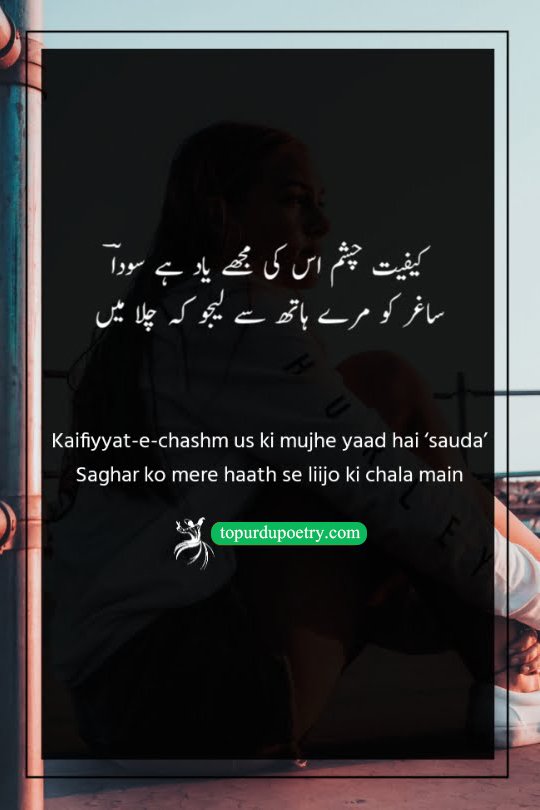
کیفیت چشم اس کی مجھے یاد ہے سوداؔ ساغر کو مرے ہاتھ سے لیجو کہ چلا میں
Kaifiyyat-e-chashm us ki mujhe یاد ہے ‘sauda’ Saghar ko mere haath se liijo ki chala main
This classic ankhain poetry in Urdu by Mirza Sauda explores the overwhelming power of the beloved's gaze, which far surpasses the strength of any physical wine. It unearths a haunting (lingering sensation) that the mere memory of those eyes is enough to induce a state of total intoxication and surrender. The poet asks for the 'saghar' (wine cup) to be taken from his hand, as he is no longer able to maintain his composure after recalling that mesmerizing look.
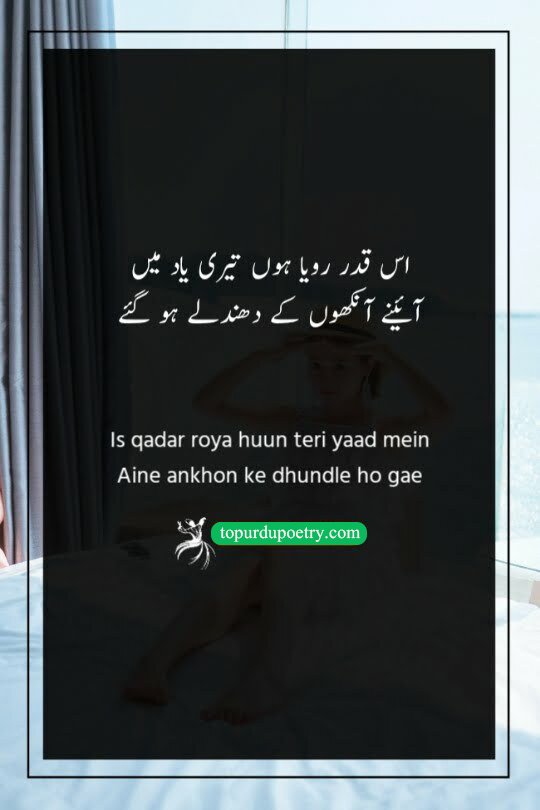
اس قدر رویا ہوں تیری یاد میں آئینے آنکھوں کے دھندلے ہو گئے
Is qadar roya huun teri yaad mein Aine ankhon ke dhundle ho gae
This urdu poetry on beautiful eyes poignantly describes the physical and emotional exhaustion that follows a period of intense longing. It crystallizes a mournful (perceptual shift) that the eyes, which usually act as clear mirrors to the world, have lost their clarity through the sheer volume of tears shed in the beloved's absence. The metaphor of 'dhundle' (blurred) mirrors suggests that grief has not only clouded the poet's vision but has also altered his very perception of reality.
Classic Elegance: Urdu Poetry on Eyes by Ghalib
No collection of Urdu literature is complete without mentioning the master of words, Mirza Ghalib. Urdu Poetry on eyes by Ghalib often touches on the philosophical and complex nature of sight and perception. Ghalib had a way of describing the “nazar” (gaze) that was both intellectual and deeply moving. This section features his most famous couplets that explore how eyes can be both a source of inspiration and a cause of profound restlessness. If you appreciate the classical depth of Urdu literature, these legendary Urdu poetry on beautiful eyes (آنکھیں شاعری) are a must-read.
ان جھیل سی گہری آنکھوں میں اک لہر سی ہر دم رہتی ہے
Un jhiil si gahri ankhon mein Ik lahar si har dam rahti hai
This couplet uses the serene imagery of nature to describe the mesmerizing depth of a beloved's gaze. It paints a delicate 'Ehsaas' (visual emotion) that these eyes are not just features, but vast, 'jhiil' (lake) like expanses holding untold stories. The mention of a 'lahar' (wave or ripple) suggests a constant, subtle shimmer of life, emotion, or playfulness that never fades. It portrays the idea that true beauty lies in the depth and the ever-changing expressions.
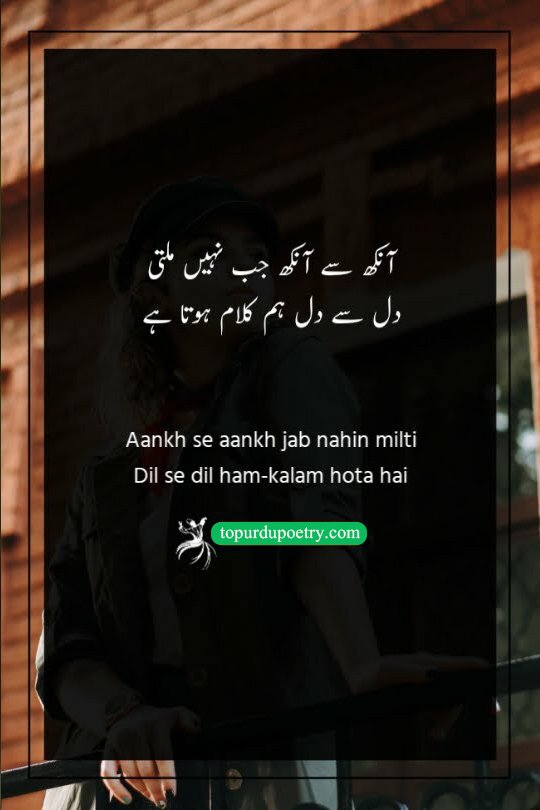
آنکھ سے آنکھ جب نہیں ملتی دل سے دل ہم کلام ہوتا ہے
Aankh se aankh jab nahin milti Dil se dil ham-kalam hota hai
This verse captures the ethereal nature of connection that transcends physical presence. It evokes a silent awareness that when the eyes are unable to meet, the communication does not cease; instead, it moves into a deeper, more spiritual realm. The poet suggests that true lovers possess a telepathic bond where the hearts continue their 'ham-kalam' (conversation) even in the absence of a visual gaze.
ہم محبت کا سبق بھول گئے تیری آنکھوں نے پڑھایا کیا ہے
Ham mohabbat ka sabaq bhuul gae Teri ankhon ne padhaya kya hai
This poetry on eyes captures the enchanting and educational power of beauty, where a single gaze can redefine one's entire understanding of love. It ignites a transformative 'Ehsaas' (profound learning) that all previous knowledge and traditional 'lessons' of affection have become obsolete in the presence of the beloved's eyes. The poet suggests that what he learned from books or the world was nothing compared to the deep, silent wisdom conveyed by her look.
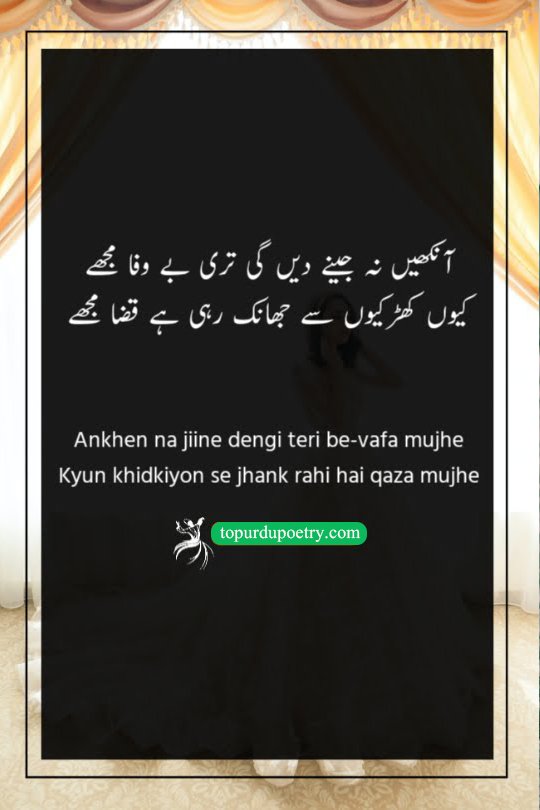
آنکھیں نہ جینے دیں گی تری بے وفا مجھے کیوں کھڑکیوں سے جھانک رہی ہے قضا مجھے
Ankhen na jiine dengi teri be-vafa mujhe Kyun khidkiyon se jhank rahi hai qaza mujhe
This shayari on eyes in Urdu is a haunting exploration of the lethal impact of betrayal and the psychological weight of a disloyal gaze. It captures a chilling Idraak (consciousness) that the beloved's eyes, once a source of life, have now become instruments of destruction. The metaphor of 'Qaza' (death) peering through 'khidkiyon' (windows) suggests that the narrator feels hunted by the memory of those eyes; they are no longer a window to the soul but a gateway to his inevitable end.
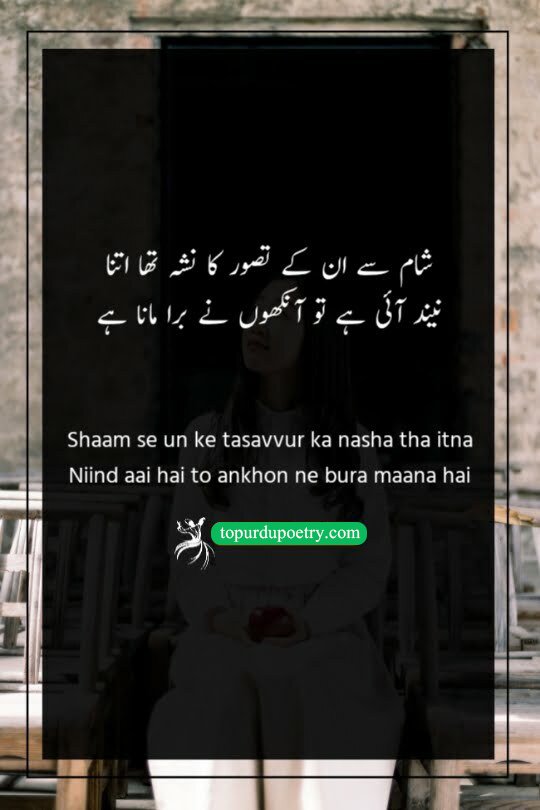
شام سے ان کے تصور کا نشہ تھا اتنا نیند آئی ہے تو آنکھوں نے برا مانا ہے
Shaam se un ke tasavvur ka nasha tha itna Niind aai hai to ankhon ne bura maana hai
This verse captures the sweet rebellion of eyes that are deeply immersed in the memory of a loved one. It highlights a profound Aagahi (inner awareness) that the mental image of the beloved is so intoxicating that the natural need for sleep is seen as an unwelcome distraction. The poet suggests that his eyes would rather remain awake in the 'nasha' (ecstasy) of the beloved’s 'tasavvur' (imagination) than succumb to the blankness of rest.
میرؔ ان نیم باز آنکھوں میں ساری مستی شراب کی سی ہے
‘Mir’ un nim-baz ankhon mein Saari masti sharab ki si hai
This world-renowned ankhain poetry in Urdu by Mir Taqi Mir is the pinnacle of classical urdu poetry on eyes. It unveils a delicate (intuitive vision) that the most profound form of intoxication is not found in a bottle, but in the 'nim-baz' (half-open) eyes of the beloved. These eyes, heavy with a natural, languid beauty, possess a 'masti' (spiritual rapture) that perfectly mirrors the essence of the finest wine. It portrays the idea that true ecstasy is an aesthetic and emotional experience.
کبھی ان مد بھری آنکھوں سے پیا تھا اک جام آج تک ہوش نہیں ہوش نہیں ہوش نہیں
Kabhi in madbhari ankhon sy pia tha ek jaam Aaj tak hosh nahi hosh nahi hosh nahi
This eyes quotes in Urdu captures the overwhelming and permanent nature of a single moment of attraction. It illustrates a startling Haqiqat (reality) that the 'madbhari' (intoxicated) eyes of the beloved act as a divine goblet of wine. The poet claims that having 'drunk' from that gaze just once in the past, he has been cast into a state of perpetual ecstasy. The repetition of 'hosh nahi' (no consciousness) emphasizes that this is not a temporary daze, but a life-altering shift where the senses are forever silenced.
کسی نے چوم کے آنکھوں کو یہ دعا دی تھی زمین تیری خدا موتیوں سے نم کر دے
Kisi ne chuum ke ankhon ko ye dua di thi Zamin teri khuda motiyon se nam kar de
This urdu poetry on eyes transforms a tender moment of affection into a spiritual blessing. It reveals a touching Idraak (deep understanding) that a protective or parental love sees the sorrow within the eyes not as a burden, but as a source of divine grace. The 'dua' (prayer) that one's 'zamin' (life or surroundings) be moistened with 'motiyon' (pearls) is a beautiful metaphor for tears. It suggests that even the grief shed from these eyes is so precious that it has the power to enrich the very ground one walks upon.
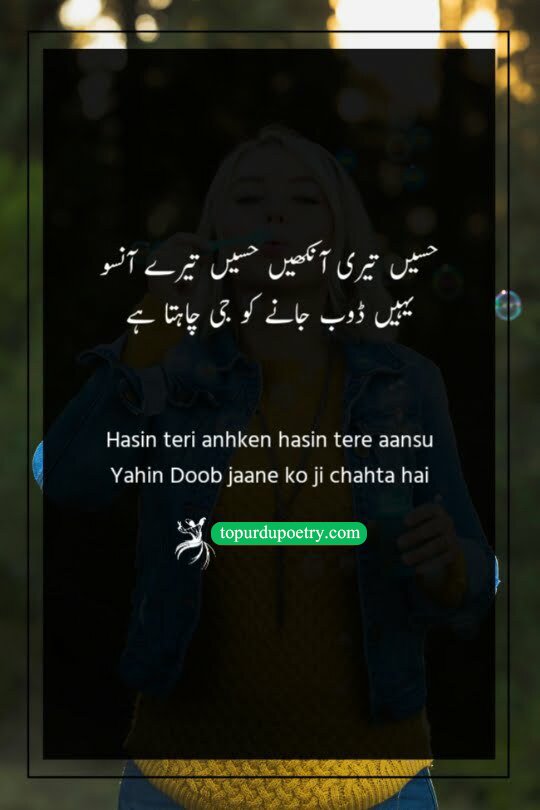
حسیں تیری آنکھیں حسیں تیرے آنسو یہیں ڈوب جانے کو جی چاہتا ہے
Hasin teri anhken hasin tere aansu Yahin Doob jaane ko ji chahta hai
This poetry on eyes in english is a romantic surrender to the captivating power of a beloved’s gaze, finding an unexpected aesthetic perfection in both their joy and their sorrow. It unfolds a mesmerizing Aagahi (vivid realization) that there is no distinction between the beauty of the 'ankhen' (eyes) and the 'aansu' (tears) they shed. The poet uses the metaphor of drowning to express a total loss of self; the emotional depth of these eyes is seen as a vast, beautiful ocean where the heart willingly seeks to lose itself.
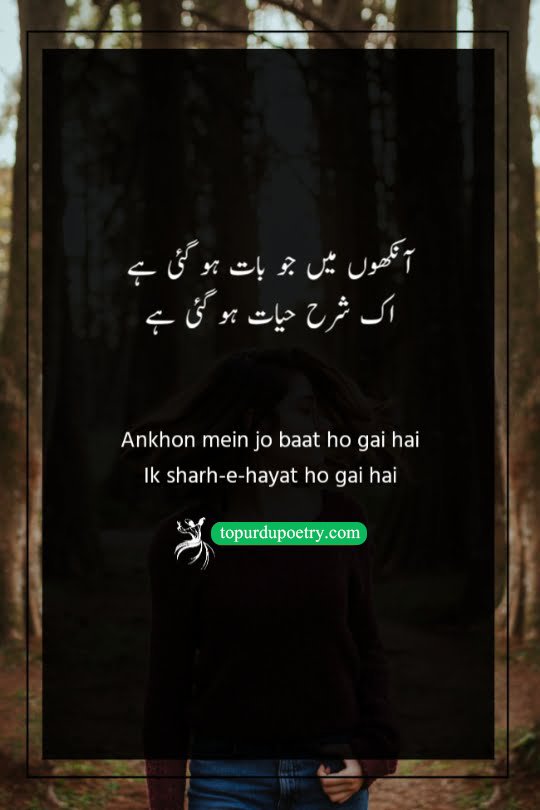
Ankhon mein jo baat ho gai hai Ik sharh-e-hayat ho gai hai
This verse highlights the profound weight of silent communication, suggesting that a single exchange of looks can reveal the entire meaning of one's existence. It presents an enlightening 'Manzar' (vision) that the 'baat' (conversation) held within the eyes serves as a complete 'sharh-e-hayat' (commentary on life). It suggests that the mysteries of the soul and the complexities of human connection are more eloquently explained through a glance than through any language.
Deeply Expressive Ankhain Poetry in Urdu
The word “Ankhain” carries a weight of its own in poetry. In this section, we focus on ankhain poetry in Urdu that highlights the storytelling ability of the eyes. Whether they are “mast” (intoxicating) or “purnam” (filled with tears), eyes never lie. These 2-line Ankhain Poetry in Urdu (آنکھیں شاعری) are designed to be short yet impactful, making them ideal for those moments when you want to post a status that says a lot with very little.
میں ڈر رہا ہوں تمہاری نشیلی آنکھوں سے کہ لوٹ لیں نہ کسی روز کچھ پلا کے مجھے
Main Dar raha huun tumhari nashili ankhon se Ki luut len na kisi roz kuchh pila ke mujhe
This couplet personifies the beloved's gaze as a dangerous intoxicant capable of robbing one's self-control. It captures a playful yet cautious Kheyal (thought) that the narrator is wary of the 'nashili' (intoxicating) power found in those eyes. The fear expressed is that the beauty of the look will act as a silent invitation that leaves the lover vulnerable to being plundered of his heart and senses.
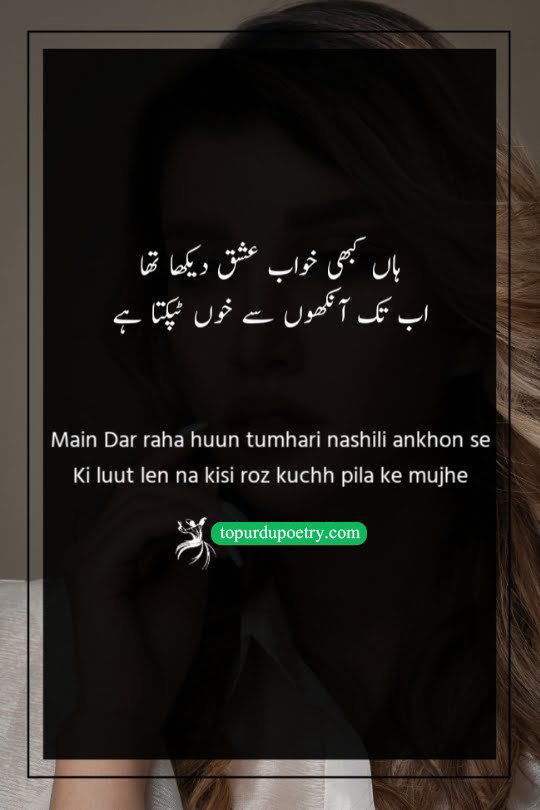
ہاں کبھی خواب عشق دیکھا تھا اب تک آنکھوں سے خوں ٹپکتا ہے
Haan kabhi khvab-e-ishq dekha tha Ab tak ankhon se khuun tapakta hai
This poetry on eyes by ghalib illustrates the heavy price of a shattered dream, suggesting that some visions leave a permanent, visceral mark on the soul. It brings to light a haunting Haqiqat (reality) that the wounds of a lost 'khvab-e-ishq' (dream of love) do not simply fade into memory. Instead, the grief remains so intense that it manifests as metaphorical 'khuun' (blood) dripping from the eyes. It portrays the idea that for the heartbroken, the pain is not a past event but a continuous, bleeding experience.
اب تک مری یادوں سے مٹائے نہیں مٹتا بھیگی ہوئی اک شام کا منظر تری آنکھیں
Ab tak meri yadon se mitae nahin mitta Bhigi hui ik shaam ka manzar teri ankhen
This shayari on eyes in Urdu describes an indelible memory that remains etched in the mind despite the passage of time. It highlights a vivid Haqiqat (reality) that the image of the beloved's eyes is compared to a 'bhigi hui shaam' (drenched evening), suggesting a poignant mix of beauty and melancholy. The poet expresses that while other memories might fade, the specific look of those eyes—soft and perhaps tearful like a rainy twilight—refuses to be erased.
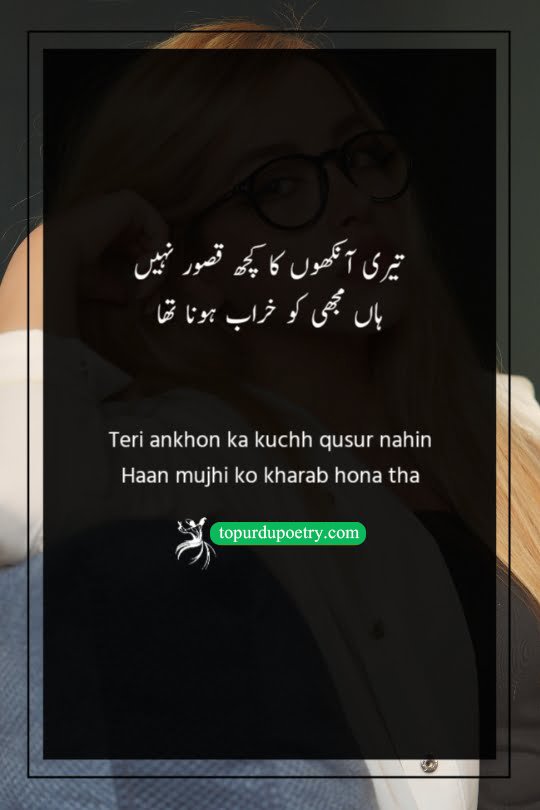
تیری آنکھوں کا کچھ قصور نہیں ہاں مجھی کو خراب ہونا تھا
Teri ankhon ka kuchh qusur nahin Haan mujhi ko kharab hona tha
This ankhain poetry in Urdu expresses a profound acceptance of one's fate in love, shifting the blame away from the beloved’s beauty. It brings forward a modest Haqiqat (reality) that the enchanting nature of the eyes is not a 'qusur' (fault); rather, the narrator’s heart was already predisposed to this beautiful ruin. It suggests that the destruction of the ego or self in the path of love was an inevitable destiny. It portrays the idea that one doesn't fall into love because of an internal readiness to be overwhelmed.
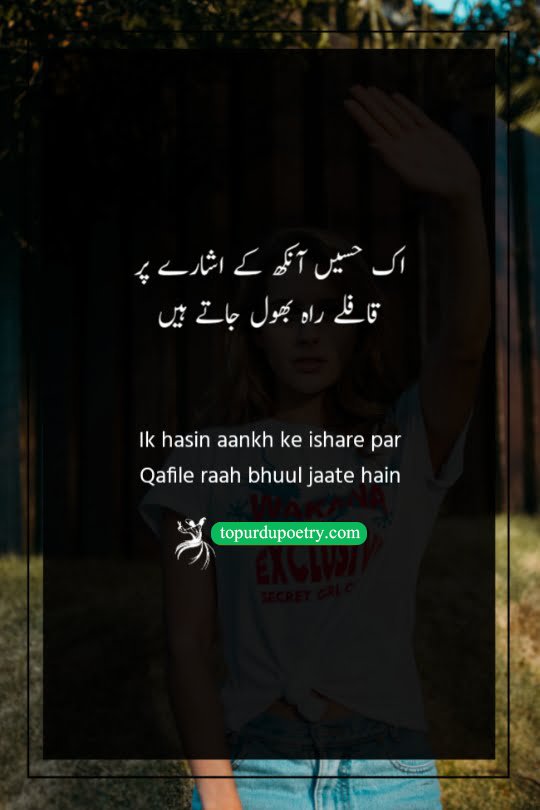
Ik hasin aankh ke ishare par Qafile raah bhuul jaate hain
This eyes quotes in urdu captures the sheer magnetism and disruptive power of beauty. It presents a compelling Haqiqat (reality) that a mere 'ishara' (gesture) from a 'hasin' (beautiful) eye is enough to derail even the most organized 'qafile' (caravans). It suggests that the logic and direction of the world are often abandoned when faced with the irresistible pull of a single, enchanting look.
آنکھیں خدا نے دی ہیں تو دیکھیں گے حسن یار کب تک نقاب رخ سے اٹھائی نہ جائے گی
Ankhen khuda ne di hain to dekhenge husn-e-yar Kab tak naqab rukh se uthai na jaegi
This verse reflects a bold and determined spirit that views the act of admiring beauty as a divine right. It highlights a clear Haqiqat (reality) that since the Creator has granted the gift of sight, it is only natural to seek out the 'husn-e-yar' (beauty of the beloved). The second line serves as a patient yet persistent challenge to the 'naqab' (veil), suggesting that while beauty may be hidden for a time, the power of a devoted gaze will eventually witness the truth.
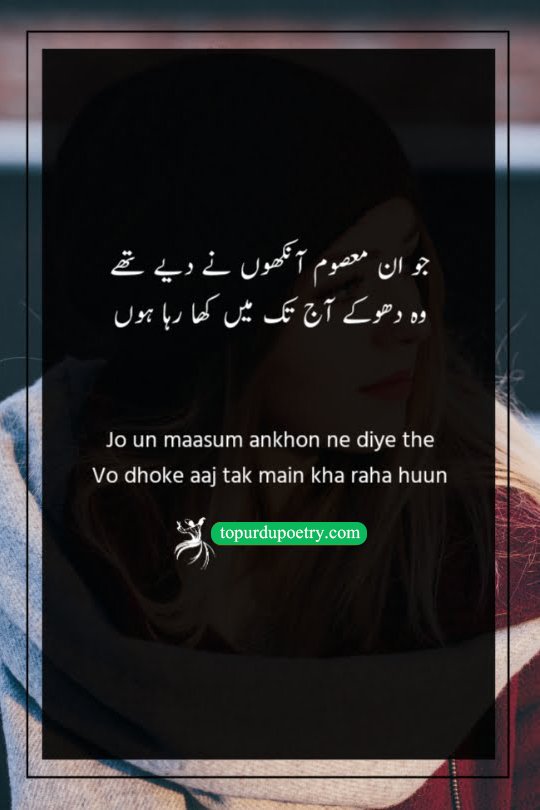
جو ان معصوم آنکھوں نے دیے تھے وہ دھوکے آج تک میں کھا رہا ہوں
Jo un maasum ankhon ne diye the Vo dhoke aaj tak main kha raha huun
This eyes quotes in Urdu speaks to the irony of betrayal originating from a source that appears pure and 'maasum' (innocent). It highlights a lasting Haqiqat (truth) that the most effective deceptions are those we do not see coming because we are blinded by the beauty of a gaze. The narrator admits that even today ('aaj tak'), he remains trapped in the consequences of that misplaced trust. It portrays the idea that appearances can be a veil for a painful reality.
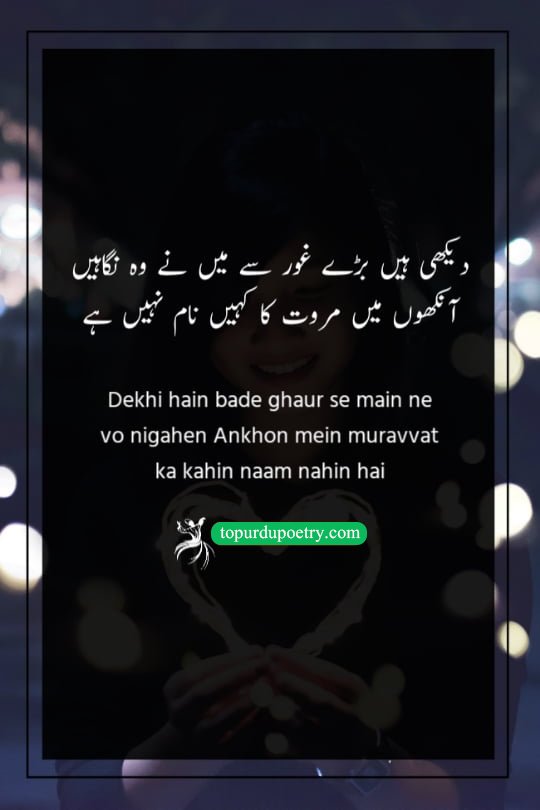
دیکھی ہیں بڑے غور سے میں نے وہ نگاہیں آنکھوں میں مروت کا کہیں نام نہیں ہے
Dekhi hain bade ghaur se main ne vo nigahen Ankhon mein muravvat ka kahin naam nahin hai
This poetry for eyes in urdu expresses a deep sense of disappointment after a careful and searching observation of the beloved's gaze. It presents a stark Haqiqat (reality) that despite looking deeply and intently ('ghaur se'), the narrator found absolutely no trace of 'muravvat' (kindness, empathy, or graciousness) within those eyes. It shatters the illusion of a compassionate lover, revealing a cold and indifferent truth hidden behind what might otherwise be a beautiful look.
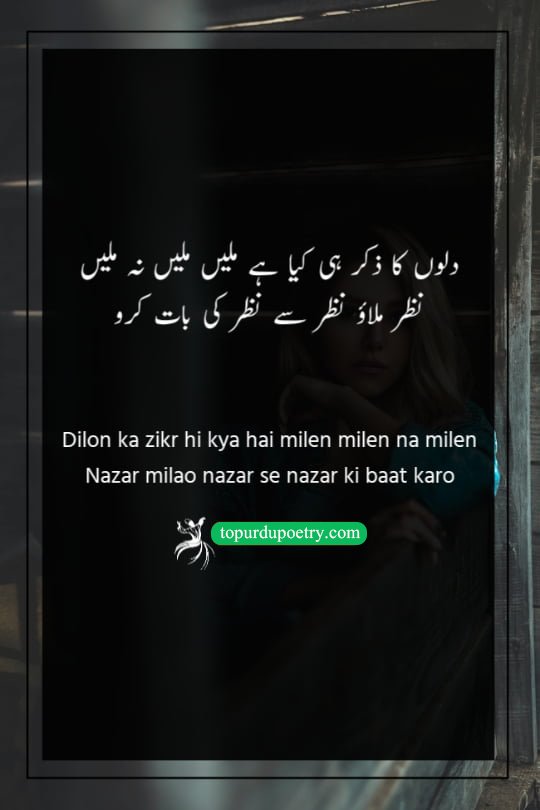
دلوں کا ذکر ہی کیا ہے ملیں ملیں نہ ملیں نظر ملاؤ نظر سے نظر کی بات کرو
Dilon ka zikr hi kya hai milen milen na milen Nazar milao nazar se nazar ki baat karo
This Urdu poetry on eyes dismisses the complex and often uncertain matters of the heart in favor of an immediate, visible connection. It presents a simple Haqiqat (reality) that whether hearts truly connect ('milen') or not is deeply unpredictable. Therefore, the poet urges the beloved to bypass the complicated talk of hearts and focus solely on the present moment by meeting their gaze. It portrays the idea that a direct look is a more tangible and immediate form of communication.
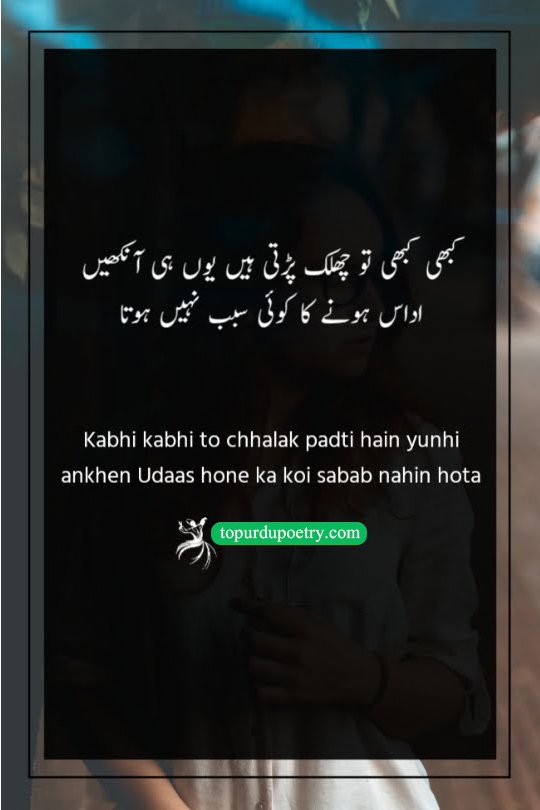
کبھی کبھی تو چھلک پڑتی ہیں یوں ہی آنکھیں اداس ہونے کا کوئی سبب نہیں ہوتا
Kabhi kabhi to chhalak padti hain yunhi ankhen Udaas hone ka koi sabab nahin hota
This verse beautifully captures the unpredictable and profound nature of human sorrow. It highlights a poignant Haqiqat (reality) that tears do not always require a tangible trigger or an immediate tragedy. Sometimes, the 'ankhen' (eyes) simply overflow as a spontaneous release of the soul's accumulated, unspoken weight. It portrays the idea that a generalized sense of melancholy can exist within us, leading to moments where one feels 'udaas' (sad) without any specific 'sabab' (reason).
Wisdom in Sight: Eyes Quotes in Urdu
Sometimes, prose can be just as powerful as poetry. Our collection of eyes quotes in Urdu provides meaningful insights into the importance of vision, perception, and the truth hidden behind a person’s look. These quotes on eyes in Urdu (آنکھیں شاعری) are excellent for those looking for motivational or philosophical content to share as captions or text messages. They remind us that while the world sees what we do, our eyes reveal who we truly are.
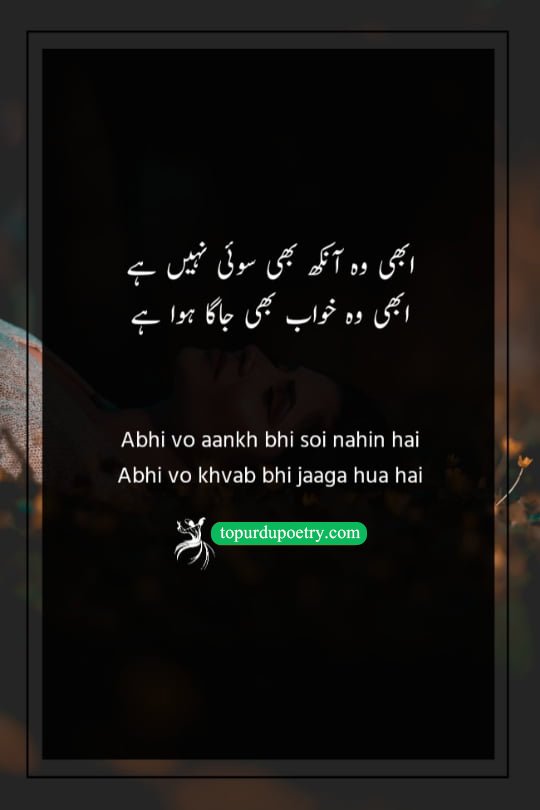
ابھی وہ آنکھ بھی سوئی نہیں ہے ابھی وہ خواب بھی جاگا ہوا ہے
Abhi vo aankh bhi soi nahin hai Abhi vo khvab bhi jaaga hua hai
This shayari on eyes in urdu captures the restless energy of an unfulfilled desire or a persistent memory. It highlights a profound Aagahi (inner awareness) that physical rest is impossible when the mind is occupied by a powerful vision. The poet states that the 'aankh' (eye) remains sleepless because the 'khvab' (dream) it holds is still vibrant, alive, and 'jaaga' (awake). It portrays the idea that a living, breathing dream or a lingering hope demands constant attention.
میں نے چاہا تھا کہ اشکوں کا تماشا دیکھوں اور آنکھوں کا خزانہ تھا کہ خالی نکلا
Main ne chaha tha ki ashkon ka tamasha dekhun Aur ankhon ka khazana tha ki khali nikla
This ankhain poetry in Urdu depicts a profound state of emotional exhaustion where grief has surpassed the ability to weep. It reveals a heartbreaking Kaifiyat (state of being) where the narrator wishes to release their sorrow through a 'tamasha' (spectacle) of tears, only to find that the 'khazana' (treasure) of their eyes is completely empty. It portrays the painful reality that the most intense suffering often leaves a person entirely numb, as the reservoir of sorrow has long since run dry.
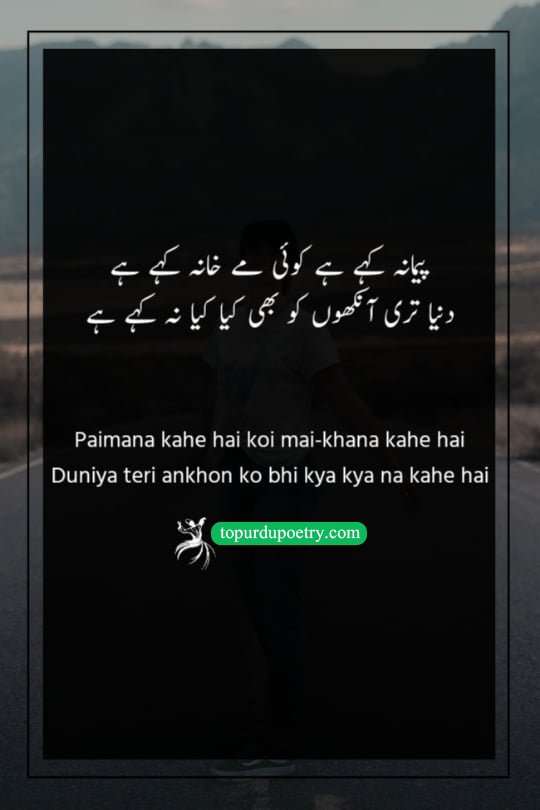
پیمانہ کہے ہے کوئی مے خانہ کہے ہے دنیا تری آنکھوں کو بھی کیا کیا نہ کہے ہے
Paimana kahe hai koi mai-khana kahe hai Duniya teri ankhon ko bhi kya kya na kahe hai
This verse highlights the universally captivating and intoxicating beauty of the beloved's gaze. It presents a charming Haqiqat (reality) that observers are so mesmerized by these eyes that they struggle to define them, comparing them to a 'paimana' (goblet of wine) or even an entire 'mai-khana' (tavern). It portrays the idea that the beloved's eyes hold such a vast capacity to enchant and overwhelm the senses that the world runs out of ordinary words, relying instead on grand metaphors of deep intoxication.
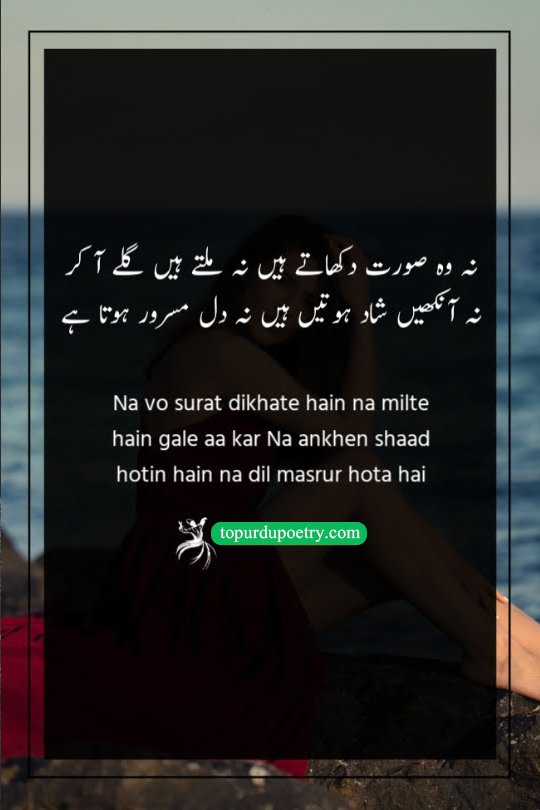
نہ وہ صورت دکھاتے ہیں نہ ملتے ہیں گلے آ کر نہ آنکھیں شاد ہوتیں ہیں نہ دل مسرور ہوتا ہے
Na vo surat dikhate hain na milte hain gale aa kar Na ankhen shaad hotin hain na dil masrur hota hai
This verse beautifully captures the dual agony of a lover who is deprived of both visual and physical affection. It describes a sorrowful Kaifiyat (state of being) where the beloved neither reveals their face ('surat') nor offers an embrace ('gale aa kar'). As a direct result, the narrator suffers a two-fold deprivation: the eyes are denied the visual joy ('shaad') of seeing the beloved, and the heart is starved of the deep emotional comfort ('masrur') that comes from closeness.
آ جائے نہ دل آپ کا بھی اور کسی پر دیکھو مری جاں آنکھ لڑانا نہیں اچھا
Aa jaae na dil aap ka bhi aur kisi par Dekho meri jaan aankh ladana nahin achchha
This playful yet cautious sad eyes poetry in urdu captures the classic emotion of romantic possessiveness and the fear of losing a loved one's affection. It highlights a lighthearted Taqaza (demand) that the beloved should be careful with their gaze. The poet warns that 'aankh ladana' (exchanging flirtatious glances) is a dangerous game that could lead to the heart accidentally wandering toward someone else. It portrays the idea that in the world of love, the eyes are the primary messengers of the heart.
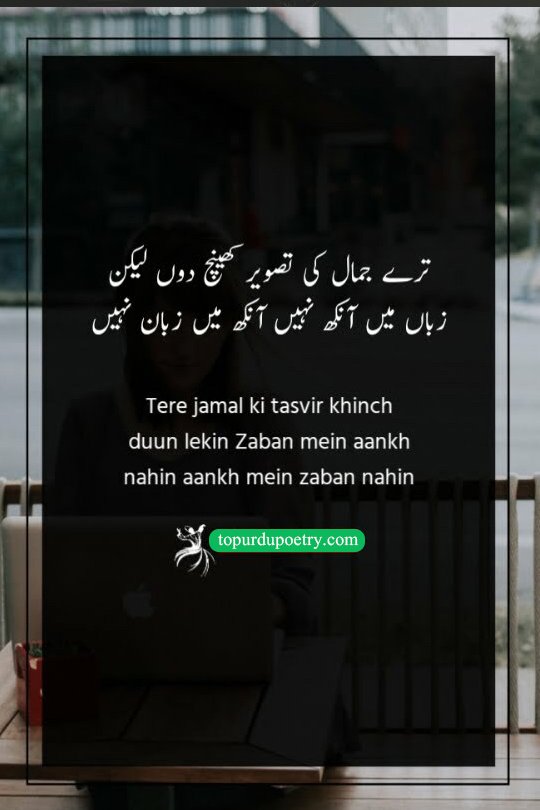
ترے جمال کی تصویر کھینچ دوں لیکن زباں میں آنکھ نہیں آنکھ میں زبان نہیں
Tere jamal ki tasvir khinch duun lekin Zaban mein aankh nahin aankh mein zaban nahin
This masterpiece explores the ultimate limitation of human expression when faced with absolute beauty. It presents a profound Haqiqat (truth) regarding the struggle between observation and description. The poet wishes to paint a 'tasvir' (picture) of the beloved's 'jamal' (radiant beauty) using words, but he is trapped by a fundamental paradox: the tongue, which has the power of speech, lacks the 'aankh' (eye) to truly witness such beauty; while the eye, which witnesses everything, lacks the 'zaban' (tongue) to speak and describe it.
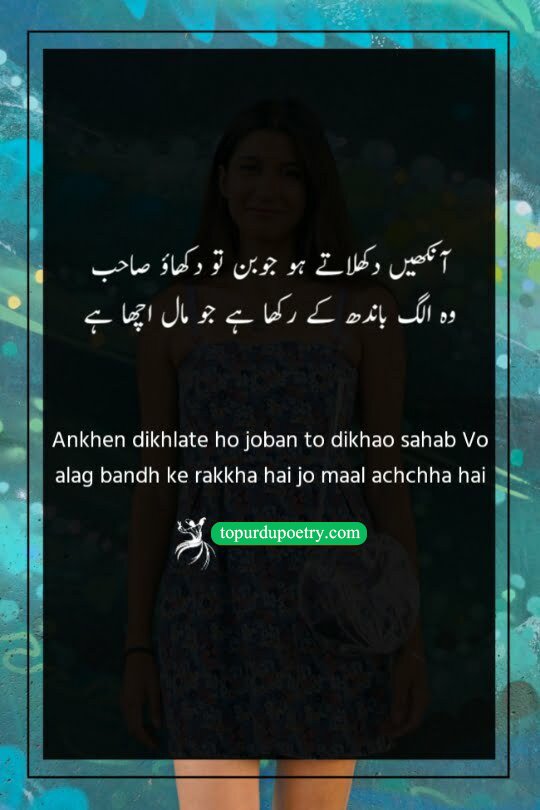
آنکھیں دکھلاتے ہو جوبن تو دکھاؤ صاحب وہ الگ باندھ کے رکھا ہے جو مال اچھا ہے
Ankhen dikhlate ho joban to dikhao sahab Vo alag bandh ke rakkha hai jo maal achchha hai
This Urdu poetry on eyes is a sharp, witty piece of classical Urdu poetry that uses playful confrontation. It captures a bold 'Andaz' (style) where the narrator challenges the beloved's display of anger. When the beloved shows 'Ankhen' (angry eyes) to intimidate, the poet dismisses this, daringly asking to see the 'Joban' (youthful beauty) instead. He suggests that the beloved is hiding their best 'Maal' (charms) behind a veil of annoyance. It portrays a flirtatious power dynamic where the lover refuses to be intimidated by a stern gaze.
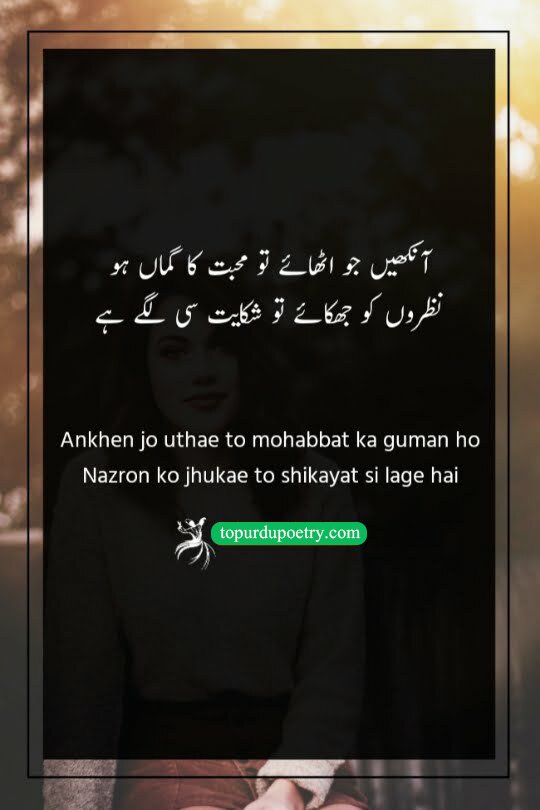
آنکھیں جو اٹھائے تو محبت کا گماں ہو نظروں کو جھکائے تو شکایت سی لگے ہے
Ankhen jo uthae to mohabbat ka guman ho Nazron ko jhukae to shikayat si lage hai
This eyes quotes in Urdu beautifully captures the delicate art of non-verbal communication, where every movement of the eye is open to interpretation. It reveals a shifting Andaz (style) of emotion where the narrator is caught between hope and doubt. When the beloved raises their 'Ankhen' (eyes), it creates a 'Guman' (feeling) of 'Mohabbat' (love). However, when those same eyes are lowered, the silence feels like a 'Shikayat' (complaint). It portrays the idea that for a lover, the simple act of looking or looking away can become a complex language of its own.
جان سے ہو گئے بدن خالی جس طرف تو نے آنکھ بھر دیکھا
Jaan se ho gae badan khali Jis taraf tu ne aankh bhar dekha
This powerful poetry on eyes in english illustrates the soul-snatching intensity of a single, full gaze from the beloved. It reveals a breathtaking 'Aalam' (state of existence) where a glance is not merely seen, but felt as a force that drains the very life from those it touches. The poet suggests that when the beloved looks 'aankh bhar' (intently) in any direction, the bodies of those present are left 'khali' (empty) of their soul. It portrays the idea that true beauty possesses a divine, almost lethal authority.
رات کو سونا نہ سونا سب برابر ہو گیا تم نہ آئے خواب میں آنکھوں میں خواب آیا تو کیا
Raat ko sona na sona sab barabar ho gaya Tum na aae khvab mein ankhon mein khvab aaya to kya
This shayari on eyes in Urdu captures the ultimate point of romantic despair, where the biological need for rest becomes meaningless without the beloved's presence. It highlights a poignant 'Kaifiyat' (state of mind) where the distinction between sleeping and waking disappears. The poet argues that even if 'khvab' (dreams) come to the 'ankhon' (eyes), they are worthless if the beloved does not appear. It portrays the idea that a dream without the beloved is merely a hollow vision.
Captivating Charm: Beautiful Eyes Poetry in Urdu
The true charm of a face often lies in the sparkle of the eyes, and poets have spent lifetimes trying to describe that radiance. Our collection of beautiful eyes poetry in Urdu (آنکھیں شاعری) is dedicated to those who find themselves lost in a mesmerizing gaze. These verses focus on the “shokhi” (playfulness) and “chamak” (brightness) that make a person’s eyes truly unforgettable. Whether you are looking for a poetic way to compliment someone special or simply want to appreciate the artistic descriptions of “haseen ankhain,” these 2-line beautiful eyes poetry in Urdu capture the pinnacle of romantic admiration. Sharing these lines is the perfect way to tell someone that their eyes are the most beautiful part of their story.
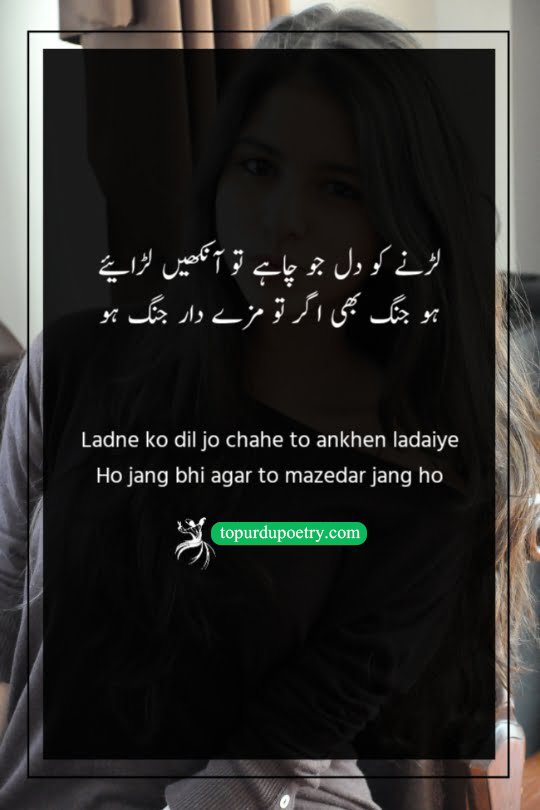
لڑنے کو دل جو چاہے تو آنکھیں لڑائیے ہو جنگ بھی اگر تو مزے دار جنگ ہو
Ladne ko dil jo chahe to ankhen ladaiye Ho jang bhi agar to mazedar jang ho
This witty and romantic aankhon par shayari reimagines the concept of conflict, suggesting that the most enjoyable battles are those fought through glances. It proposes a playful 'Mashwara' (advice) that if the heart feels a sudden urge to 'ladne' (fight), it should choose the medium of 'ankhen' (eyes). The poet argues that even a 'jang' (war) can become 'mazedar' (delightful) when the weapons used are enchanting looks. It portrays the idea that romantic tension is a thrilling form of competition.
ان رس بھری آنکھوں میں حیا کھیل رہی ہے دو زہر کے پیالوں میں قضا کھیل رہی ہے
Un ras bhari ankhon mein haya khel rahi hai Do zahr ke pyalon mein qaza khel rahi hai
This strikingly vivid poetry on eyes in Urdu explores the dangerous duality of the beloved's gaze, where beauty and mortality coexist. It reveals a mesmerizing 'Tazaad' (contrast) where the eyes are first described as 'ras bhari' (filled with sweetness), sparkling with 'haya' (modesty). However, the second line shifts to a darker metaphor: those same eyes are compared to 'zahr ke pyalon' (cups of poison) where 'qaza' (death) itself is 'khel rahi' (playing). It portrays the idea that a single look can be both life-giving and fatal.
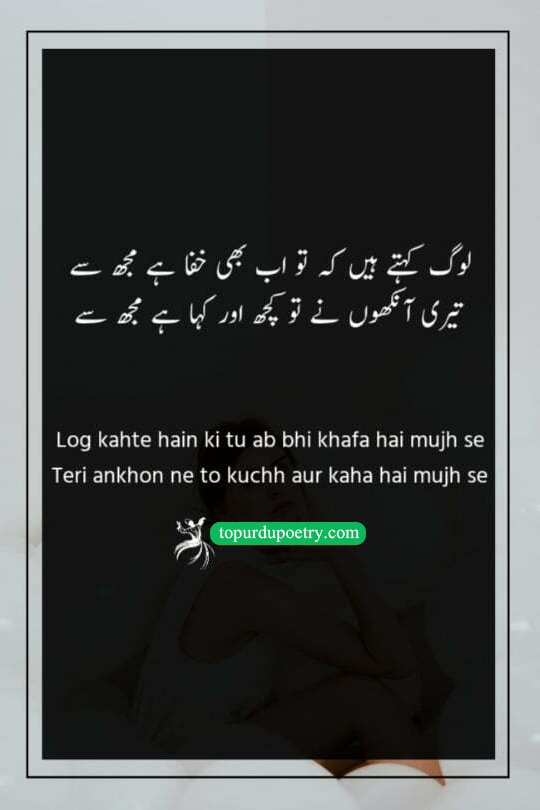
لوگ کہتے ہیں کہ تو اب بھی خفا ہے مجھ سے تیری آنکھوں نے تو کچھ اور کہا ہے مجھ سے
Log kahte hain ki tu ab bhi khafa hai mujh se Teri ankhon ne to kuchh aur kaha hai mujh se
This Urdu poetry on eyes highlights the discrepancy between public perception and private, unspoken truths. It presents a comforting 'Haqiqat' (reality) where the external world believes that the beloved is still 'khafa' (angry). However, the narrator finds a secret reassurance in a direct gaze. He claims that the 'ankhon' (eyes) have communicated a completely different story. It portrays the idea that while words may suggest conflict, the eyes remain the most honest source of true feelings.
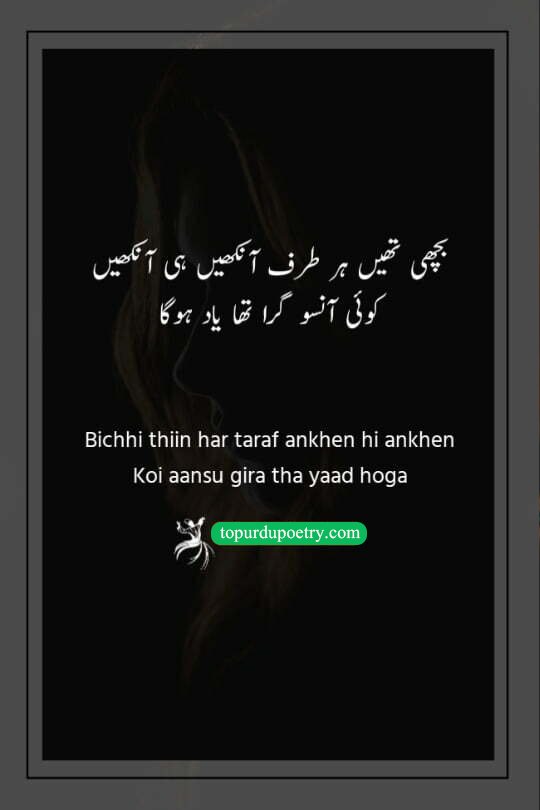
بچھی تھیں ہر طرف آنکھیں ہی آنکھیں کوئی آنسو گرا تھا یاد ہوگا
Bichhi thiin har taraf ankhen hi ankhen Koi aansu gira tha yaad hoga
This beautiful eyes poetry in Urdu captures a moment of intense public scrutiny versus a single, private act of sorrow. It sets a vivid Manzar (scene) where 'ankhen hi ankhen' (countless eyes) were fixed upon the narrator from every direction. Amidst this overwhelming sea of observers, the poet recalls a single 'aansu' (tear) that fell. It suggests that while the world was busy watching, only the beloved or a true witness would remember that one silent drop of pain. It portrays the idea that true empathy is noticed in the smallest details.
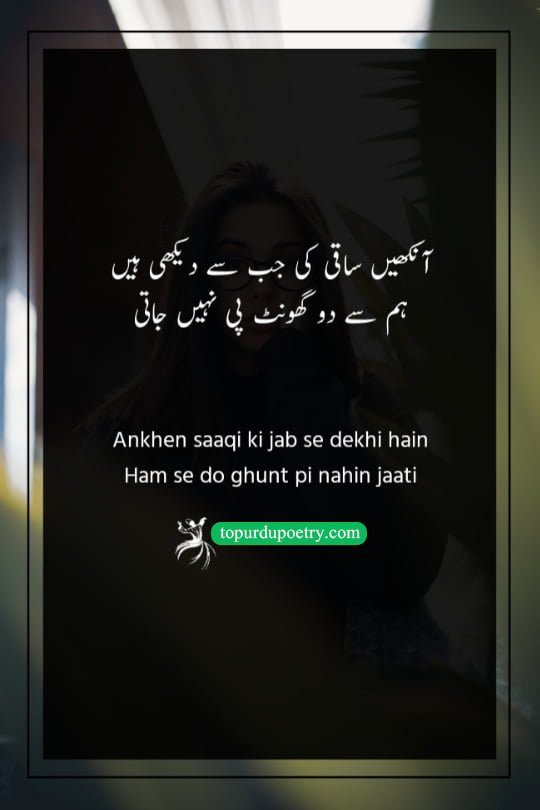
آنکھیں ساقی کی جب سے دیکھی ہیں ہم سے دو گھونٹ پی نہیں جاتی
Ankhen saaqi ki jab se dekhi hain Ham se do ghunt pi nahin jaati
This classic poetry for eyes in Urdu explores the supreme power of natural beauty over artificial intoxication. It presents a charming Kaifiyat (state of mind) where the 'saaqi' (wine-server), whose job is to provide the drink, inadvertently provides a far more potent high through their 'ankhen' (eyes). The poet claims that since witnessing the depth and allure of those eyes, even 'do ghunt' (two sips) of actual wine have become impossible to consume. It portrays the idea that the intoxication of a beloved's gaze is so overwhelming.
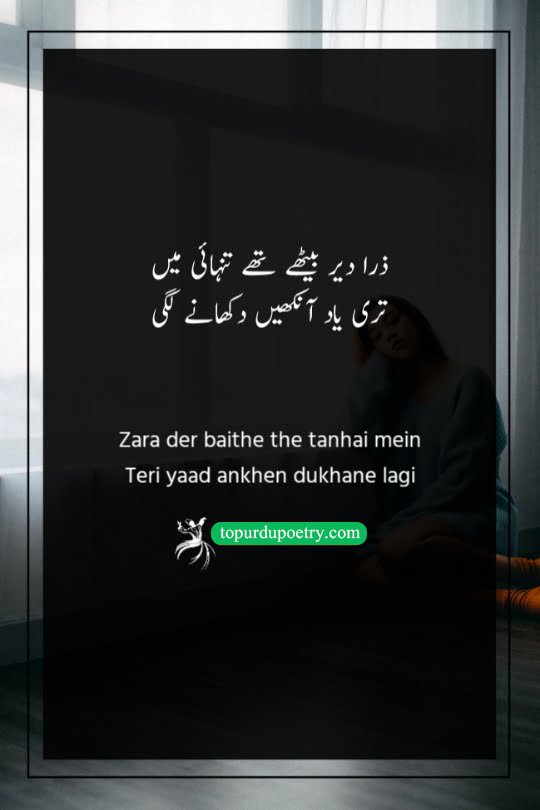
ذرا دیر بیٹھے تھے تنہائی میں تری یاد آنکھیں دکھانے لگی
Zara der baithe the tanhai mein Teri yaad ankhen dukhane lagi
This verse captures the intrusive and overwhelming nature of memories when one is alone. It reveals a haunting 'Kaifiyat' (state of mind) where a brief moment of 'tanhai' (solitude) is immediately interrupted by a powerful 'yaad' (memory). The phrase 'ankhen dukhane lagi' is a brilliant play on words; it suggests both a physical ache of tears and a metaphorical glare from a memory that refuses to remain silent. It portrays the idea that the memory of the beloved is a forceful presence.
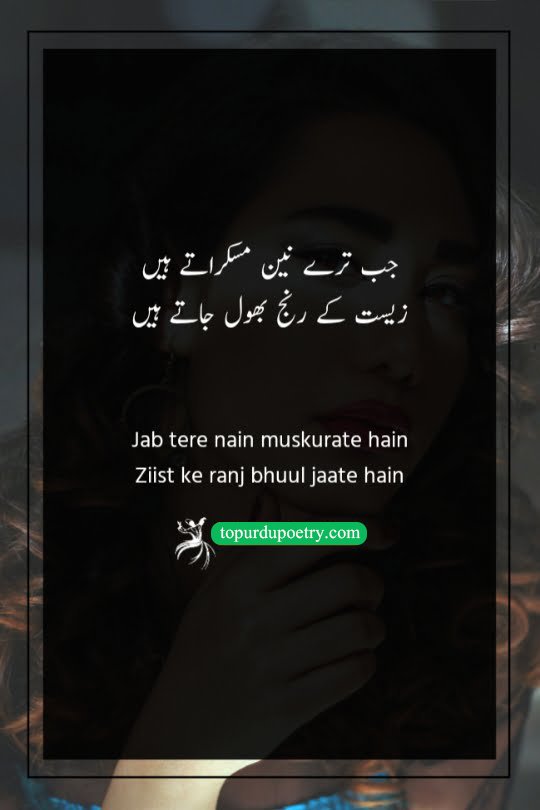
Jab tere nain muskurate hain Ziist ke ranj bhuul jaate hain
This couplet celebrates the transformative power of a beloved’s happiness to heal a weary soul. It presents a comforting Taskeen (solace) that even the most deep-seated 'ranj' (sorrows) of 'ziist' (life) can be momentarily erased by a single glance of joy. The poet suggests that the 'nain' (eyes) radiate a warmth so potent that the heavy burdens of existence simply fade away. It portrays the idea that love acts as a sanctuary, where a single smile from the eyes provides an escape from worldliness.
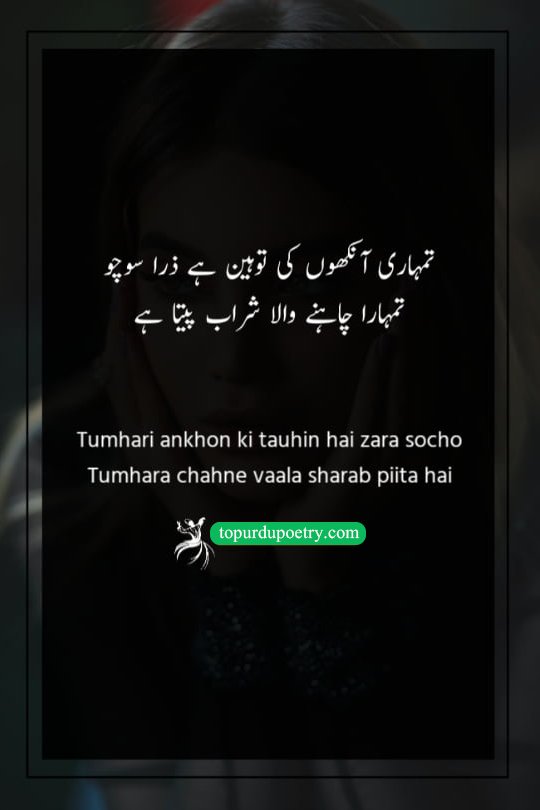
تمہاری آنکھوں کی توہین ہے ذرا سوچو تمہارا چاہنے والا شراب پیتا ہے
Tumhari ankhon ki tauhin hai zara socho Tumhara chahne vaala sharab piita hai
This witty and romantic aankhon par shayari uses a clever paradox to compliment the beloved's intoxicating beauty. It presents a daring 'Shikwa' (complaint) that if the beloved's eyes truly possess the legendary power to mesmerize, then the narrator should have no need for any other stimulant. By drinking 'sharab' (wine), the lover is jokingly accused of committing a 'tauhin' (insult) against those eyes, suggesting that their natural intoxication is being undervalued.
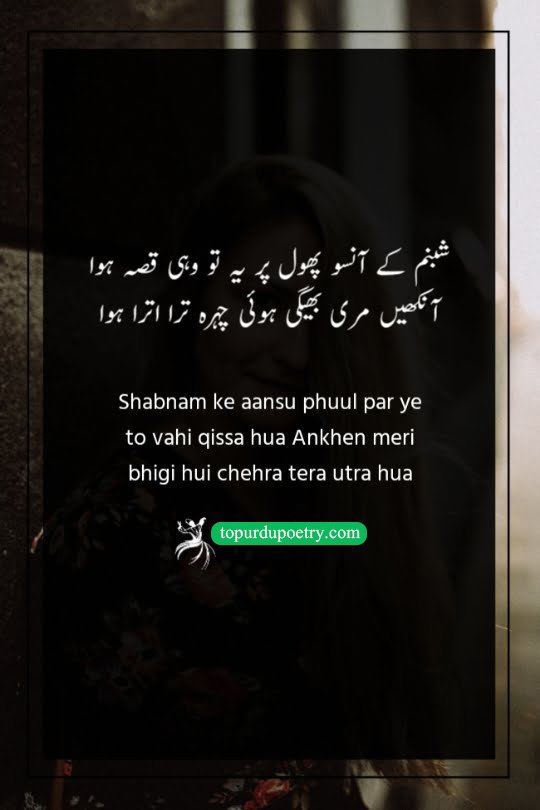
شبنم کے آنسو پھول پر یہ تو وہی قصہ ہوا آنکھیں مری بھیگی ہوئی چہرہ ترا اترا ہوا
Shabnam ke aansu phuul par ye to vahi qissa hua Ankhen meri bhigi hui chehra tera utra hua
This beautiful eyes poetry in Urdu draws a delicate parallel between nature and human emotion, suggesting that two souls can be so deeply connected that the pain of one is instantly visible in the other. It presents a poignant 'Mumaasilat' (analogy) where the narrator's 'bhigi hui' (tear-filled) eyes are compared to 'shabnam' (dew) on a 'phuul' (flower). Even though the narrator is the one weeping, it is the beloved's 'chehra' (face) that appears 'utra hua' (pale). It portrays the idea that in true love, the boundary between the 'self' and the 'other' vanishes during grief.
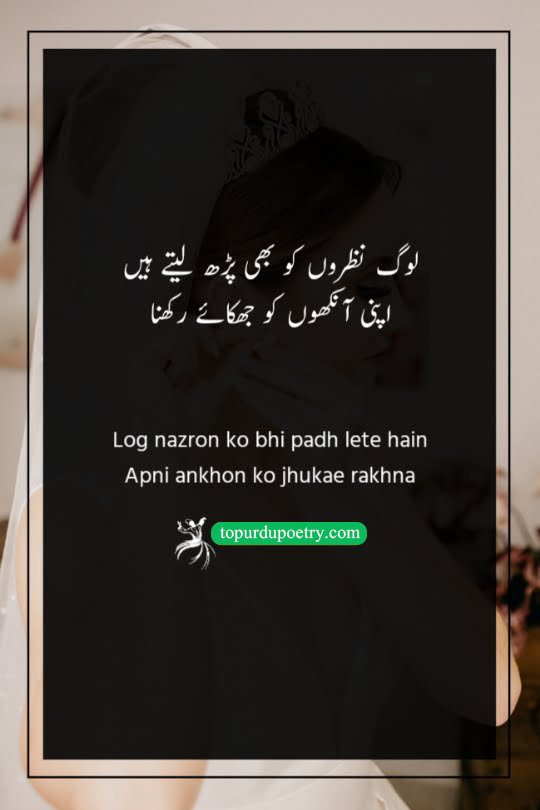
لوگ نظروں کو بھی پڑھ لیتے ہیں اپنی آنکھوں کو جھکائے رکھنا
Log nazron ko bhi padh lete hain Apni ankhon ko jhukae rakhna
This eyes quotes in Urdu serves as a cautionary Mashwara (advice) regarding the transparency of human emotion. It highlights the idea that 'log' (people) are often perceptive enough to 'padh' (read) the secrets or intentions hidden within a gaze. By suggesting one should keep their 'ankhon' (eyes) 'jhukae' (lowered), the poet advocates for a layer of protection, modesty, or mystery. It portrays the eyes as the ultimate windows to the soul, warning that in a world of prying observers, the eyes can betray the heart's truth.
Final Thoughts on Eyes Poetry in Urdu (آنکھیں شاعری)
We hope this collection of Urdu poetry on eyes helped you find the perfect words to describe that one unforgettable gaze. Eyes truly are the silent narrators of our lives.
Which of these eyes quotes in Urdu (آنکھیں شاعری) did you find most meaningful? Let us know in the comments, and don’t forget to save our custom-designed images to use as your next profile update!


















1 Comment
Pingback: 75+ Best Love Poetry in Urdu Text | Romantic 2 Line Poetry