There is no language in the world that captures the breathtaking beauty, the deep devotion, and the profound passion of romance quite like Urdu. When you are truly in love, every verse feels like it was written specifically for you and your beloved. Love poetry in urdu is not just an arrangement of words; it is a celebration of soul-deep connection. Interestingly, neuroscientists who study the science of romantic love have discovered that being in love floods the human brain with dopamine and oxytocin, creating a state of intense euphoria and profound attachment. This biological reality perfectly mirrors the nasha (intoxication) and junoon (passion) that classic Urdu poets have described for centuries. By reading and sharing these couplets, you are translating a deeply powerful human emotion into the most elegant language on earth.
They say the eyes are the beginning of every great love story. If you are mesmerized by your beloved’s gaze, you will also love our enchanting collection of Urdu Poetry on Eyes.
Table of Contents
Share Your Heart: Love Poetry in Urdu Text (محبت پوئِٹْری)
Finding the exact words to express how much someone means to you can be difficult, but our collection of love poetry in Urdu text makes it completely effortless. Whether you want to send a sweet good morning message, a random midday compliment, or a romantic late-night note, having these verses available in easily copy-pasteable text ensures you can instantly share your heart. Let these beautifully 2 lines love poetry bridge the distance between you and your partner.
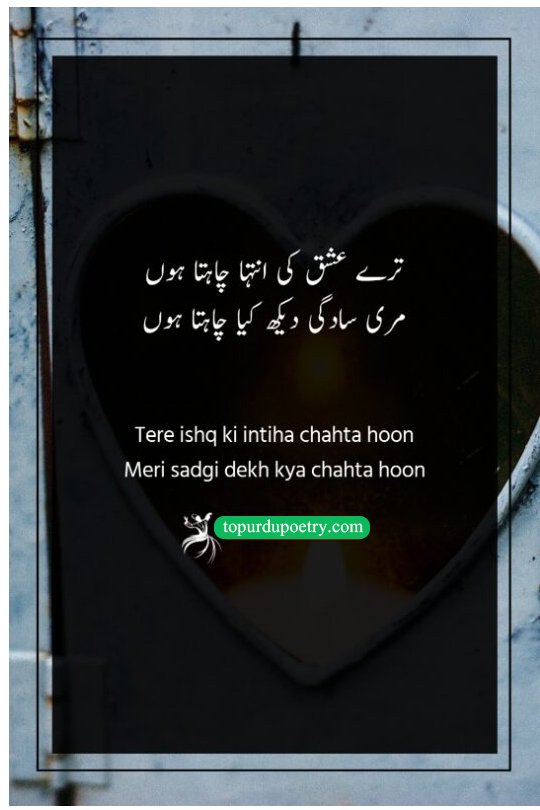
ترے عشق کی انتہا چاہتا ہوں مری سادگی دیکھ کیا چاہتا ہوں
Tere ishq ki intiha chahta hoon, Meri sadgi dekh kya chahta hoon
This legendary love poetry in Urdu text by Allama Iqbal explores the audacity and innocent naivety of a true lover. The poet expresses a desire to reach the 'intiha' (the absolute peak or limit) of love—a state that usually implies total self-annihilation or divine union. The second line highlights his 'sadgi' (simplicity or naivety), as he marvels at the sheer scale of his own request. To ask for the end of love is to ask for the most difficult and transformative experience possible, yet the poet seeks it with the simple heart of a child. It captures the beautiful paradox of the human soul: desiring the infinite while being blissfully unaware of the immense sacrifice it demands.
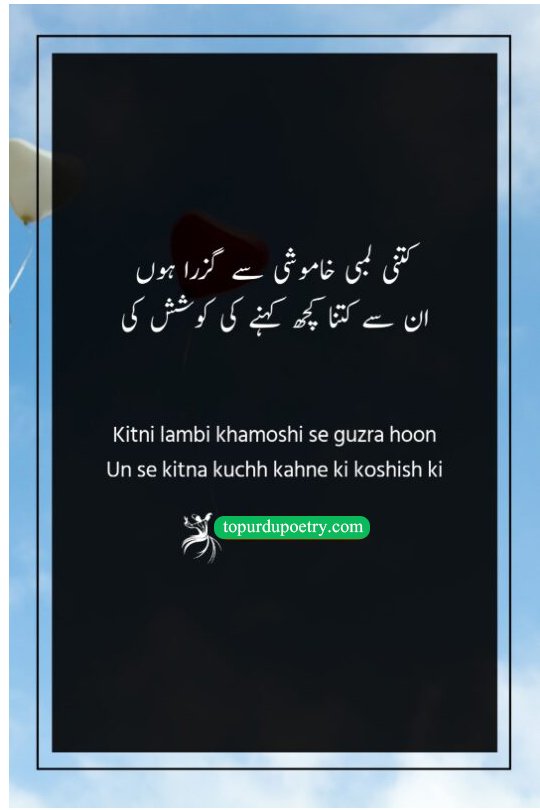
کتنی لمبی خاموشی سے گزرا ہوں ان سے کتنا کچھ کہنے کی کوشش کی
Kitni lambi khamoshi se guzra hoon, Un se kitna kuchh kahne ki koshish ki
This poignant poetry for love in Urdu captures the suffocating weight of unsaid words and the agonizing struggle of failed communication. The poet reflects on enduring a 'lambi khamoshi' (prolonged silence)—not a peaceful quiet, but a painful expanse of time where feelings remained trapped inside. The second line reveals the inner turmoil: despite this outward silence, the poet made desperate, perhaps silent or misunderstood, attempts to express 'kitna kuchh' (so much) to the other person. It beautifully articulates the tragedy of having a heart full of emotions but being unable to bridge the gap of silence between two souls.
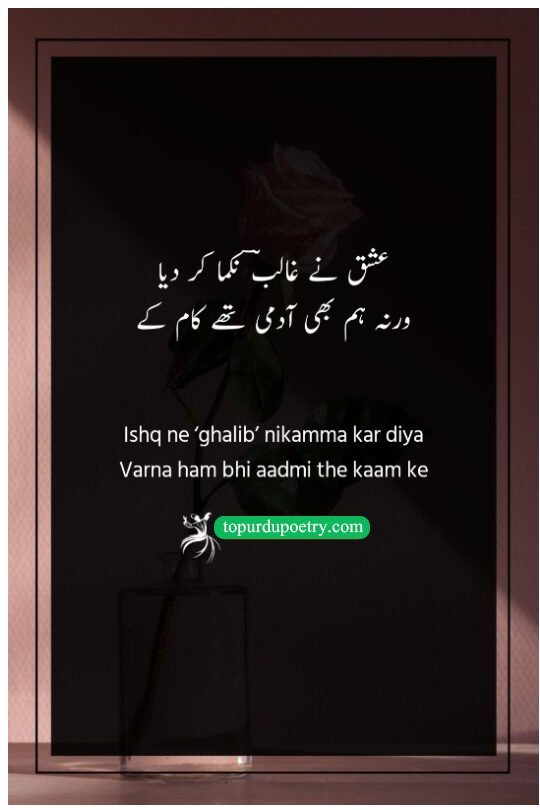
عشق نے غالبؔ نکما کر دیا ورنہ ہم بھی آدمی تھے کام کے
Ishq ne ‘ghalib’ nikamma kar diya Varna ham bhi aadmi the kaam ke
This iconic Urdu poetry love by Mirza Ghalib is a masterclass in self-deprecating wit and profound resignation. The poet humorously admits that 'Ishq' (love) has rendered him 'nikamma' (useless or idle), stripping away his productivity and worldly ambition. In the second line, he reflects that without the all-consuming distraction of love, he too would have been a 'man of worth'—someone useful to society or successful in traditional terms. It perfectly captures how intense passion can derail a person's life, turning a potentially 'successful' individual into a wandering, obsessed dreamer.
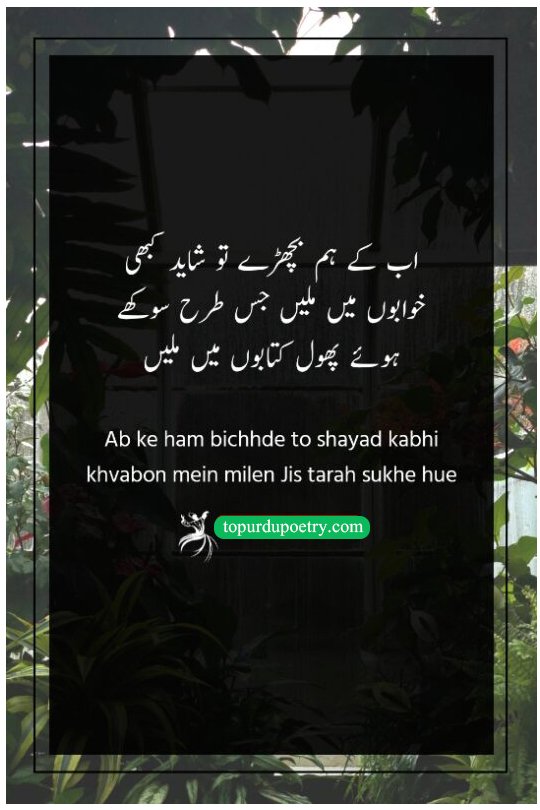
اب کے ہم بچھڑے تو شاید کبھی خوابوں میں ملیں جس طرح سوکھے ہوئے پھول کتابوں میں ملیں
Ab ke ham bichhde to shayad kabhi khvabon mein milen Jis tarah sukhe hue phuul kitabon mein milen
This heart touching love poetry in urdu by Ahmad Faraz expresses the finality of a deep separation. The poet suggests that this parting is so absolute that a reunion might only be possible in the world of dreams. By using the metaphor of 'dried flowers in books,' he beautifully illustrates that even if they do meet again as memories, they will have lost their original life and fragrance, remaining only as fragile, preserved remnants of a lost past.
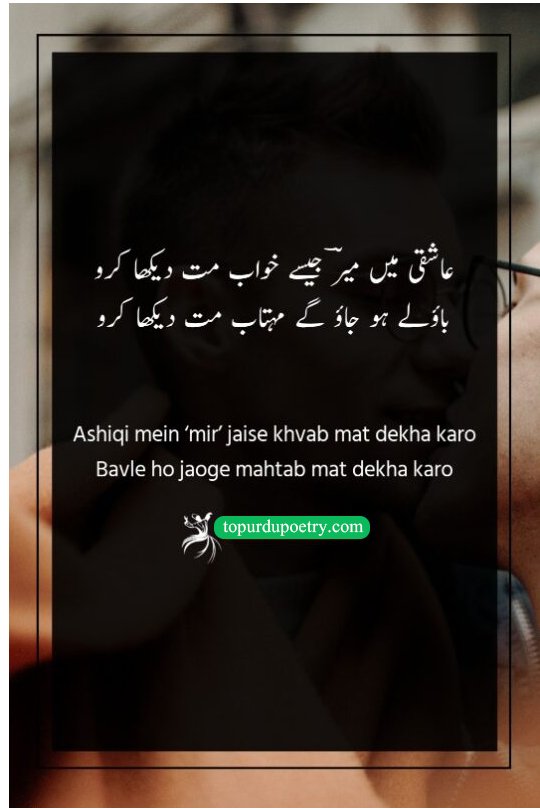
عاشقی میں میرؔ جیسے خواب مت دیکھا کرو باؤلے ہو جاؤ گے مہتاب مت دیکھا کرو
Ashiqi mein ‘mir’ jaise khvab mat dekha karo Bavle ho jaoge mahtab mat dekha karo
In this cautionary 2 line love poetry , the poet warns against the intense, self-destructive nature of romantic idealism. Referencing 'Mir' Taqi Mir, who was famous for his poetry of deep sorrow and madness, the verse advises lovers not to indulge in such grand or obsessive 'khvab' (dreams). The second line warns that staring at the 'mahtab' (the moon)—often a symbol for the beloved's face—will lead to 'baavla' (madness). It suggests that pursuing the absolute peak of beauty and love can break a person's mind, leading to a state of obsession that the average person cannot survive.
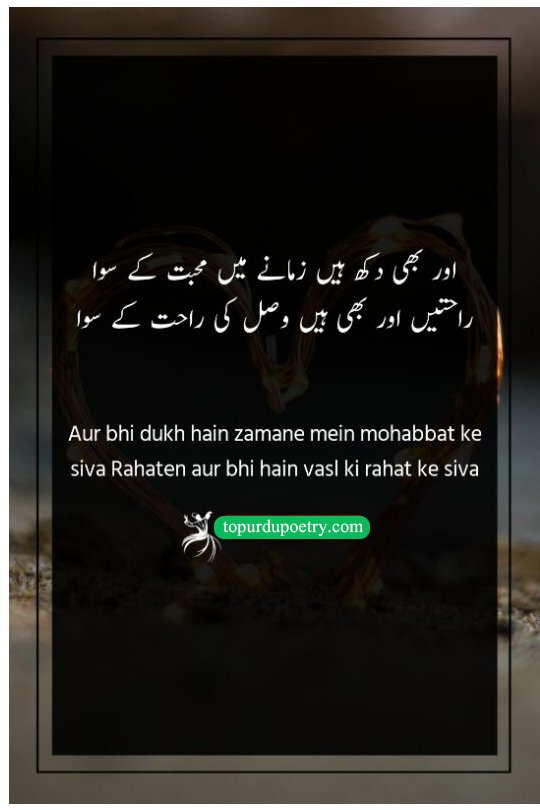
اور بھی دکھ ہیں زمانے میں محبت کے سوا راحتیں اور بھی ہیں وصل کی راحت کے سوا
Aur bhi dukh hain zamane mein mohabbat ke siva Rahaten aur bhi hain vasl ki rahat ke siva
This famous love poetry in Urdu text by Faiz Ahmed Faiz marks a shift from romantic obsession to social consciousness. The poet acknowledges that while the pain of love is intense, the world suffers from many other 'dukh' (sorrows) like poverty and injustice. Similarly, he suggests that 'rahat' (peace or pleasure) can be found in things beyond just 'vasl' (union with the beloved), such as the struggle for humanity and truth. It serves as a reminder that life is vast and contains responsibilities that extend far beyond personal romance.
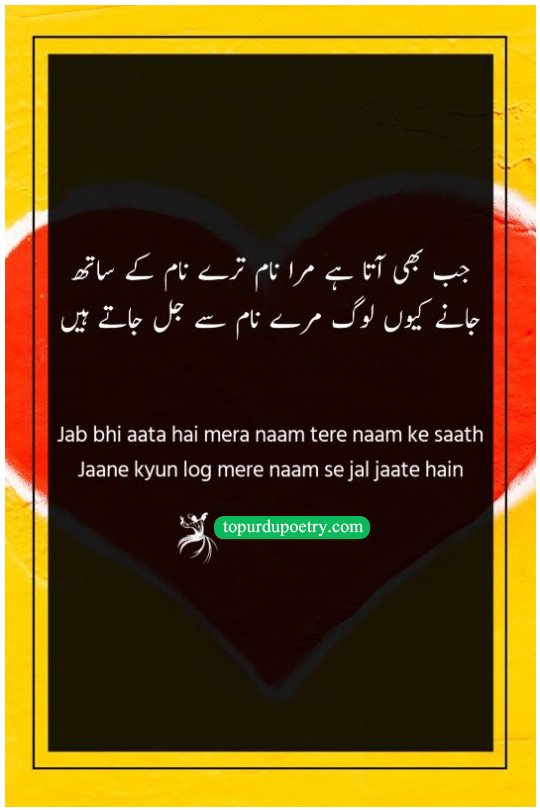
جب بھی آتا ہے مرا نام ترے نام کے ساتھ جانے کیوں لوگ مرے نام سے جل جاتے ہیں
Jab bhi aata hai mera naam tere naam ke saath Jaane kyun log mere naam se jal jaate hain
This best poetry for love in Urdu explores the honor and social consequences of being associated with a beloved. The poet notes that whenever their name is mentioned alongside the beloved's, it draws immediate jealousy from others. It suggests that the beloved’s status or charm is so great that even a verbal connection to them grants the lover a borrowed glory that the world finds hard to tolerate. It captures the bittersweet reality of a public bond where the pride of the connection is often accompanied by the envy of the surrounding society.
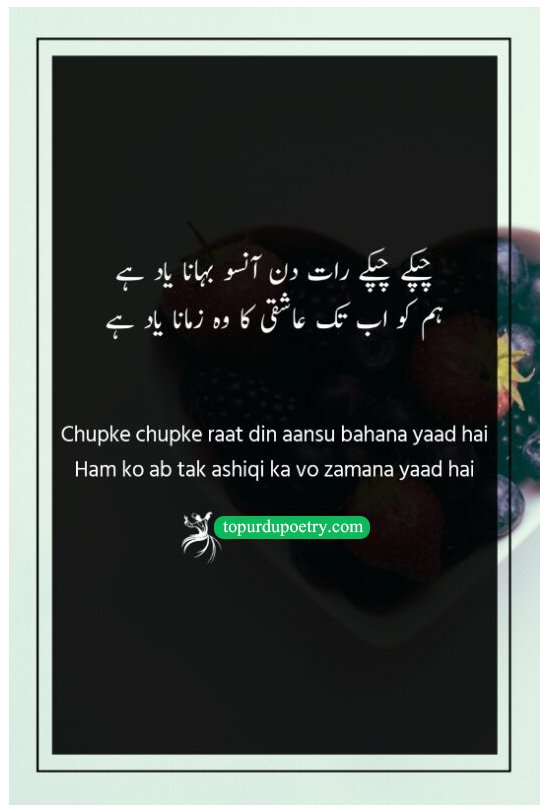
چپکے چپکے رات دن آنسو بہانا یاد ہے ہم کو اب تک عاشقی کا وہ زمانا یاد ہے
Chupke chupke raat din aansu bahana yaad hai Ham ko ab tak ashiqi ka vo zamana yaad hai
This best poetry in Urdu for love by Hasrat Mohani is a timeless expression of nostalgia and secret love. The poet recalls a period in his life when he was so deeply in love that he would weep silently and continuously, hidden from the eyes of the world. By stating that he still remembers that 'zamana' (era) of 'ashiqi' (romance), he highlights how certain emotional memories remain etched in the soul forever, even when the relationship itself has passed. It captures the bittersweet beauty of remembering the intensity of one's first true passion.
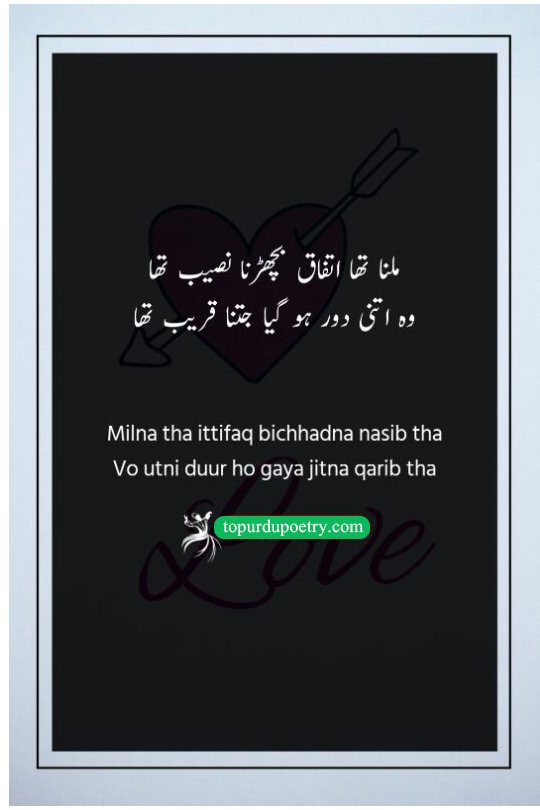
ملنا تھا اتفاق بچھڑنا نصیب تھا وہ اتنی دور ہو گیا جتنا قریب تھا
Milna tha ittifaq bichhadna nasib tha Vo utni duur ho gaya jitna qarib tha
This poignant Urdu poetry love reflects on the painful irony of fate and human relationships. The poet views the initial meeting with the beloved as a mere 'ittifaq' (coincidence or chance encounter), but describes the eventual 'bichhadna' (separation) as 'nasib' (destiny or preordained fate). The second line emphasizes the tragic shift in proximity: the person who was once incredibly close to the poet’s heart has now moved to an equally extreme distance. It highlights the void left behind when an intimate bond is broken, suggesting that the more central someone is to your life, the further they seem to drift once they are gone.
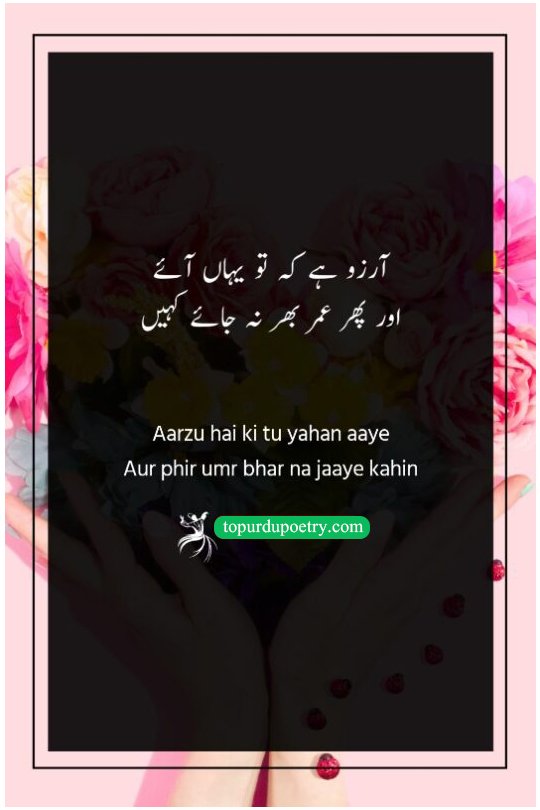
آرزو ہے کہ تو یہاں آئے اور پھر عمر بھر نہ جائے کہیں
Aarzu hai ki tu yahan aaye Aur phir umr bhar na jaaye kahin
This soulful 2 line love poetry about eyes expresses the ultimate desire of a heart in love. The poet wishes for the beloved's presence to not be a fleeting moment but a permanent stay. It captures the essence of deep attachment and the longing for stability in a relationship, where the only thing that matters is the eternal company of the one they adore. It reflects a state of complete emotional surrender, where the presence of the beloved is the only 'aarzu' (wish) left.
Dedicate Your Feelings: Poetry for Love in Urdu (محبت پوئِٹْری)
When ordinary conversations simply aren’t enough to show the depth of your care, dedicating poetry for love in Urdu elevates your expression to a true art form. These verses celebrate loyalty, admiration, and the sheer, undeniable joy of having someone incredibly special in your life. Use these romantic love poetry in Urdu to remind your partner that they are the center of your universe and the answer to your prayers.
یہ عشق نہیں آساں اتنا ہی سمجھ لیجے اک آگ کا دریا ہے اور ڈوب کے جانا ہے
Ye ishq nahin asan itna hi samajh liije Ik aag ka dariya hai aur duub ke jaana hai
This iconic poetry for love in Urdu by Jigar Moradabadi defines the true, demanding nature of love. The poet warns that 'ishq' (love) is far from a simple or easy path. He uses the vivid and terrifying metaphor of a 'river of fire' to represent the trials, passion, and inevitable suffering one must face. Crucially, the only way to navigate this river is by 'diving' into it—signifying that love requires total immersion, sacrifice, and the courage to face destruction in order to reach the other side. It is a profound statement on the transformative and taxing power of deep devotion.
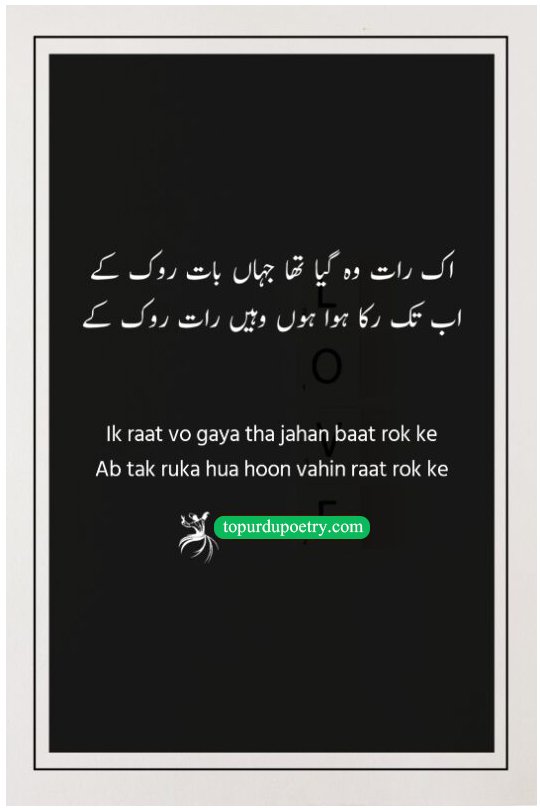
اک رات وہ گیا تھا جہاں بات روک کے اب تک رکا ہوا ہوں وہیں رات روک کے
Ik raat vo gaya tha jahan baat rok ke Ab tak ruka hua hoon vahin raat rok ke
This hauntingly beautiful Urdu poetry love captures the essence of emotional stagnation and the pain of an unresolved ending. The poet describes a specific night where the beloved left, cutting off a conversation mid-sentence. Instead of moving forward with life, the poet remains 'ruka hua' (stuck) at that very point in time, as if the night itself has been halted. It depicts the profound struggle of moving on when there is no closure, showing how a single moment of abandonment can freeze a person's entire existence in the past.
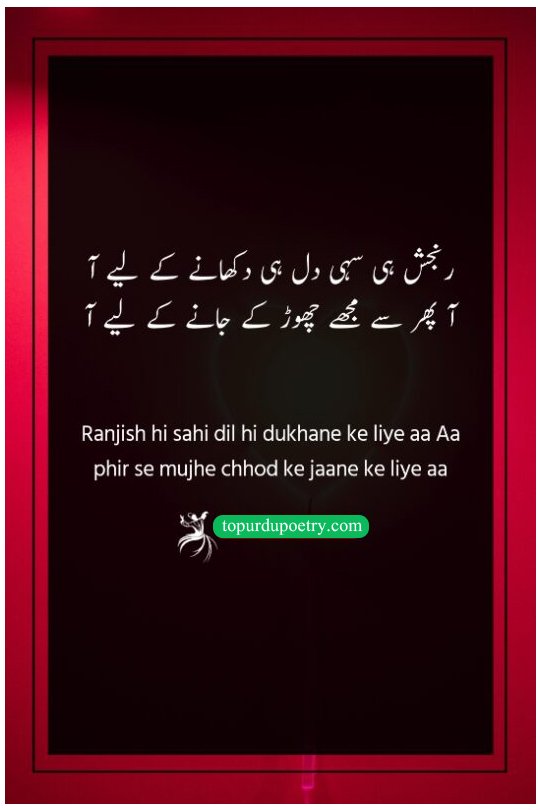
رنجش ہی سہی دل ہی دکھانے کے لیے آ آ پھر سے مجھے چھوڑ کے جانے کے لیے آ
Ranjish hi sahi dil hi dukhane ke liye aa Aa phir se mujhe chhod ke jaane ke liye aa
This legendary poetry for love in Urdu by Ahmed Faraz expresses a desperate level of longing where even pain is preferred over indifference. The poet asks the beloved to return, even if it is out of 'ranjish' (resentment) or just to break his heart again. He is so starved for their presence that he is willing to endure the agony of being abandoned all over again just to see them one more time. It captures the extreme vulnerability of a lover who values a painful connection more than a lonely peace.
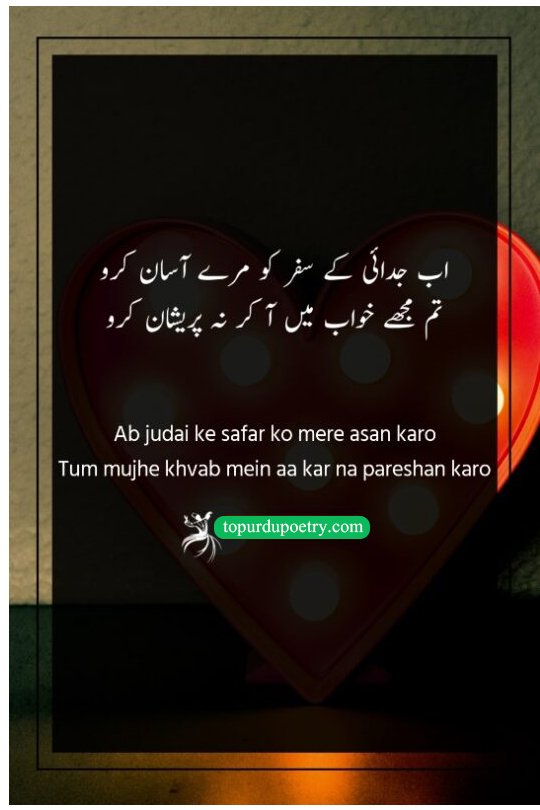
اب جدائی کے سفر کو مرے آسان کرو تم مجھے خواب میں آ کر نہ پریشان کرو
Ab judai ke safar ko mere asan karo Tum mujhe khvab mein aa kar na pareshan karo
This poignant love poetry in Urdu text expresses the exhausting struggle of moving on after a breakup. The poet describes the period following a separation as a 'journey' that is already difficult enough to navigate. By asking the beloved to stop appearing in their dreams, the poet highlights how these subconscious visits cause 'pareshani' (distress) and prevent emotional healing. It is a plea for true distance and closure, suggesting that the memory of a loved one can often be more painful than their physical absence.
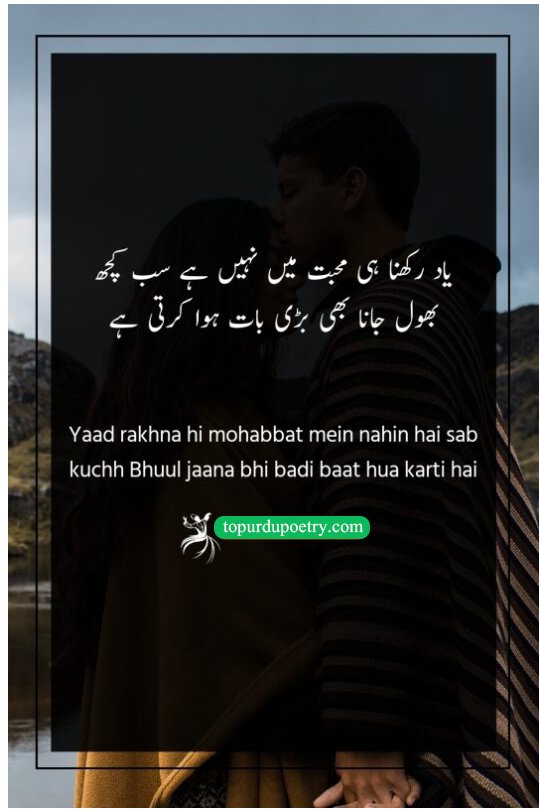
یاد رکھنا ہی محبت میں نہیں ہے سب کچھ بھول جانا بھی بڑی بات ہوا کرتی ہے
Yaad rakhna hi mohabbat mein nahin hai sab kuchh Bhuul jaana bhi badi baat hua karti hai
This best poetry in Urdu for love offers a mature perspective on the aftermath of love. While society often glorifies the act of remembering and longing, the poet suggests that 'yaad rakhna' (remembering) isn't the only measure of emotional depth. He argues that 'bhool jaana' (forgetting) is also a 'badi baat' (a great feat)—implying that the strength to let go, heal, and move forward requires immense courage. It challenges the romantic notion of eternal sorrow, emphasizing that finding peace is as significant as the love itself.
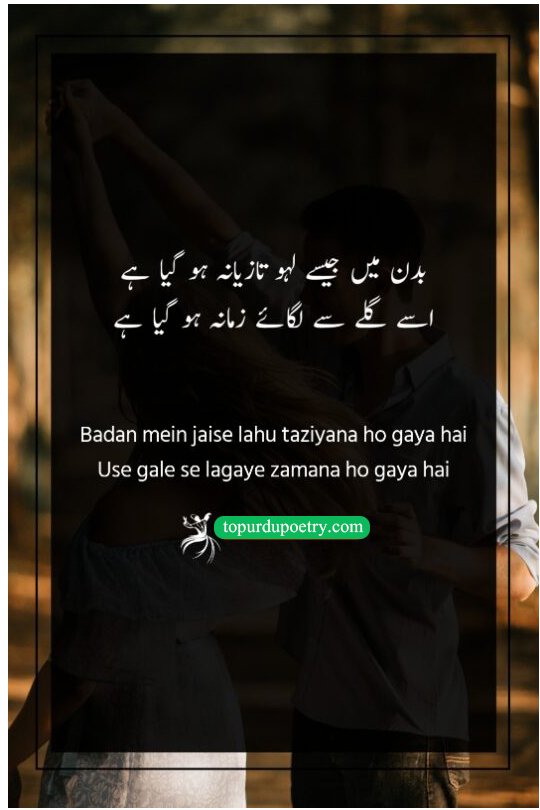
بدن میں جیسے لہو تازیانہ ہو گیا ہے اسے گلے سے لگائے زمانہ ہو گیا ہے
Badan mein jaise lahu taziyana ho gaya hai Use gale se lagaye zamana ho gaya hai
This intense poetry for love in Urdu describes the physical and emotional toll of prolonged separation. The poet uses the powerful metaphor of 'taziyana' (a whip) to describe his own blood, suggesting that the longing for the beloved has turned his very life force into a source of stinging pain. The second line emphasizes that it has been an 'era'—an incredibly long time—since he last embraced his beloved, highlighting a deep, aching void that time has failed to heal.
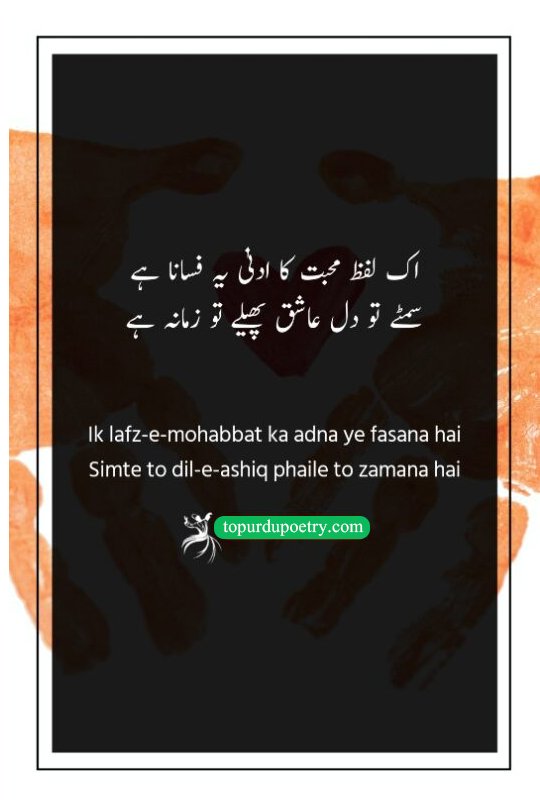
اک لفظ محبت کا ادنیٰ یہ فسانا ہے سمٹے تو دل عاشق پھیلے تو زمانہ ہے
Ik lafz-e-mohabbat ka adna ye fasana hai Simte to dil-e-ashiq phaile to zamana hai
This philosophical Urdu poetry love by Jigar Moradabadi explores the paradoxical nature of love’s scale. The poet suggests that the 'fasana' (story) of love is both incredibly small and infinitely vast. When condensed or 'simte,' it resides entirely within the private, singular heart of a lover. Yet, when it expands or 'phaile,' it becomes the narrative of the entire 'zamana' (world/universe). It beautifully illustrates that while love is a deeply personal emotion, it is also the fundamental force that encompasses all of human existence.
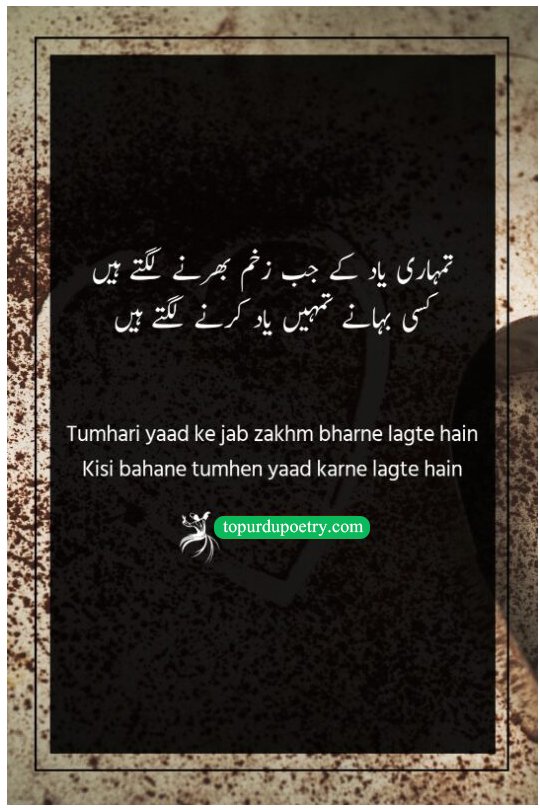
تمہاری یاد کے جب زخم بھرنے لگتے ہیں کسی بہانے تمہیں یاد کرنے لگتے ہیں
Tumhari yaad ke jab zakhm bharne lagte hain Kisi bahane tumhen yaad karne lagte hain
This touching poetry for love in Urdu highlights the subconscious resistance to healing after a heartbreak. The poet observes that just as time begins to mend the 'zakhm' (wounds) of a past memory, the heart finds a clever 'bahana' (excuse) to dwell on the beloved once more. It captures the bittersweet cycle of moving on, suggesting that the mind often sabotages its own recovery because it isn't quite ready to let go of the connection, even if that connection only exists as pain.
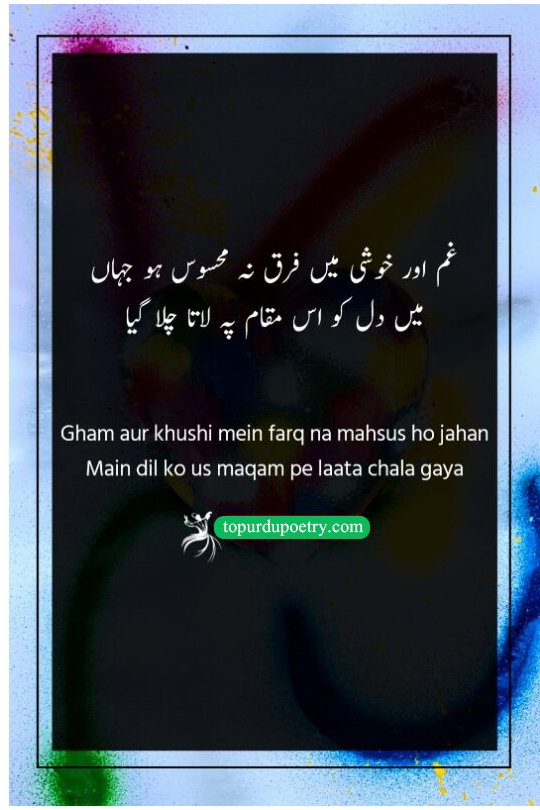
غم اور خوشی میں فرق نہ محسوس ہو جہاں میں دل کو اس مقام پہ لاتا چلا گیا
Gham aur khushi mein farq na mahsus ho jahan Main dil ko us maqam pe laata चला gaya
This profound sad poetry for husband by Sahir Ludhianvi reflects a journey toward emotional transcendence and stoicism. The poet describes how he has consciously trained his heart to reach a state of 'maqam' (station) where the distinction between 'gham' (sorrow) and 'khushi' (joy) ceases to exist. It suggests a high level of detachment where the heart is no longer swayed by the fluctuating circumstances of life, finding a deep, steady equilibrium regardless of whether the situation is happy or sad.
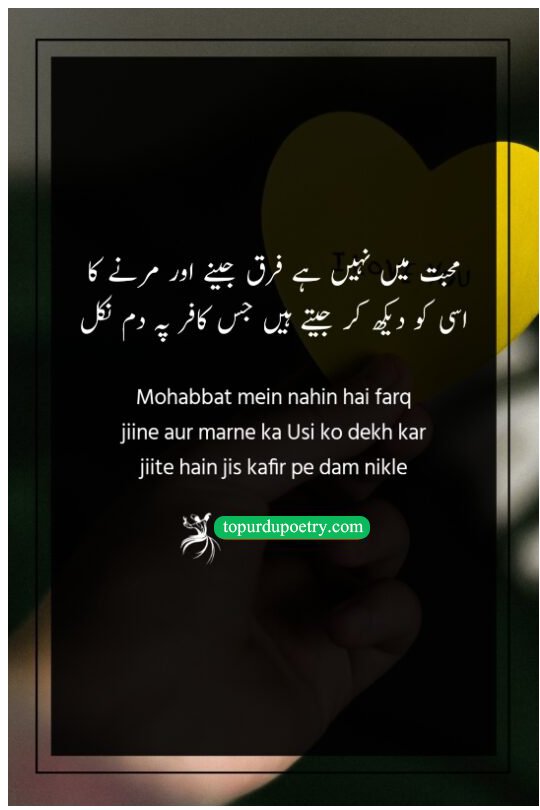
محبت میں نہیں ہے فرق جینے اور مرنے کا اسی کو دیکھ کر جیتے ہیں جس کافر پہ دم نکلے
Mohabbat mein nahin hai farq jiine aur marne ka Usi ko dekh kar jiite hain jis kafir pe dam nikle
This legendary love poetry in Urdu text by Mirza Ghalib captures the paradoxical nature of intense love. The poet claims that in the state of true devotion, the boundary between living and dying disappears. He explains that he draws his very life and breath from looking at the beloved—the same 'kafir' (enchantress/infidel) whose beauty and indifference are the cause of his metaphorical death. It perfectly illustrates a soul so consumed by passion that the source of its destruction is also its only source of survival.
Timeless Romance: Urdu Poetry Love (محبت پوئِٹْری)
The tradition of Urdu poetry love carries centuries of literary brilliance. From the delicate praises of a beloved’s beauty (Husn) to the passionate declarations of eternal companionship, this classic style of love shayari resonates across generations. If you appreciate the deep, traditional elegance of Urdu literature, these deep love poetry in Urdu will wrap your modern romance in a timeless, vintage charm.
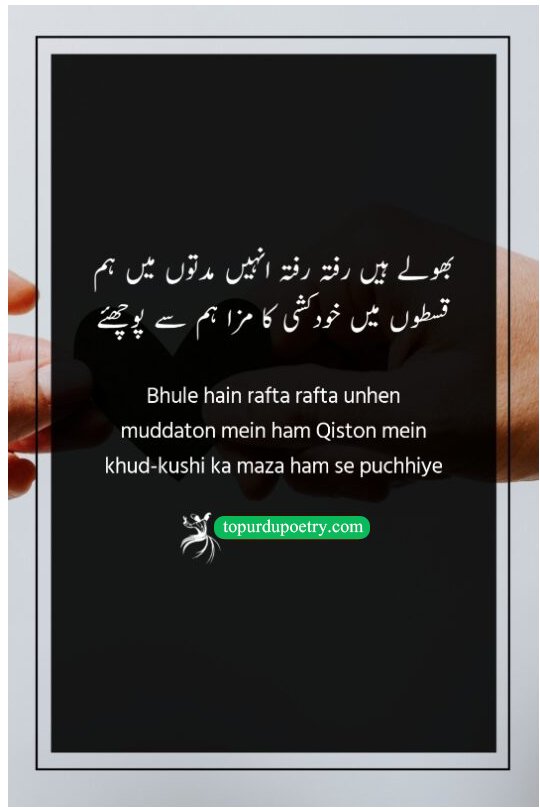
بھولے ہیں رفتہ رفتہ انہیں مدتوں میں ہم قسطوں میں خودکشی کا مزا ہم سے پوچھئے
Bhule hain rafta rafta unhen muddaton mein ham Qiston mein khud-kushi ka maza ham se puchhiye
This powerful Urdu poetry love by Fani Badayuni is a definitive expression of the slow agony involved in moving on from a deep love. The poet describes the act of forgetting a beloved 'rafta rafta' (gradually) over 'muddaton' (ages) as a form of 'khud-kushi' (suicide) performed in 'qiston' (installments). It suggests that erasing someone from your heart is not a quick relief, but a long, drawn-out process where every faded memory feels like a small, painful death. It captures the dark, ironic 'pleasure' of enduring a grief that refuses to end quickly.
تمہارے شہر کا موسم بڑا سہانا لگے میں ایک شام چرا لوں اگر برا نہ لگے
Tumhare shahr ka mausam bada suhana lage Main ek shaam chura luun agar bura na lage
This delicate and romantic heart touching love poetry in urdu by Qaisarul Jafri uses the 'weather' as a beautiful metaphor for the atmosphere created by a beloved's presence. The poet expresses a gentle, almost shy desire to 'steal' a single evening from the flow of time just to be near the person they admire. It highlights the sweetness of shared moments and the way a person’s surroundings become enchanting simply because of the company they keep. It is a classic expression of romantic yearning and the immense value placed on quality time spent together.
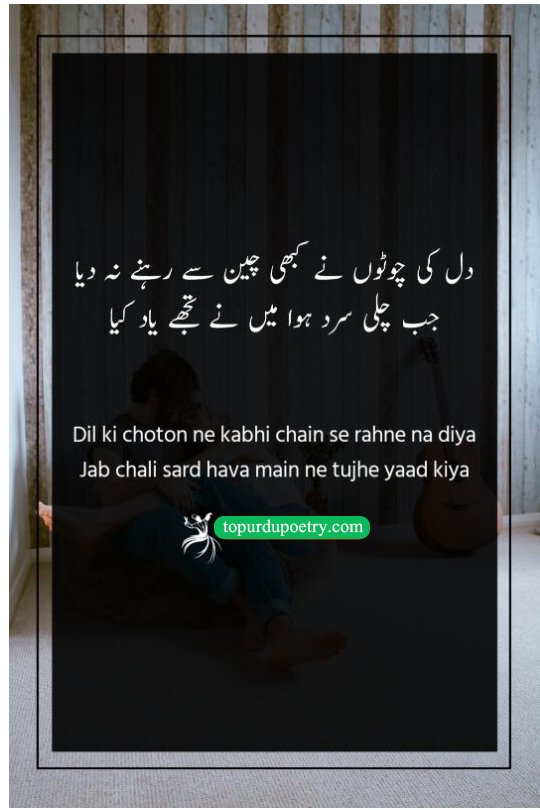
دل کی چوٹوں نے کبھی چین سے رہنے نہ دیا جب چلی سرد ہوا میں نے تجھے یاد کیا
Dil ki choton ne kabhi chain se rahne na diya Jab chali sard hava main ne tujhe yaad kiya
This melancholic 2 line love poetry by Nasir Kazmi illustrates the persistent nature of emotional pain and the triggers of memory. The poet admits that the 'choton' (wounds) of his heart have never truly allowed him to find peace. He identifies a specific catalyst—the 'sard hava' (cold wind)—which serves as a metaphor for solitude or a change in atmosphere that inevitably brings back the memory of a beloved. It beautifully captures how external environments can suddenly awaken dormant grief, turning a quiet moment into a deeply nostalgic and painful reminder of the past.
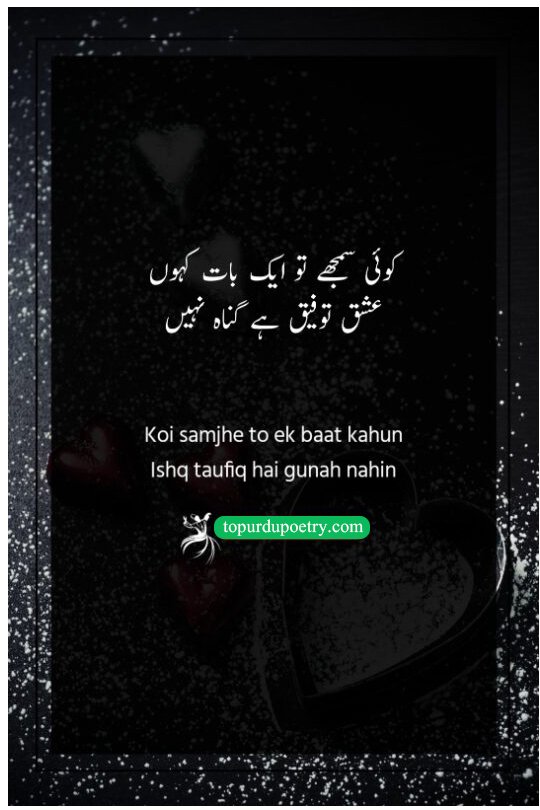
Koi samjhe to ek baat kahun Ishq taufiq hai gunah nahin
This profound true love poetry in Urdu challenges the traditional or judgmental view of romance. The poet suggests that love is not a 'gunah' (sin) but rather 'taufiq' (a divine blessing or a grace granted by God). It frames the ability to feel deep love as a spiritual gift rather than a moral failing, urging the listener to understand its sacred nature. It is a powerful defense of the purity of the heart's emotions against societal labels.
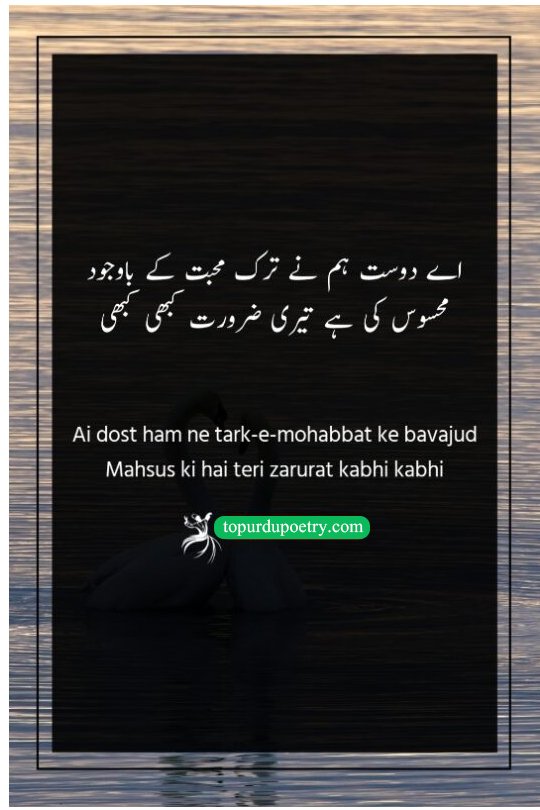
اے دوست ہم نے ترک محبت کے باوجود محسوس کی ہے تیری ضرورت کبھی کبھی
Ai dost ham ne tark-e-mohabbat ke bavajud Mahsus ki hai teri zarurat kabhi kabhi
This poignant friends love poetry in urdu explores the reality of a human heart that cannot simply flip a switch to stop caring. Even after 'tark-e-mohabbat' (the renunciation of love), the poet admits that there are moments when the presence or support of that former partner is still deeply needed. By using the word 'dost' (friend), the poet acknowledges a bond that transcends romantic labels, admitting that some people remain essential to our emotional well-being long after the relationship has officially ended.
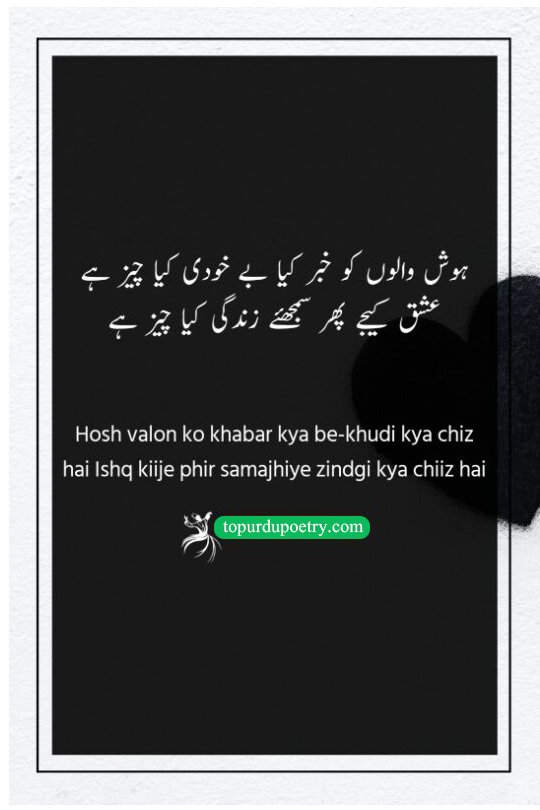
ہوش والوں کو خبر کیا بے خودی کیا چیز ہے عشق کیجے پھر سمجھئے زندگی کیا چیز ہے
Hosh valon ko khabar kya be-khudi kya chiiz hai Ishq kiije phir samajhiye zindagi kya chiiz hai
This famous and most romantic love poetry in Urdu by Nida Fazli highlights the gap between cold logic and the ecstatic state of passion. The poet suggests that those who live purely by their senses and reason ('hosh valon') have no real understanding of 'be-khudi'—the profound state of self-forgetfulness and spiritual intoxication that love brings. He argues that 'zindagi' (life) remains a mystery until one experiences the intensity of love, which transforms a person's entire perception of existence. It is a celebration of feeling over thinking.
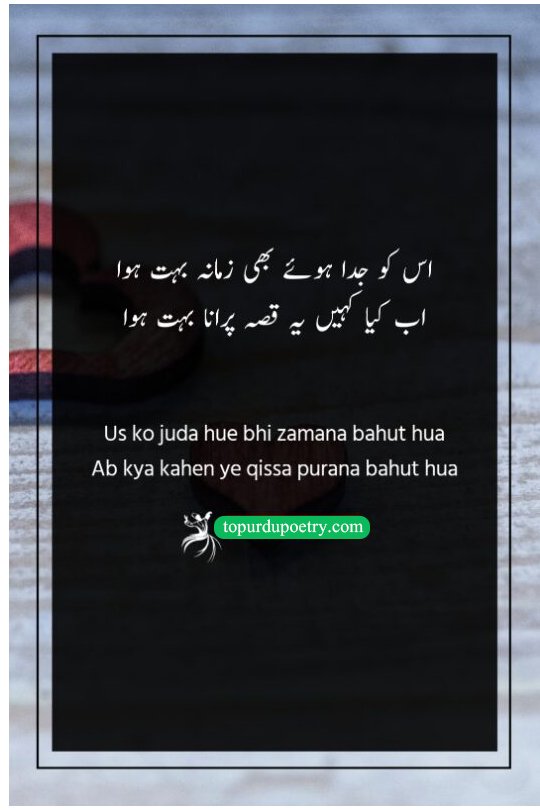
اس کو جدا ہوئے بھی زمانہ بہت ہوا اب کیا کہیں یہ قصہ پرانا بہت ہوا
Us ko juda hue bhi zamana bahut hua Ab kya kahen ye qissa purana bahut hua
This Urdu poetry love reflects a weary sense of resignation and the eventual fading of drama after a long separation. The poet notes that it has been an 'era' (zamana) since the parting, suggesting that the initial shock and sharp pain have settled into a dull, distant memory. By calling it an 'old story' (qissa purana), the verse suggests that there is nothing left to say or explain; the time for mourning has passed, even if the history remains. it beautifully captures the stage of moving on where one simply stops talking about the past because it has lost its relevance to the present.
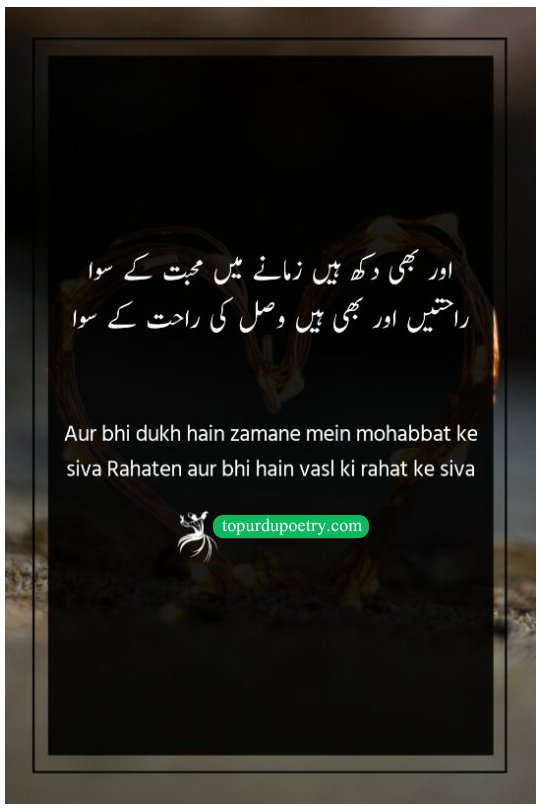
اور بھی دکھ ہیں زمانے میں محبت کے سوا راحتیں اور بھی ہیں وصل کی راحت کے سوا
Aur bhi dukh hain zamane mein mohabbat ke siva Rahaten aur bhi hain vasl ki rahat ke siva
This iconic 2 line love poetry by Faiz Ahmed Faiz signifies a major shift from romantic isolation to social awareness. The poet acknowledges that while the pain of love is immense, the world is burdened with other 'dukh' (sorrows)—such as poverty, injustice, and the struggle for survival—that are equally significant. Similarly, he suggests that 'rahat' (comfort) is not exclusive to 'vasl' (union with a beloved) but can be found in the service of humanity and the pursuit of a larger purpose. It is a reminder that life is vast and demands our attention beyond personal emotions.
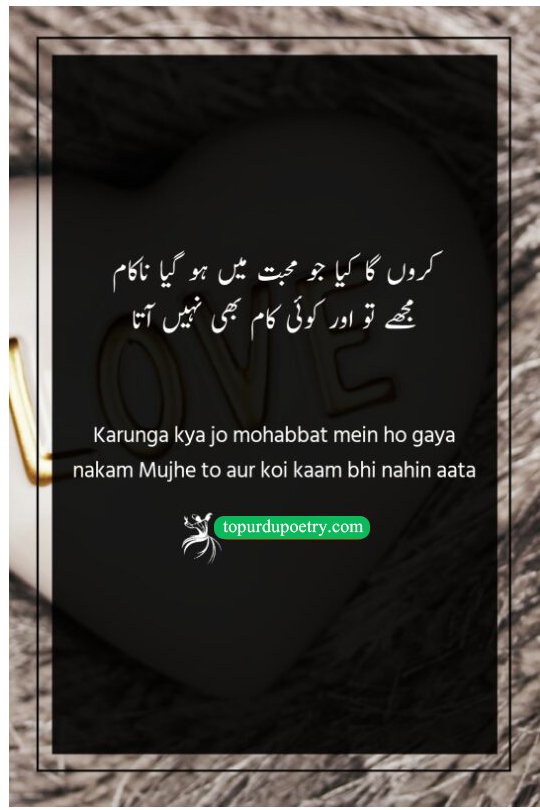
کروں گا کیا جو محبت میں ہو گیا ناکام مجھے تو اور کوئی کام بھی نہیں آتا
Karunga kya jo mohabbat mein ho gaya nakam Mujhe to aur koi kaam bhi nahin aata
This poetry for love in Urdu by Iqbal Ashar reflects a state of total emotional immersion. The poet presents love not merely as a feeling, but as his sole vocation or 'job' in life. He poignantly wonders what his fate would be if he failed in love, admitting that he has neglected to learn any other skill or worldly trade. It captures the vulnerability of someone who has placed all their 'eggs in one basket,' making love the singular purpose of their existence.
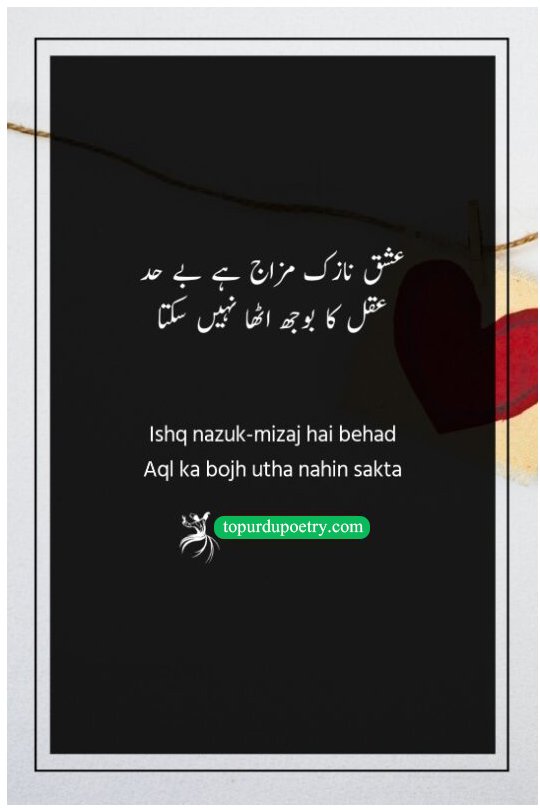
Ishq nazuk-mizaj hai behad Aql ka bojh utha nahin sakta
This love poetry in Urdu text highlights the inherent conflict between the heart and the mind. The poet describes 'Ishq' (love) as having an extremely delicate and sensitive temperament—it is a force of pure emotion and instinct. Because of this fragility, love is incapable of carrying the 'bojh' (burden) of 'aql' (logic or reason). It suggests that when one is in love, rational thinking becomes a heavy, incompatible weight that can stifle the purity and spontaneity of passion.
Short & Sweet: 2 Line Love Poetry (محبت پوئِٹْری)
In today’s fast-paced digital world, sometimes less is absolutely more. Our handpicked 2 line love poetry is crafted specifically for modern romance. These short, impactful couplets pack a massive emotional punch in just a few words, making them absolutely perfect for WhatsApp statuses, Instagram captions, or a quick text to make your partner smile. These Urdu love poetry in 2 lines prove that you don’t need a long paragraph to make a profound impact.
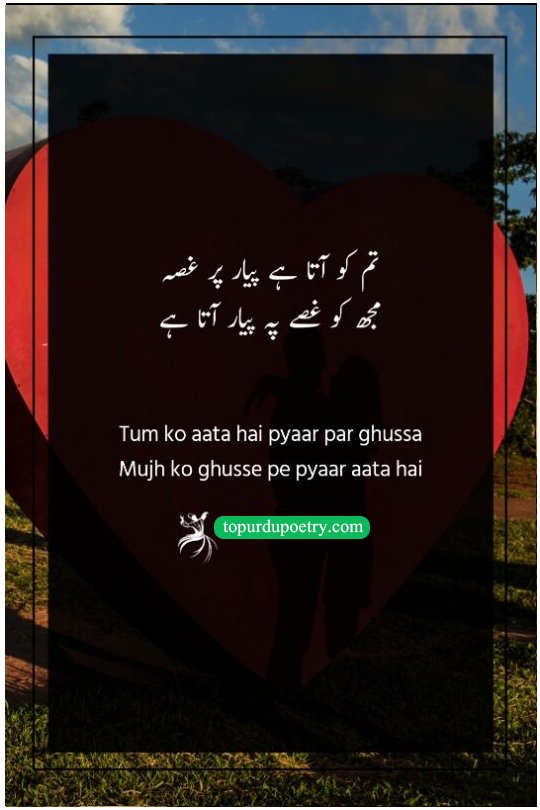
تم کو آتا ہے پیار پر غصہ مجھ کو غصے پہ پیار آتا ہے
Tum ko aata hai pyaar par ghussa Mujh ko ghusse pe pyaar aata hai
This charming and playful love poetry in Urdu captures the delightful friction in a romantic relationship. The poet observes a beautiful irony: while the beloved gets annoyed or angry at the poet's constant expressions of 'pyaar' (love), the poet finds that very 'ghussa' (anger) to be incredibly endearing. It suggests a deep level of affection where even the beloved's temperament is seen through a lens of adoration, turning a moment of conflict into a reason for further infatuation. It is a classic representation of the 'bittersweet' dynamics that make romance so captivating.
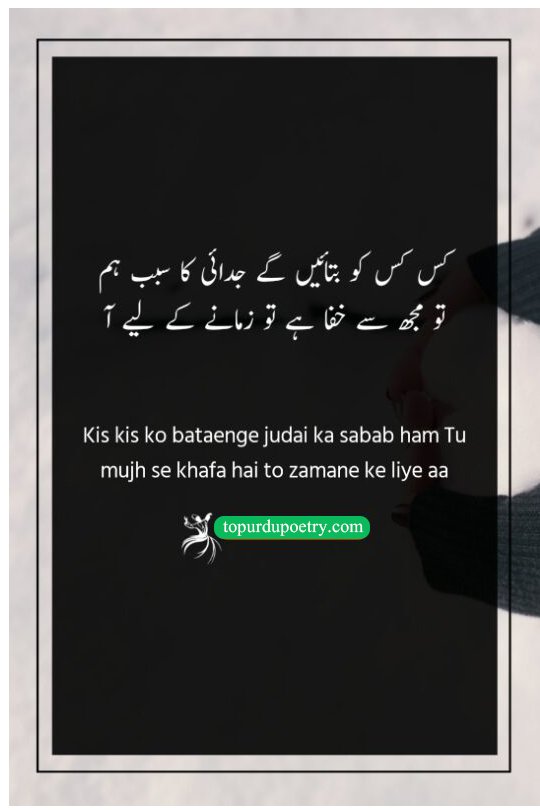
کس کس کو بتائیں گے جدائی کا سبب ہم تو مجھ سے خفا ہے تو زمانے کے لیے آ
Kis kis ko bataenge judai ka sabab ham Tu mujh se khafa hai to zamane ke liye aa
This 2 line love poetry , another gem from Ahmed Faraz’s 'Ranjish Hi Sahi,' speaks to the social burden of a breakup. The poet laments that it is impossible to explain the complex reasons for their separation to every curious person in society. He asks the beloved to return—not necessarily out of love, but simply for the sake of appearances ('zamane ke liye'). It captures the fear of public judgment and the desire to protect the dignity of a past relationship from the prying eyes of the world.
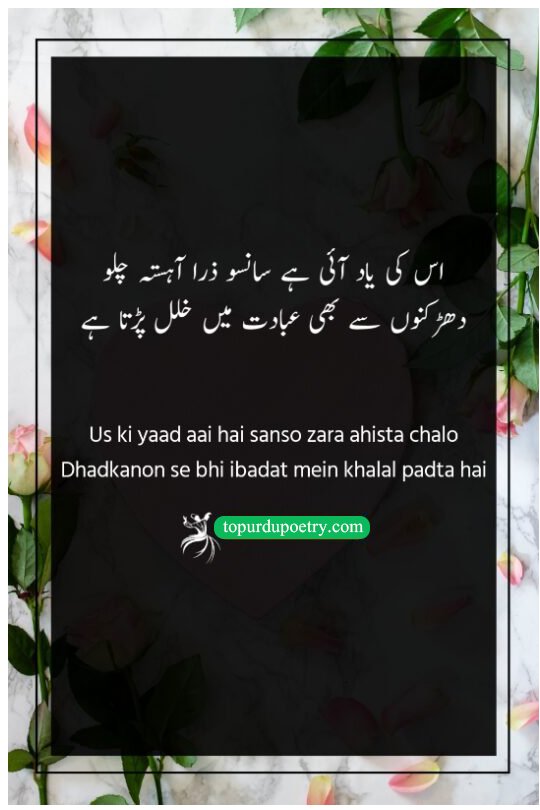
اس کی یاد آئی ہے سانسو ذرا آہستہ چلو دھڑکنوں سے بھی عبادت میں خلل پڑتا ہے
Us ki yaad aai hai sanso zara ahista chalo Dhadkanon se bhi ibadat mein khalal padta hai
This deeply spiritual and romantic poetry for love in Urdu elevates the memory of a beloved to the status of 'ibadat' (worship). The poet feels that the presence of these memories is so sacred and delicate that even the natural act of breathing or the rhythmic beating of the heart feels like a noisy disruption. It portrays a state of total immersion where the lover seeks absolute stillness to honor the quiet sanctity of their thoughts. It is a beautiful expression of how love can become a meditative and divine experience.
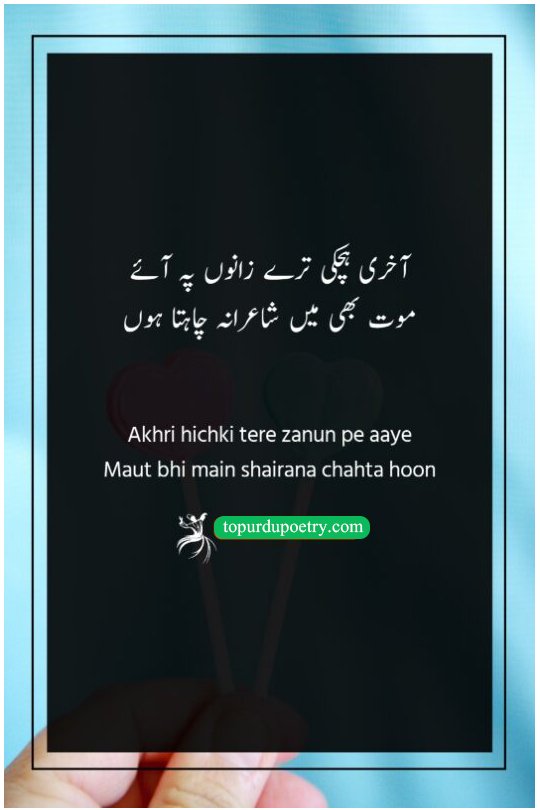
آخری ہچکی ترے زانو پہ آئے موت بھی میں شاعرانہ چاہتا ہوں
Akhri hichki tere zanu pe aaye Maut bhi main shairana chahta hoon
This deeply romantic sad love poetry in urdu expresses a lover's ultimate wish for their final moments. The poet desires that his 'akhri hichki' (final breath) should occur while his head rests on the beloved's 'zano' (lap). By describing this as a 'shairana' (poetic) death, he suggests that even the end of life can be transformed into a beautiful, artistic masterpiece if it happens in the presence of love. It portrays a devotion so absolute that the poet seeks beauty and connection even in mortality.
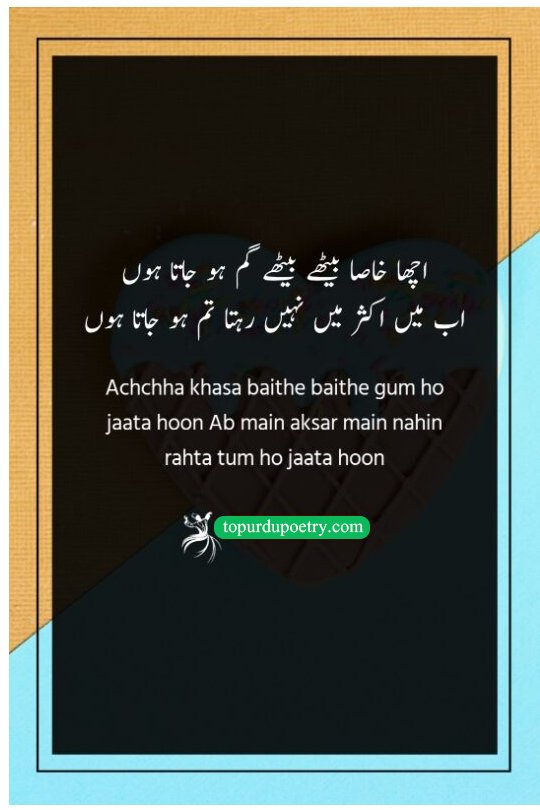
اچھا خاصا بیٹھے بیٹھے گم ہو جاتا ہوں اب میں اکثر میں نہیں رہتا تم ہو جاتا ہوں
Achchha khasa baithe baithe gum ho jaata hoon Ab main aksar main nahin rahta tum ho jaata hoon
This beautiful love poetry in 2 lines captures the state of 'fana' or self-annihilation in love. The poet describes how, even in moments of apparent normalcy, he suddenly loses himself in the thought of the beloved. The line 'main nahin rahta tum ho jaata hoon' suggests that his own identity has become so secondary to the presence of the beloved that he feels as though he has merged into them. It reflects an obsession so deep that the boundary between the 'self' and the 'other' completely disappears.
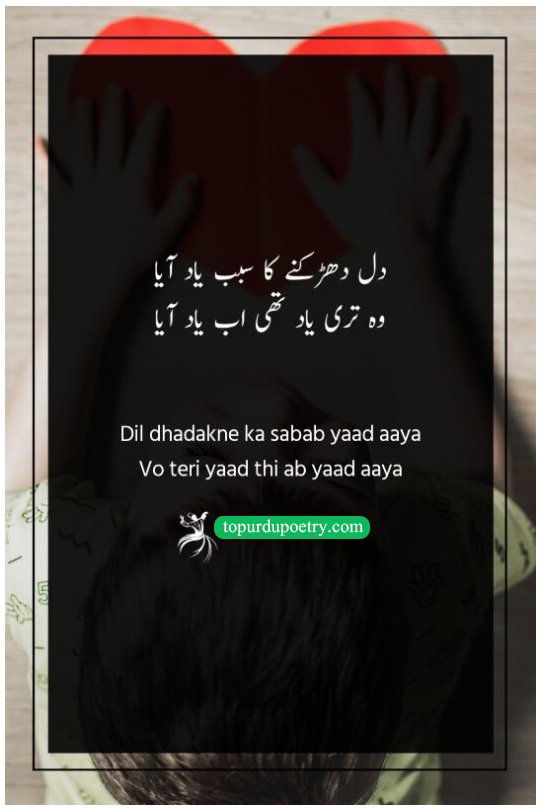
دل دھڑکنے کا سبب یاد آیا وہ تری یاد تھی اب یاد آیا
Dil dhadakne ka sabab yaad aaya Vo teri yaad thi ab yaad aaya
This iconic heart touching love poetry in Urdu by Nasir Kazmi captures the profound connection between the physical heart and emotional memory. The poet describes a sudden awareness of his own heartbeat, only to realize that the 'sabab' (reason) for its rhythm is the memory of his beloved. It suggests that the beloved’s presence in his thoughts is so powerful that it dictates his very life force, turning a simple biological function into a romantic revelation. It is a masterpiece of simplicity and deep emotion.
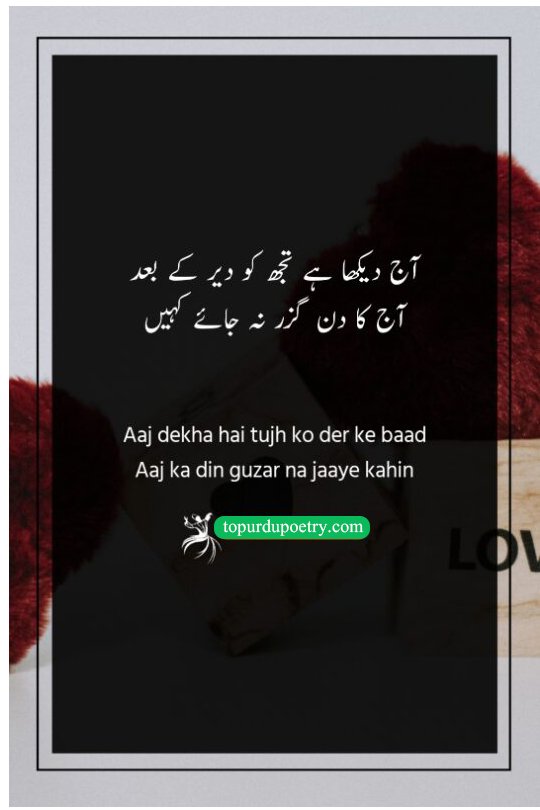
آج دیکھا ہے تجھ کو دیر کے بعد آج کا دن گزر نہ جائے کہیں
Aaj dekha hai tujh ko der ke baad Aaj ka din guzar na jaaye kahin
This Urdu poetry love captures the fragile beauty of a long-awaited reunion. The poet has finally seen the beloved after 'der ke baad' (a long time), and the experience is so overwhelming that it brings a sense of anxiety. He fears the passage of time, wishing that the day would never end so he can savor the presence of his loved one. It beautifully illustrates how, in moments of extreme happiness, the fear of losing that moment becomes just as intense as the joy itself.
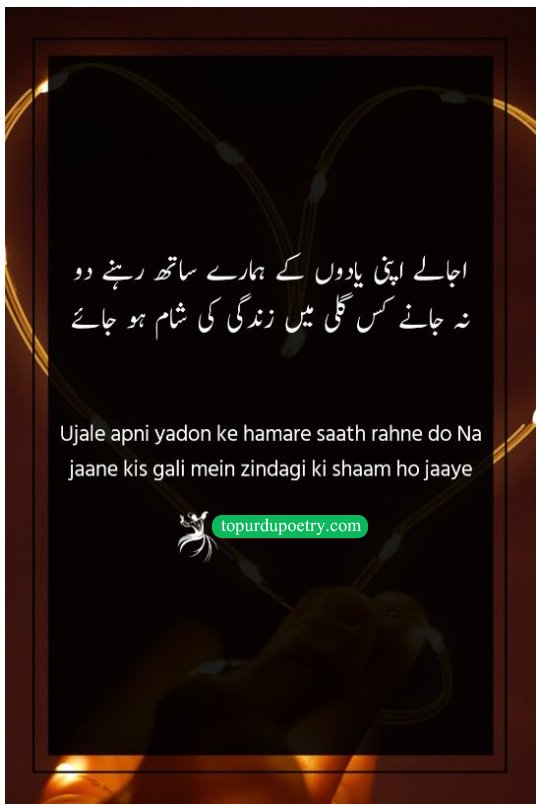
اجالے اپنی یادوں کے ہمارے ساتھ رہنے دو نہ جانے کس گلی میں زندگی کی شام ہو جائے
Ujale apni yadon ke hamare saath rahne do Na jaane kis gali mein zindagi ki shaam ho jaaye
This famous poetry for love in Urdu by Bashir Badr uses the beautiful metaphor of 'ujale' (light/brightness) to describe the memories of a loved one. The poet asks to keep these memories close, viewing them as a source of warmth and guidance. The second line, 'zindagi ki shaam' (the evening of life), is a poignant reference to mortality and the unpredictability of death. It suggests that since we never know when or where our journey will end, we should at least carry the comforting light of shared memories to brighten our final path. It is a verse of deep nostalgia and acceptance.
تیرا ملنا خوشی کی بات سہی تجھ سے مل کر اداس رہتا ہوں
Tera milna khushi ki baat sahi Tujh se mil kar udaas rahta hoon
This 2 line love poetry by Sahir Ludhianvi explores a complex emotional paradox. While logically, meeting the beloved should bring pure 'khushi' (happiness), the poet admits to feeling 'udaas' (sad) during or after the encounter. This sadness often stems from the haunting awareness of the coming separation, the brevity of the moment, or the realization that even a physical meeting cannot bridge the emotional distance. It beautifully captures the bittersweet reality of a love that is overshadowed by its own temporary nature.
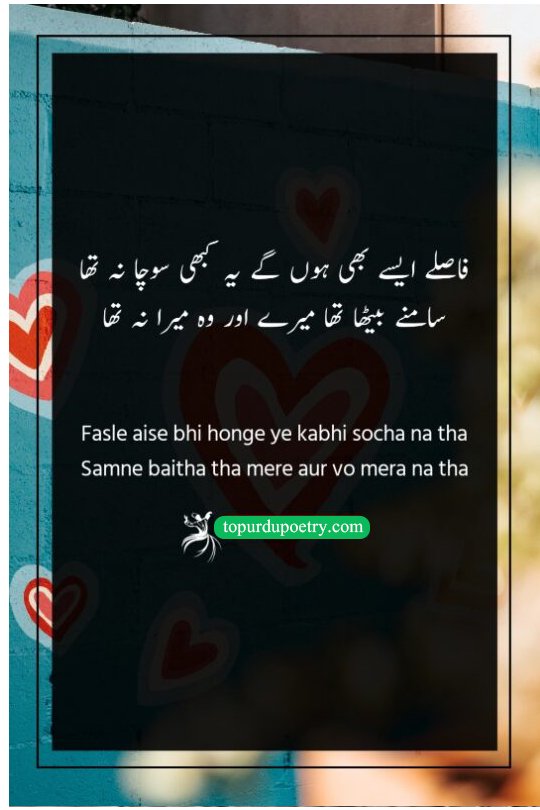
فاصلے ایسے بھی ہوں گے یہ کبھی سوچا نہ تھا سامنے بیٹھا تھا میرے اور وہ میرا نہ تھا
Fasle aise bhi honge ye kabhi socha na tha Samne baitha tha mere aur vo mera na tha
This best love poetry in Urdu text describes the most painful kind of distance—emotional estrangement. The poet laments that while the beloved was physically present ('sitting in front of me'), the emotional connection was completely severed ('he wasn't mine'). It highlights the realization that true distance isn't measured in miles, but in the lack of belonging and intimacy. It captures the hollow feeling of being a stranger to someone who is right before your eyes, making the physical proximity feel even more agonizing.
Soulful Devotion: Deep Poetry in Urdu for Love
True romance often goes far beyond mere attraction; it is a deep, soulful connection where two hearts feel completely intertwined. When you want to express a bond that feels destined and eternal, exploring deep poetry in Urdu for love (محبت پوئِٹْری) helps capture that profound intensity. These specific verses focus on Roohani Ishq (spiritual love), describing how a beloved becomes not just a partner, but the very reason for your peace and existence. If your relationship has grown into a beautiful, lifelong devotion where words often fall short, these couplets will perfectly articulate the overwhelming magnitude of your feelings.
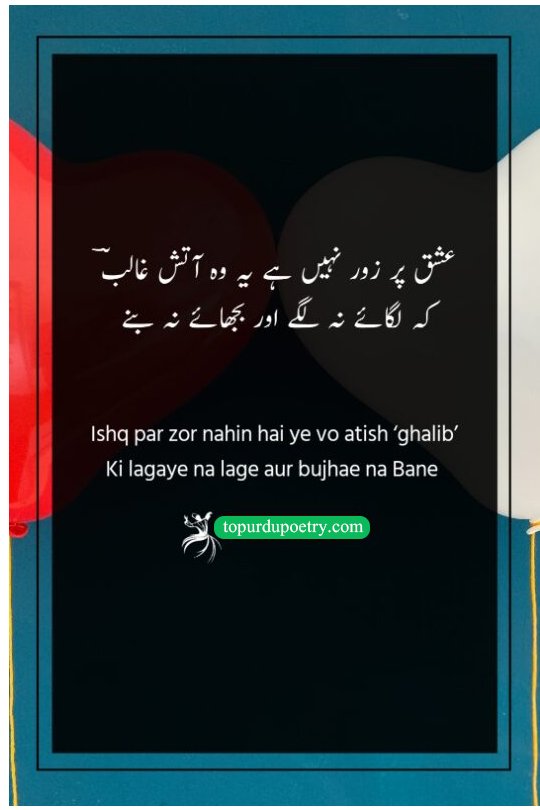
عشق پر زور نہیں ہے یہ وہ آتش غالبؔ کہ لگائے نہ لگے اور بجھائے نہ بنے
Ishq par zor nahin hai ye vo atish ‘ghalib’ Ki lagaye na lage aur bujhae na bane
This deep poetry in Urdu for love by Mirza Ghalib defines the uncontrollable nature of passion. He compares 'Ishq' (love) to an 'atish' (fire) that is entirely beyond human 'zor' (control). It is a flame that cannot be intentionally lit by will, nor can it be suppressed once it starts burning. Ghalib captures the helplessness of the lover, portraying love as a powerful, autonomous force that dictates its own beginning and end, regardless of human effort or logic.
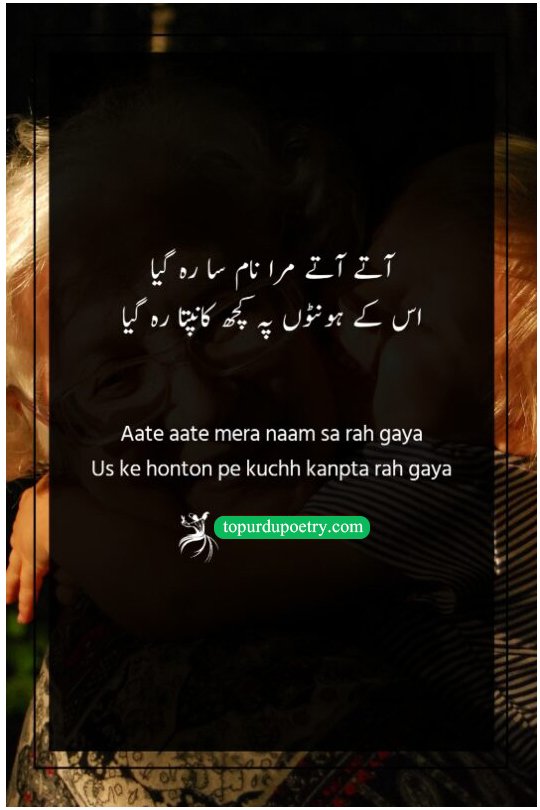
آتے آتے مرا نام سا رہ گیا اس کے ہونٹوں پہ کچھ کانپتا رہ گیا
Aate aate mera naam sa rah gaya Us ke honton pe kuchh kanpta rah gaya
This evocative true love poetry in Urdu by Waseem Barelvi captures a poignant moment of hesitation and unspoken emotion. The poet describes a scene where his name almost reached the beloved's lips but remained there, unfinished and 'trembling.' It signifies a struggle between the impulse to speak and the restraint of silence, pride, or perhaps a lingering pain. It beautifully portrays the weight of 'almost' moments in a relationship—the words that are felt deeply but never quite find their way into the air, leaving a haunting sense of what remained unsaid.
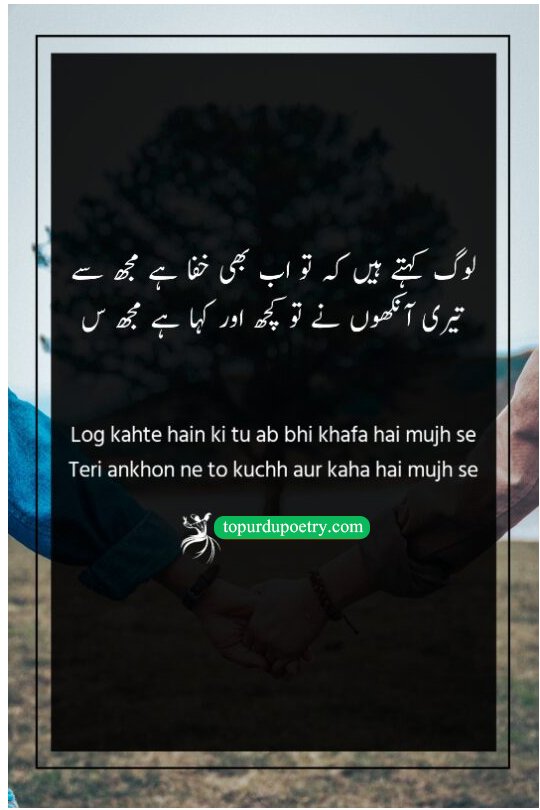
لوگ کہتے ہیں کہ تو اب بھی خفا ہے مجھ سے تیری آنکھوں نے تو کچھ اور کہا ہے مجھ سے
Log kahte hain ki tu ab bhi khafa hai mujh se Teri ankhon ne to kuchh aur kaha hai mujh se
This famous poetry in urdu sad love by Ahmed Faraz explores the discrepancy between what the world sees and the private truth shared between lovers. While people around the poet claim that the beloved is still 'khafa' (angry or upset), the poet finds a different truth in the beloved's 'ankhon' (eyes). It suggests that eyes often betray the heart's true feelings of lingering affection, even when words or social pretenses suggest a rift. It is a beautiful acknowledgment of the silent, unspoken language of love that bypasses the noise of the world.
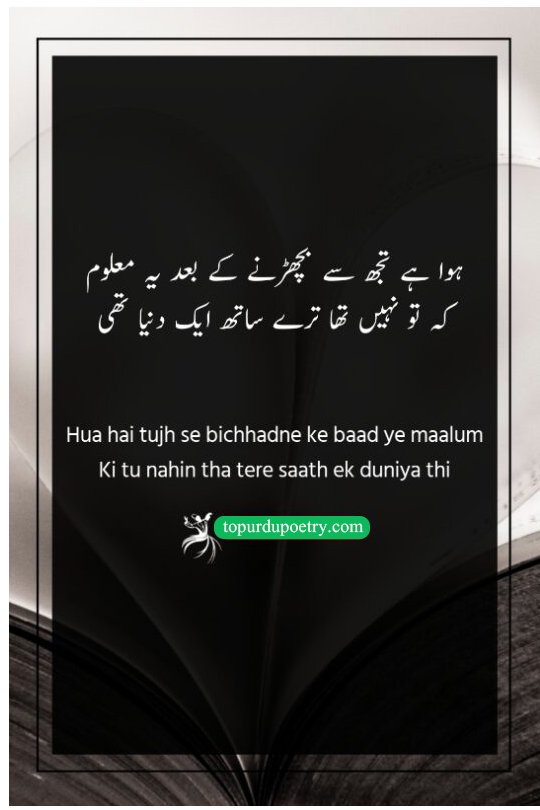
ہوا ہے تجھ سے بچھڑنے کے بعد یہ معلوم کہ تو نہیں تھا ترے ساتھ ایک دنیا تھی
Hua hai tujh se bichhadne ke baad ye maalum Ki tu nahin tha tere saath ek duniya thi
This deep and reflective couplet by Ahmed Faraz expresses the overwhelming void left by the departure of a loved one. The poet admits that he only realized the true magnitude of the person's presence after they were gone. He discovered that the beloved wasn't just an individual, but a 'duniya' (world) in themselves—a source of meaning, social connection, and emotional stability. Without them, it’s not just one person missing, but an entire universe of life and light that has vanished, leaving the world feeling empty and hollow.
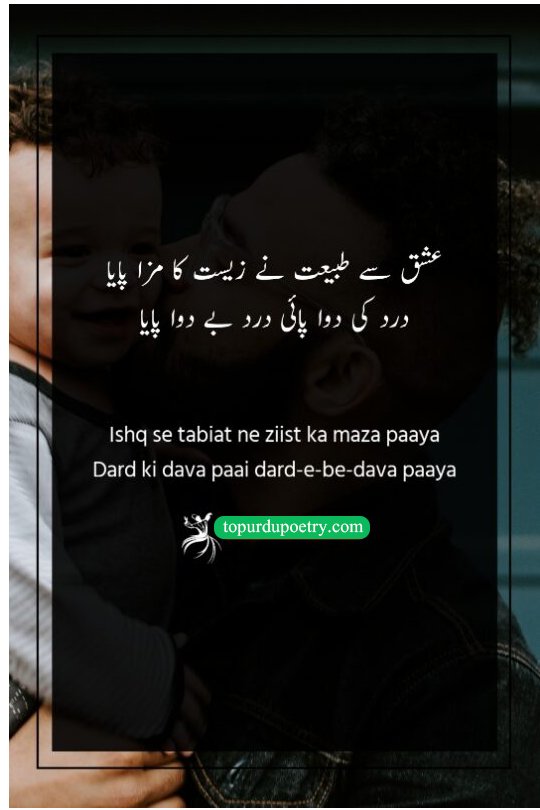
عشق سے طبیعت نے زیست کا مزا پایا درد کی دوا پائی درد بے دوا پایا
Ishq se tabiat ne ziist ka maza paaya Dard ki dava paai dard-e-be-dava paaya
This profound couplet by the legendary Mirza Ghalib captures the beautiful paradox of love. The poet admits that it was only through 'Ishq' (love) that his soul finally discovered the true 'maza' (pleasure) of 'ziist' (life). However, this joy comes with a complex twist: while love acts as a 'dava' (remedy) for the ordinary sorrows of the world, it introduces a new kind of 'dard-e-be-dava'—an incurable pain that stays with the lover forever. It suggests that the depth of life is found in this inseparable mix of ultimate healing and eternal longing.
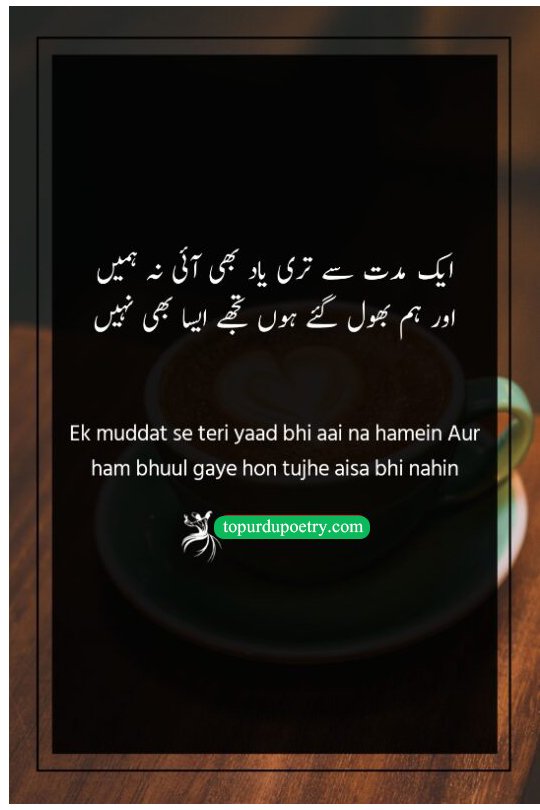
ایک مدت سے تری یاد بھی آئی نہ ہمیں اور ہم بھول گئے ہوں تجھے ایسا بھی نہیں
Ek muddat se teri yaad bhi aai na hamein Aur ham bhuul gaye hon tujhe aisa bhi nahin
This profound love poetry in 2 lines by Firaq Gorakhpuri describes a subtle and mature stage of emotional connection. The poet suggests that while a long time (muddat) has passed without him actively recalling the beloved, this should not be mistaken for forgetting. It portrays a state where the memory has moved from the conscious mind to the soul—it is no longer a sharp, daily thought, but a permanent, quiet part of his existence. It beautifully captures the idea that some people become so integrated into our being that 'remembering' them is no longer necessary because they are never truly gone.
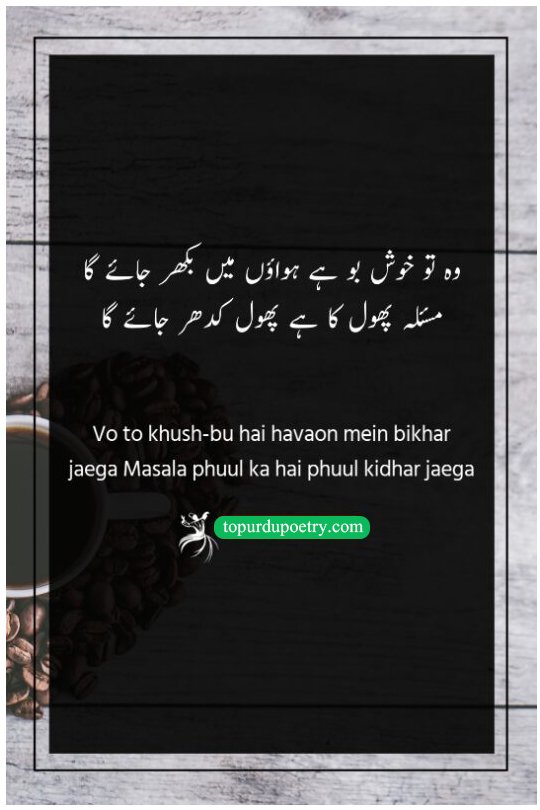
وہ تو خوش بو ہے ہواؤں میں بکھر جائے گا مسئلہ پھول کا ہے پھول کدھر جائے گا
Vo to khush-bu hai havaon mein bikhar jaega Masala phuul ka hai phuul kidhar jaega
In this heart touching love poetry in Urdu , Parveen Shakir employs a delicate and haunting metaphor of a flower and its fragrance. The 'khush-bu' (fragrance) represents the beloved, or perhaps a fleeting spirit that is free to drift away and merge with the wind. The 'phuul' (flower), however, represents the lover who is left behind—rooted, vulnerable, and destined to wither once the essence that gave it meaning has departed. It poignantly captures the imbalance of power in a relationship, where one party has the freedom to leave while the other is left to face the consequences of that absence.
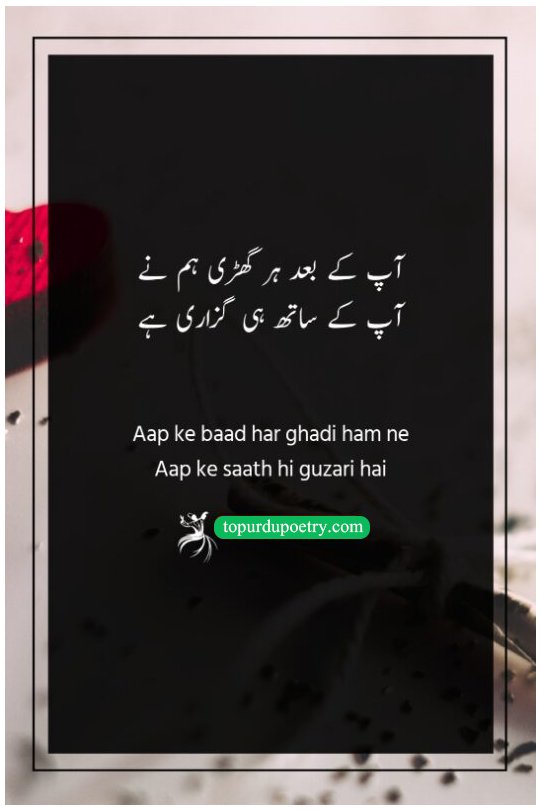
Aap ke baad har ghadi ham ne Aap ke saath hi guzari hai
This profound love poetry for husband by Obaidullah Aleem expresses the eternal nature of true devotion. The poet suggests that although the beloved is physically absent ('Aap ke baad'), his internal world remains entirely occupied by them. Every single moment spent alone is, in reality, spent in the mental and emotional company of the loved one. It beautifully captures the idea that for some, a person’s memory is so vivid and constant that physical separation never truly results in loneliness. It is a testament to a love that transcends space and time.
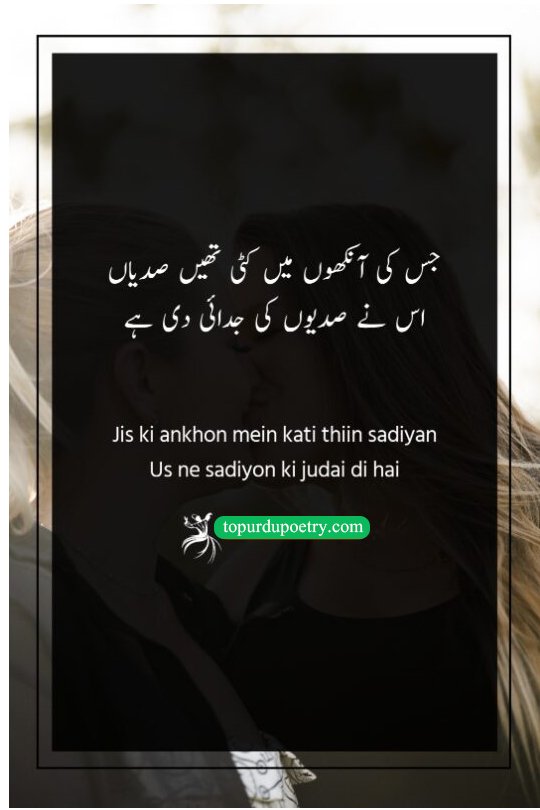
جس کی آنکھوں میں کٹی تھیں صدیاں اس نے صدیوں کی جدائی دی ہے
Jis ki ankhon mein kati thiin sadiyan Us ne sadiyon ki judai di hai
This poignant 2 line love poetry reflects on the vast emotional scale of a relationship. To 'spend centuries' in someone's eyes suggests a connection so deep and immersive that time itself seemed to stand still. However, the poet highlights a painful irony: the same depth of intimacy has now been replaced by a 'separation of centuries.' It suggests that the more profound the bond, the more eternal the sense of loss feels once that person is gone. It is a masterful expression of the enduring weight of heartbreak.
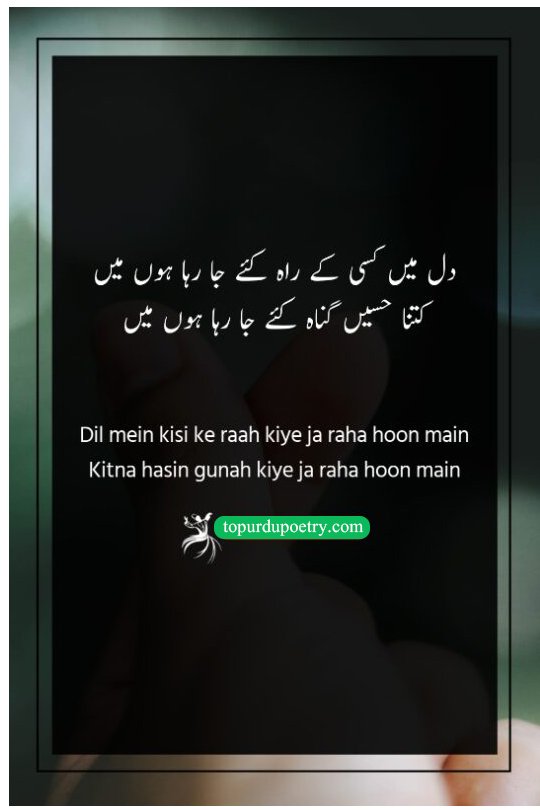
دل میں کسی کے راہ کئے جا رہا ہوں میں کتنا حسیں گناہ کئے جا رہا ہوں میں
Dil mein kisi ke raah kiye ja raha hoon main Kitna hasin gunah kiya ja raha hoon main
This deep poetry in Urdu for love by Jigar Moradabadi captures the cheeky and romantic side of love. It portrays the act of winning someone's heart not as a duty or a serious affair, but as a 'hasin gunah' (beautiful sin). It suggests that while love might be seen as a transgression by the world or logic, the sweetness of the journey makes it worthwhile. It's a celebration of the subtle art of seduction and the joyous surrender to an enchanting, 'forbidden' feeling.
Final Thoughts on Love Poetry in Urdu Text
True love is a beautiful journey, and having the right words to express it makes the bond even stronger. We hope this collection of love poetry in Urdu (محبت پوئِٹْری) gave you the perfect lines to bring a smile to your special someone’s face.
Which couplet are you dedicating to your beloved today? Save your favorite custom-designed love poetry pics, share them with your partner, and keep the romance alive!